01 / Scenario
STUDIO
P
High-End Pilates Studios
Premium aesthetics meet quiet operation for boutique studio environments.

ISO
9001
CE
Certified
OEM
Available
10YR
Warranty
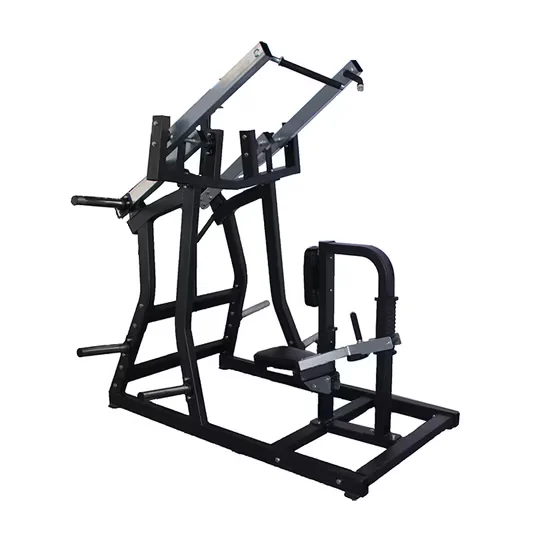
Commercial Plate Loaded ISO-Lateral Decline Bench OS-H5004, Steel Frame, 141kg Net Weight — plate loaded chest equipment with iso-lateral decline movement for natural pressing mechanics. Frame constructed from industrial steel with customizable main frame and cushion colors to match facility branding. Dimensions 1300×1150×1750mm require proper floor planning for safe clearance. Every unit undergoes individual load testing before shipment to verify structural integrity under commercial use conditions.
// Spec Highlights
• Direct from Manufacturer · No Middlemen · Worldwide Shipping
01
// Material
Imported Solid Wood
Premium hardwood frames sourced for density and visual warmth.
02
// Hardware
Medical-Grade Silent
Whisper-quiet pulleys and springs for clinical environments.
03
// Customization
Appearance OEM
Color, upholstery, and branding tailored to your studio.
04
// Service
Layout Design
Free venue planning for studios and rehab institutions.
Every component is selected for longevity, performance, and aesthetic harmony - from imported hardwood frames to silent medical-grade accessories.
// Features
11-Gauge Traceable Steel — every OS-H5004 frame tube carries mill certification back to the coil, so you can verify what you are buying before it hits the gym floor.
| Parameter | Value |
|---|---|
| Designation | OS-H5004 |
| Product Type | Plate Loaded ISO-Lateral Decline Bench |
| Exercise Part | Chest |
| Loading Type | Plate loaded |
| Frame Material | Steel |
| Frame Construction | Heavy-duty steel tube, continuous MIG welded |
| Product Dimensions | 1300 × 1150 × 1750 mm |
| Net Weight | 141 kg |
| Main Frame Color | Available per customer specification |
| Cushion Color | Available per customer specification |
| Assembly State | Unfolded |
| Power Source | Manual |
| Certification | ISO 9001, CE |
| Facility Type | Typical Use |
|---|---|
| Commercial gym strength floor | Primary decline pressing station in the plate-loaded section |
| Fitness club | Dedicated chest isolation equipment for member training |
| Community fitness center | High-durability pressing station for multi-user environments |
| Hotel fitness center | Compact chest training solution for limited-floor-space layouts |
| University strength and conditioning room | Athlete chest development in supervised training programs |
The frame joint is the first place commercial equipment fails — not the steel itself, but the weld bead that holds it together.
When gym owners evaluate a commercial plate loaded iso-lateral decline bench, the conversation usually starts with tube gauge and ends with price. What rarely gets examined is how those tubes are joined. Spot-welded connections on pressing equipment pass a visual check on day one, but under repeated off-axis loading from users dropping plates or shifting mid-rep, the weld nugget concentrates stress into a small area. Over months of heavy traffic, micro-cracks propagate from that concentration point until the joint develops visible play [NEED_CITE: weld classification and fatigue performance in structural steel]. Continuous MIG welding distributes the load across the entire seam, which fundamentally changes how the frame handles the thousands of loading cycles a busy gym produces each month.
The OS-H5004 fills a specific gap in the pressing lineup — isolated decline-angle chest work that barbell benches and flat machines cannot replicate. In a fully configured strength zone, it pairs with flat and incline ISO-lateral stations to give members complete pectoral coverage across three angles. The independent arm design accommodates users with asymmetries or returning from shoulder rehabilitation, since each side tracks separately. For high-density commercial floors, this commercial plate loaded iso-lateral decline bench occupies a footprint that leaves adequate clearance for loading plates without blocking adjacent equipment traffic lanes.
A decline bench absorbs a different stress profile than flat or incline equipment. The angled frame means gravitational load resolves into both compressive and shear components at the base welds, especially where the upright connects to the floor rail. Every rep introduces a short impact peak as the user returns to the start position, and in a facility running ten-plus hours daily, those micro-impacts accumulate into meaningful fatigue demand on the joints. [NEED_CITE: EN 957 structural requirements for stationary training equipment] The pivot points on ISO-lateral arms experience rotational wear from constant loading and unloading, making bearing seal integrity critical in environments where chalk dust, sweat residue, and cleaning chemicals are present around the clock. Upholstery contact zones on the decline pad see concentrated compression from the user’s torso sliding against the angle, which accelerates foam breakdown if density is underspecified.
At 141 kg net weight, the OS-H5004 signals how much steel is actually in the structure — and mass directly correlates with resistance to deflection under load. When a user loads multiple plates on each horn, the frame must resist both the static weight and the dynamic forces from controlled reps and occasional rough handling. The steel tube dimensions and wall thickness determine the moment of inertia for each structural member, which is the engineering property that governs how much a tube bends before it springs back. Thinner-walled tubing may hold the same static load, but it flexes noticeably under heavier plate loads, which changes the feel of the movement and introduces lateral play at the pivot bearings over time. The powder coating thickness applied before assembly determines how well the frame resists cosmetic degradation from plate contact, shoe scuffs, and chemical cleaners used in daily maintenance routines.
Manufacturers who compete on price for plate-loaded equipment typically save money in areas that are invisible at the showroom stage. Thin-wall tubing on a decline bench feels adequate when tested with light plates, but under the heavy loads that experienced lifters use, the frame develops perceptible flex that undermines user confidence. Non-sealed bearings at the ISO-lateral pivot points allow chalk dust and sweat to contaminate the rolling surfaces, creating play that grows progressively worse and requires bearing replacement far earlier than the frame itself would need attention. [NEED_CITE: bearing seal performance in high-contamination fitness environments] Underspecified foam density on the decline pad leads to visible compression within the first year of commercial use, forcing reupholstery that takes the station out of service and costs more than specifying proper density from the start.
The steel used in the OS-H5004 frame is sourced with mill certification traceable to the original coil, giving operators documentation of exactly what is supporting their members. Robotic MIG welding produces continuous weld lines rather than spot connections, which is the difference between a joint that handles thousands of cycles and one that develops cracks within the first year of heavy rotation. Every unit undergoes load testing before shipment — not sample-based QC on one unit per batch, but individual verification that the frame meets structural requirements under loaded conditions. The industrial powder coating applied at 200μm thickness protects contact points and high-wear zones from chipping and corrosion in humid environments where sweat and cleaning agents are constant. The ten-year frame warranty reflects confidence in these structural choices rather than a marketing claim. Floor planning support includes CAD layouts that position this commercial plate loaded iso-lateral decline bench with correct safety clearances relative to adjacent stations and traffic paths.
Provide your strength zone floor area and existing equipment list to receive a 2D or 3D layout showing where the OS-H5004 fits with proper safety clearances and traffic flow. Specify your facility’s average daily user volume so the structural grade can be confirmed for your traffic level. Indicate the body size range of your primary user population to verify pad dimensions and range-of-motion suitability. Note any custom requirements for frame color, cushion color, or logo placement to align with your facility’s visual identity.
Q: How do I evaluate whether a plate-loaded decline bench is truly commercial grade?
A: Start by requesting the steel tube wall thickness and material grade documentation from the supplier, then verify the welding method — continuous MIG welds indicate structural commitment, while spot welds suggest light-duty construction. Check the net weight as a proxy for material volume, ask for per-unit load test records rather than sample-based QC, and confirm the warranty covers the frame for at least ten years under commercial use conditions.
Q: What is the difference between ISO-lateral and fixed-path plate-loaded equipment?
A: ISO-lateral machines feature independent movement arms that track separately, allowing each side of the body to work through its own range of motion without the stronger side compensating for the weaker one. Fixed-path equipment links both sides to a single bar or carriage. For commercial environments serving members with varying experience levels and potential asymmetries, the commercial plate loaded iso-lateral decline bench provides more accommodating movement patterns.
Q: How should I plan floor spacing around this type of pressing equipment?
A: Beyond the machine footprint itself, account for the full range of plate loading on each horn, the space users need to approach and exit safely, and the traffic lane between adjacent stations. Request CAD layout files from the supplier that include recommended clearance dimensions, and cross-reference those against your local fire and accessibility codes before finalizing equipment placement on the strength floor.
Q: What maintenance intervals make sense for plate-loaded ISO-lateral stations?
A: Pivot bearings should be inspected for rotational play and contamination every quarter in high-traffic facilities, with cleaning and relubrication as needed. Structural bolts require torque verification at similar intervals since vibration from plate loading gradually loosens fasteners. Upholstery compression on the decline pad should be evaluated annually, and powder-coated surfaces benefit from regular cleaning with appropriate agents to prevent chemical damage.
Q: Can frame and cushion colors be matched to an existing gym interior?
A: Yes, both the main frame powder coat and the upholstery color on the OS-H5004 are available per customer specification. Provide RAL or Pantone references for the frame finish and vinyl color samples for the cushion to ensure consistency with your facility’s design system. Custom logo application on the frame or pad is also available for branded environments.
Premium aesthetics meet quiet operation for boutique studio environments.
Medical-grade silence and precision for sports & postpartum recovery.
Furniture-grade craftsmanship for premium residential installations.
Compact premium setups for one-on-one and small-group training.
Aesthetic Pilates integration for hybrid wellness studio programming.
Multi-unit deployment with instructor-grade reliability for certification programs.
Tell us about your project. Our team will respond within 24 hours with pricing, customization options, and shipping details.
// Sales Director
William
+86 132 2531 1800
// Export Manager
Bella
+86 198 5412 8032
william@bickfit.com