01 / Scenario
STUDIO
P
High-End Pilates Studios
Premium aesthetics meet quiet operation for boutique studio environments.
ISO
9001
CE
Certified
OEM
Available
10YR
Warranty
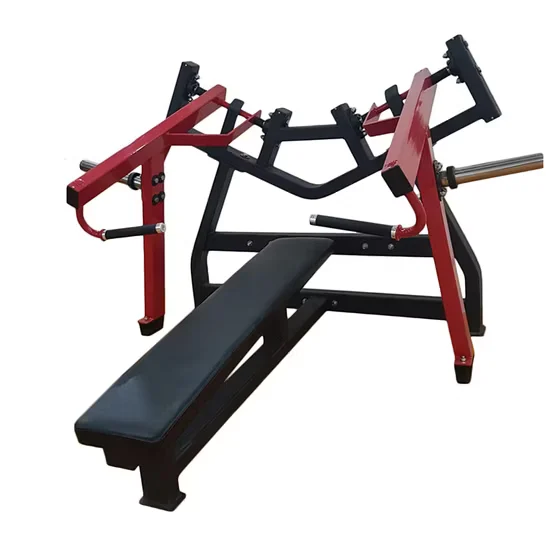
Plate Loaded Lateral Horizontal Bench Press, 112kg Net Weight, 1700×1400×1200mm — engineered with 11-gauge steel frame and robotic MIG continuous welding to eliminate cold joints and spot-weld fatigue under heavy plate loading. Sealed bearing pivots and precision-machined guide rods prevent binding during off-center loads. Each unit undergoes three-stage QC with load testing before shipment, backed by a 10-year frame warranty and free floor planning CAD support.
// Spec Highlights
• Direct from Manufacturer · No Middlemen · Worldwide Shipping
01
// Material
Imported Solid Wood
Premium hardwood frames sourced for density and visual warmth.
02
// Hardware
Medical-Grade Silent
Whisper-quiet pulleys and springs for clinical environments.
03
// Customization
Appearance OEM
Color, upholstery, and branding tailored to your studio.
04
// Service
Layout Design
Free venue planning for studios and rehab institutions.
Every component is selected for longevity, performance, and aesthetic harmony - from imported hardwood frames to silent medical-grade accessories.
// Features
Traceable 11-Gauge Frame Steel — Every tube on this plate loaded chest press is mill-certified back to the original Q235/Q345 coil, eliminating the vague commercial-grade claims that leave gym owners guessing about actual wall thickness and deformation thresholds.
| Parameter | Value |
|---|---|
| Product Type | Plate Loaded Chest Press |
| Frame Steel Gauge | 11-gauge |
| Frame Tube Size | 3×3 inch |
| Steel Grade | Q235 / Q345, mill-certified |
| Welding Type | Robotic MIG, continuous weld |
| Loading Type | Plate loaded |
| Bearing Type | Sealed industrial bearings |
| Powder Coating | 200μm scratch-resistant, sandblast pre-treated |
| Product Dimensions | 1700×1400×1200mm |
| Net Weight | 112kg |
| Color Options | Optional |
| Upholstery | Standard or high-density options available |
| Certification | ISO 9001, CE |
| Warranty | 10-year frame |
| Facility Type | Typical Use |
|---|---|
| Commercial gym strength floor | Primary horizontal pressing station in free-weight and plate-loaded zones |
| Hotel and resort fitness center | Durable chest press for unsupervised, high-turnover guest use |
| University strength and conditioning room | Heavy pressing work for athletic development programs |
| CrossFit box functional zone | Plate-loaded pressing option integrated into strength skill areas |
| Rehabilitation and performance center | Controlled horizontal pressing for return-to-training protocols |
Continuous robotic MIG welds carry the load path across the entire joint, not just at discrete tack points.
When a member-loaded chest press is loaded with multiple plates and pushed through hundreds of reps daily, the stress concentrates at the arm-to-frame junction. Spot-welded frames pass a visual inspection on day one but develop micro-cracks at the weld boundaries within months of heavy use. Those cracks propagate silently until a joint fails under load. The commercial plate loaded lateral horizontal bench press we build uses full-penetration continuous weld seams, distributing force along the entire joint length rather than relying on isolated weld spots [NEED_CITE: weld classification and fatigue performance in structural steel]. This is the difference between a frame that needs replacement in two years and one that holds its geometry for a decade.
This unit targets the horizontal pressing plane, engaging the pectorals, anterior deltoids, and triceps through a converging movement path. It complements incline and decline pressing stations, as well as iso-lateral shoulder and back units, to form a complete upper-body pressing cluster. In facilities with moderate to high member density, dedicating a lateral horizontal press prevents bottlenecking at the flat bench stations. The 1700×1400mm footprint accommodates a broad range of user statures without requiring excessive floor space, making it viable for both expansive commercial floors and compact hotel fitness rooms.
Every time a user loads plates unevenly or shifts grip mid-set, the press arms experience eccentric torque that travels through the pivot bearings and into the main frame uprights. Over thousands of cycles, this eccentric loading fatigues the weld seams at the arm pivot and the base gussets. Sealed industrial bearings at each pivot point resist dust and sweat ingress, maintaining alignment and preventing the play that accelerates wear on the powder coating and upholstery contact zones [NEED_CITE: EN 957 structural requirements for stationary training equipment]. The 200μm powder coating, applied over sandblasted steel, withstands the repeated contact of plates, shoes, and cleaning chemicals without exposing bare metal.
The 11-gauge, 3×3 inch tube section provides a high moment of inertia, meaning the frame resists bending under the asymmetric loads created when users load plates on one side or press with uneven force. Robotic MIG welding with continuous beads eliminates the cold joints and incomplete fusion zones that manual spot welding introduces at high production volumes. Sealed bearings at the pivot points prevent the axial play that causes press arms to wobble and bind after months of use in dusty, humid gym environments. The 200μm powder coating thickness, achieved through electrostatic application over abrasive-blasted surfaces, prevents the chipping at plate contact zones and grip wear areas that exposes steel to corrosion. Q235 and Q345 steel grades provide verified yield characteristics, traceable to the mill coil, giving procurement teams confidence in the material specification rather than relying on unverified commercial-grade labels.
Thin-wall tubing on a horizontal press flexes visibly under heavy loads, transferring that deflection into the user’s shoulder joints and undermining the stability needed for maximal effort pressing. Spot-welded joints that crack under cyclic loading create liability exposure for facility operators when a failure occurs mid-set. Non-sealed bearings develop play within the first year, requiring labor-intensive teardowns and replacements that pull the unit off the floor for days. Low-density upholstery compresses and splits under daily commercial use, forcing reupholstery costs or leaving members with an uncomfortable, unprofessional-looking station. Insufficient powder coating chips at high-contact zones, allowing sweat and humidity to initiate rust that spreads beneath the coating, eventually requiring full strip-and-recoat or frame replacement [NEED_CITE: powder coating adhesion and corrosion resistance in fitness equipment].
The 11-gauge steel frame with mill-traceable Q235/Q345 sourcing ensures every commercial plate loaded lateral horizontal bench press that ships has verifiable structural integrity, not just a marketing claim. Robotic MIG continuous welding on every joint means the fatigue life of the frame is determined by the steel itself, not by weld inconsistencies. Each unit undergoes a three-stage inspection and load test before crating, catching any deviation before it reaches your dock. The 200μm industrial powder coating maintains appearance and corrosion protection through years of plate contact, shoe scuffs, and chemical cleaning. A 10-year frame warranty reflects the engineering margins built into the structure, not a prorated promise. Our facility planning team provides 2D and 3D CAD layouts that position this press with correct safety clearances and traffic flow relative to adjacent stations, preventing the unusable gaps and pinch points that plague poorly planned strength floors. OEM customization, including frame color, upholstery selection, and logo application, allows the unit to align with facility branding without compromising the underlying structural specification.
Provide your strength zone dimensions and current equipment schedule to receive a 2D or 3D layout that integrates this press with proper clearances and traffic flow. Share your facility’s daily member throughput so we can confirm the structural grade matches your usage intensity. Specify the target user population’s stature range to verify the convergence path and seat geometry accommodate your membership. Communicate any customization requirements, including frame color, upholstery grade, and logo placement, to align the unit with your facility identity.
Q: How do you distinguish a true commercial-grade plate loaded press from a light-commercial unit?
A: True commercial frames specify steel gauge, tube dimensions, and steel grade with mill traceability, rather than using vague terms like heavy-duty. Welding should be continuous robotic MIG, not spot-welded. Bearings must be sealed industrial units, not unsealed bushings. Load testing should occur on every production unit, not just engineering samples. A commercial unit will carry a long-term frame warranty backed by verifiable structural testing.
Q: What does frame steel gauge and tube size mean for load capacity and long-term rigidity?
A: Steel gauge indicates wall thickness, with lower numbers representing thicker walls. An 11-gauge tube resists bending under heavy plate loads far better than thinner alternatives. The 3×3 inch tube cross-section increases the moment of inertia, reducing deflection during off-center or maximal loading. Together, these parameters define how much load the frame can carry repeatedly without permanent deformation or fatigue cracking at weld joints.
Q: Plate loaded versus selectorized chest press: which suits high-traffic commercial environments?
A: Plate loaded units have fewer moving parts, no weight stacks or cable systems to maintain, and allow users to load precisely the resistance they need, which appeals to serious lifters. Selectorized units offer faster weight changes and are preferred in facilities with high member turnover or unsupervised use. Many commercial floors stock both, placing plate loaded presses in dedicated strength zones and selectorized units in general fitness areas.
Q: What are the equipment spacing and floor planning guidelines for safe commercial gym layouts?
A: Each pressing station requires clearance on all sides for safe plate loading, user passage, and emergency egress. Adjacent units must not create pinch points where users could be trapped between moving arms. CAD-based floor planning ensures these clearances are met and that traffic flow between stations prevents congestion during peak hours. Proper spacing also facilitates cleaning access and equipment maintenance without disrupting adjacent stations.
Q: What are the upholstery and grip replacement cycles under daily commercial use conditions?
A: Standard upholstery in a high-traffic facility typically shows compression and surface wear within two to three years, while high-density options extend that interval significantly. Grips and contact points subjected to sweat, chalk, and constant friction should be inspected biannually. Specifying high-density upholstery and reinforced grip zones at the time of purchase reduces the frequency of downtime for replacement and maintains a professional appearance throughout the equipment’s service life.
Premium aesthetics meet quiet operation for boutique studio environments.
Medical-grade silence and precision for sports & postpartum recovery.
Furniture-grade craftsmanship for premium residential installations.
Compact premium setups for one-on-one and small-group training.
Aesthetic Pilates integration for hybrid wellness studio programming.
Multi-unit deployment with instructor-grade reliability for certification programs.
Tell us about your project. Our team will respond within 24 hours with pricing, customization options, and shipping details.
// Sales Director
William
+86 132 2531 1800
// Export Manager
Bella
+86 198 5412 8032
william@bickfit.com