01 / Scenario
STUDIO
P
High-End Pilates Studios
Premium aesthetics meet quiet operation for boutique studio environments.
ISO
9001
CE
Certified
OEM
Available
10YR
Warranty
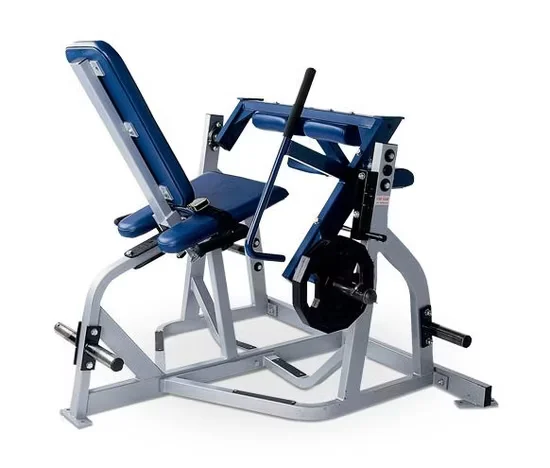
Plate Loaded Seated Leg Curl Machine, Steel Frame, 103kg Net Weight — engineered with industrial-grade steel tubing and robotic MIG continuous welding to eliminate spot-weld fatigue under heavy commercial loading. Sealed bearings ensure smooth plate-loaded resistance through full range of motion, while 200μm powder coating resists chipping in high-traffic environments. Every unit undergoes individual load testing before shipment, backed by a 10-year frame warranty and complimentary floor planning support.
// Spec Highlights
• Direct from Manufacturer · No Middlemen · Worldwide Shipping
01
// Material
Imported Solid Wood
Premium hardwood frames sourced for density and visual warmth.
02
// Hardware
Medical-Grade Silent
Whisper-quiet pulleys and springs for clinical environments.
03
// Customization
Appearance OEM
Color, upholstery, and branding tailored to your studio.
04
// Service
Layout Design
Free venue planning for studios and rehab institutions.
Every component is selected for longevity, performance, and aesthetic harmony - from imported hardwood frames to silent medical-grade accessories.
// Features
Traceable Mill Steel — every 11-gauge tube in the Plate Loaded Seated Leg Curl is traceable to the Q235/Q345 coil certificate before it enters the cutting cell.
| Parameter | Value |
|---|---|
| Product Type | Plate Loaded Leg Curl Machine |
| Frame Steel | 11-gauge, 3×3 inch rectangular tube |
| Steel Grade | Q235 / Q345 mill-certified |
| Welding | Robotic continuous MIG, no spot welds |
| Loading Type | Plate loaded, dual-side horn |
| Bearing Type | Sealed industrial bearings |
| Pulley System | Aircraft-grade cable, sealed pulleys |
| Upholstery | High-density commercial grade, replaceable |
| Powder Coating | 200μm scratch-resistant, sandblast pre-treatment |
| Product Dimensions | 1440 × 1695 × 1481 mm |
| Net Weight | 103 kg |
| Certification | ISO 9001:2015, CE |
| Warranty | 10-year frame |
| Facility Type | Typical Use |
|---|---|
| Commercial gym strength floor | Primary hamstring isolation station in plate-loaded row |
| CrossFit box functional zone | Supplemental posterior chain work for athletes |
| Hotel fitness center | Compact hamstring machine for limited square footage |
| University strength and conditioning room | Team training circuits and off-season hypertrophy blocks |
| Rehabilitation and performance center | Controlled eccentric hamstring loading under supervision |
A continuous MIG bead carries load along the entire joint; a spot weld concentrates it at a single point.
Most spec sheets say "commercial grade" and stop there. In a high-traffic gym, that phrase hides the real failure mode: the seated leg curl generates a long moment arm from the hip pivot to the loading horn, and every rep cycles the frame through bending stress. A spot-welded cross-member will crack at the weld nugget long before the steel itself yields. We switched to robotic continuous MIG welding after a batch of thin-wall leg curls had to be recalled when the main crossbeam deformed under sustained heavy loading. That recall ended any tolerance for joint shortcuts [NEED_CITE: weld classification and fatigue performance in structural steel].
The Plate Loaded Seated Leg Curl targets the hamstrings through hip-flexed knee flexion, complementing the lying leg curl and Romanian deadlift station already on most strength floors. Its compact footprint fits between a leg press and a calf raise without creating dead space. The seated position suits lifters of varying torso lengths because the thigh pad and backrest distribute contact across a wide surface area. In a commercial gym running eight or more hours of daily traffic, this machine earns its square footage by filling the one gap that free weights alone cannot cover: isolated, controlled hamstring work under plate-loaded resistance.
Each rep of a seated leg curl imposes an eccentric overload on the pivot axis as the lifter resists the return. Multiply that by hundreds of reps per day in a busy gym, and the fatigue cycles accumulate on the weld line at the main pivot bracket. Sealed bearings at the pivot keep the rotation smooth and prevent sweat and chalk dust from migrating into the race [NEED_CITE: EN 957 structural requirements for stationary training equipment]. The loading horns see repeated plate impact, and the 200μm powder coat must resist chipping where plates make contact. Upholstery takes abrasion from thigh friction and chemical exposure from daily cleaning sprays.
The 11-gauge frame tube sets the deformation threshold: thicker wall section resists bending under off-center plate loading better than thinner alternatives. Robotic continuous MIG welding eliminates the cold joints and incomplete fusion defects common in manual spot welding, extending fatigue life at the pivot and cross-member intersections. Sealed industrial bearings at the knee pad pivot prevent play from developing in the first year, a failure pattern common with unsealed bushings in humid or high-sweat environments. The 200μm powder coat, applied over sandblast pre-treatment, bonds to the steel at a depth that resists chipping at contact points and slows corrosion from cleaning chemicals.
Thin-wall tubing bends visibly under heavy plate loads and never straightens back. Spot welds that pass a visual check on day one crack under cyclic loading, creating a liability event rather than a maintenance ticket. Unsealed bearings develop radial play within months, producing noise and wobble that members notice and complain about. Low-density upholstery compresses permanently, requiring replacement that costs more in downtime than the original savings. A powder coat applied without proper pre-treatment chips at plate contact zones, exposing bare steel to sweat corrosion and accelerating the cycle toward full refurbishment [NEED_CITE: industrial powder coating adhesion and corrosion resistance standards].
The 11-gauge Q235/Q345 steel is mill-certified and traceable to the coil, not sourced on vague commercial-grade claims. Robotic continuous MIG welding runs full-length beads at every joint, verified by three-stage QC inspection. Every unit undergoes load testing before crating — not sample-based, but individual. The 200μm industrial powder coat is rated for daily commercial cleaning chemicals without delamination. A 10-year frame warranty backs the structure. For layout planning, we provide 2D and 3D CAD files showing safe clearance zones around the machine so your strength floor flows without pinch points.
Provide your strength floor dimensions and current machine list so we can generate a 2D or 3D layout that positions this leg curl with correct clearances. Tell us your estimated daily user volume so we can confirm the structural grade matches your traffic. Specify any color, logo, or upholstery requirements for brand alignment. OEM private label options are available for distributors and chain operators.
Q: How do I verify that a leg curl machine is truly commercial grade?
A: Request the steel mill certificate showing gauge and grade, ask for weld type documentation showing continuous MIG rather than spot welding, and confirm that load testing is performed on every unit before shipment rather than on a sampling basis. These three documents separate commercial-grade construction from light-commercial equipment marketed with ambiguous specifications.
Q: What is the relationship between frame gauge and load capacity?
A: Frame gauge determines how much bending resistance the tube provides under eccentric and off-center loading. An 11-gauge tube with a 3×3 inch cross-section resists deformation at the pivot and loading horn junctions far better than thinner alternatives, keeping the movement path stable even when plates are loaded unevenly on one side.
Q: Should I choose plate-loaded or selectorized leg curl for my facility?
A: Plate-loaded machines suit environments where users load their own weight and prefer incremental plate changes, common in strength-focused gyms and athletic facilities. Selectorized units serve high-turnover commercial floors where quick pin selection reduces changeover time. Both can coexist on the same floor serving different user segments.
Q: What clearance spacing is needed around this machine?
A: Allow enough space on both sides for full plate loading and unloading, plus a rear walkway for user entry and exit. Exact dimensions depend on the largest bumper plate diameter your facility stocks. A 2D CAD layout from the manufacturer ensures safe passage without reducing usable floor density.
Q: How often should upholstery and grip surfaces be replaced?
A: Upholstery pads in high-traffic commercial settings typically show surface wear before the foam core compresses. Inspect pads quarterly for vinyl splitting or foam exposure. Replacement pads are available as spare parts and can be swapped on-site without returning the machine, minimizing floor downtime.
Premium aesthetics meet quiet operation for boutique studio environments.
Medical-grade silence and precision for sports & postpartum recovery.
Furniture-grade craftsmanship for premium residential installations.
Compact premium setups for one-on-one and small-group training.
Aesthetic Pilates integration for hybrid wellness studio programming.
Multi-unit deployment with instructor-grade reliability for certification programs.
Tell us about your project. Our team will respond within 24 hours with pricing, customization options, and shipping details.
// Sales Director
William
+86 132 2531 1800
// Export Manager
Bella
+86 198 5412 8032
william@bickfit.com