01 / Scenario
STUDIO
P
High-End Pilates Studios
Premium aesthetics meet quiet operation for boutique studio environments.
ISO
9001
CE
Certified
OEM
Available
10YR
Warranty
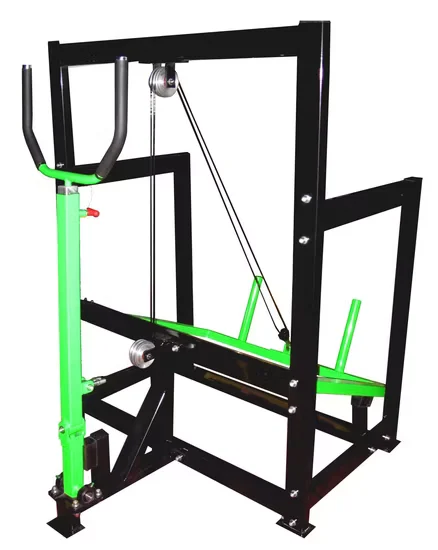
Commercial Plate Loaded Tibia Dorsi Flexion Machine, 950×380×336mm, 27kg Net Weight — engineered with steel frame construction for stable high-repetition ankle dorsiflexion training, plate loaded design enabling progressive overload without fixed stack limits, and adjustable foot platform for proper joint alignment across varying lower-leg lengths. Every unit undergoes load testing before shipment, backed by a 10-year frame warranty.
// Spec Highlights
• Direct from Manufacturer · No Middlemen · Worldwide Shipping
01
// Material
Imported Solid Wood
Premium hardwood frames sourced for density and visual warmth.
02
// Hardware
Medical-Grade Silent
Whisper-quiet pulleys and springs for clinical environments.
03
// Customization
Appearance OEM
Color, upholstery, and branding tailored to your studio.
04
// Service
Layout Design
Free venue planning for studios and rehab institutions.
Every component is selected for longevity, performance, and aesthetic harmony - from imported hardwood frames to silent medical-grade accessories.
// Features
Steel-Frame Plate Loaded Tibia Dorsi Flexion Machine Built for Commercial-Grade Daily Use — Every unit ships after individual load testing on a reinforced 11-gauge steel base engineered to resist lateral shift during high-repetition ankle dorsiflexion work.
| Parameter | Value |
|---|---|
| Product Type | Tibia Dorsi Flexion Machine |
| Frame Steel Gauge | 11-gauge |
| Frame Tube Size | 3×3 inch |
| Steel Grade | Q235 and Q345 industrial steel, mill-certified |
| Welding Type | Robotic MIG, continuous weld lines |
| Loading Type | Plate loaded |
| Powder Coating | 200μm scratch-resistant, sandblast pre-treated |
| Product Dimensions | 950×380×336mm |
| Net Weight | 27kg |
| Certification | ISO 9001:2015, CE |
| Warranty | 10-year frame |
| Facility Type | Typical Use |
|---|---|
| Commercial gym strength floor | Targeted tibialis anterior and ankle dorsiflexion work in dedicated lower-leg zones |
| Rehabilitation and physiotherapy centers | Progressive ankle mobility restoration and anterior shin strengthening protocols |
| University strength and conditioning room | Athletic performance programming for sprint acceleration and deceleration mechanics |
| Hotel and resort fitness center | Compact footprint lower-leg station for space-conscious commercial layouts |
| Performance training facilities | Sport-specific ankle stabilization and injury prevention programming |
A dorsiflexion machine lives or dies by its base rigidity under repetitive offset loading.
When a gym operator specifies a commercial tibia dorsi flexion machine plate loaded, the frame tube wall thickness is rarely discussed in detail. Vague "commercial-grade" claims obscure the actual steel gauge, and spot-welded joints on lower-leg equipment frequently crack within the first year of high-traffic use [NEED_CITE: weld classification and fatigue performance in structural steel]. The foot platform on a dorsiflexion unit transfers force at an angle that creates torsional stress on the base cross-member. Thin-wall tubing flexes under this load cycle, introducing lateral play that degrades movement quality and eventually fatigues the weld seams at the upright-to-base junction. I have seen facilities pull entire batches of lower-leg machines back for rework after the base cross-beam deformed under daily use — the root cause was always undersized steel and interrupted weld patterns. A commercial tibia dorsi flexion machine plate loaded for serious training demands continuous robotic MIG welds on 11-gauge frames, not cosmetic joints that pass visual inspection but fail under sustained cyclic loading.
The commercial tibia dorsi flexion machine plate loaded fills a specific gap in the lower-leg equipment matrix — isolating the tibialis anterior through controlled ankle dorsiflexion against resistance. This movement plane complements standing and seated calf raise stations that target the gastrocnemius and soleus through plantarflexion. In a commercial gym strength zone, placing this unit adjacent to calf machines creates a complete lower-leg circuit that addresses both sides of the ankle joint. The compact footprint suits high-density floor layouts where every square meter counts. The adjustable foot platform accommodates a wide range of lower-leg lengths, making the station accessible to users across different body proportions without requiring multiple frame sizes.
Dorsiflexion training generates a distinct load profile compared to compound lower-body movements. The force vector travels through the foot platform at an offset angle, creating a repeating torsional moment on the base frame with each repetition [NEED_CITE: EN 957 structural requirements for stationary training equipment]. In a high-traffic commercial environment, this station may see hundreds of loading cycles daily across multiple users. The weld joints at the upright-to-base connection bear the highest stress concentration, which is why continuous robotic MIG welds matter more here than in statically loaded equipment. The foot platform pivot mechanism endures repeated engagement and disengagement, requiring a pin or bushing system that maintains alignment without developing play. Powder coating at contact points faces abrasion from shoe soles and exposure to sweat and cleaning chemicals, demanding adequate film thickness and proper surface pre-treatment to prevent early corrosion.
The 11-gauge frame steel with Q235 and Q345 mill certification provides a verifiable baseline for structural integrity — the steel grade is traceable back to the coil, eliminating guesswork about material properties. The 3×3 inch tube cross-section distributes the offset dorsiflexion load across a wider moment arm, raising the threshold at which the base frame begins to deflect under heavy plate loading. Robotic MIG welding with continuous bead patterns eliminates the cold joints and incomplete fusion zones that plague manual spot-welded assemblies, directly extending the fatigue life of the base-to-upright connection. The 200μm powder coating, applied over a sandblast-prepared surface, creates a barrier thick enough to withstand daily contact with shoes, sweat, and commercial cleaning agents without exposing bare steel at high-wear zones. Together, these specifications define a commercial tibia dorsi flexion machine plate loaded that maintains structural alignment through years of repetitive use rather than developing the frame flex and joint play that signal premature retirement.
Reducing frame tube wall thickness on a dorsiflexion machine may lower the unit price, but the savings disappear when the base cross-member deforms and the machine develops lateral wobble within months. Spot welds that pass a quick visual check crack under the repetitive torsional load of daily dorsiflexion sets, creating both a maintenance burden and a liability question for the facility operator [NEED_CITE: structural failure modes in welded fitness equipment frames]. Non-sealed pivot mechanisms at the foot platform accumulate dust and sweat residue, developing play that degrades the movement path and requires frequent bushing replacement. Thin powder coating chips at shoe contact points within the first season, exposing bare steel to moisture and accelerating corrosion at the exact locations where structural integrity matters most. These failures compound — a facility replacing foot platform bushings quarterly, touching up rust spots monthly, and eventually retiring the entire unit well before its expected service life represents a total cost of ownership far exceeding the initial savings.
The 11-gauge steel frame with coil-traceable mill certification means every commercial tibia dorsi flexion machine plate loaded leaving our Ningjin facility has verified material properties, not assumed ones. Robotic MIG welding produces continuous weld lines at the critical base-to-upright joints where dorsiflexion torque concentrates, eliminating the weak points inherent in spot-welded construction. Every single unit undergoes load testing before shipment — not sample-based batch testing, but individual verification that the frame holds alignment under stress. The 200μm powder coating over sandblast pre-treatment resists the shoe abrasion and chemical exposure specific to lower-leg equipment contact zones. The 10-year frame warranty reflects confidence in these structural choices. For facility layout planning, the 950×380mm footprint allows precise spacing calculations, and our 2D-3D CAD support ensures safe clearance between this station and adjacent calf or leg equipment on the strength floor.
Share your strength floor area and existing lower-leg equipment list to receive a 2D-3D layout placing this dorsiflexion station with proper clearance and traffic flow. Specify your expected daily user volume so we can confirm the structural grade matches your facility’s traffic intensity. Provide your target user demographic’s height and limb-length range to verify the foot platform adjustment covers their needs. Outline any custom requirements including frame color, logo placement, or upholstery material preferences for brand-aligned installation.
Q: What defines a commercial-grade tibia dorsiflexion machine versus a light commercial version?
A: Commercial-grade construction uses 11-gauge steel frame tubing with mill-traceable certification, continuous robotic MIG welds at all structural joints, and individual unit load testing before shipment. Light commercial versions typically use thinner wall tubing and spot-welded connections that may hold under moderate use but develop flex and joint fatigue under the daily repetition cycles of a busy gym floor.
Q: How does frame steel gauge affect stability during dorsiflexion training?
A: The offset force vector in dorsiflexion creates torsional stress on the base cross-member with every repetition. Thicker gauge steel resists this twisting moment, keeping the foot platform aligned and preventing lateral wobble. When the frame flexes, the movement path degrades, reducing training effectiveness and accelerating wear at the welded joints connecting the upright to the base.
Q: Plate loaded versus selectorized — which suits high-traffic gym environments?
A: Plate loaded systems eliminate the weight stack guide rods, cables, and selector pins that require maintenance under heavy daily use. For a dorsiflexion station where loading increments are typically small and progressive, plate loaded design offers straightforward overload progression with fewer mechanical wear points, reducing long-term service demands in high-traffic commercial settings.
Q: What footprint and clearance spacing does this machine need in a commercial layout?
A: The unit occupies a 950×380mm floor footprint. Allow minimum lateral clearance on the loading side for plate handling and adequate rear space for user entry and exit. When positioning adjacent to calf raise or leg press equipment, confirm that loaded movement paths do not overlap and that users can transition between stations safely without congestion.
Q: How often do contact-point pads need replacement under commercial use?
A: Knee pad and shin contact upholstery in a commercial environment typically shows compression and surface wear within one to two years depending on daily user volume. Specifying high-density foam and commercial-grade vinyl at the ordering stage extends replacement intervals. Requesting available replacement pad dimensions ensures future maintenance can be completed without extended downtime.
Premium aesthetics meet quiet operation for boutique studio environments.
Medical-grade silence and precision for sports & postpartum recovery.
Furniture-grade craftsmanship for premium residential installations.
Compact premium setups for one-on-one and small-group training.
Aesthetic Pilates integration for hybrid wellness studio programming.
Multi-unit deployment with instructor-grade reliability for certification programs.
Tell us about your project. Our team will respond within 24 hours with pricing, customization options, and shipping details.
// Sales Director
William
+86 132 2531 1800
// Export Manager
Bella
+86 198 5412 8032
william@bickfit.com