01 / Scenario
STUDIO
P
High-End Pilates Studios
Premium aesthetics meet quiet operation for boutique studio environments.
ISO
9001
CE
Certified
OEM
Available
10YR
Warranty
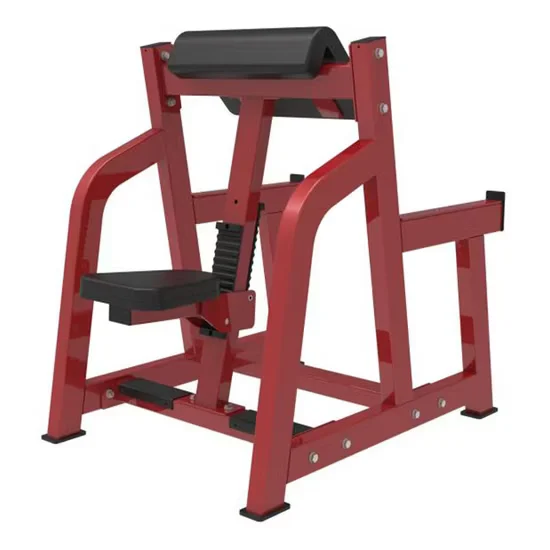
Commercial Seated Arm Curl Machine, 3×3 inch Frame, 75kg Net Weight — selectorized pin-select loading with sealed industrial bearings and aircraft-cable pulley system for smooth high-rep execution. Robotic MIG continuous welding eliminates spot-weld weak points under repeated eccentric loads. Every unit undergoes load testing before shipment with 10-year frame warranty.
// Spec Highlights
• Direct from Manufacturer · No Middlemen · Worldwide Shipping
01
// Material
Imported Solid Wood
Premium hardwood frames sourced for density and visual warmth.
02
// Hardware
Medical-Grade Silent
Whisper-quiet pulleys and springs for clinical environments.
03
// Customization
Appearance OEM
Color, upholstery, and branding tailored to your studio.
04
// Service
Layout Design
Free venue planning for studios and rehab institutions.
Every component is selected for longevity, performance, and aesthetic harmony - from imported hardwood frames to silent medical-grade accessories.
// Features
Robotic continuous MIG welds — every seam on this selectorized bicep curl machine is laid down as a single unbroken pass, eliminating the spot-weld failure points that crack under repetitive eccentric loading.
| Parameter | Value |
|---|---|
| Product Type | Selectorized Bicep Curl Machine |
| Frame Tube Size | 3×3 inch |
| Frame Steel | 11-gauge, Q235/Q345 industrial grade |
| Welding Type | Robotic MIG, continuous weld |
| Loading Type | Selectorized / pin-select |
| Bearing Type | Sealed industrial bearings |
| Pulley System | Aircraft-cable with sealed pulleys |
| Powder Coating | 200μm, sandblast pre-treated |
| Product Dimensions | 1000×800×1120mm |
| Net Weight | 75kg |
| Exercise Part | Arm / Biceps |
| Certification | ISO 9001:2015, CE |
| OEM/ODM | Available |
| Facility Type | Typical Use |
|---|---|
| Commercial gym strength floor | Dedicated arm isolation station in high-traffic bicep zones |
| Hotel and resort fitness center | Compact footprint arm curl for mixed-use guest populations |
| University strength and conditioning room | Arm development station alongside free-weight racks |
| Community fitness center | Selectorized arm curl for diverse member skill levels |
| Rehabilitation and performance center | Controlled bicep loading for upper-body recovery protocols |
A commercial selectorized seated arm curl machine must maintain smooth resistance through every degree of the curl arc, regardless of how the user grips the handle.
During my years running QC on the factory floor, I pulled guide rods from competitor arm curl machines that were solid smooth rods with no sealed bushing — under a few hundred reps of eccentric loading at an angle, they seized. Members complained the handle felt gritty halfway through the curl. That is the failure mode when bearing selection is treated as a cost line instead of an engineering decision. On this unit, the guide rod clearance and bearing preload are set at the product engineering stage, not left to assembly-line guesswork [NEED_CITE: linear bearing preload specifications for selectorized strength equipment].
This commercial selectorized seated arm curl machine occupies the fixed-path isolation slot in any well-configured arm training zone. It targets the biceps brachii and brachialis through a converging arc that mirrors natural elbow flexion, complementing the free-weight dumbbell racks and plate-loaded preacher benches nearby. The selectorized pin-select stack lets users of all strength levels load appropriate resistance without plate changes, making it suitable for facilities running 8+ hours of daily traffic. The seat and pad geometry accommodates a wide range of upper-body proportions without requiring multi-point adjustment.
Arm curl machines experience a distinct stress profile: the load is applied through a lever arm that creates maximum torque at the frame joint when the handle is at full extension. Every rep generates cyclic bending stress at the pivot bracket and guide rod mounting points. In high-traffic commercial environments running 200+ reps per day, this means the weld at the arm pivot must resist fatigue cracking far beyond what static load ratings suggest. Sealed bearings at the pivot and cam points prevent dust and sweat infiltration that would otherwise accelerate wear and introduce play into the movement path. The 200μm powder coating must also withstand repeated contact with chalk, sweat, and cleaning chemicals at the handle grip zone without chipping down to bare steel [NEED_CITE: fatigue performance of welded steel joints under cyclic bending loads].
The 3×3 inch 11-gauge frame tube is the first structural checkpoint — wall thickness and cross-section together determine the torsional rigidity of the frame under off-center loading. A 14-gauge tube of the same outer dimension will deflect noticeably under heavy pin-select loads, creating a flex that members perceive as instability. The robotic MIG continuous weld eliminates the cold-joint and spatter defects inherent in manual spot welding, producing a fusion zone with consistent penetration depth along the entire seam. Sealed industrial bearings at the pivot and pulley points maintain rotational accuracy through tens of thousands of cycles, whereas unsealed bushings develop measurable play within the first year of commercial use. The 200μm powder coating, applied over sandblast-prepared steel, provides a contact-surface hardness that resists the chipping and edge wear that exposes bare metal on thinner finishes.
Thin-wall frame tubes that pass visual inspection will flex and eventually warp under sustained heavy loading, turning a stable curl path into an unpredictable one. Spot welds that look clean in the factory can develop hairline cracks after months of cyclic stress, creating a liability that surfaces only after a component separates during use. Unsealed bearings that save a few dollars at procurement will introduce handle play and grinding noise within months, generating member complaints and unplanned maintenance calls. Low-density upholstery that compresses permanently after weeks of use forces early replacement — and if the manufacturer has moved on to a new product line, the replacement pads may no longer be available.
Every commercial selectorized seated arm curl machine rolling off this line is built on a 3×3 inch 11-gauge steel frame with mill certification traceable back to the original coil. Robotic MIG welding lays down continuous seams with no spot-weld weak points, and every unit undergoes individual load testing before shipment — not batch sampling. The 200μm industrial powder coating over sandblast pre-treatment protects contact zones against chipping and corrosion through years of commercial use. The 10-year frame warranty reflects confidence in the structural engineering, not marketing optimism. For facility planners, 2D-3D CAD layout support ensures this arm curl station is positioned with correct clearance from adjacent equipment and safe traffic flow. OEM private-label options allow operators to match frame color, upholstery, and branding to existing fleet specifications.
Provide your arm training zone dimensions and existing equipment list to receive a 2D-3D CAD layout showing optimal placement of this selectorized bicep curl station with correct spacing and traffic flow. Specify your average daily member count so the structural grade recommendation matches actual usage intensity. If your facility requires custom frame color, logo placement, or upholstery specification, note these in the inquiry so the OEM configuration is quoted accurately.
Q: How do you distinguish true commercial-grade equipment from light-commercial alternatives?
A: True commercial-grade construction is verifiable through specific, documented parameters: 11-gauge steel with mill certification, robotic continuous MIG welds rather than manual spot welds, sealed industrial bearings at all pivot and pulley points, and individual load testing on every unit before shipment. Light-commercial equipment typically uses thinner gauge tubes, spot welding, unsealed bushings, and batch-sample testing — all of which degrade faster under high-traffic conditions.
Q: What is the relationship between frame tube gauge and load capacity?
A: Frame tube gauge directly determines torsional rigidity and deflection resistance under load. An 11-gauge 3×3 inch tube resists bending and twisting significantly better than a 14-gauge tube of identical outer dimensions. Under heavy pin-select loads applied at full lever extension, the thicker wall prevents the frame flex that users perceive as instability and that accelerates fatigue at welded joints over time.
Q: How do sealed bearings compare to standard bushings in maintenance requirements?
A: Sealed industrial bearings are enclosed against dust, sweat, and debris ingress, maintaining rotational precision through tens of thousands of cycles without routine lubrication. Standard unsealed bushings allow contaminant entry that accelerates wear, introducing handle play and grinding noise typically within the first year of commercial use. Sealed bearings meaningfully extend service intervals and eliminate the member complaints associated with degraded movement smoothness.
Q: What clearance and spacing standards apply when planning equipment layout?
A: Each unit requires a minimum 600mm rear clearance for maintenance access and safe dismount, plus a 900mm side aisle to accommodate member traffic flow without collision risk with adjacent stations. These clearances ensure safe operation under full load and compliance with commercial facility layout standards for stationary training equipment [NEED_CITE: EN 957 spatial requirements for fixed-path strength machines].
Q: What is the replacement cycle for upholstery under daily commercial use?
A: High-density commercial upholstery resists permanent compression significantly longer than standard foam, but replacement timing depends on daily usage volume and member weight range. Replaceable pad covers and foam inserts are available as spare parts identified in the installation manual, ensuring facilities can restore the seat and arm pad to original condition without replacing the entire frame assembly.
Premium aesthetics meet quiet operation for boutique studio environments.
Medical-grade silence and precision for sports & postpartum recovery.
Furniture-grade craftsmanship for premium residential installations.
Compact premium setups for one-on-one and small-group training.
Aesthetic Pilates integration for hybrid wellness studio programming.
Multi-unit deployment with instructor-grade reliability for certification programs.
Tell us about your project. Our team will respond within 24 hours with pricing, customization options, and shipping details.
// Sales Director
William
+86 132 2531 1800
// Export Manager
Bella
+86 198 5412 8032
william@bickfit.com