01 / Scenario
STUDIO
P
High-End Pilates Studios
Premium aesthetics meet quiet operation for boutique studio environments.
ISO
9001
CE
Certified
OEM
Available
10YR
Warranty
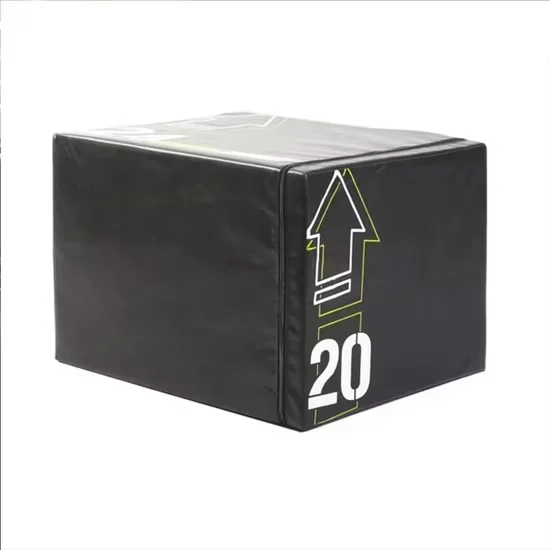
Soft Plyo Box, 20"x24"x30" Multi-Height, High-Density Foam Core — engineered with reinforced internal geometry and impact-absorbing foam that maintains shape retention under repeated heavy landings. Reinforced seam construction prevents splitting during explosive box jumps and lateral movements, while the non-slip base ensures stability on rubber flooring. Every unit undergoes static and dynamic load testing before shipment to verify commercial-grade durability.
// Spec Highlights
• Direct from Manufacturer · No Middlemen · Worldwide Shipping
01
// Material
Imported Solid Wood
Premium hardwood frames sourced for density and visual warmth.
02
// Hardware
Medical-Grade Silent
Whisper-quiet pulleys and springs for clinical environments.
03
// Customization
Appearance OEM
Color, upholstery, and branding tailored to your studio.
04
// Service
Layout Design
Free venue planning for studios and rehab institutions.
Every component is selected for longevity, performance, and aesthetic harmony - from imported hardwood frames to silent medical-grade accessories.
// Features
Foam Density Defines Platform Longevity — High-density EVA core maintains shape recovery after repeated impact landings, preventing the compression collapse seen in low-grade alternatives within months of commercial use.
| Parameter | Value |
|---|---|
| Product Type | Plyo Box |
| Model NO. | PB-3100 |
| Specification | 20" x 24" x 30" |
| Color | Black |
| Logo | Customized Logo Available |
| MOQ | 50 PCS |
| Production Capacity | 10,000 / Year |
| Facility Type | Typical Use |
|---|---|
| CrossFit box functional zone | Plyometric drills, box jumps, step-ups for metabolic conditioning circuits |
| Commercial gym HIIT area | Group training platforms for explosive lower-body power development |
| University athletic performance center | Speed and agility training, reactive landing drills for student-athletes |
| Strength and conditioning facility | Progressive overload跳箱训练 for sprinters, jumpers, and field sport athletes |
Cheap soft plyo boxes compress permanently after weeks of daily commercial use, creating uneven landing surfaces that increase ankle and knee injury risk. The commercial soft plyo box solves this with high-density EVA foam engineered for repeated impact absorption without permanent deformation.
Facility operators report replacement cycles under six months for light-density units — the foam flattens at center impact zones while edges remain raised, forming a tripping hazard during fatigued landings. Outer covers split at seam intersections where lateral forces concentrate during misaligned jumps. [NEED_CITE: foam compression set and recovery properties in impact-absorbing materials]
This commercial soft plyo box occupies the plyometric and explosive power zone, complementing sled tracks, battle rope stations, and rig systems in high-density functional areas. The 20" x 24" x 30" multi-height design allows athletes to progress through three working heights without repositioning equipment or storing multiple units — critical for facilities where floor space commands premium operational cost.
The platform serves users across a wide body mass range, from technique-focused beginners using the lowest height to advanced athletes performing depth jumps at full extension. Non-slip base material prevents migration on rubber flooring during repetitive bounding sequences, maintaining station integrity throughout class rotations.
Plyometric boxes endure dynamic impact forces significantly exceeding static body weight — a 100kg athlete performing box jumps generates landing forces exceeding 300kg per repetition. The commercial soft plyo box addresses this through internal frame geometry that distributes impact across the full base footprint rather than concentrating stress at center points.
Seam construction determines cover longevity under lateral kick forces and drag across flooring surfaces. Reinforced multi-stitch seams resist splitting at corner intersections where single-stitch alternatives fail within months. [NEED_CITE: seam strength requirements for high-stress flexible enclosures]
Foam density directly affects compression recovery — low-density cores develop permanent set after hundreds of loading cycles, while high-density formulations return to original thickness, maintaining consistent landing height and shock absorption characteristics throughout service life.
The 20" x 24" x 30" dimension set provides three progressive working heights (20", 24", 30") from a single unit, eliminating the need for multiple boxes and reducing footprint in crowded functional zones. This multi-height approach requires internal structure capable of maintaining rigidity across all three orientations — when rotated to the 30" working height, the narrower base must resist tipping under off-center landings.
Foam core density determines both impact absorption and long-term shape retention. High-density EVA compresses under load to dissipate energy, then recovers fully — preventing the permanent compression channels that develop in light-density alternatives. The foam must balance softness for joint protection with firmness for stable foot placement during explosive takeoffs.
Cover material selection affects both grip and durability. The surface must provide traction for athletic footwear during rapid step-ups and jumps, while resisting abrasion from flooring contact and cleaning chemicals. Reinforced corner construction prevents the seam failures that plague single-layer covers at high-stress intersection points.
Low-density foam cores compress permanently within months, forcing facility replacement cycles that exceed the cost difference between commercial and light-commercial grades. When foam collapses, the box develops a concave landing surface that channels foot placement toward the center — eliminating the stable platform athletes require for consistent performance.
Thin-gauge covers with single-stitch seams split at corner intersections, exposing foam to moisture, cleaning chemicals, and mechanical damage. Once the cover fails, the entire unit requires replacement — there are no field-serviceable components in budget alternatives.
Non-reinforced internal structures allow the box to deform under repeated loading, creating wobble during use. This instability increases injury risk during fatigued landings and forces athletes to reduce intensity — undermining the training stimulus the equipment is meant to deliver. [NEED_CITE: structural integrity requirements for impact-rated training equipment]
Every commercial soft plyo box undergoes load testing before shipment — not sample-based inspection, but individual unit verification that the structure withstands rated impact forces without deformation. This protocol catches manufacturing defects that batch sampling misses, ensuring every platform delivered performs identically.
High-density EVA foam cores are specified by compression recovery rating, not just density measurement — guaranteeing the material returns to original thickness after repeated loading cycles. This specification prevents the premature collapse that forces early replacement in light-density alternatives.
Reinforced seam construction uses multi-stitch patterns at high-stress corner intersections, preventing the cover failures that end service life in single-stitch alternatives. The stitching pattern distributes force across multiple thread lines, resisting the progressive tearing that unzips single-seam covers.
Custom logo and color options allow facility branding integration without compromising structural specifications — the same high-density foam and reinforced construction regardless of aesthetic selection. This ensures branded installations maintain the same durability as standard units.
Provide functional zone dimensions and equipment adjacency requirements to receive 2D-3D layout recommendations showing optimal commercial soft plyo box placement within your training flow. Specify daily user volume and athlete body mass range to confirm foam density and structural ratings match your operational intensity.
Indicate branding requirements — custom logo placement and color matching integrate the platform into facility aesthetics without structural compromise. Request maintenance schedule documentation to plan replacement component inventory aligned with your preventive maintenance program.
Q: How do I distinguish commercial-grade soft plyo boxes from light-commercial variants?
A: Commercial units specify foam density by compression recovery rating, not just hardness measurement. Reinforced multi-stitch seams at corner intersections resist splitting under lateral forces. Individual load testing before shipment verifies each unit meets impact ratings — light-commercial grades rely on batch sampling that allows defective units into the field.
Q: What does foam density mean for durability under repeated box jumps?
A: High-density foam compresses to absorb impact energy, then recovers to original thickness — maintaining consistent landing height and shock absorption. Low-density cores develop permanent compression channels after hundreds of cycles, creating uneven surfaces that increase injury risk and force premature replacement.
Q: How does multi-height design compare to single-height boxes for programming versatility?
A: The 20" x 24" x 30" configuration provides three working heights from one unit, allowing progressive overload without storing multiple boxes. This reduces footprint in dense functional zones while accommodating athletes at different skill levels — beginners use lower heights while advanced performers work at full extension.
Q: What maintenance cycle should I expect for foam cores and covers in high-traffic facilities?
A: High-density foam cores maintain shape recovery through thousands of loading cycles without permanent compression. Covers require inspection for seam integrity — reinforced construction extends service life significantly beyond single-stitch alternatives. Order replacement components proactively to minimize downtime when wear indicators appear.
Q: Can I customize logo and color without affecting structural specifications?
A: Custom branding options use the same high-density foam core and reinforced seam construction as standard units. Aesthetic selections do not compromise impact absorption, load capacity, or durability — ensuring branded installations maintain identical performance characteristics.
Premium aesthetics meet quiet operation for boutique studio environments.
Medical-grade silence and precision for sports & postpartum recovery.
Furniture-grade craftsmanship for premium residential installations.
Compact premium setups for one-on-one and small-group training.
Aesthetic Pilates integration for hybrid wellness studio programming.
Multi-unit deployment with instructor-grade reliability for certification programs.
Tell us about your project. Our team will respond within 24 hours with pricing, customization options, and shipping details.
// Sales Director
William
+86 132 2531 1800
// Export Manager
Bella
+86 198 5412 8032
william@bickfit.com