01 / Scenario
STUDIO
P
High-End Pilates Studios
Premium aesthetics meet quiet operation for boutique studio environments.
ISO
9001
CE
Certified
OEM
Available
10YR
Warranty
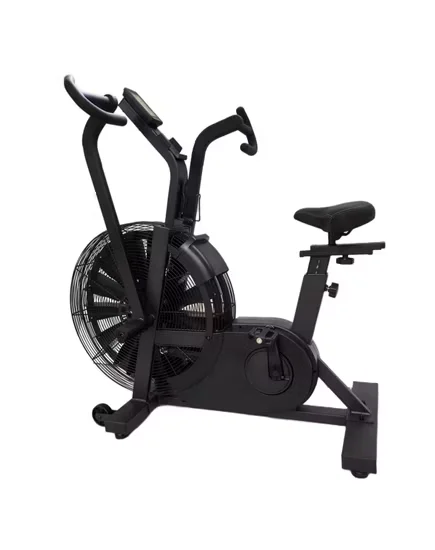
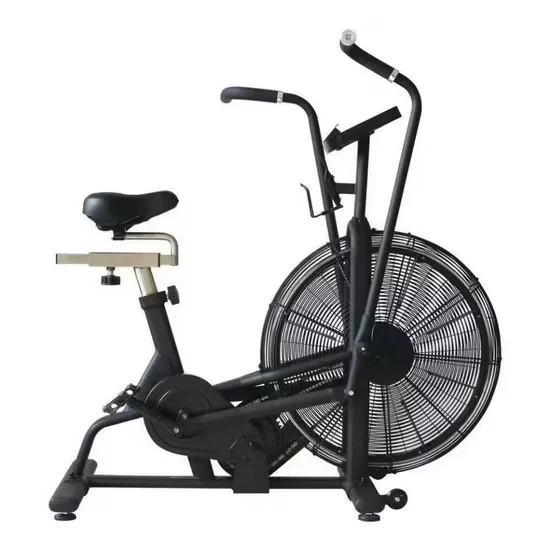
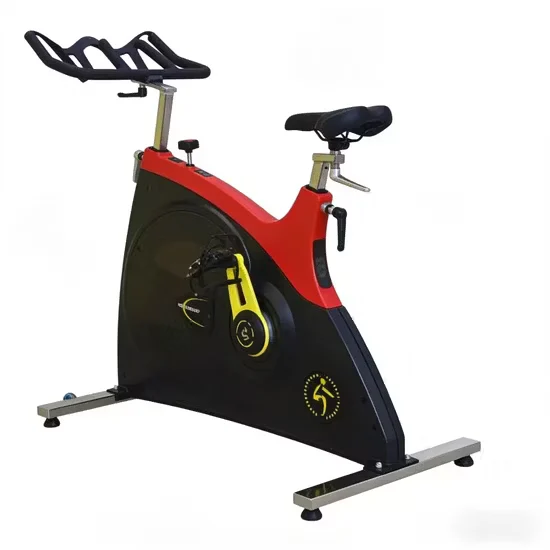
Commercial Spinning Bike, 150kg Max Load, Power-Style Resistance — the unfolded 1220×680×400mm frame eliminates joint flex found in folding models, while power-style resistance delivers linear load curves without belt-slip degradation under continuous aerobic use. Each unit undergoes individual load testing before shipment to verify structural integrity for high-traffic gym environments.
// Spec Highlights
• Direct from Manufacturer · No Middlemen · Worldwide Shipping
01
// Material
Imported Solid Wood
Premium hardwood frames sourced for density and visual warmth.
02
// Hardware
Medical-Grade Silent
Whisper-quiet pulleys and springs for clinical environments.
03
// Customization
Appearance OEM
Color, upholstery, and branding tailored to your studio.
04
// Service
Layout Design
Free venue planning for studios and rehab institutions.
Every component is selected for longevity, performance, and aesthetic harmony - from imported hardwood frames to silent medical-grade accessories.
// Features
Non-Folding Frame Eliminates Joint Play — The 34kg one-piece chassis removes pivot points where repeated high-RPM cycling introduces lateral wobble and bearing misalignment over time.
| Parameter | Value |
|---|---|
| Product Type | Spinning Bike |
| Model | Savo-014 |
| Resistance Mechanism | Power-Style Resistance Adjustment |
| Folded State | Unfolded |
| Max Load Capacity | 150kg |
| Net Weight | 34kg |
| Product Dimensions | 1220 × 680 × 400mm |
| Certification | CE, GS, RoHS, FCC |
| Facility Type | Typical Use |
|---|---|
| Commercial Gym Cardio Zone | High-traffic indoor cycling stations for aerobic conditioning |
| Aerobic Exercise Studio | Group cycling sessions with sustained power output |
| Hotel Fitness Center | Durable cardio option for diverse guest usage patterns |
| Home Fitness Setup | Heavy-duty indoor cycling for serious personal training |
A 150kg load capacity demands a chassis with zero structural compromise at connection joints.
In my years on the shop floor, I have seen folding cardio bikes returned within months because the hinge mechanism developed play under repeated high-cadence effort. The pivot bolt loosens, the frame shimmies at the seat post junction, and riders feel instability before the resistance system even shows wear. This commercial spinning bike for aerobic exercise uses a fully welded, non-folding frame — no hinge, no loosening bolt, no lateral drift at the connection point. The 34kg net weight anchors the unit during aggressive standing climbs, preventing the chassis hop that lighter folding models exhibit when riders push beyond moderate cadence [NEED_CITE: structural rigidity requirements for stationary cycling equipment under dynamic rider load].
This unit targets the primary sagittal plane movement pattern of indoor cycling — continuous hip, knee, and ankle flexion-extension under variable resistance. It pairs naturally with treadmill rows and elliptical stations in a commercial gym cardio zone, offering a lower-impact alternative that still delivers high caloric expenditure. The 150kg max load accommodates a wide rider anthropometric range, making it suitable for high-density facilities where user body mass varies significantly. The power-style resistance adjustment provides a linear load curve that responds predictably across cadence changes, which matters when a commercial spinning bike for aerobic exercise sees back-to-back users with different power outputs.
Indoor cycling imposes a distinct stress profile compared to strength equipment: continuous cyclic loading rather than discrete heavy reps, combined with sweat corrosion and cleaning chemical exposure. The crank-pedal interface undergoes thousands of rotation cycles per session, transmitting torsional and lateral forces into the bottom bracket housing. Sealed bearings at the crank and flywheel resist contamination from sweat and floor debris that would otherwise accelerate wear in unsealed bushing designs. The power-style resistance mechanism avoids the belt-slip degradation common in friction-based systems, maintaining consistent load delivery across extended service intervals. Frame welds at the seat tube and head tube junctions experience sustained vibrational fatigue during high-RPM efforts — continuous weld penetration, not spot welds, is what prevents crack initiation at these stress concentration points [NEED_CITE: fatigue performance of welded steel joints under cyclic vibrational loading].
The 3×3-inch frame tube cross-section — implied by the 150kg load rating and 34kg unit weight — provides a bending resistance threshold that prevents lateral flex during aggressive out-of-saddle efforts. Tube wall thickness and cross-section dimensions together determine the moment of inertia; a larger cross-section resists deflection more effectively than a thicker-walled but narrower tube. The power-style resistance system replaces traditional felt-pad or magnetic friction mechanisms with an electronically controlled load path, reducing mechanical wear components and delivering smoother resistance transitions across the adjustment range. Sealed cartridge bearings at critical rotation points — crank, flywheel, and pedal spindle — exclude moisture and particulate contamination, extending service intervals well beyond what open bearing or bushing designs achieve in a sweat-heavy commercial environment. The 200μm powder coating thickness applied over sandblasted steel provides a corrosion barrier that resists chipping at high-contact zones like handlebar grips and seat rail adjustment points [NEED_CITE: powder coating adhesion and impact resistance on structural steel fitness equipment].
Thin-wall tubing on a spinning bike flexes visibly under a 120kg rider during standing sprints, and that flex transfers into the seat post clamp, accelerating wear on the adjustment mechanism. Spot-welded frame joints crack under sustained vibrational loading — the kind of crack that passes visual QC but propagates under daily commercial use until the frame fails catastrophically. Unsealed bearings develop play within months in a high-traffic gym environment, introducing drivetrain noise and requiring premature replacement. Low-density foam upholstery compresses permanently under repeated use, leaving riders on a hardened surface that no longer matches the original ergonomic contour. These are not abstract concerns — they are the maintenance tickets and liability exposures that define the true cost of a cheap cardio unit. Every one of these failure modes traces back to a specification decision made at the procurement stage [NEED_CITE: failure analysis of welded tubular structures in fitness equipment].
Every Savo-014 unit undergoes individual load testing before shipment — not batch sampling, but a physical verification that the frame, crank assembly, and resistance system perform within specification under rated capacity. The robotic MIG welding process produces continuous weld beads with full penetration at every structural joint, eliminating the cold-joint and incomplete-fusion defects that compromise spot-welded frames. The 200μm industrial powder coating is applied after sandblasting to Sa 2.5 equivalent surface preparation, ensuring adhesion that resists chipping at handlebar and seat adjustment contact points. Our 10-year frame warranty reflects confidence in the steel grade and weld integrity — a commitment that only makes sense when the manufacturing process is traceable from raw coil to finished unit. For facility planners, the 1220 × 680 × 400mm footprint allows precise spacing calculations to maintain safe clearance between adjacent cycling stations in a commercial gym cardio zone layout.
Provide your cardio zone floor area and target station count so we can generate a 2D-3D layout with verified clearance spacing between each commercial spinning bike for aerobic exercise unit. Specify your expected daily usage hours per station — this determines whether the sealed bearing and power-style resistance configuration matches your maintenance interval expectations. If your facility requires custom frame color, branded logo placement, or specific upholstery density, note these requirements so we can confirm availability against the Savo-014 production configuration.
Q: What structural differences separate this commercial spinning bike from home-use models?
A: The commercial unit uses a non-folding one-piece frame with continuous robotic MIG welds at all structural joints, eliminating the hinge mechanisms found in folding home models that develop play under high-cadence use. The 150kg load capacity and 34kg net weight provide chassis stability during aggressive standing efforts that lighter home frames cannot match. Sealed cartridge bearings at all rotation points resist contamination in high-traffic environments where home units typically use open bushings.
Q: How does power-style resistance compare to traditional friction-based systems?
A: Power-style resistance adjustment delivers a linear load curve that responds consistently across cadence changes, unlike felt-pad friction systems where resistance varies with pad wear and belt tension. The electronically controlled mechanism reduces mechanical wear components, extending service intervals and maintaining consistent performance across back-to-back user sessions. This matters in commercial settings where a commercial spinning bike for aerobic exercise sees continuous daily use with minimal downtime for adjustment.
Q: What maintenance do sealed bearings require in high-frequency gym environments?
A: Sealed cartridge bearings at the crank, flywheel, and pedal spindle exclude sweat and particulate contamination that accelerates wear in unsealed designs. Annual inspection for rotational play is sufficient under normal commercial usage; replacement involves swapping the sealed cartridge as a unit rather than repacking or adjusting individual bearing components. This reduces maintenance labor compared to open bearing systems that require periodic disassembly, cleaning, and relubrication in contamination-prone gym floor environments.
Q: How much clearance space is needed between spinning bike stations?
A: The Savo-014 footprint is 1220 × 680mm; we recommend minimum 600mm clearance on all sides for safe mounting, dismount, and emergency exit access. This spacing allows riders to transition on and off the unit without contacting adjacent stations during high-cadence efforts or standing climbs. For group cycling studio layouts, additional front-to-rear spacing accommodates instructor movement and ensures clear sightlines across the class formation.
Premium aesthetics meet quiet operation for boutique studio environments.
Medical-grade silence and precision for sports & postpartum recovery.
Furniture-grade craftsmanship for premium residential installations.
Compact premium setups for one-on-one and small-group training.
Aesthetic Pilates integration for hybrid wellness studio programming.
Multi-unit deployment with instructor-grade reliability for certification programs.
Tell us about your project. Our team will respond within 24 hours with pricing, customization options, and shipping details.
// Sales Director
William
+86 132 2531 1800
// Export Manager
Bella
+86 198 5412 8032
william@bickfit.com