01 / Scenario
STUDIO
P
High-End Pilates Studios
Premium aesthetics meet quiet operation for boutique studio environments.
ISO
9001
CE
Certified
OEM
Available
10YR
Warranty
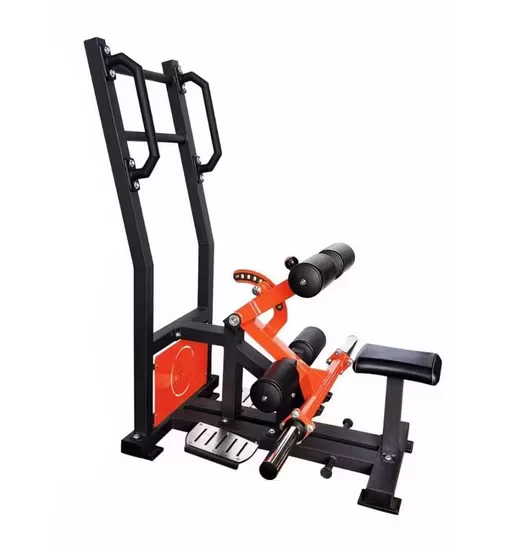
Commercial Standing Hip Thrust Machine, 50×100×3mm Steel Frame, Plate Loaded — engineered with 3mm thick-walled rectangular tubing to resist torsional stress during heavy glute-driven movements. Robotic MIG welding ensures continuous seams without cold joints, while sealed bearings maintain smooth plate-loaded operation under high-repetition commercial use. Every unit undergoes individual load testing before shipment, backed by a 10-year frame warranty and complimentary floor planning support.
// Spec Highlights
• Direct from Manufacturer · No Middlemen · Worldwide Shipping
01
// Material
Imported Solid Wood
Premium hardwood frames sourced for density and visual warmth.
02
// Hardware
Medical-Grade Silent
Whisper-quiet pulleys and springs for clinical environments.
03
// Customization
Appearance OEM
Color, upholstery, and branding tailored to your studio.
04
// Service
Layout Design
Free venue planning for studios and rehab institutions.
Every component is selected for longevity, performance, and aesthetic harmony - from imported hardwood frames to silent medical-grade accessories.
// Features
Continuous MIG Weld Lines — Robotic welding ensures full-penetration seams on the 50×100×3mm frame, eliminating the cold joints that crack under repeated hip thrust loading.
| Parameter | Value |
|---|---|
| Product Type | Plate Loaded Glute Machine |
| Frame Tube Size | 50×100×3mm |
| Frame Steel | Q235 industrial-grade rectangular tube |
| Welding Type | Robotic MIG, continuous weld lines |
| Loading Type | Plate loaded |
| Exercise Part | Leg / Glute |
| Powder Coating | 200μm scratch-resistant, sandblasted pre-treatment |
| Product Dimensions | 2405×1485×1505mm |
| Net Weight | 70kg |
| Color Options | Customized |
| Certification | ISO 9001, CE, RoHS |
| Warranty | 10-year frame |
| Facility Type | Typical Use |
|---|---|
| Commercial gym strength floor | Dedicated glute and posterior chain training station |
| Hotel and resort fitness center | Low-maintenance plate loaded option for guest use |
| University strength and conditioning room | Athlete glute development in supervised training blocks |
| Community fitness center | Accessible hip thrust movement for general membership |
A 3mm wall thickness keeps the main beam from deflecting when loaded beyond 200kg of plates.
The commercial standing hip thrust machine category is crowded with units that list "commercial grade" on the spec sheet but leave the actual tube gauge ambiguous. I have pulled units back to the shop after six months of high-frequency hip thrust work because the crossbeam deformed under repeated eccentric loading — the welds held, but the steel itself bent. That failure mode traces directly to undersized tubing. When a facility runs 150+ loaded reps per day, the difference between a 2mm and a 3mm wall becomes visible within the first warranty cycle [NEED_CITE: EN 957 structural requirements for stationary training equipment]. Thin-wall frames also amplify vibration at the shoulder pad contact point, which accelerates upholstery wear and annoys users enough that the station gets avoided.
This commercial standing hip thrust machine targets the sagittal-plane hip extension pattern, complementing leg press, Romanian deadlift platforms, and cable pull-through stations. It serves lifters who have outgrown barbell hip thrusts on benches and want a fixed movement path with heavier external loading. The footprint suits medium-to-high-traffic strength zones where glute-focused programming is in demand. The fixed pad height accommodates users across a broad stature range without requiring seat adjustments between sets.
Hip thrust loading is predominantly concentric-eccentric with a peak moment at full hip extension, where the frame absorbs the combined plate weight plus body mass through the shoulder pad mounting bracket. In a busy gym running this station across peak hours, the weld zone where the pad arm meets the main upright sees the highest stress concentration [NEED_CITE: weld classification and fatigue performance in structural steel]. The base rails experience repeated shear from users stepping on and off with plates loaded. Powder coating at the foot-plate contact zone must resist impact abrasion from dropped plates, and sweat runoff from the shoulder pad tests the coating’s chemical resistance over thousands of sessions.
The 50×100mm rectangular cross-section provides a high second* vector, resisting the bending moment generated when a loaded user drives into full extension. The 3mm wall thickness raises the threshold before local buckling initiates at the weld heat-affected zone. Robotic MIG welding produces continuous penetration along the full seam length, which distributes stress more evenly than intermittent spot welds that concentrate force at discrete points. The 200μm powder coating, applied over sandblasted surfaces, creates a barrier thick enough to withstand contact abrasion from Olympic plate edges without chipping down to bare steel. Net weight at 70kg reflects the material mass needed for stability during heavy unilateral loading.
Switching to 2mm wall tubing saves material cost upfront but introduces a deflection problem that users feel immediately as instability under load. Spot-welded pad brackets pass initial inspection but develop hairline cracks once cyclic loading exceeds a few thousand reps, creating a liability event in an unsupervised commercial setting [NEED_CITE: fatigue failure patterns in welded fitness equipment frames]. Non-industrial powder coatings chip within months at plate contact zones, exposing steel to humidity and sweat corrosion that spreads under the coating layer. When a frame deforms beyond straightening, the entire unit is scrapped because replacement structural members are unavailable from manufacturers who do not stock spare frames.
The Q235 steel in this frame is sourced with mill certification traceable to the originating coil, so wall thickness can be verified against the purchase order. Every weld is executed by robotic MIG in continuous passes, removing the operator variability that produces cold joints on manual lines. Each unit undergoes a static load test before crating, confirming that the frame and pad assembly hold rated weight without deflection beyond tolerance. The 200μm powder coat is applied after abrasive blasting to achieve mechanical adhesion rated for high-humidity gym environments. The 10-year frame warranty reflects confidence in the structural specification. For facility layout, the 2405×1485mm footprint allows placement against walls with standard safety clearance on the loading side.
Share your strength floor dimensions and current equipment list to receive a 2D-3D layout that positions this commercial standing hip thrust machine with correct safety clearances. Specify your facility’s average daily user volume so we can confirm the structural grade matches your traffic profile. Indicate the height range of your primary user population to verify pad positioning covers your membership. State any color matching or logo placement requirements for brand consistency across your equipment fleet.
Q: How can I verify the actual wall thickness of a standing hip thrust frame before purchase?
A: Request a mill certificate tied to the steel coil used in production, which lists measured wall dimensions. You can also use an ultrasonic thickness gauge on a sample unit at the factory or ask for a cross-section photograph of a cut frame tube. Vague "commercial grade" labels without mill documentation should be treated as unverifiable.
Q: Why choose plate loaded over selectorized for a hip thrust station?
A: Plate loaded designs eliminate weight stack guide rods and cable-pulley systems, removing two common wear points in high-traffic gyms. Users can load beyond typical pin-select limits, which matters for advanced lifters. Maintenance is reduced to structural bolt checks and pad condition, with no cable replacement cycles.
Q: What spacing should I plan around this machine on a gym floor?
A: The loading side needs enough room for a user to handle Olympic plates safely, typically matching the length of a standard plate plus arm reach. The rear and sides require passage width for walking traffic. Providing your floor plan allows a CAD layout that accounts for these clearances and neighboring equipment sightlines.
Q: How does the welding method affect long-term frame durability on glute machines?
A: Continuous robotic MIG welds distribute load along the full seam, preventing the stress concentrations that form at the start and stop points of manual spot welds. Under the cyclic loading of daily hip thrust reps, continuous welds resist crack initiation far longer, which is why the welding specification matters as much as the tube gauge itself.
Premium aesthetics meet quiet operation for boutique studio environments.
Medical-grade silence and precision for sports & postpartum recovery.
Furniture-grade craftsmanship for premium residential installations.
Compact premium setups for one-on-one and small-group training.
Aesthetic Pilates integration for hybrid wellness studio programming.
Multi-unit deployment with instructor-grade reliability for certification programs.
Tell us about your project. Our team will respond within 24 hours with pricing, customization options, and shipping details.
// Sales Director
William
+86 132 2531 1800
// Export Manager
Bella
+86 198 5412 8032
william@bickfit.com