01 / Scenario
STUDIO
P
High-End Pilates Studios
Premium aesthetics meet quiet operation for boutique studio environments.
ISO
9001
CE
Certified
OEM
Available
10YR
Warranty
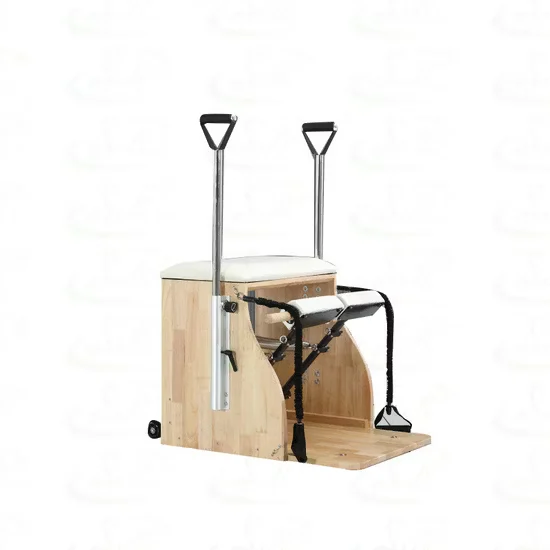
Pilates Combo Chair Wooden, 800×620×1100mm, 45kg Net Weight — solid wood frame construction paired with reinforced body delivers stable resistance platforms for high-repetition studio work. Commercial-grade build supports continuous daily use with a 3-year structural warranty and customized logo options available. Backed by 32-point inspection and 100% load testing on every unit before shipment.
// Spec Highlights
• Direct from Manufacturer · No Middlemen · Worldwide Shipping
01
// Material
Imported Solid Wood
Premium hardwood frames sourced for density and visual warmth.
02
// Hardware
Medical-Grade Silent
Whisper-quiet pulleys and springs for clinical environments.
03
// Customization
Appearance OEM
Color, upholstery, and branding tailored to your studio.
04
// Service
Layout Design
Free venue planning for studios and rehab institutions.
Every component is selected for longevity, performance, and aesthetic harmony - from imported hardwood frames to silent medical-grade accessories.
// Features
Solid Wood Integrity — Every Pilates Combo Chair Wooden unit uses mill-verified solid timber frames with reinforced joinery, eliminating the warping and joint loosening common in veneer-core alternatives.
| Parameter | Value |
|---|---|
| Product Type | Pilates Combo Chair |
| Frame Construction | Solid wood species, reinforced joinery |
| Product Dimensions | 800×620×1100mm |
| Net Weight | 45kg |
| Finish | Solid Color |
| User Profile | Adult, Unisex |
| Logo Customization | Customized Is Allowed |
| Warranty | 3 Years structural |
| Transport Package | Standard Wood Case |
| Facility Type | Typical Use |
|---|---|
| Commercial Pilates studio | Group reformer-class chair sessions and circuit programming |
| Boutique fitness and wellness center | Semi-private Pilates chair instruction and rehabilitation flows |
| Hotel and resort fitness facility | Guest-accessible functional movement and flexibility stations |
| Rehabilitation and wellness center | Low-impact resistance work and post-injury movement retraining |
A commercial wooden Pilates combo chair marketed as studio-grade often hides hollow-core plywood beneath a laminate skin. Under repeated pedal loading and spring tension, the internal layers delaminate and the frame twists at the joints. What starts as a subtle wobble during split-pedal work becomes a maintenance liability within months of daily class rotation [NEED_CITE: structural performance standards for studio fitness equipment under cyclic loading].
The units I have pulled from studio floors told the same story: veneer peeling at the pedal mount, composite cores crumbling where spring anchors bite, and wobbly pedal arms that could not hold tension symmetry. A solid wood frame with proper joinery resists this degradation because the grain structure distributes spring-tension forces along the timber rather than concentrating them at a glue line. When you are outfitting a studio with twenty chairs and scheduling six classes a day, the difference between solid timber and composite core determines whether your equipment survives the first year or becomes a warranty claim pile.
The Pilates Combo Chair Wooden targets the sagittal and frontal planes through split-pedal and single-pedal resistance patterns, engaging the lower posterior chain, hip stabilizers, and deep core under variable spring tension. In a studio equipment mix, it complements reformer rows by adding a standing and seated resistance station that challenges balance and unilateral control. Facilities running group classes in the eight-to-twelve station range benefit from its compact footprint, which allows tighter placement density without compromising instructor sight lines. The unit accommodates a wide range of user body types through its pedal geometry and spring assembly configuration, making it suitable for mixed-level class rosters.
Every pedal depression sends a tension pulse through the spring anchor and into the frame joint at the base. In a studio running six back-to-back classes, each chair endures hundreds of these cycles daily, with peak eccentric loading when users control the pedal return against spring resistance. The pedal pivot hardware and its attachment point on the solid wood frame experience the highest fatigue concentration, and any looseness in the mounting bolt or pivot bushing accelerates wear along the entire pedal arm path. Upholstery contact surfaces on the seat and pedal tops face abrasive wear from barefoot and grip-sock friction, compounded by sweat and cleaning agents that degrade lower-grade vinyl covers over time [NEED_CITE: cyclic fatigue behavior in wood-to-metal mechanical joints]. The powder-coated or sealed wood finish must resist moisture penetration from repeated cleaning to prevent grain swelling at high-contact zones.
The solid wood species and frame joinery method define the chair’s deformation threshold under sustained spring tension — mortise-and-tenon or doweled joints outperform butt joints secured only with fasteners because the interlocking wood surfaces distribute load across a larger grain area. Spring assembly configuration directly affects resistance consistency: paired springs with matched tension ratings deliver symmetrical pedal response, while mismatched or unmarked springs create uneven resistance that confuses users and forces instructors into constant manual correction. The 45kg net weight provides a grounded base that resists tipping during standing pedal work and aggressive unilateral pressing, where lighter units shift on hardwood studio floors. Upholstery replacement availability matters in commercial rotation — chairs with proprietary pad shapes and no aftermarket supply force a full unit replacement when the seat cover splits.
A composite-core chair saves money on the invoice and costs it back through the maintenance calendar. Hollow plywood frames warp under the asymmetric pull of spring tension, pulling the pedal mount out of alignment and creating uneven resistance that no amount of adjustment corrects. Non-replaceable upholstery means a torn seat pad turns the entire chair into dead floor space until a full reupholstery or replacement happens. Thin laminate surfaces chip at pedal contact edges, exposing the composite core to moisture that accelerates delamination from the inside out [NEED_CITE: moisture degradation rates in composite versus solid timber fitness furniture]. Proprietary spring anchors with no standard replacement supply chain force studio owners to cannibalize retired units for spare parts.
The solid wood frame sourcing is traceable, not a generic "commercial timber" claim without verification. Every unit undergoes load testing before shipment, confirming that the pedal mechanism and spring assembly hold rated tension without frame deflection or joint creep. The 200μm industrial-grade finish on all metal hardware components resists sweat corrosion and cleaning-agent degradation across years of studio use. The 3-year structural warranty covers frame integrity and joint construction under commercial use conditions. OEM private label and custom branding options allow studio chains to maintain visual identity across a fleet order, and the compact 800×620mm footprint fits standard group class layouts with safe instructor walkway clearance between stations.
Provide your studio floor area and planned class capacity to receive a 2D-3D layout with safe spacing between commercial wooden Pilates combo chair stations. State your expected daily session count so we can confirm the structural rating matches your traffic volume. Specify your target user demographic to verify the pedal range and spring tension configuration covers the full class roster. Confirm any custom color, logo placement, or upholstery requirements for fleet branding consistency.
Q: How do I verify a Pilates chair is genuinely solid wood rather than veneer over composite?
A: Request a cross-section sample or mill certificate from the supplier showing the timber species and grade. Inspect an exposed joint — solid wood shows continuous grain through the cut surface, while veneer over composite reveals a layered core with no grain structure. Check the net weight; a 45kg unit indicates substantial solid timber, whereas composite-core chairs are significantly lighter. Ask for warranty terms that explicitly cover frame warping and joint failure under commercial use.
Q: What spring tension range works for a commercial studio versus home use?
A: Commercial studios need a broader spring tension range to accommodate mixed-level classes running back-to-back sessions throughout the day. Multiple spring anchor points with varying resistance ratings let instructors dial in appropriate load for rehabilitation clients and advanced practitioners on the same unit. Home users typically operate within a narrower range and benefit from a simpler spring configuration. Request the supplier’s spring tension chart per anchor position to confirm the range covers your class programming needs.
Q: How does pedal attachment hardware affect long-term maintenance?
A: Pedal pivot hardware that uses standard-size bolts and commercially available bushings can be serviced or replaced without ordering proprietary parts from a single supplier. Non-standard or proprietary pedal mounts create a dependency on the original manufacturer for every replacement, extending downtime when parts are backordered. Inspect whether the pedal arm attaches with through-bolts or set screws — through-bolts distribute shear load more evenly and resist loosening under hundreds of daily cycles in a commercial environment.
Q: What floor spacing and layout density should I plan for group Pilates chair classes?
A: Allow a minimum of 600mm walkway between adjacent units so instructors can move freely during group sessions and correct form without crowding participants. The 800×620mm footprint of each chair plus user movement envelope during standing pedal work means a practical density of roughly two square meters per station including clearance. Factor in wall clearance for storage and instructor demonstration space. Request a 2D layout drawing from the supplier that maps your exact room dimensions against the unit footprint.
Q: What does the warranty typically cover on frame, springs, and upholstery?
A: The 3-year structural warranty covers frame integrity and joinery against warping, cracking, and joint loosening under normal commercial use conditions. Springs are typically classified as consumable components and covered against manufacturing defects rather than fatigue from normal cyclic use. Upholstery pads carry a shorter coverage period due to direct wear from daily user contact. Confirm with the supplier which components fall under structural warranty versus wear-item replacement, and verify that replacement pads and spring sets remain available for the product’s service life.
Premium aesthetics meet quiet operation for boutique studio environments.
Medical-grade silence and precision for sports & postpartum recovery.
Furniture-grade craftsmanship for premium residential installations.
Compact premium setups for one-on-one and small-group training.
Aesthetic Pilates integration for hybrid wellness studio programming.
Multi-unit deployment with instructor-grade reliability for certification programs.
Tell us about your project. Our team will respond within 24 hours with pricing, customization options, and shipping details.
// Sales Director
William
+86 132 2531 1800
// Export Manager
Bella
+86 198 5412 8032
william@bickfit.com