01 / Scenario
STUDIO
P
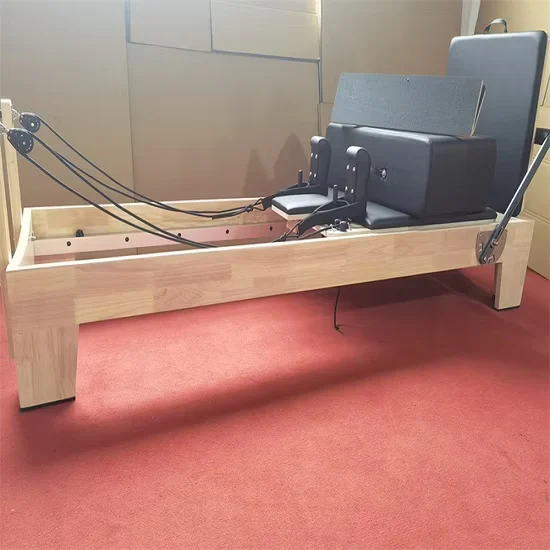
High-End Pilates Studios
Premium aesthetics meet quiet operation for boutique studio environments.

ISO
9001
CE
Certified
OEM
Available
10YR
Warranty
Wooden Yoga Balance Board, 1030×300×15mm, Plywood Core, 5kg — 15mm solid plywood construction eliminates internal void gaps that cause micro-fractures under repeated studio use, calibrated thickness-to-length ratio ensures stable flex response for adult load distribution. Custom logo integration available via laser etching for surface integrity in high-traffic environments. Every unit undergoes flex load testing per piece before shipment.
// Spec Highlights
• Direct from Manufacturer · No Middlemen · Worldwide Shipping
01
// Material
Imported Solid Wood
Premium hardwood frames sourced for density and visual warmth.
02
// Hardware
Medical-Grade Silent
Whisper-quiet pulleys and springs for clinical environments.
03
// Customization
Appearance OEM
Color, upholstery, and branding tailored to your studio.
04
// Service
Layout Design
Free venue planning for studios and rehab institutions.
Every component is selected for longevity, performance, and aesthetic harmony - from imported hardwood frames to silent medical-grade accessories.
// Features
Structural Integrity Verified — Solid plywood core with mill-traceable lamination eliminates internal voids that compromise flex consistency under repeated studio loading.
| Parameter | Value |
|---|---|
| Product Type | Wooden Yoga Balance Board |
| Model | SRY-15 |
| Material | Plywood (Solid Core) |
| Dimensions | 1030 × 300 × 15 mm |
| Net Weight | Approx. 5 kg |
| Thickness | 15 mm |
| Finish | Smooth Surface Treatment |
| Color | Solid Color (Options Available on Request) |
| Logo | Customized Is Allowed |
| Warranty | 3 Years |
| Certification | CE Conformity |
| Facility Type | Typical Use |
|---|---|
| Yoga & Pilates Studio | Balance training, proprioception drills in barefoot classes |
| Commercial Gym Wellness Area | Core activation stations in functional training zones |
| Rehabilitation Center | Post-injury balance recovery and neuromuscular retraining |
| Functional Training Facility | Stability work integrated into group conditioning sessions |
| University Athletic Department | Supplemental balance work for sport-specific conditioning |
A solid plywood core with verified layer bonding outlasts hollow-core alternatives in daily studio rotation.
When a balance board fails in a commercial setting, it rarely snaps in half on day one. The failure starts as micro-fractures along internal voids—gaps between veneer layers that manufacturers leave unaddressed to cut material costs. After several hundred barefoot contact cycles, these voids become flex points that feel unstable underfoot and eventually split along the grain [NEED_CITE: EN 957 structural requirements for stationary training equipment]. The SRY-15 addresses this directly with a solid plywood core where lamination layers are bonded without void gaps, keeping flex response uniform across the full 1030mm span regardless of where the user stands.
A commercial wooden yoga balance board occupies a specific niche in studio and functional training environments: it targets ankle stability, core engagement, and proprioceptive control that mat work alone cannot provide. It pairs naturally with stability balls, foam pads, and wobble cushions in a dedicated balance station, giving instructors variety without requiring additional floor space. The 1030mm length accommodates bilateral standing for most adult users, while the moderate profile allows storage against a wall or on a rack between classes.
Every balance session applies alternating eccentric and static loads across the board’s longitudinal axis. In a studio running four or five classes daily, that translates to thousands of flex cycles per week concentrated at the center span. The primary stress points are the mid-section underfoot and the rocker contact zone beneath the board. Over time, boards with weak internal bonding develop delamination at these stress concentrations, creating audible creaking and visible edge separation [NEED_CITE: plywood fatigue behavior under cyclic bending loads]. The 15mm thickness-to-length ratio on this board is selected to distribute adult body weight without excessive center deflection during sustained standing holds.
Plywood grade, core bonding method, and layer count determine whether a board survives its first year in commercial rotation. Solid core construction means each lamination layer is fully bonded to the next, eliminating the air pockets that plague lower-density alternatives. The 15mm thickness is not arbitrary—it is the threshold where plywood achieves adequate stiffness for adult users across a 1030mm span without becoming too rigid to provide meaningful balance challenge. Surface finish treatment serves dual purposes: it must resist moisture absorption from barefoot contact and sweat while maintaining enough texture to prevent slipping. Laser-etched logo customization preserves surface integrity far better than printed or sticker-based branding, which peels and degrades under cleaning chemicals and daily friction.
Boards that undercut commercial pricing typically compromise in ways that surface within months. Thin veneer cores with internal voids crack under repetitive loading, turning a balance tool into a liability claim. Surface coatings that lack moisture resistance absorb sweat and cleaning solution, causing the plywood edges to swell and delaminate. Printed logos wear away within weeks of barefoot traffic, leaving facilities with unbranded boards that undermine their studio aesthetic [NEED_CITE: material degradation in fitness equipment under high-frequency use]. Non-standard dimensions that do not align with storage racks or class layouts create cluttered floor plans that instructors work around rather than integrate.
The plywood core in this board is sourced with verifiable lamination certification, confirming void-free bonding layer by layer. Each unit undergoes flex load testing before shipment rather than relying on batch sampling, catching any board with inconsistent density distribution before it reaches a studio floor. The surface treatment is calibrated for barefoot environments, balancing grip texture against smoothness for cleaning access. Custom logo integration uses laser etching that burns into the wood grain rather than sitting on top of it, meaning branding survives years of contact without flaking. The three-year warranty reflects confidence in the core construction surviving commercial daily use without structural degradation.
Provide your studio floor dimensions and existing equipment list to receive a layout plan that positions balance boards in logical class flow. Specify expected daily class frequency and average participant count so we can confirm board quantity and rotation cycles match your traffic volume. Share any logo, color, or finish customization requirements early to align production lead time with your facility opening or renovation schedule.
Q: How do I tell commercial-grade plywood from consumer-grade veneer in a balance board?
A: Inspect the board edge for visible gaps between lamination layers. Commercial-grade plywood shows tight, continuous bonding with no air pockets. Tap the surface in multiple spots—consistent sound indicates solid core density, while hollow tones suggest internal voids. Request material certification from the manufacturer documenting void-free lamination and bonding standards.
Q: What thickness keeps a balance board stable for adult users without breaking down?
A: A 15mm thickness across a 1030mm span provides sufficient stiffness for adult body weight while maintaining enough flex for balance challenge. Thinner boards risk center-sag and eventual delamination under repeated standing loads. Thicker boards become too rigid, reducing the proprioceptive stimulus that makes balance training effective in studio environments.
Q: How does surface treatment affect grip and cleaning in barefoot studios?
A: A properly calibrated surface finish provides enough texture for barefoot grip without trapping sweat and moisture that cause plywood swelling. Smooth sealed surfaces resist absorption and allow quick wipe-down between classes. Avoid boards with unfinished or raw wood surfaces, which absorb moisture rapidly and develop splinter risks within months of daily use.
Q: Does custom logo application affect the board’s structural durability?
A: Laser-etched logos burn into the wood surface without compromising plywood layer bonding or creating weak points. Printed or adhesive-based logos sit on top of the finish and degrade under barefoot friction and cleaning chemicals, leaving peeling residue. Specify etching depth during customization to ensure branding remains legible through years of studio rotation.
Q: How often should balance boards be replaced in high-traffic studio environments?
A: Replacement timing depends on daily class volume, user weight range, and storage conditions. Boards in studios running multiple classes daily should be inspected quarterly for edge swelling, surface wear, and flex inconsistency. Replace any board showing audible creaking during use, visible delamination, or surface splintering to maintain participant safety and studio equipment standards.
Premium aesthetics meet quiet operation for boutique studio environments.
Medical-grade silence and precision for sports & postpartum recovery.
Furniture-grade craftsmanship for premium residential installations.
Compact premium setups for one-on-one and small-group training.
Aesthetic Pilates integration for hybrid wellness studio programming.
Multi-unit deployment with instructor-grade reliability for certification programs.
Tell us about your project. Our team will respond within 24 hours with pricing, customization options, and shipping details.
// Sales Director
William
+86 132 2531 1800
// Export Manager
Bella
+86 198 5412 8032
william@bickfit.com