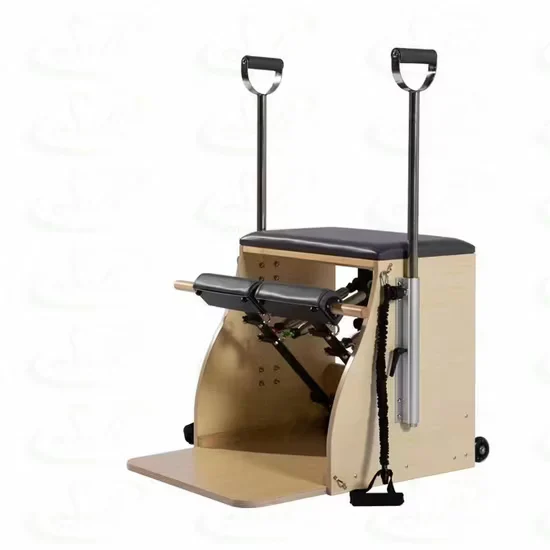
01 / Scenario
STUDIO
P
High-End Pilates Studios
Premium aesthetics meet quiet operation for boutique studio environments.

ISO
9001
CE
Certified
OEM
Available
10YR
Warranty
Multi-Functional Foldable Pilates Reformer, Solid Oak/Maple Wood Frame, Spring-Based Resistance — engineered with hardwood species selected for density and grain stability under repetitive loading cycles, featuring a foldable hinge mechanism rated for commercial use and modular accessory interfaces including long box, jump board, and platform. Dimensions at 2400×600×350mm with 100kg net weight support high-density studio floor planning without compromising structural rigidity. Every unit undergoes 32-point inspection and 100% load testing before dispatch to commercial studios and rehabilitation centers.
// Spec Highlights
• Direct from Manufacturer · No Middlemen · Worldwide Shipping
01
// Material
Imported Solid Wood
Premium hardwood frames sourced for density and visual warmth.
02
// Hardware
Medical-Grade Silent
Whisper-quiet pulleys and springs for clinical environments.
03
// Customization
Appearance OEM
Color, upholstery, and branding tailored to your studio.
04
// Service
Layout Design
Free venue planning for studios and rehab institutions.
Every component is selected for longevity, performance, and aesthetic harmony - from imported hardwood frames to silent medical-grade accessories.
// Features
Solid Hardwood Rigidity — Oak and maple frames resist warping under repetitive spring-loaded movement cycles in daily studio use.
| Parameter | Value |
|---|---|
| Product Type | Pilates Reformer |
| Frame Material | Solid hardwood (Oak or Maple) |
| Loading Type | Spring-based resistance |
| Product Dimensions | 2400 × 600 × 350 mm |
| Net Weight | 100 kg |
| Accessories Included | Long box, jump board, platform |
| Foldable | Yes |
| Customization | Logo and color options available |
| Warranty | 3 years |
| Facility Type | Typical Use |
|---|---|
| Commercial Pilates studio | High-turnover group and private reformer classes |
| Rehabilitation and physical therapy center | Controlled resistance exercises for injury recovery |
| Boutique fitness studio | Reformer-based training integrated into mixed-use floors |
| Hotel and resort wellness spa | Guest-access reformer sessions in compact wellness areas |
| Home and private training space | Foldable storage for multi-purpose room configurations |
Solid hardwood grain structure determines how a reformer performs after ten thousand spring cycles.
Pilates reformers labeled as commercial grade often rely on laminated plywood or softwood frames that appear stable on day one but gradually warp under repetitive carriage travel and spring tension. The grain density of oak and maple provides dimensional stability that bonded wood layers cannot sustain when exposed to fluctuating studio humidity and constant mechanical loading. When a frame twists even slightly, the carriage tracks misalign, spring anchor points shift, and the entire movement feel degrades for every client who uses that station. [NEED_CITE: structural performance of solid hardwood versus laminated wood in repetitive-load applications]
The commercial foldable wooden Pilates reformer occupies a defined footprint within dedicated reformer zones or mixed-modality boutique studio layouts. It complements mat stations, Cadillac towers, and chair-based apparatus by filling the primary spring-resistance training role that anchors most Pilates programming. Facilities with class turnover every sixty minutes benefit from the foldable configuration, which clears floor space for mat work or stretching sequences between reformer blocks. The platform surface accommodates users across a wide height and weight range, making it practical for open-enrollment group classes and one-on-one rehabilitation sessions alike.
Reformer frames experience a specific fatigue profile: the carriage rail endures lateral shear at each direction reversal, the spring anchor plate absorbs cyclic tension spikes, and the folding hinge mechanism bears the full unit weight during deployment and collapse. In a studio running six to eight classes daily, these stress points accumulate thousands of load cycles per week. The hinge hardware is where lighter consumer units first develop play, producing lateral carriage wobble that instructors notice during slow controlled movements. Spring attachment points also concentrate stress where metal meets wood, requiring reinforced insert hardware rather than direct wood-thread engagement. [NEED_CITE: cyclic fatigue behavior in folding mechanism hardware under repetitive deployment]
Oak and maple differ in grain structure and density, which directly affects how the frame handles long-term spring tension and carriage impact at rail endpoints. Oak offers open-grain stiffness that resists compression along the rail axis, while maple provides tighter grain uniformity that handles multi-directional stress without splintering at hardware mounting points. The spring-based resistance system relies on multiple gauge options to create progressive load curves — lighter springs for rehabilitation ranges and heavier gauges for athletic conditioning. Spring tension retention over time depends on the alloy quality and heat treatment, because underspecified springs lose their calibrated resistance profile and require premature replacement. The accessory attachment interfaces — long box rails, jump board mounts, platform brackets — all concentrate force into small wood contact areas, making reinforced metal inserts essential at each junction.
A laminated plywood reformer frame may pass initial inspection but begins revealing its limitations within the first year of commercial throughput. Delamination at the carriage rail mounting surface creates uneven tracking that no amount of adjustment can fully correct. Lightweight hinge pivots designed for occasional home use develop lateral play under daily folding, eventually producing audible knocking during carriage return. Springs manufactured without proper heat treatment lose tension progressively, creating inconsistent resistance that forces instructors to compensate with verbal cueing rather than trusting the equipment. When non-standard hardware is used throughout the frame, replacement parts become unavailable once the original supplier discontinues that configuration, leaving the entire unit unserviceable over a single failed component. [NEED_CITE: long-term maintenance costs of consumer-grade versus commercial apparatus in high-throughput environments]
Solid hardwood sourcing with verified moisture content specification prevents seasonal warping that compromises carriage alignment. Robotic welding standards applied to metal hardware inserts ensure consistent attachment strength at every spring anchor and hinge point. Individual unit load testing before shipment catches assembly defects that sample-based inspection protocols miss entirely. Industrial-grade powder coating on all metal contact surfaces resists chipping where springs, cables, and accessories repeatedly connect and disconnect. The three-year warranty reflects confidence in frame longevity under commercial scheduling, and facility layout support helps studio operators plan reformer spacing that maintains safe clearance during active use and efficient storage when folded.
Provide your studio floor dimensions and class schedule density to receive a 2D or 3D layout showing optimal reformer placement with safe operating clearances. Specify your typical client profile and whether the equipment will serve rehabilitation, group fitness, or private training to confirm appropriate spring gauge configuration. Share any branding requirements including logo placement and frame color preferences so customization details are finalized before production begins.
Q: How can I tell if a wooden reformer frame is truly solid hardwood rather than laminated?
A: Examine the rail cross-section and end grain for continuous natural grain patterns running through the full thickness. Laminated plywood reveals alternating layer lines at cut edges and hardware mounting holes. Solid oak or maple maintains consistent density throughout, which becomes especially visible where spring anchors and hinge hardware are recessed into the frame structure.
Q: What determines how long a reformer frame lasts under daily commercial use?
A: Frame longevity depends on wood species density, moisture content at manufacture, hardware reinforcement at stress points, and the quality of the carriage rail mounting surface. Units with metal inserts at every attachment point outperform those relying on direct wood-thread engagement, because repeated spring tension and impact loading gradually strips unsupported wood fibers over time.
Q: What are the trade-offs between foldable and fixed-frame reformers?
A: Foldable reformers sacrifice a marginal degree of absolute rigidity at the hinge junction in exchange for significant floor space recovery between sessions. Fixed frames maintain uninterrupted structural continuity but demand permanent floor commitment. For studios running mixed-modality classes that alternate between reformer and mat work, the foldable configuration provides practical scheduling flexibility without compromising the movement experience during active use.
Q: How should spring resistance be matched to different client populations?
A: Rehabilitation clients benefit from lighter gauge springs that provide gradual load progression through limited ranges of motion. Athletic populations require heavier springs that maintain tension through full extension. A reformer configured with multiple interchangeable spring gauges allows instructors to dial resistance precisely rather than asking clients to modify their movement patterns to suit a fixed load profile.
Q: What maintenance does a wooden reformer require in a high-traffic studio?
A: Regular maintenance includes wiping down hardwood surfaces after each class with pH-neutral cleaners, inspecting carriage rail surfaces for debris or scoring, checking hinge and accessory bolt torque quarterly, and monitoring spring tension consistency across the full set. The wood finish protects against moisture absorption but requires periodic reapplication in high-humidity environments to maintain dimensional stability.
Premium aesthetics meet quiet operation for boutique studio environments.
Medical-grade silence and precision for sports & postpartum recovery.
Furniture-grade craftsmanship for premium residential installations.
Compact premium setups for one-on-one and small-group training.
Aesthetic Pilates integration for hybrid wellness studio programming.
Multi-unit deployment with instructor-grade reliability for certification programs.
Tell us about your project. Our team will respond within 24 hours with pricing, customization options, and shipping details.
// Sales Director
William
+86 132 2531 1800
// Export Manager
Bella
+86 198 5412 8032
william@bickfit.com