01 / Scenario
STUDIO
P
High-End Pilates Studios
Premium aesthetics meet quiet operation for boutique studio environments.
ISO
9001
CE
Certified
OEM
Available
10YR
Warranty
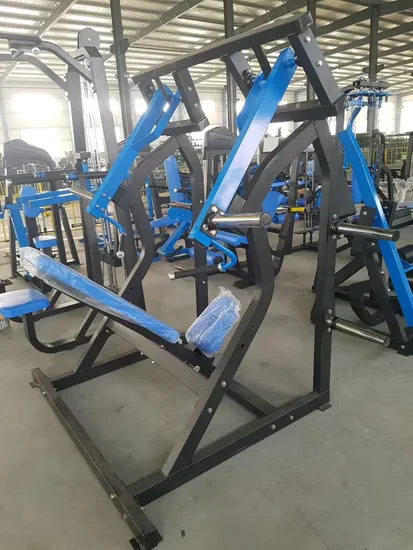
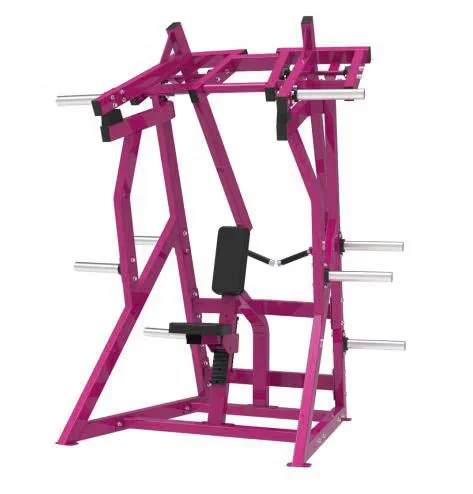
Plate Loaded ISO-Lateral Row Machine 5003, 1455×1476×2133mm, 135kg Net Weight — engineered with independent converging arm paths to eliminate strength imbalances during heavy back training. ISO9001 and CE certified, OEM/ODM customization available for commercial gym operators. Every unit undergoes full load testing before shipment to ensure structural integrity under high-traffic use.
// Spec Highlights
• Direct from Manufacturer · No Middlemen · Worldwide Shipping
01
// Material
Imported Solid Wood
Premium hardwood frames sourced for density and visual warmth.
02
// Hardware
Medical-Grade Silent
Whisper-quiet pulleys and springs for clinical environments.
03
// Customization
Appearance OEM
Color, upholstery, and branding tailored to your studio.
04
// Service
Layout Design
Free venue planning for studios and rehab institutions.
Every component is selected for longevity, performance, and aesthetic harmony - from imported hardwood frames to silent medical-grade accessories.
// Features
Mill-Traceable 11GA Steel — Every tube in the 5003 frame traces back to the Q235/Q345 coil certificate, so you know exactly what is carrying the load.
| Parameter | Value |
|---|---|
| Designation | 5003 |
| Product Type | Plate Loaded ISO-Lateral Row Machine |
| Frame Steel Gauge | 11-gauge |
| Frame Tube Size | 3×3 inch |
| Steel Grade | Q235 / Q345 industrial steel, mill-certified |
| Welding Type | Robotic MIG continuous weld |
| Loading Type | Plate loaded, ISO-Lateral independent arms |
| Bearing Type | Sealed industrial bearings at pivot points |
| Pulley System | Aircraft-cable with sealed pulleys |
| Powder Coating | 200μm scratch-resistant, sandblast pre-treated |
| Product Dimensions | 1455 × 1476 × 2133 mm |
| Net Weight | 135 kg |
| Certification | ISO 9001, CE |
| Warranty | 10-year frame |
| OEM / ODM | Available |
| Facility Type | Typical Use |
|---|---|
| Commercial gym strength floor | Primary back training station in high-traffic plate loaded zones |
| University strength and conditioning room | Heavy pulling work for collegiate and competitive athletes |
| Hotel and resort fitness center | Durable back training option with low maintenance overhead |
| Crossfit box functional zone | Supplemental rowing movement for strength-skill programming |
| Rehabilitation and performance center | Independent arm loading for unilateral back reconditioning |
Continuous MIG welds eliminate the single-point failure that ends most plate loaded row machines early.
When a lifter loads plates onto an ISO-Lateral arm and pulls through a heavy set, the force travels from the loading horn through the pivot and into the main frame. At that junction, a spot weld concentrates stress into a small contact area. After thousands of loading cycles — the kind a commercial plate loaded iso-lateral row machine sees in a busy gym — micro-cracks propagate from the spot weld edge. I have pulled units off the floor where the frame steel was intact but the weld had fractured cleanly, leaving the arm assembly loose mid-session. [NEED_CITE: weld classification and fatigue performance in structural steel] Robotic MIG welding deposits a continuous bead along the entire joint line, distributing that same load across a much larger surface area and removing the initiation point for fatigue cracking.
The 5003 operates on a converging ISO-Lateral movement path, meaning each arm moves independently through its own arc. This targets the latissimus dorsi, rhomboids, and mid-trapezius while allowing unilateral loading — useful when one side is recovering from strain or simply weaker. On a commercial strength floor, this unit typically sits alongside a plate loaded lat pulldown and a T-bar row to give members three distinct pulling angles. The independent arm design accommodates a wide range of torso lengths and shoulder widths without requiring the user to fit a fixed bar path, making it practical for facilities serving mixed-body-type populations. A commercial plate loaded iso-lateral row machine fills the horizontal pulling slot that cable rows and free-weight bent-over rows cannot cover as safely under fatigue.
Every pulling repetition sends a dynamic load through the loading horn, pivot bearing, and main upright. In a commercial gym running ten or more hours daily, a single row station may see hundreds of sets per week — each one a tension cycle that tests weld integrity and bearing tolerance. The heaviest users load multiple plates and accelerate through the concentric phase, creating impact spikes beyond the static plate weight. Sealed industrial bearings at the ISO-Lateral pivot resist sweat and chalk dust ingress that would otherwise create play within the first year of operation. [NEED_CITE: bearing seal performance in high-cycle fitness equipment] The powder-coated frame faces constant contact from plates being loaded and unloaded, and the 200μm coating thickness with sandblast pre-treatment resists chipping at those high-wear contact zones. Upholstery on the chest pad absorbs compressive force on every set; its replacement cycle depends directly on foam density and daily session count.
The 11-gauge, 3×3 inch tube section sets the deformation threshold: under heavy plate loads, a thinner or narrower tube will deflect visibly, making the movement feel unstable and accelerating fatigue at attachment points. Q235 and Q345 steel grades provide the baseline yield characteristics that make this gauge meaningful — generic "commercial steel" without a mill certificate leaves that baseline unverified. Robotic MIG continuous welding ensures every joint on the 5003 meets the same standard, rather than relying on individual welder consistency across a production run. At the pivot, sealed industrial bearings maintain tight rotational tolerance regardless of chalk dust and humidity exposure, while unsealed bushings develop radial play that translates into a wandering row path. The aircraft-cable pulley system routes force smoothly through direction changes, and its sealed pulleys resist the same environmental contamination that attacks pivot bearings.
A frame built from thinner-gauge tube saves material cost upfront but flexes under heavy loads, producing a vague pulling feel that experienced lifters notice immediately. Spot-welded joints hold through a showroom demonstration but crack unpredictably once daily commercial cycles begin — and when a loaded arm breaks free mid-set, the liability falls on the facility operator. Non-sealed bearings at the pivot require periodic replacement, and each service visit means the commercial plate loaded iso-lateral row machine is offline for members. Low-density chest pad foam compresses permanently within months, forcing upholstery replacement that costs in parts, labor, and downtime. Insufficient powder coating — especially without proper sandblast pre-treatment — chips at plate contact points and exposes bare steel to sweat-driven corrosion, shortening the frame’s serviceable life. [NEED_CITE: EN 957 structural requirements for stationary training equipment]
The 11-gauge steel with mill certification means every frame tube is traceable to its source coil, so structural claims are verifiable rather than marketing language. Robotic MIG continuous welding removes operator variability — the same weld profile is produced on every unit, every shift. Each 5003 undergoes load testing before crating, not a sample pulled from a batch, so the unit arriving at your dock has been physically proven under load. The 200μm industrial powder coating over sandblast pre-treatment holds up against plates, chalk, and cleaning chemicals through years of commercial rotation. The 10-year frame warranty reflects confidence in that structural package. For facility layout, the 1455 × 1476 mm footprint requires clearance on both sides for plate loading and safe user entry — we provide 2D and 3D CAD files so the 5003 fits your floor plan with correct safety spacing before anything ships.
Provide your strength area dimensions and current equipment list so we can generate a 2D or 3D layout showing the 5003 in context with safe clearance zones. Specify your expected daily traffic volume so we can confirm the structural grade matches your use intensity. If your membership includes competitive athletes or bariatric users, note the body-type range so we verify pad and grip positioning. Mention any color, logo, or upholstery customization requirements with your inquiry.
Q: How do I verify a plate loaded row machine is truly commercial grade?
A: Request the steel gauge specification with a mill certificate — genuine commercial frames use 11-gauge or thicker tubing with traceable Q235/Q345 steel. Confirm welding is continuous MIG, not spot weld, and ask for per-unit load test records rather than sample-based QC reports. A unit that cannot provide these documents is likely built to a lighter standard regardless of how it is marketed.
Q: What structural difference does ISO-Lateral independent arm design make?
A: Each arm pivots on its own sealed bearing and moves through an independent arc, so one side cannot compensate for the other. This requires a more complex frame junction with dual pivot assemblies and continuous welds at each attachment point. The result is balanced loading across the back musculature and a movement path that adapts to individual shoulder width rather than forcing a fixed bar trajectory.
Q: Plate loaded versus selectorized — which row machine fits a commercial floor better?
A: Plate loaded units like the 5003 serve experienced lifters who prefer incremental loading and a direct force feel, and they have fewer moving parts to maintain since there is no weight stack or selector pin mechanism. Selectorized rows offer faster weight changes and suit facilities with high member turnover. Many commercial gyms run both types to cover different user preferences in the same pulling zone.
Q: What maintenance do sealed pivot bearings require compared to bushings?
A: Sealed industrial bearings are closed units that block sweat, chalk dust, and moisture from entering the race, so they maintain smooth rotation without scheduled lubrication. Inspect them visually every quarter for any sign of radial play or roughness. Bushings lack this sealing and develop wear-induced play significantly sooner in high-humidity gym environments, requiring more frequent replacement and creating equipment downtime.
Q: How long do chest pads and grips last under commercial use?
A: Pad lifespan depends on foam density and daily session volume; high-density foam maintains its shape through years of heavy compression cycles while standard foam may compress permanently within months. Grips wear from chalk abrasion and sweat exposure. Confirm with your supplier that replacement pads and grips are stocked as spare parts for the specific model, so you are not forced to replace entire assemblies when wear items reach end of life.
Premium aesthetics meet quiet operation for boutique studio environments.
Medical-grade silence and precision for sports & postpartum recovery.
Furniture-grade craftsmanship for premium residential installations.
Compact premium setups for one-on-one and small-group training.
Aesthetic Pilates integration for hybrid wellness studio programming.
Multi-unit deployment with instructor-grade reliability for certification programs.
Tell us about your project. Our team will respond within 24 hours with pricing, customization options, and shipping details.
// Sales Director
William
+86 132 2531 1800
// Export Manager
Bella
+86 198 5412 8032
william@bickfit.com