01 / Scenario
STUDIO
P
High-End Pilates Studios
Premium aesthetics meet quiet operation for boutique studio environments.

ISO
9001
CE
Certified
OEM
Available
10YR
Warranty
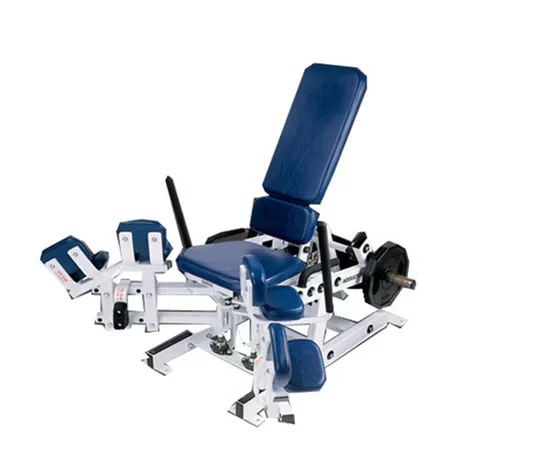
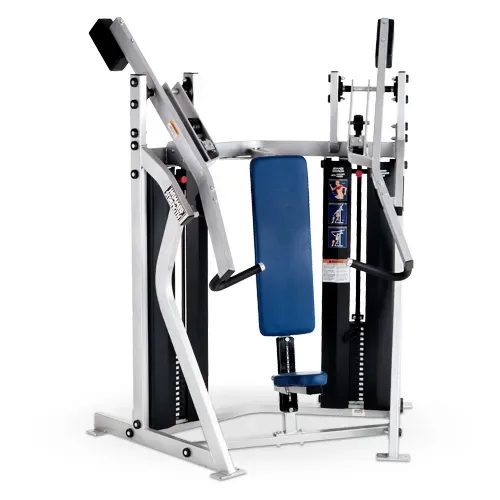
Plate Loaded Lateral Raise Machine, 1050×1506×1300mm, 102kg Net Weight — engineered with industrial steel frame and robotic MIG continuous welding to eliminate cold joints under repetitive lateral loading. Sealed bearings ensure smooth pivot action across high-traffic commercial shoulder training zones. Every unit undergoes full load testing before shipment, backed by a 10-year frame warranty.
// Spec Highlights
• Direct from Manufacturer · No Middlemen · Worldwide Shipping
01
// Material
Imported Solid Wood
Premium hardwood frames sourced for density and visual warmth.
02
// Hardware
Medical-Grade Silent
Whisper-quiet pulleys and springs for clinical environments.
03
// Customization
Appearance OEM
Color, upholstery, and branding tailored to your studio.
04
// Service
Layout Design
Free venue planning for studios and rehab institutions.
Every component is selected for longevity, performance, and aesthetic harmony - from imported hardwood frames to silent medical-grade accessories.
// Features
Mill-Traceable Steel — every tube traced back to the Q235/Q345 coil certificate, not just labeled commercial grade.
| Parameter | Value |
|---|---|
| Product Type | Plate Loaded Shoulder Machine |
| Loading Type | Plate loaded |
| Frame Steel | 11-gauge, 3×3 inch tube |
| Steel Grade | Q235 and Q345 industrial steel, mill-certified |
| Welding Type | Robotic MIG, continuous weld lines |
| Bearing Type | Sealed industrial bearings |
| Powder Coating | 200μm scratch-resistant, sandblast pre-treatment |
| Product Dimensions | 1050×1506×1300mm |
| Net Weight | 102kg |
| Exercise Part | Shoulder |
| Certification | ISO 9001, CE |
| Appliance | Gymnasium |
| Gender | Unisex |
| Age Group | Adult |
| Production Capacity | 500 pieces per month |
| Warranty | 10-year frame |
| Facility Type | Typical Use |
|---|---|
| Commercial gym strength floor | Dedicated shoulder isolation station in plate-loaded selectorized zones |
| Hotel and resort fitness center | Low-maintenance shoulder training for guest use across varied fitness levels |
| University strength and conditioning room | Athletic department shoulder development within periodized team programs |
| CrossFit box functional zone | Accessory shoulder work complementing overhead barbell and gymnastics movements |
| Rehabilitation and performance center | Controlled unilateral shoulder loading for return-to-play protocols |
Continuous MIG welds distribute lateral torque across the full joint, not just four contact points.
When a member loads a plate-loaded ISO-lateral lateral raise with heavy plates and drives through an eccentric phase, the moment arm multiplies shear force at the pivot weld. Spot welds pass a visual check on the showroom floor but concentrate stress into small nuggets. After months of repeated cycles, micro-cracks propagate from the nugget edge into the heat-affected zone, and the arm assembly develops play that no amount of bolt tightening fixes. I have opened machines where the frame tube was intact but the spot-welded gusset had separated cleanly — the steel never yielded, the weld simply let go [NEED_CITE: weld classification and fatigue performance in structural steel]. Robotic MIG welding lays a continuous bead along the entire joint perimeter, spreading that same lateral load across a weld length measured in centimeters instead of millimeters.
A commercial plate loaded lateral raise machine occupies a compact footprint that slots between a plate-loaded shoulder press and a low-row station without disrupting traffic flow. The iso-lateral arm design lets each side move independently, accommodating members with bilateral strength imbalances or those working through unilateral rehabilitation. In a high-density strength floor, this unit fills the frontal-plane shoulder gap that overhead presses and upright rows leave unaddressed. The converging movement path suits a wide range of torso lengths because the seat and pad geometry allows both shorter and taller users to align their glenohumeral joint with the pivot axis.
Every repetition on this machine sends a bending moment through the swing arm and into the main frame junction. At peak contraction, the load is quasi-static — the member holds the arm at full abduction before lowering. During the eccentric phase, the plates generate inertial shock that travels through the pivot bearing and into the gusset plate [NEED_CITE: EN 957 structural requirements for stationary training equipment]. Over thousands of daily cycles across multiple users, the weld toe at the arm-to-frame junction becomes the primary fatigue point. Sealed bearings at the pivot resist dust and chalk infiltration that would otherwise score the race and introduce wobble. The powder coating at grip contact zones and plate-loading horns endures repeated impact from steel plates and abrasive cleaning agents.
The 11-gauge, 3×3 inch tube cross-section provides a section modulus that resists bending under the lateral moment arm created when a member presses outward with loaded horns. Thinner tubes may hold the same static load on a test bench but deflect noticeably once dynamic eccentric forces enter the equation. Robotic MIG welding removes the inconsistency inherent in manual spot welding — the arc travels at a programmed speed and maintains a fixed distance from the joint, producing uniform penetration depth along the entire seam. Sealed industrial bearings at the pivot point keep contamination out and grease in, maintaining smooth arm travel without the axial play that develops in unsealed bushings within the first year of heavy use. The 200μm powder coating, applied over a sandblasted substrate, provides a coating thickness that resists chipping at the plate horn contact zone where bare steel would otherwise oxidize within weeks [NEED_CITE: powder coating thickness and abrasion resistance in commercial fitness environments].
A thinner frame tube saves material cost at the factory but transfers the expense to the gym owner in the form of warranty claims and member complaints. When spot welds crack under cyclic lateral loading, the repair requires pulling the machine off the floor, grinding out the failed nugget, and re-welding — downtime that costs more than the original weld savings. Non-sealed bearings at the pivot allow chalk dust and sweat to penetrate the race, creating a grinding sensation that members notice immediately and report as equipment failure. A thin powder coating chips at the plate-loading horns within months, exposing bare steel that rusts and stains the surrounding floor matting, accelerating the cosmetic decline of an entire training zone [NEED_CITE: coating degradation and corrosion initiation in high-humidity gym environments]. Upholstery stapled over low-density foam compresses permanently under daily use, requiring pad replacement that could have been avoided with higher-density material specified from the start.
The 11-gauge steel frame with mill-certified Q235 and Q345 sourcing means you can verify the tube specification against the coil certificate, not just trust a label that says commercial grade. Robotic MIG welding on every frame joint eliminates the spot-weld failures that plague lateral raise machines under repeated eccentric loading. Each unit undergoes load testing before shipment — not sample-based batch testing, but individual verification that the pivot arm and base structure hold the rated capacity without deflection. The 200μm industrial powder coating over sandblast pre-treatment keeps the plate horns and seat rail contact zones intact through years of plate impacts and chemical cleaning. A 10-year frame warranty backs the structural assembly, and 2D-3D floor planning CAD support ensures the 1050×1506mm footprint integrates with adjacent equipment while maintaining safe clearance on all sides.
Provide your strength zone floor area and adjacent equipment list so we can generate a 2D or 3D layout that positions this lateral raise station with proper clearance on all sides. Specify your average daily member volume to confirm the structural grade matches your traffic cycle. Indicate the height range of your primary user population so we can verify seat and pad geometry covers your demographic. Share any custom requirements including frame color, logo placement, or upholstery material to align the unit with your facility branding.
Q: How do I verify that a plate loaded lateral raise machine meets genuine commercial-grade standards?
A: Request the steel mill certificate showing tube gauge and grade — genuine commercial frames use 11-gauge or thicker steel with traceable coil sourcing. Confirm the welding method is continuous MIG rather than spot welding, and ask for the individual load test record. Check that bearings are sealed industrial type, not unsealed bushings, and verify the powder coating thickness specification is stated in microns.
Q: What is the relationship between frame tube gauge and long-term durability on shoulder isolation machines?
A: Thicker gauge steel provides a higher section modulus, meaning the frame resists bending deformation under the lateral moment created during eccentric loading. A tube that flexes under load accelerates fatigue at every welded joint connected to it. The gauge must be matched to the movement’s force vector — lateral raises produce outward bending moments that demand stiff sidewall tubing to keep the pivot axis stable over thousands of cycles.
Q: Why choose plate-loaded over selectorized for a lateral raise station?
A: Plate-loaded lateral raise machines allow incremental loading beyond fixed weight stack increments, which suits strength-focused facilities where members progress in small plate additions. They also eliminate cable and pulley wear components, reducing long-term maintenance. Selectorized versions offer faster weight changes for circuit-style training environments where speed between sets matters more than granular load progression.
Q: How should equipment spacing be planned around a lateral raise machine?
A: The iso-lateral arms extend outward during abduction, so clearance on both sides must account for full range of motion plus a safe walkway for passing members. Adjacent equipment should not block the swing arc or create a pinch point. Floor planning CAD support helps position the unit so the footprint integrates with neighboring stations while maintaining required safety margins.
Premium aesthetics meet quiet operation for boutique studio environments.
Medical-grade silence and precision for sports & postpartum recovery.
Furniture-grade craftsmanship for premium residential installations.
Compact premium setups for one-on-one and small-group training.
Aesthetic Pilates integration for hybrid wellness studio programming.
Multi-unit deployment with instructor-grade reliability for certification programs.
Tell us about your project. Our team will respond within 24 hours with pricing, customization options, and shipping details.
// Sales Director
William
+86 132 2531 1800
// Export Manager
Bella
+86 198 5412 8032
william@bickfit.com