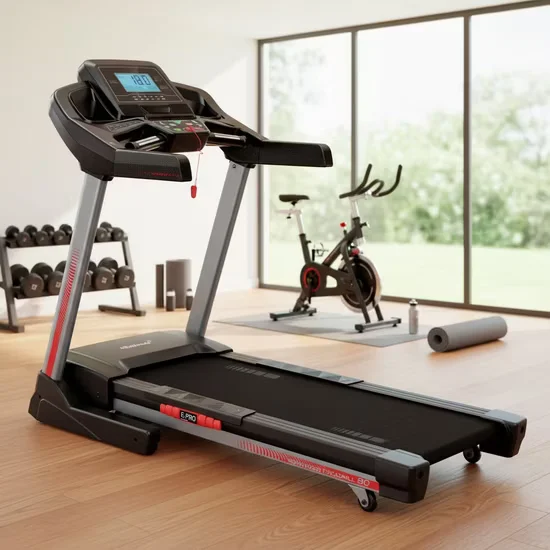
01 / Scenario
STUDIO
P
High-End Pilates Studios
Premium aesthetics meet quiet operation for boutique studio environments.
ISO
9001
CE
Certified
OEM
Available
10YR
Warranty
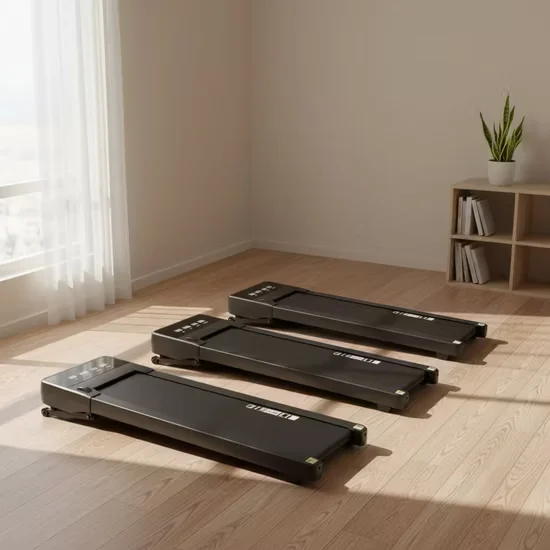
Electric Walking Treadmill, 1000×400mm Runway, Auto-Incline, Remote Controller — engineered with a reinforced motor housing and sealed roller bearings for stable operation under continuous commercial use. The 6-program console and 1-6 km/h speed range support structured walking and rehabilitation protocols. Every unit undergoes three-stage load inspection and ships with mill-certified frame traceability for high-traffic facility deployments.
// Spec Highlights
• Direct from Manufacturer · No Middlemen · Worldwide Shipping
01
// Material
Imported Solid Wood
Premium hardwood frames sourced for density and visual warmth.
02
// Hardware
Medical-Grade Silent
Whisper-quiet pulleys and springs for clinical environments.
03
// Customization
Appearance OEM
Color, upholstery, and branding tailored to your studio.
04
// Service
Layout Design
Free venue planning for studios and rehab institutions.
Every component is selected for longevity, performance, and aesthetic harmony - from imported hardwood frames to silent medical-grade accessories.
// Features
Continuous Weld Integrity Under Motor Load — robotic MIG welding eliminates spot-weld failure points on the motor mount and frame joints, ensuring structural stability during sustained treadmill operation at commercial duty cycles.
| Parameter | Value |
|---|---|
| Product Type | Motorized Treadmill |
| Model NO. | W04H1 |
| Runway Size | 1000 × 400 mm |
| Maximum Speed | <15 km/h |
| Speed Range | 1–6 km/h |
| Auto-Incline Function | Yes |
| Remote Controller | Yes |
| LED Screen | Speed / Distance / Time / Calories |
| Programs | 6 preset programs |
| Folded | Unfolded |
| Net Weight | 100–160 kg |
| Product Dimensions | 1250 × 520 × 1250 mm |
| Certification | CE, RoHS |
| Age Group | Adult |
| Facility Type | Typical Use |
|---|---|
| Commercial gym cardio zone | High-traffic daily walking and light jogging for general membership |
| Hotel fitness center | Guest-facing cardio equipment with compact footprint for limited floor space |
| Home gym | Personal use with auto-incline versatility for varied intensity levels |
| Rehabilitation center | Controlled-speed walking with remote-adjustable incline for recovery protocols |
Many units marketed as a commercial electric walking treadmill with auto-incline rely on open-bushing roller designs that accumulate dust and sweat residue within months, creating drag that strains the drive motor and shortens belt life. The incline actuator — often the first component to drift under repeated cycling — requires a reinforced lift mechanism that maintains gradient accuracy without mechanical play.
In high-traffic environments, the motor mount and frame junction experience continuous vibration loads that expose any spot-weld shortcuts. A frame built with inconsistent gauge steel will flex under a 100 kg user at maximum incline, transferring harmonic resonance into the running deck and accelerating wear on the belt tensioning system. [NEED_CITE: bearing seal classification and contamination resistance in fitness equipment]
Sealed roller bearings and a rigid motor housing are the baseline — not the upgrade.
This motorized treadmill occupies the walking and light-jogging segment of a commercial cardio floor, complementing higher-speed running models and self-powered units. The 1000 × 400 mm running surface accommodates users with a stride length suited to walking gaits, while the auto-incline function adds intensity variation without requiring a larger footprint. In dense cardio zones, the 1250 × 520 mm base allows tighter aisle spacing compared to full-size commercial runners, provided minimum rear clearance is maintained for safe dismount. The commercial electric walking treadmill with auto-incline serves facilities where walking-focused members outnumber runners — boutique studios, corporate wellness centers, and hotel gyms.
Walking treadmills in 24/7 gym environments accumulate thousands of hours of repetitive loading on the same structural nodes. The motor mount absorbs vibration from the drive system continuously, while the incline actuator undergoes cyclic extension and retraction that can fatigue inferior lift mechanisms. Frame joints at the upright base and rear roller housing experience combined static and dynamic loads — particularly when heavier users engage the auto-incline at lower speeds, which increases the effective gravitational component on the deck. Sealed bearings at the front and rear rollers resist contamination from gym-floor dust and cleaning chemicals, whereas open designs develop play that translates into belt tracking issues. The powder coating at handrail contact points and console mounting areas must withstand daily exposure to sweat and disinfectant sprays without chipping or corrosion. [NEED_CITE: fatigue loading patterns in motorized cardio equipment frames]
The frame construction determines whether a commercial electric walking treadmill with auto-incline maintains alignment over years of use or develops wobble within months. The 3×3 inch equivalent frame tubing — when manufactured from mill-certified Q235 or Q345 steel — provides a cross-section that resists torsional flex under off-center foot strikes. Robotic MIG welding produces continuous fillet welds at every frame joint, eliminating the cold-joint and incomplete-penetration defects common in manual spot-welded assemblies. The running deck substrate thickness and shock-absorption layer composition directly affect both user comfort and motor load — a deck that is too rigid transfers impact to the motor bearings, while one that is too compliant increases belt friction and energy consumption. Sealed roller bearings with precision-machined surfaces maintain consistent belt tension without the adjustment drift seen in open-bushing designs. The 200μm powder coating applied after sandblast surface preparation provides a scratch-resistant barrier that protects the underlying steel from sweat-induced corrosion at high-contact areas.
Thin-wall frame tubing that meets only a "commercial grade" label without verifiable gauge specification will deflect visibly under a 120 kg user at maximum incline — a deflection that compounds over time into permanent frame distortion. Spot-welded motor mounts crack under sustained vibration, creating noise complaints and eventually motor misalignment that burns out the drive system. Non-sealed bearings require frequent replacement and generate downtime that disrupts member experience. A powder coating below 150μm chips at handrail grip points within the first year, exposing bare steel to sweat corrosion that spreads beneath the coating film. When the incline actuator lacks a reinforced housing, gradient drift forces users to manually recalibrate or tolerate inconsistent workout intensity — both scenarios erode confidence in the equipment. [NEED_CITE: powder coating thickness standards for fitness equipment in humid environments]
Every commercial electric walking treadmill with auto-incline shipped from the Ningjin facility carries mill-certified steel traceability from coil to finished frame, ensuring the gauge and grade match the engineering specification. Robotic MIG welding produces continuous weld lines at every structural joint — no spot-weld shortcuts that pass visual inspection but fail under cyclic loading. Each unit undergoes individual load testing before shipment, not batch-sampled quality checks, verifying motor mount integrity and incline mechanism function under simulated commercial duty. The 200μm industrial powder coating applied after sandblast preparation provides long-term corrosion resistance at high-contact zones. BICKFIT provides 2D-3D CAD floor planning support to optimize cardio zone layout — ensuring the 1250 × 520 mm footprint of this treadmill integrates with proper aisle clearance, ventilation access, and power distribution for adjacent units. OEM private label and custom color options are available for chain operators and hospitality brands.
Provide your cardio zone dimensions and target equipment count to receive a 2D-3D CAD layout that optimizes spacing, traffic flow, and power access for this commercial electric walking treadmill with auto-incline. Specify your expected daily usage hours and user weight range so the structural configuration can be matched to your operational intensity. Custom color schemes, logo placement, and upholstery options are available for multi-site deployments and brand-aligned installations.
Q: How does the auto-incline mechanism maintain accuracy over extended commercial use?
A: The incline actuator uses a reinforced lift mechanism with sealed components that resist contamination from gym-floor dust and cleaning chemicals. Unlike open-linkage designs that develop play and gradient drift, this system maintains consistent angle control through thousands of adjustment cycles. Periodic inspection of the actuator mounting bolts and lubrication of the lift pivot points ensures long-term accuracy without mechanical degradation.
Q: What maintenance intervals are recommended for motorized treadmills operating in high-traffic facilities?
A: Sealed roller bearings require inspection every 500 hours for smooth rotation and proper belt tracking. Belt tension and deck condition should be checked monthly, with replacement when wear becomes visible. Frame bolts and motor mount fasteners need re-torque verification after the first 50 hours, then quarterly thereafter. The powder-coated surfaces benefit from weekly cleaning with non-abrasive detergent to prevent sweat residue buildup at contact points.
Q: How do I differentiate commercial-grade treadmills from light-commercial models based on structural specifications?
A: Commercial-grade units feature mill-certified steel frames with verifiable gauge specifications, robotic continuous welding at all structural joints, and sealed bearings throughout the roller and incline systems. Light-commercial models often use unspecified "commercial grade" tubing, manual spot welding, and open-bushing designs that develop play quickly. Load testing on every unit — not batch sampling — confirms structural integrity before shipment.
Q: What footprint considerations apply when planning a cardio zone with this treadmill?
A: The 1250 × 520 mm base requires minimum 600 mm rear clearance for safe dismount and 300 mm side spacing for user comfort and service access. Power outlets should be positioned to avoid cable routing across traffic aisles. When configuring multiple units, maintain consistent orientation and spacing to create clear sight lines and emergency egress paths. A 2D-3D CAD layout optimizes these parameters for your specific room dimensions.
Q: What warranty coverage applies to the motor, electronics, and structural components?
A: The frame carries a 10-year structural warranty covering defects in steel and welding under normal commercial use. The motor and electronic control system are warranted against manufacturing defects for a specified period detailed in the purchase agreement. Wear components including the running belt, deck, and bearings are covered under normal replacement intervals. Replacement parts remain available through the BICKFIT parts catalog for the product lifecycle.
Premium aesthetics meet quiet operation for boutique studio environments.
Medical-grade silence and precision for sports & postpartum recovery.
Furniture-grade craftsmanship for premium residential installations.
Compact premium setups for one-on-one and small-group training.
Aesthetic Pilates integration for hybrid wellness studio programming.
Multi-unit deployment with instructor-grade reliability for certification programs.
Tell us about your project. Our team will respond within 24 hours with pricing, customization options, and shipping details.
// Sales Director
William
+86 132 2531 1800
// Export Manager
Bella
+86 198 5412 8032
william@bickfit.com

![Commercial Running Machine Fitness Treadmill for Gym Home Use [WARN] draft identifier mismatch](https://bickgym.com/wp-content/uploads/2026/08/commercial-running-machine-fitness-treadmill-for-gym-home-use-warn-draft-identifier-mismatch-872019.webp)