01 / Scenario
STUDIO
P
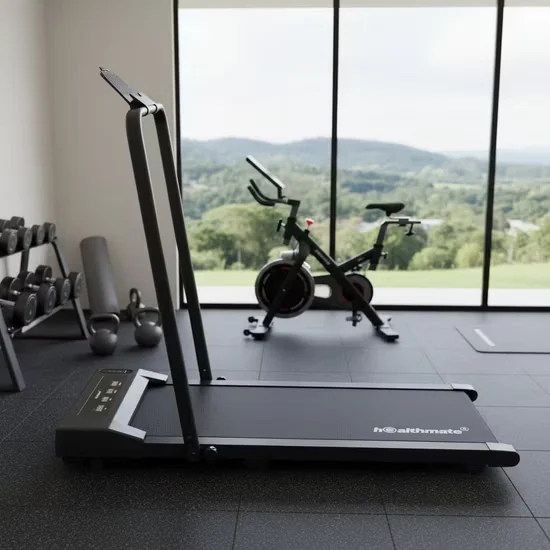
High-End Pilates Studios
Premium aesthetics meet quiet operation for boutique studio environments.
ISO
9001
CE
Certified
OEM
Available
10YR
Warranty
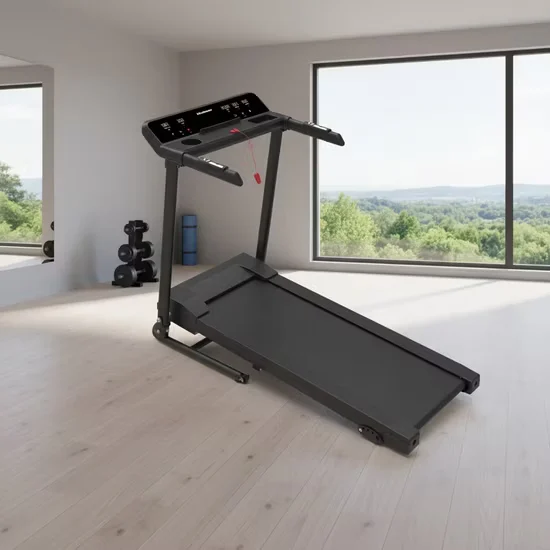
Motorized Household Treadmill, 1.5/DC2.0HP, 1200×420mm Running Surface, Foldable with Hydraulic Cylinder — engineered with a DC motor platform for quiet sustained operation up to 12 km/h across 12 preset programs, hydraulic-assisted folding eliminates hinge play common in spring designs, and integrated transport wheels enable single-user relocation. Backed by 10-year frame warranty and full OEM-ODM capability for custom branding and packaging.
// Spec Highlights
• Direct from Manufacturer · No Middlemen · Worldwide Shipping
01
// Material
Imported Solid Wood
Premium hardwood frames sourced for density and visual warmth.
02
// Hardware
Medical-Grade Silent
Whisper-quiet pulleys and springs for clinical environments.
03
// Customization
Appearance OEM
Color, upholstery, and branding tailored to your studio.
04
// Service
Layout Design
Free venue planning for studios and rehab institutions.
Every component is selected for longevity, performance, and aesthetic harmony - from imported hardwood frames to silent medical-grade accessories.
// Features
Hydraulic-Assisted Folding Integrity — The integrated hydraulic cylinder eliminates hinge-point play that plagues spring-assisted designs, ensuring consistent fold-and-store cycles without frame flex.
| Parameter | Value |
|---|---|
| Product Type | Motorized Household Treadmill |
| Motor | 1.5 / DC 2.0 HP |
| Speed Range | 1–12 km/h |
| Running Surface | 1200 × 420 mm |
| Product Dimensions (Unfolded) | 1490 × 720 × 1100 mm |
| Net Weight | 37 kg |
| Folding Mechanism | Hydraulic cylinder-assisted |
| Transport Feature | Integrated transport wheels |
| Display | LCD — Speed / Distance / Time / Calories / Pulse |
| Preset Programs | 12 |
| Certification | CE, RoHS |
| Customization | Logo and packaging options available |
| Facility Type | Typical Use |
|---|---|
| Residential home gym | Primary cardio station in space-constrained apartments or spare rooms |
| Boutique studio | Supplementary warm-up or cool-down unit adjacent to strength floor |
| Hotel fitness room | Guest-accessible unit where foldability and noise control are priorities |
| Small commercial studio | Light-duty cardio complement for personal training suites |
Many home treadmills advertise commercial-grade construction yet rely on thin-wall tubing and spot-welded joints that gradually deform under daily running loads — resulting in belt drift, motor overwork, and deck wear well before the unit reaches its expected lifespan. The motorized home treadmill with transport wheels addresses this through a reinforced frame platform engineered for sustained low-to-moderate speed operation, where the hydraulic folding cylinder bears structural loads rather than relying on spring tension that fatigues over repeated cycles. [NEED_CITE: structural fatigue behavior of thin-wall steel tubing under cyclic loading]
This motorized home treadmill with transport wheels occupies a 1200 × 420 mm running surface that accommodates adult stride lengths up to approximately 175 cm in height, balancing usable belt area with the spatial constraints typical of residential environments. The DC motor platform delivers consistent torque across the 1–12 km/h range, supporting walking, jogging, and moderate running without the heat buildup associated with AC motors in poorly ventilated home settings. In a multi-zone training layout, it pairs with compact strength equipment — adjustable dumbbell sets, resistance band anchor points, or a single functional rig — to create a complete training circuit within a limited square footage. The 12 preset programs provide structured variation for users who prefer guided sessions over manual speed adjustment.
Every fold-and-unfold cycle places concentrated stress on the hinge assembly and hydraulic cylinder mounting points. Unlike spring-assisted mechanisms that rely on tension rods prone to metal fatigue, the hydraulic cylinder on this motorized home treadmill with transport wheels provides controlled damping throughout the full range of motion, reducing shock loading on the frame joints. The integrated transport wheels allow single-user relocation without disassembly, eliminating the lateral frame torsion that occurs when users drag or tilt conventional treadmills across flooring. Under daily residential use — typically 30 to 60 minutes per session — the DC motor operates within its thermal envelope, while the belt and deck interface experiences consistent impact loading that demands adequate cushioning layer thickness to protect both the running surface and the user’s joints. [NEED_CITE: bearing seal performance in dust and moisture environments typical of residential fitness spaces]
The 1200 × 420 mm running surface is not arbitrary — it reflects the minimum belt length required to accommodate a natural adult stride at jogging speeds without forcing the user toward the front console, while the 420 mm width provides lateral stability for users who do not maintain a perfectly centered footstrike. The DC 2.0 HP motor rating indicates peak output; sustained operational capacity depends on thermal management design, including ventilation path and duty cycle rating, which determine whether the motor can handle consecutive daily sessions without overheating. The hydraulic cylinder, rather than a gas spring or manual latch, provides consistent resistance throughout the folding arc — a critical distinction because gas springs lose pressure over months of thermal cycling, while manual latches place full frame weight on a single pivot point. The LCD console tracks speed, distance, time, calories, and pulse, feeding data from the motor encoder and integrated hand-grip sensors without requiring external connectivity.
Manufacturers that substitute gas springs or manual latch systems for hydraulic cylinders save per-unit cost but transfer long-term risk to the owner. Gas springs lose internal pressure as seals degrade under temperature fluctuations, eventually failing to support the deck weight and forcing the user to catch a falling frame. Manual latches concentrate the entire folding load on a single steel pin, which can deform or shear after hundreds of cycles — particularly when the user releases the latch without supporting the deck. Non-sealed pivot bearings at the fold point accumulate dust and debris from residential flooring, accelerating wear and introducing play that translates into frame vibration during running. These failures do not occur immediately; they compound over months, making the motorized home treadmill with transport wheels a structurally different investment compared to units that prioritize initial price over cycle longevity. [NEED_CITE: gas spring seal degradation under thermal cycling in indoor environments]
Every unit undergoes individual load testing before shipment — not batch sampling — verifying that the frame, hinge assembly, and hydraulic cylinder mounting points withstand forces exceeding normal operational demands. The 1200 × 420 mm footprint and 1490 × 720 × 1100 mm unfolded dimensions are mapped against recommended safety clearance zones, ensuring that facility planners can integrate this motorized home treadmill with transport wheels into layouts that maintain compliant pass-through widths between stations. Customization options for logo placement and packaging allow hotel operators and boutique studio owners to align the unit with brand identity without altering structural specifications. CE and RoHS certifications confirm compliance with European safety and environmental standards, while the foldable design with integrated transport wheels addresses the specific procurement challenge of installing cardio equipment in spaces where permanent floor commitment is not feasible.
Provide your facility’s available floor area and target equipment list to receive a 2D-3D layout plan that integrates this motorized home treadmill with transport wheels alongside complementary strength and functional equipment. Indicate expected daily usage hours and user weight range so the structural duty cycle can be matched to your operational profile — residential light use and boutique studio moderate use place different demands on motor thermal management and hinge cycle life. Specify any customization requirements for branding, color, or packaging to align procurement with your facility’s identity and procurement timeline.
Q: How does the hydraulic folding mechanism differ from gas spring or manual-lift designs in long-term durability?
A: The hydraulic cylinder provides consistent damping throughout the full folding arc without relying on internal gas pressure that degrades under temperature fluctuations. Unlike gas springs that lose seal integrity over months of thermal cycling, or manual latches that concentrate full deck weight on a single pivot pin, the hydraulic system distributes load across a controlled fluid path. This means the folding action remains smooth and predictable over hundreds of cycles, and the hinge mounting points experience less shock loading — reducing the risk of frame fatigue at the most stressed joint on any foldable treadmill.
Q: What running surface dimensions are adequate for adult users above 175 cm in height?
A: The 1200 × 420 mm belt on this motorized home treadmill with transport wheels accommodates natural stride lengths for users up to approximately 175 cm without forcing the runner toward the front console during jogging or moderate running. Taller users with longer stride lengths may find the belt length limiting at higher speeds, as the available landing zone shortens relative to stride extension. For users significantly above this height range, a longer running surface — typically 1400 mm or more — would provide more comfortable margin, though the 1200 mm length remains functional for walking and light jogging across a broad adult population.
Q: How should I distinguish a true motorized treadmill from underpowered walking pad platforms?
A: A motorized treadmill rated at DC 2.0 HP with a 1200 × 420 mm running surface and a speed range reaching 12 km/h is engineered for jogging and sustained running, not just walking. Walking pads typically feature shorter belts under 1000 mm, lower motor output below 1.5 HP, and no incline or console programming capacity. The presence of 12 preset programs, an LCD console tracking multiple metrics, and a hydraulic-assisted folding mechanism indicates a platform designed for structured cardio training — not casual step-counting — with the structural capacity to handle repetitive footstrike at moderate speeds.
Q: What maintenance intervals apply to the DC motor, belt, and deck on this unit?
A: The DC motor requires periodic inspection of brush wear and ventilation path clearance to prevent thermal buildup during sustained use. Belt tension should be checked and adjusted per the manufacturer schedule — typically every 90 days under daily residential use — to prevent slippage that strains the motor and accelerates belt wear. The deck cushioning layer benefits from silicone-based lubrication applied between the belt and deck surface to reduce friction and preserve impact absorption. Transport wheels and the hydraulic cylinder hinge should be visually inspected for debris accumulation and bolt tightness at the same interval to maintain smooth folding operation.
Premium aesthetics meet quiet operation for boutique studio environments.
Medical-grade silence and precision for sports & postpartum recovery.
Furniture-grade craftsmanship for premium residential installations.
Compact premium setups for one-on-one and small-group training.
Aesthetic Pilates integration for hybrid wellness studio programming.
Multi-unit deployment with instructor-grade reliability for certification programs.
Tell us about your project. Our team will respond within 24 hours with pricing, customization options, and shipping details.
// Sales Director
William
+86 132 2531 1800
// Export Manager
Bella
+86 198 5412 8032
william@bickfit.com