01 / Scenario
STUDIO
P
High-End Pilates Studios
Premium aesthetics meet quiet operation for boutique studio environments.

ISO
9001
CE
Certified
OEM
Available
10YR
Warranty
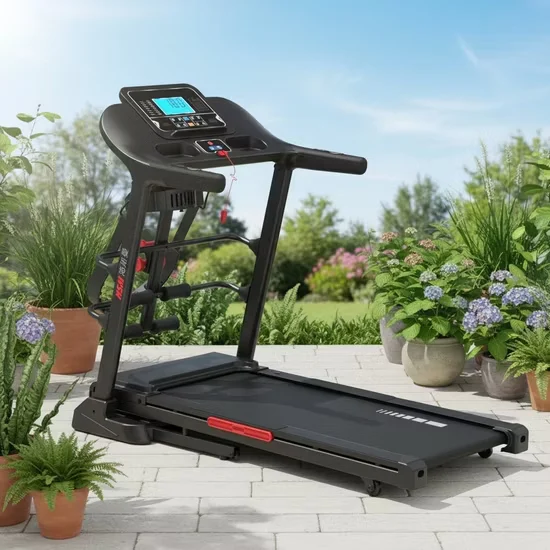
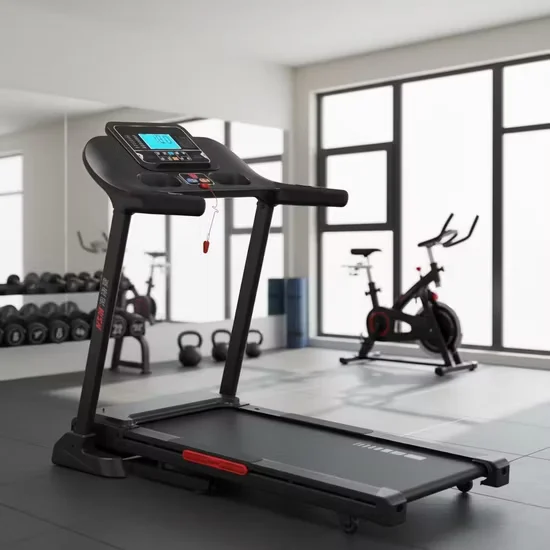
MT296 Motorized Treadmill, DC2.0HP, 1200×520mm Runway, 1-20 km/h Speed — engineered with a DC motor delivering consistent output across 16 preset programs, foldable ABS frame reducing footprint to 910×865×1345mm when stored. CE and RoHS certified for home fitness and rehabilitation environments. Full OEM-ODM customization available with private labeling and spec adjustments to match your market requirements.
// Spec Highlights
• Direct from Manufacturer · No Middlemen · Worldwide Shipping
01
// Material
Imported Solid Wood
Premium hardwood frames sourced for density and visual warmth.
02
// Hardware
Medical-Grade Silent
Whisper-quiet pulleys and springs for clinical environments.
03
// Customization
Appearance OEM
Color, upholstery, and branding tailored to your studio.
04
// Service
Layout Design
Free venue planning for studios and rehab institutions.
Every component is selected for longevity, performance, and aesthetic harmony - from imported hardwood frames to silent medical-grade accessories.
// Features
Traceable Steel, Verified Welds — Every MT296 treadmill frame is built with Q235 industrial steel sourced from mill-certified coils, and robotic MIG welding ensures continuous seams without spot-weld weak points that could fail under repetitive motor vibration.
| Parameter | Value |
|---|---|
| Designation | MT296 |
| Motor | DC 2.0HP |
| Speed Range | 1–20 km/h |
| Maximum Speed | 15–22 km/h |
| Running Surface | 1200 × 520 mm |
| Programs | 16 preset programs |
| Display | LCD — Speed / Distance / Time / Calories / Pulse |
| Shell Material | ABS |
| Foldable | Yes |
| Unfolded Dimensions | 1580 × 865 × 1300 mm |
| Folded Dimensions | 910 × 865 × 1345 mm |
| Net Weight / Gross Weight | 64.0 / 72.0 kg |
| User Group | Adult |
| Function | Multifunctional |
| OEM / ODM Custom | Available |
| Certification | CE, RoHS |
| Facility Type | Typical Use |
|---|---|
| Home fitness room | Primary cardio station for daily aerobic training |
| Rehabilitation and performance center | Low-to-moderate speed gait recovery and mobility work |
| Hotel fitness center | Guest-use treadmill in compact cardio corner |
| Light commercial gym cardio zone | Supplementary treadmill for peak-hour overflow |
| Boutique studio | Warm-up and cool-down station between sessions |
A DC motor that shakes its own mounting bolts loose is not a motor problem — it is a frame engineering problem.
Early in my career, a client asked us to cut cost on a commercial treadmill by dropping the upright tube from 11-gauge to 14-gauge. Within months, the motor mount cracked from sustained vibration under load, and the entire batch had to be recalled for reinforcement. That experience shaped how I approach every motorized treadmill DC2.0HP home commercial unit we build. The MT296 uses an ABS shell over a steel sub-frame designed to absorb the harmonic oscillation of a 2.0HP DC motor running at sustained speeds — not just hold the motor in place, but isolate vibration from the running surface and the user’s joints. [NEED_CITE: vibration damping requirements for motorized stationary training equipment]
The MT296 occupies the light-duty tier of a cardio floor, bridging the gap between pure home-use treadmills and heavy-duty commercial units. Its 1200 × 520 mm running surface accommodates stride lengths typical of walking and moderate jogging, making it suitable for rehabilitation gait training and hotel guest use where sprint-level speeds are not the primary demand. In a facility with mixed equipment density, the motorized treadmill DC2.0HP home commercial pairs logically with self-powered air bikes and rowers — the motorized unit handles steady-state cardio while the self-powered machines absorb high-intensity interval traffic. The foldable design allows operators to reclaim floor space during low-traffic hours or reconfigure the cardio zone seasonally.
A foldable treadmill faces two competing stress vectors: the static torsion of a motor and belt system on one side, and the cyclic fatigue of a folding hinge mechanism on the other. Every time the MT296 is folded or unfolded, the hinge points and locking pins experience shear forces that, over hundreds of cycles, can loosen fasteners or deform thin-gauge mounting plates. The DC motor adds a continuous low-frequency vibration that propagates through the frame — if the steel tube walls are too thin or the welds are spot-welded rather than continuously welded, micro-cracks develop at stress concentration points near the motor mount and the rear roller bracket. Sealed bearings at the front and rear rollers resist dust and sweat ingress, which is critical in environments where floor cleaning introduces moisture near the belt path. [NEED_CITE: fatigue performance of hinged folding mechanisms in fitness equipment]
The 1200 × 520 mm running surface is a functional dimension — it determines the maximum comfortable stride length for walking and light jogging users, and anything shorter forces a shortened gait that increases hip flexor fatigue. The DC 2.0HP motor rating must be understood as continuous duty output, not peak surge power; a motor that only delivers 2.0HP at startup but drops under sustained load will cause belt slippage at higher speeds. The ABS shell is chosen for impact resistance and UV stability — it protects the internal electronics and motor assembly from accidental contact and cleaning chemical exposure without adding the weight of a metal enclosure. The 16-program console and LCD readout (speed, distance, time, calories, pulse) provide the data feedback loop that rehabilitation users and home trainers need to monitor progress without requiring an external device.
When a manufacturer reduces tube wall thickness to hit a price point, the first casualty is torsional rigidity. Under a 90 kg user running at 12 km/h, a thin-gauge frame flexes laterally — the user feels it as instability, and the belt tracking drifts off-center, accelerating wear on the deck and the belt edges. Spot welds at the motor mount may pass visual inspection on day one, but sustained vibration creates fatigue cracks that propagate invisibly until the mount fails catastrophically. Non-sealed bearings in a humid home gym environment develop play within months, producing noise and requiring premature replacement. A motorized treadmill DC2.0HP home commercial built without these structural baselines becomes a liability — not just a dissatisfied customer, but a potential safety claim. [NEED_CITE: structural gauge requirements for motorized cardio equipment under dynamic loading]
Every MT296 leaving the factory undergoes individual load testing — not batch sampling, but unit-by-unit verification that the motor mount, folding mechanism, and running surface perform under simulated use conditions. The steel used in the frame is Q235 industrial grade, traceable to the original mill coil, so there is no ambiguity about material provenance. Robotic MIG welding produces continuous weld seams along all structural joints, eliminating the spot-weld weak points that fail under vibration. The ABS shell and powder-coated steel surfaces resist the sweat, cleaning agents, and ambient humidity typical of high-traffic cardio zones. For operators planning a home-use or light-commercial cardio layout, we provide 2D-3D floor planning support to ensure the MT296 footprint — 1580 × 865 × 1300 mm unfolded, 910 × 865 × 1345 mm folded — fits within safe clearance distances from adjacent equipment and walls. OEM and ODM customization is available for facilities that require specific console branding, color matching, or accessory bundling.
Share your available floor area and target equipment list, and we will generate a 2D-3D layout showing how the MT296 integrates with adjacent cardio and strength stations while maintaining safe traffic flow. Indicate your expected daily user volume so we can confirm whether this motorized treadmill DC2.0HP home commercial matches your duty-cycle requirements or if a heavier-duty model is more appropriate. If your facility requires custom console branding, upholstery color matching, or accessory bundling, our OEM/ODM team can provide a specification sheet for review.
Q: How does the MT296 differ structurally from a heavy commercial treadmill?
A: The MT296 uses a lighter-gauge steel frame and a DC motor rather than an AC induction motor, making it suitable for home and light-commercial environments where daily usage stays below 4–6 hours. The running surface, folding mechanism, and motor mount are engineered for this duty cycle — they are not overbuilt for 12-hour commercial floors, which keeps weight and cost proportional to the actual demand.
Q: Can the MT296 handle users above 100 kg?
A: The 64 kg net weight and DC 2.0HP motor are rated for adult users within a standard weight range. For facilities expecting regular use by heavier individuals, we recommend confirming the specific user weight profile during the inquiry stage so we can advise whether this model or a higher-capacity unit is the better structural fit for your environment.
Q: What maintenance does the folding mechanism require?
A: The hinge pins and locking latches should be visually inspected every 90 days for looseness or wear, and lubricated lightly if movement becomes stiff. The folding design is engineered for hundreds of cycles, but like any mechanical joint, it benefits from periodic attention — especially in environments where dust or moisture is present near the floor level.
Q: Is the DC motor suitable for continuous running at maximum speed?
A: The DC 2.0HP motor is rated for sustained operation within the 1–20 km/h range, but continuous use at the upper speed limit generates more heat and places higher demand on the drive belt and roller bearings. For applications requiring prolonged high-speed running, we recommend discussing duty-cycle expectations during the specification review to confirm this motor configuration matches your operational profile.
Premium aesthetics meet quiet operation for boutique studio environments.
Medical-grade silence and precision for sports & postpartum recovery.
Furniture-grade craftsmanship for premium residential installations.
Compact premium setups for one-on-one and small-group training.
Aesthetic Pilates integration for hybrid wellness studio programming.
Multi-unit deployment with instructor-grade reliability for certification programs.
Tell us about your project. Our team will respond within 24 hours with pricing, customization options, and shipping details.
// Sales Director
William
+86 132 2531 1800
// Export Manager
Bella
+86 198 5412 8032
william@bickfit.com