01 / Scenario
STUDIO
P
High-End Pilates Studios
Premium aesthetics meet quiet operation for boutique studio environments.

ISO
9001
CE
Certified
OEM
Available
10YR
Warranty
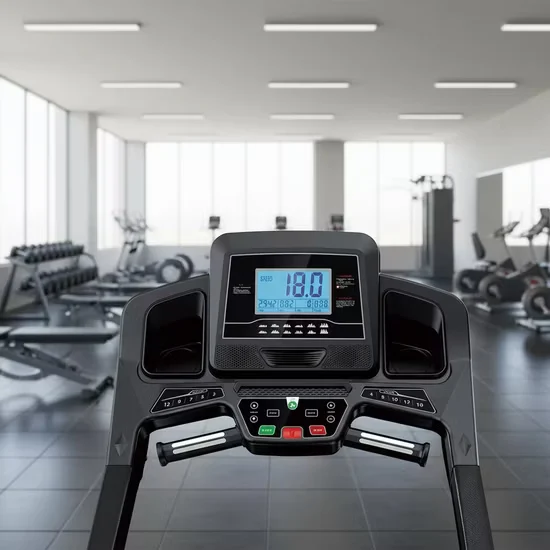
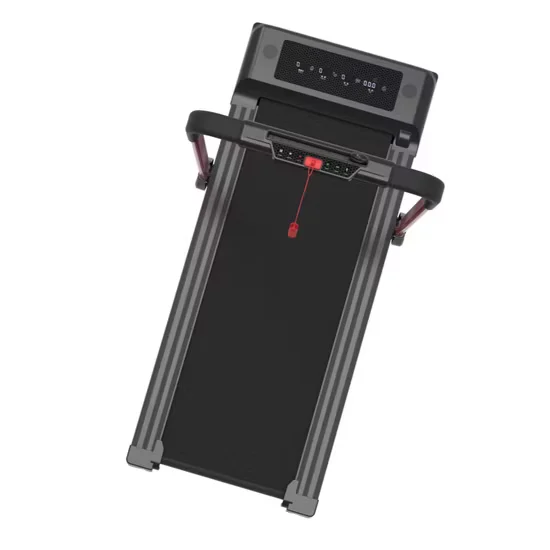
MT296 Motorized Home Treadmill, DC2.0HP, 1-20 km/h Speed Range — engineered with a 1200×520mm running deck sized for adult stride comfort and a foldable frame that reduces footprint to 910×865×1345mm when stored. Sixteen preset programs with LCD feedback track speed, distance, calories, and pulse for structured cardiopulmonary conditioning. Every unit undergoes motor duty cycle verification and deck load testing before shipment to ensure sustained residential performance.
// Spec Highlights
• Direct from Manufacturer · No Middlemen · Worldwide Shipping
01
// Material
Imported Solid Wood
Premium hardwood frames sourced for density and visual warmth.
02
// Hardware
Medical-Grade Silent
Whisper-quiet pulleys and springs for clinical environments.
03
// Customization
Appearance OEM
Color, upholstery, and branding tailored to your studio.
04
// Service
Layout Design
Free venue planning for studios and rehab institutions.
Every component is selected for longevity, performance, and aesthetic harmony - from imported hardwood frames to silent medical-grade accessories.
// Features
Robotic Continuous Welding — The MT296 motorized home treadmill frame utilizes robotic MIG welding with continuous seams, eliminating spot-weld weak points that commonly fail under sustained vibration during cardiopulmonary training sessions.
| Parameter | Value |
|---|---|
| Designation | MT296 |
| Product Type | Motorized Treadmill |
| Motor | DC 2.0HP |
| Speed Range | 1–20 km/h |
| Running Surface | 1200 × 520 mm |
| Preset Programs | 16 |
| Display | LCD (Speed / Distance / Time / Calories / Pulse) |
| Unfolded Dimensions | 1580 × 865 × 1300 mm |
| Folded Dimensions | 910 × 865 × 1345 mm |
| Net Weight | 64.0 kg |
| Foldable | Yes |
| Shell Material | ABS |
| Certification | CE, RoHS |
| OEM / ODM | Available |
| Facility Type | Typical Use |
|---|---|
| Residential Home Gym | Daily cardiopulmonary conditioning and step-count training |
| Apartment Fitness Setup | Compact cardio zone where foldable footprint is critical |
| Hotel Guest Fitness Room | Supplementary cardio option for short-duration guest workouts |
| Personal Training Studio | Warm-up and cool-down cardio between strength blocks |
A treadmill deck that warps or a motor mount that shifts is almost always a frame-welding and steel-gauge problem, not a motor problem.
Home treadmills marketed at aggressive price points frequently substitute thin-wall tubing for the running deck frame and rely on intermittent spot welds at the motor mount junction. Under daily use of even moderate duration, these spot welds develop micro-cracks from harmonic vibration. The motor mount shifts by millimeters — enough to misalign the belt tracking plane, increase drag on the DC motor, and eventually overload the controller board. The MT296 motorized home treadmill addresses this at the welding stage: continuous robotic MIG seams along the deck frame and motor cradle distribute vibrational stress across the full joint length rather than concentrating it at discrete points [NEED_CITE: weld classification and fatigue performance in structural steel].
The MT296 occupies the primary cardio station in a residential fitness layout, serving as the default warm-up and steady-state conditioning tool. Its 1200 × 520 mm running surface accommodates adult stride lengths across a broad height range, while the foldable frame allows the unit to retract into a 910 × 865 × 1345 mm footprint when the space must serve dual purposes. The DC 2.0HP motor delivers consistent belt speed across the 1–20 km/h range, making the MT296 motorized home treadmill suitable for walking rehabilitation protocols through to high-intensity interval efforts. Sixteen preset programs and real-time LCD feedback on speed, distance, time, calories, and pulse provide structured session guidance without requiring external devices.
Home treadmill usage patterns differ from commercial gym traffic in frequency distribution but not in cumulative fatigue demand. A single household user running 45 minutes daily generates roughly 270 hours of belt-on-deck contact annually — comparable to a lightly used commercial unit. The running deck frame absorbs both static load from user weight and dynamic impact from footstrike at each stride cycle. At the hinge mechanism, repeated folding and unfolding introduces cyclic shear at the latch pins and pivot bushings. The ABS shell panels experience thermal cycling from motor heat and ambient temperature swings, which can embrittle lower-grade compounds over time. Continuous weld seams at all structural junctions and a reinforced folding hinge assembly are what separate a treadmill that remains stable after years of daily use from one that develops frame flex and latch play within months [NEED_CITE: fatigue behavior of folded steel hinge mechanisms under cyclic loading].
The DC 2.0HP motor rating defines the continuous power delivery capacity of the drive system. Unlike peak-HP marketing claims that measure instantaneous output under no-load conditions, a DC continuous rating reflects the motor’s thermal and mechanical endurance during sustained operation — the actual condition under which home treadmill motors fail. The 1200 × 520 mm running surface dimensions directly determine stride comfort and joint loading: a deck shorter than 1200 mm forces stride truncation for users above 175 cm, increasing knee and hip flexion stress at higher speeds. The 520 mm width provides lateral margin that prevents edge-of-deck foot placement, which accelerates belt wear and creates uneven loading on the rear roller bearings. The foldable frame’s hinge and latch assembly must withstand the full 64 kg unit weight during each folding cycle while maintaining alignment precision — any play at the hinge translates to deck wobble at running speed.
Manufacturers who reduce frame steel wall thickness to hit a price point create a cascade of downstream failures. A thin-wall deck frame deflects under repetitive footstrike loading, causing the running board to crown in the center. This crown forces the belt to track off-center, accelerating wear on one side of the belt and one side of the roller bearings. The motor mount, if attached with spot welds rather than continuous seams, develops angular misalignment that increases brush wear and controller heat. Non-sealed pivot bushings at the folding hinge allow dust and moisture ingress, leading to corrosion-induced stiffness that makes folding difficult and eventually cracks the surrounding frame tube. These are not warranty-edge failures — they are predictable structural degradations that begin within the first year of daily use [NEED_CITE: vibration-induced fatigue in thin-wall welded steel structures].
The MT296 motorized home treadmill is produced in BICKFIT’s 15,000 ㎡ vertically integrated facility in Ningjin, Dezhou, where robotic MIG welding ensures continuous seams on every deck frame and motor cradle — the same welding standard applied across the full commercial strength equipment line. Each unit undergoes individual load testing before shipment, verifying belt tracking alignment, motor thermal performance, and folding mechanism integrity under simulated use conditions. The 16 preset programs and LCD console are validated for sensor accuracy across the full speed and incline range. OEM and ODM customization is available for console branding, shell color, and packaging, with production lead times confirmed against order specifications. BICKFIT’s 17-year manufacturing heritage in fitness equipment means the MT296 benefits from the same engineering discipline applied to the HD-700 plate-loaded and SX-900 selectorized commercial lines.
Provide your available floor area and intended user profile to receive a 2D-3D layout plan showing the MT296 motorized home treadmill positioned with correct safety clearances and complementary equipment spacing. Indicate expected daily usage duration so the engineering team can confirm the DC motor duty cycle matches your operational demand. If your project requires custom console branding, shell color matching, or modified packaging for retail distribution, specify these OEM requirements at the inquiry stage to receive accurate lead-time and tooling-cost feedback.
Q: How should I evaluate the DC 2.0HP motor rating against competing treadmill claims?
A: The DC 2.0HP rating on the MT296 reflects continuous power output under operating load, not peak or no-load horsepower. When comparing, request the manufacturer’s duty-cycle test data showing motor temperature and belt speed stability over a sustained runtime period. Motors rated only at peak HP will overheat and trigger thermal shutdown during sessions exceeding twenty minutes at moderate to high speed.
Q: Is the 1200 × 520 mm running surface adequate for taller adult users?
A: A 1200 mm deck length accommodates stride lengths for users up to approximately 185 cm without forcing stride truncation at jogging or running speeds. The 520 mm width provides sufficient lateral margin to prevent edge-of-deck foot placement, which reduces uneven belt wear and rear roller bearing load. Users significantly above 185 cm should verify stride comfort at their target running speed during a trial session.
Q: How does the foldable frame affect long-term structural rigidity?
A: The folding hinge assembly on the MT296 uses reinforced pivot pins and a positive-latch mechanism designed to maintain deck alignment after repeated folding cycles. Rigidity in the unfolded running position depends on the latch engagement precision and the continuous weld seams along the deck frame. Periodic inspection of the hinge pins for play and the latch for secure engagement will preserve running stability and prevent deck wobble at higher speeds.
Q: What maintenance intervals should I follow for the MT296 motorized home treadmill?
A: Running belt lubrication should follow the deck manufacturer’s recommended interval, typically every three to six months depending on usage frequency. The DC motor brushes should be inspected annually for wear depth. Folding hinge pivot points require quarterly lubrication. ABS shell panels should be wiped with non-abrasive, non-solvent cleaners. Keep the motor compartment free of dust accumulation to maintain thermal dissipation efficiency.
Premium aesthetics meet quiet operation for boutique studio environments.
Medical-grade silence and precision for sports & postpartum recovery.
Furniture-grade craftsmanship for premium residential installations.
Compact premium setups for one-on-one and small-group training.
Aesthetic Pilates integration for hybrid wellness studio programming.
Multi-unit deployment with instructor-grade reliability for certification programs.
Tell us about your project. Our team will respond within 24 hours with pricing, customization options, and shipping details.
// Sales Director
William
+86 132 2531 1800
// Export Manager
Bella
+86 198 5412 8032
william@bickfit.com