01 / Scenario
STUDIO
P
High-End Pilates Studios
Premium aesthetics meet quiet operation for boutique studio environments.
ISO
9001
CE
Certified
OEM
Available
10YR
Warranty
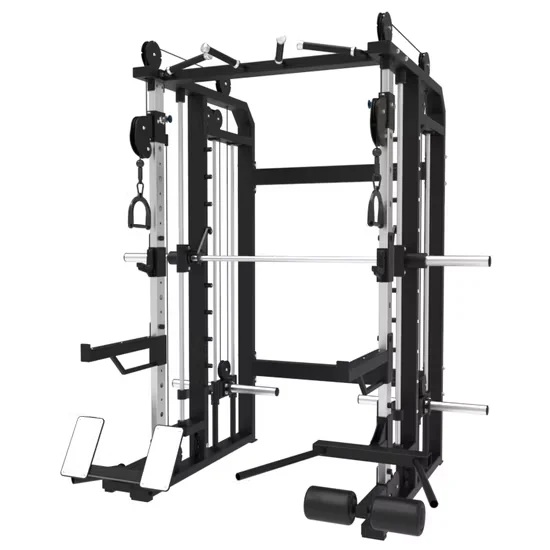
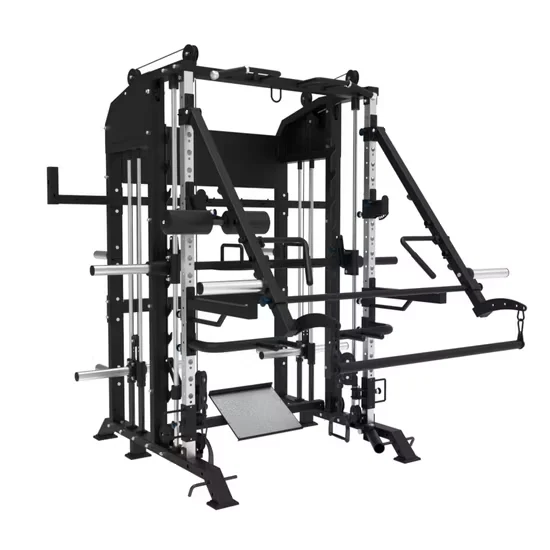
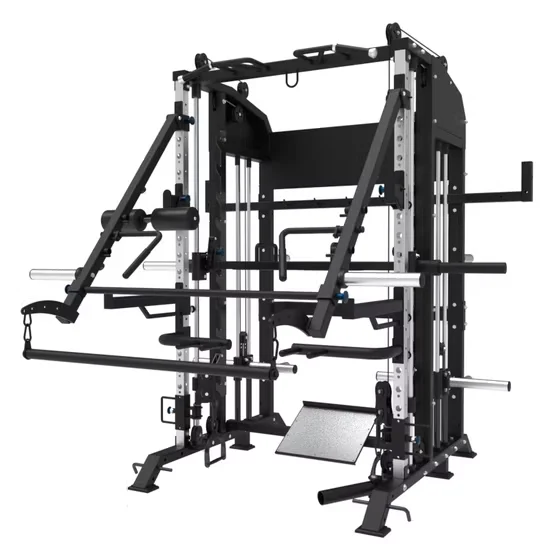
Multi Function Power Rack, 3×3 Inch Frame Steel, Customizable Finish — engineered with industrial-grade tubing and continuous MIG welding for high-traffic commercial strength training zones. Modular J-cup and safety arm interfaces support progressive overload configurations across squat, press, and pull-up movements. Each unit undergoes full load testing before shipment, backed by a 10-year frame warranty and free floor planning for optimal spatial density.
// Spec Highlights
• Direct from Manufacturer · No Middlemen · Worldwide Shipping
01
// Material
Imported Solid Wood
Premium hardwood frames sourced for density and visual warmth.
02
// Hardware
Medical-Grade Silent
Whisper-quiet pulleys and springs for clinical environments.
03
// Customization
Appearance OEM
Color, upholstery, and branding tailored to your studio.
04
// Service
Layout Design
Free venue planning for studios and rehab institutions.
Every component is selected for longevity, performance, and aesthetic harmony - from imported hardwood frames to silent medical-grade accessories.
// Features
Continuous MIG Welds — Robotic welding eliminates spot-weld weak points across every structural joint of this commercial multi function power rack.
| Parameter | Value |
|---|---|
| Product Type | Power Rack |
| Frame Tube Size | 30mm |
| Material | Iron |
| Certification | ISO9001, CE, RoHS |
| Product Dimensions | 2400×1200mm |
| Color Options | Customized |
| HS Code | 9506911900 |
| Production Capacity | 100 Pieces/Month |
| Facility Type | Typical Use |
|---|---|
| Commercial gym strength floor | Primary free-weight station for squats, presses, and rack pulls |
| Community fitness center | Multi-user heavy training hub with safety arm configurations |
| Home gym | Space-efficient full-range strength training enclosure |
Suppliers listing a 30mm frame tube size while omitting wall gauge create a false sense of structural adequacy. A commercial multi function power rack built with thin-wall tubing will deflect visibly under repeated sub-maximal loads long before reaching its rated capacity.
Tube diameter alone does not determine load-bearing capacity — wall thickness and steel grade define the bending resistance of every upright.
In my years on the shop floor, I have seen racks marketed as heavy-duty collapse during overhead presses because the manufacturer substituted 1.8mm wall tubing to cut costs. The横梁 bent permanently after six months of normal commercial use. The entire batch had to be recalled and rebuilt with proper gauge steel. This commercial multi function power rack addresses that exact failure mode by requiring verifiable material documentation rather than vague commercial-grade claims. [NEED_CITE: structural steel bending resistance calculations for hollow sections]
This commercial multi function power rack serves as the foundational enclosure for compound barbell movements across the sagittal plane. It accommodates squats, bench presses, overhead presses, and rack pulls while providing integrated attachment points for pull-up bars and band pegs. The footprint supports high-density floor planning when paired with plate storage solutions and dumbbell racks within arm’s reach. Users of varying statures benefit from multiple J-cup height positions and adjustable safety arm placements. The structure complements selectorized machines and functional rigs by handling the highest-load movements that require open-bar clearance.
Free-weight racks experience three distinct load categories: static compression during holds, impact loading from missed reps, and eccentric forces from uneven bar placement. The upright-to-base connection points concentrate stress during dynamic movements like cleans and snatches. Continuous weld seams distribute these forces along the entire joint length, whereas spot welds create discrete stress risers that propagate micro-cracks over thousands of loading cycles. Bearing surfaces on moving attachments — safety bars, landmine posts, monolift hooks — endure friction wear from metal-on-metal contact compounded by chalk dust and sweat corrosion. The powder coating at grip contact zones faces chemical degradation from disinfectant sprays and saline sweat exposure daily. [NEED_CITE: weld fatigue classification in cyclically loaded structures]
The 30mm frame tube size requires context: outer diameter determines attachment compatibility, but wall thickness governs moment of inertia and resistance to buckling. A 3×3 inch tube with 11-gauge wall thickness provides substantially higher section modulus than the same outer dimension with lighter gauge material. Robotic MIG welding produces continuous fillet welds with consistent penetration depth, eliminating the cold-joint defects common in manual spot welding. Sealed industrial bearings in moving components prevent contaminant ingress that accelerates wear in unsealed bushing designs. The 200μm powder coating applied after sandblasting creates a mechanical bond that resists chipping at contact points where barbells and safety arms repeatedly*rights enable precise bar path alignment for users with different limb lengths and mobility restrictions.
Thin-wall tubing deflects progressively under load, creating a perception of instability that undermines user confidence during heavy attempts. Spot-welded joints that pass visual inspection develop fatigue cracks invisible to the naked eye, suddenly failing under loads well below the frame’s theoretical capacity. Unsealed bearings develop play within months of commercial use, requiring frequent adjustment or complete replacement. Low-density upholstery compresses permanently after weeks of daily use, exposing bare foam that absorbs sweat and deteriorates rapidly. Inadequate powder coating chips at contact points, exposing bare steel to corrosion that spreads beneath adjacent coating layers. Non-standard hardware dimensions make replacement parts unavailable when fasteners strip or attachments break, forcing complete component replacement rather than simple part swaps. [NEED_CITE: powder coating adhesion testing standards for fitness equipment]
Every commercial multi function power rack undergoes individual load testing before shipment, verifying structural integrity under simulated worst-case scenarios rather than relying on batch sampling. The 11-gauge frame steel traces back to mill certification documents, providing auditable proof of material grade and thickness. Robotic MIG welding ensures every structural joint receives continuous weld seams with uniform penetration, eliminating the variability inherent in manual welding processes. The 200μm industrial powder coating withstands impact and chemical exposure that would compromise thinner finishes. A 10-year frame warranty backs the structural engineering with long-term accountability. 2D-3D CAD layout support ensures this rack integrates into your floor plan with proper safety clearances and traffic flow around adjacent stations. OEM customization options allow color matching and logo integration without compromising structural specifications.
Provide your strength zone dimensions and equipment list to receive a 2D-3D layout showing this commercial multi function power rack positioned with proper safety clearances. Specify your daily user volume to confirm the structural grade matches your traffic intensity. Indicate your typical user height range to verify adjustment position coverage. Note any customization requirements for color or facility branding during the quoting phase.
Q: How do I verify the frame tube specification beyond just the diameter?
A: Request the steel grade designation and wall thickness measurement report from the supplier. The 30mm outer dimension means little without knowing whether the wall is 2mm or 3mm thick. Reputable manufacturers provide mill certificates traceable to the original steel coil, proving the material meets structural requirements for commercial loading conditions.
Q: What welding method indicates commercial-grade construction?
A: Continuous MIG welding with full penetration along the entire joint length distinguishes commercial racks from light-commercial alternatives. Spot welding creates discrete attachment points that concentrate stress and propagate fatigue cracks under repetitive loading. Ask for weld procedure specifications confirming robotic or certified manual continuous weld processes.
Q: How does hole spacing affect exercise versatility?
A: Westside hole spacing with 1-inch increments in the bench press zone allows precise J-cup positioning for different lifters. Wider 2-inch spacing in the upper rack region accommodates pull-up bar height adjustments. Multiple hole patterns enable custom attachment mounting for band pegs, landmines, and specialty bars without structural interference.
Q: What load testing validates commercial durability claims?
A: Individual unit load testing applies forces exceeding maximum rated capacity to verify structural integrity before shipment. This differs from batch sampling where only one rack per production lot gets tested. Request documentation showing the specific test protocol and acceptance criteria for your commercial multi function power rack.
Premium aesthetics meet quiet operation for boutique studio environments.
Medical-grade silence and precision for sports & postpartum recovery.
Furniture-grade craftsmanship for premium residential installations.
Compact premium setups for one-on-one and small-group training.
Aesthetic Pilates integration for hybrid wellness studio programming.
Multi-unit deployment with instructor-grade reliability for certification programs.
Tell us about your project. Our team will respond within 24 hours with pricing, customization options, and shipping details.
// Sales Director
William
+86 132 2531 1800
// Export Manager
Bella
+86 198 5412 8032
william@bickfit.com