01 / Scenario
STUDIO
P
High-End Pilates Studios
Premium aesthetics meet quiet operation for boutique studio environments.

ISO
9001
CE
Certified
OEM
Available
10YR
Warranty
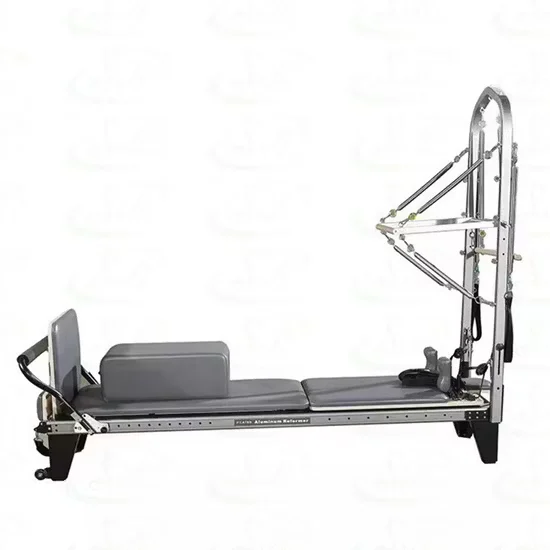
Natural Oak Pilates Reformer Combo Chair, 800×620×1100mm, 45kg Net Weight — Solid oak frame delivers high rigidity and minimal deflection under repeated carriage loading, paired with standardized accessory interfaces for long box, jump board, and platform. High-density upholstery and precision-machined rail system resist wear across high-traffic studio and rehab environments. Every unit undergoes full load testing before shipment from our 15,000㎡ vertically integrated facility.
// Spec Highlights
• Direct from Manufacturer · No Middlemen · Worldwide Shipping
01
// Material
Imported Solid Wood
Premium hardwood frames sourced for density and visual warmth.
02
// Hardware
Medical-Grade Silent
Whisper-quiet pulleys and springs for clinical environments.
03
// Customization
Appearance OEM
Color, upholstery, and branding tailored to your studio.
04
// Service
Layout Design
Free venue planning for studios and rehab institutions.
Every component is selected for longevity, performance, and aesthetic harmony - from imported hardwood frames to silent medical-grade accessories.
// Features
Structural Density First — Solid natural oak framing resists frame deflection under repeated sliding loads, maintaining alignment where veneered composites loosen within months.
| Parameter | Value |
|---|---|
| Product Type | Pilates Reformer Combo Chair |
| Material | Natural Oak Wood |
| Specification | 800×620×1100mm |
| Net Weight | 45kg |
| Accessories | Long Box, Jump Board, Platform |
| Color Options | Solid color, customization available |
| Logo | Customization allowed |
| Warranty | 3 Years |
| Facility Type | Typical Use |
|---|---|
| Commercial Pilates studio | Group and one-on-one reformer and chair sessions |
| Boutique fitness studio | Mixed modal classes blending reformer work with cardio intervals |
| Rehabilitation and physical therapy center | Post-injury mobility and controlled resistance protocols |
| Hotel and resort wellness facility | Guest-accessible functional movement and recovery sessions |
| Private home studio | Daily practice with compact footprint and dual-function design |
Material density determines the service interval, not the surface finish.
Most commercial wooden pilates reformer combo chair products on the market use particleboard or MDF cores wrapped in wood-grain veneer. In a studio running six or more sessions daily, the repeated sliding forces and accessory mounting stress loosen joint hardware and degrade the core material where screws bite into low-density fiber. Solid oak eliminates that failure mode entirely. The wood fibers run continuously through every joint, so hardware holds its torque specification across years of thermal and humidity cycling. [NEED_CITE: structural performance comparison of solid hardwood versus composite board in furniture applications]
A commercial wooden pilates reformer combo chair occupies the floor area of a single reformer but replaces two separate pieces of equipment. In studios where square-meter cost is a primary planning constraint, that consolidation frees floor space for additional client stations or movement zones. The combo configuration covers the full sagittal plane through reformer carriage work and adds frontal and transverse plane loading through the chair pedal assembly, complementing mat zones and functional rigs already on the floor. The 800×620mm footprint fits standard studio bay widths with clearance for instructor circulation on both sides.
The carriage undergoes repeated eccentric loading as clients decelerate at end range, transferring force through the wheel axles into the frame rails. On the chair side, the pedal mechanism absorbs downward impulse during standing and kneeling presses, concentrating stress at the pivot bearings and the pedal-to-frame connection. Sweat and cleaning chemicals contact the wood surface daily, making the seal coat quality critical to preventing moisture ingress and surface checking. Upholstery compression under the carriage pad and chair seat determines when replacement pads enter the maintenance schedule. [NEED_CITE: fatigue loading patterns in sliding-rail exercise equipment under commercial use]
Natural oak sits in the upper tier of furniture-grade hardwoods for density and screw-holding strength. That density gives the frame rails a higher resistance to the lateral forces generated when a client shifts weight off-center on the carriage. The accessory interfaces — where the long box, jump board, and platform mount to the frame — depend on wood thread integrity; in softer woods or composites, those mounting points strip after repeated removal and reinstallation. Sealed bearings in the carriage wheels prevent studio dust and chalk residue from entering the race, maintaining smooth travel without play developing in the first year. The three-year warranty reflects confidence that the oak frame and hardware will outlast the studio’s initial client growth phase.
Studios that purchase veneered composite equipment face a predictable replacement cycle. The core material absorbs ambient moisture at cut edges, swelling and weakening screw joints within the first seasonal humidity swing. Carriage rails on composite frames develop surface wear that creates drag, forcing instructors to compensate with cueing adjustments rather than relying on consistent mechanical feel. When mounting points strip, the entire frame section requires dowel repair or replacement rather than a simple hardware swap. Non-standard hardware sizes used by some manufacturers mean replacement bearings or pedal pivots must be sourced from the original supplier, extending downtime when parts are backordered. [NEED_CITE: total cost of ownership analysis for commercial fitness equipment frame materials]
The oak stock is selected and dried in-house to moisture content targets suited for the destination climate, reducing the risk of frame checking after installation. Every frame passes a three-stage inspection covering joint integrity, rail alignment, and carriage travel smoothness before crating. The 200μm industrial powder coating process used on the manufacturer’s steel lines also informs the finishing standards applied here — seal coats are specified for moisture resistance rather than appearance alone. OEM logo placement and custom color matching are handled on the same production line, avoiding the markup and communication lag of third-party branding vendors. Two-dimensional and three-dimensional CAD layout support is available to plan studio bays around this unit’s footprint and required instructor clearances.
Share your studio floor plan and target class size to receive a 2D-3D layout showing how many commercial wooden pilates reformer combo chair units fit with safe circulation paths. Specify your average daily sessions per station so we can confirm the oak grade and bearing specification match the usage intensity. Indicate any custom color or logo requirements early in the process, as these affect the finishing sequence and production lead time.
Q: How does solid oak compare to veneered composite for long-term studio use?
A: Solid oak maintains screw-holding strength at accessory mounting points across years of hardware removal and reinstallation. Composite cores absorb moisture at exposed edges, swelling and loosening joints within the first humidity cycle. Studios running multiple daily sessions find oak frames stay dimensionally stable, keeping carriage rails aligned and pedal pivots tight without mid-life structural repairs.
Q: What should I check to confirm the carriage system is built for commercial frequency?
A: Confirm the wheel bearings are sealed rather than open, preventing studio dust and chalk from entering the race. Check that the rail surface is finished to a consistent smoothness along its full travel length. Ask for the bearing replacement procedure — a commercially designed system allows bearing swaps without replacing the entire carriage assembly.
Q: How do the reformer and combo chair functions differ in a class setting?
A: The reformer carriage handles supine and prone movements with spring-loaded resistance through the full sagittal plane. The chair pedal adds seated, kneeling, and standing exercises targeting stabilizer muscles through smaller range-of-motion presses. Together, one unit covers the programming scope that would otherwise require two separate pieces of equipment on the studio floor.
Q: What is the replacement cycle for upholstery and springs under daily studio use?
A: Upholstery pads on the carriage and chair seat compress over time depending on session volume and client weight distribution. Replacement pads are available as spare parts and swap without tools in most cases. Springs should be inspected for fatigue cracking at the anchor loops annually and replaced preventively at the interval specified in the maintenance documentation.
Q: Are custom logo and color options limited by the oak finishing process?
A: Logo placement is applied during the finishing stage, so font and size should be confirmed before the seal coat goes on. Custom solid colors are available, though opaque finishes will mask the natural oak grain. Studios wanting visible wood texture should stay within the standard natural or lightly tinted options to preserve the material character.
Premium aesthetics meet quiet operation for boutique studio environments.
Medical-grade silence and precision for sports & postpartum recovery.
Furniture-grade craftsmanship for premium residential installations.
Compact premium setups for one-on-one and small-group training.
Aesthetic Pilates integration for hybrid wellness studio programming.
Multi-unit deployment with instructor-grade reliability for certification programs.
Tell us about your project. Our team will respond within 24 hours with pricing, customization options, and shipping details.
// Sales Director
William
+86 132 2531 1800
// Export Manager
Bella
+86 198 5412 8032
william@bickfit.com