01 / Scenario
STUDIO
P
High-End Pilates Studios
Premium aesthetics meet quiet operation for boutique studio environments.

ISO
9001
CE
Certified
OEM
Available
10YR
Warranty
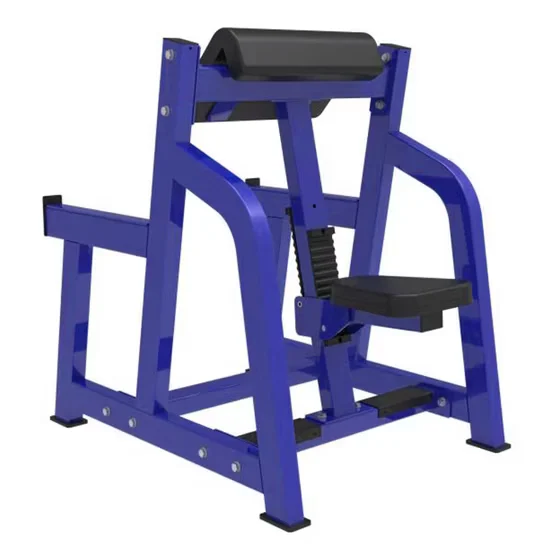
Plate Loaded ISO Lateral Shoulder Press, 1500×1250×1900mm, 139kg Net Weight — engineered with plate-loaded resistance and iso-lateral convergence for biomechanically accurate shoulder pressing. Built on industrial-grade steel framing with continuous robotic MIG welding to eliminate stress-point fatigue under repetitive heavy loads. Every unit undergoes individual load testing before shipment, backed by a 10-year frame warranty and free floor planning support for commercial facilities.
// Spec Highlights
• Direct from Manufacturer · No Middlemen · Worldwide Shipping
01
// Material
Imported Solid Wood
Premium hardwood frames sourced for density and visual warmth.
02
// Hardware
Medical-Grade Silent
Whisper-quiet pulleys and springs for clinical environments.
03
// Customization
Appearance OEM
Color, upholstery, and branding tailored to your studio.
04
// Service
Layout Design
Free venue planning for studios and rehab institutions.
Every component is selected for longevity, performance, and aesthetic harmony - from imported hardwood frames to silent medical-grade accessories.
// Features
Mill-Traceable Steel — every Plate Loaded ISO Lateral Shoulder Press frame links back to certified Q235/Q345 coil documentation.
| Parameter | Value |
|---|---|
| Product Type | Plate Loaded Shoulder Press Machine |
| Loading Type | Plate loaded |
| Frame Steel | 11-gauge, 3×3 inch tube |
| Steel Grade | Q235 / Q345 industrial steel, mill-certified |
| Welding Type | Robotic MIG, continuous weld lines |
| Load Capacity | Tested beyond 500kg |
| Bearing Type | Sealed industrial bearings |
| Powder Coating | Sandblast plus 200μm scratch-resistant finish |
| Product Dimensions | 1500×1250×1900mm |
| Net Weight | 139kg |
| Certification | ISO 9001, CE |
| Warranty | 10-year frame |
| Facility Type | Typical Use |
|---|---|
| Commercial gym strength floor | Primary shoulder pressing station in plate loaded zone |
| University strength and conditioning room | Overhead pressing development for athletic programs |
| Hotel fitness center | Durable shoulder station for high-turnover guest use |
| CrossFit box functional zone | Heavy overhead strength work alongside rig areas |
Continuous robotic MIG welding eliminates the weak links that fatigue first on plate loaded shoulder stations.
Many manufacturers quote "commercial grade" framing without disclosing whether welds are continuous or spot-applied at stress junctions. On a commercial plate loaded shoulder press machine, the connection points between the loading horns and the main upright experience repeated eccentric loading each session. Spot welds pass visual inspection on day one but develop micro-cracks within months of heavy use, eventually compromising structural integrity at the exact joint that carries the most stress [NEED_CITE: weld classification and fatigue performance in structural steel].
This commercial plate loaded shoulder press machine targets the frontal plane pressing pattern, engaging the anterior and medial deltoids through a converging iso-lateral arc. It pairs naturally with lateral raise and rear deltoid stations to complete a full shoulder development zone. The unit suits high-density commercial floors where plate loaded equipment anchors the strength section. Its iso-lateral design accommodates users ranging from first-time lifters to advanced athletes without requiring adjustment between sets.
Each loading cycle on this station involves eccentric deceleration as plates descend, creating shear stress at the horn-to-upright junction and rotational force on the pivot bearings. In a high-traffic commercial gym, a single station may see hundreds of sets per week, accumulating fatigue cycles that expose any welding shortcut or undersized bearing. The sealed industrial bearings resist sweat and chalk infiltration that degrades unsealed alternatives [NEED_CITE: EN 957 structural requirements for stationary training equipment]. The powder coating at plate contact zones must withstand repeated impact from loaded bumpers without chipping to bare steel.
The 11-gauge frame steel with 3×3 inch tube cross-section establishes a deflection threshold that holds under loaded conditions without perceptible flex. Robotic MIG welding produces uniform bead geometry across every seam, contrasting with manual welding where heat input varies by operator. The 200μm powder coating applied over sandblasted surfaces bonds mechanically to the substrate, preventing the edge-lift and flaking that thin coatings develop at grip and plate contact zones. Sealed bearings maintain rotational tolerance in chalk-dusty environments where bushing systems degrade and develop play.
Thinner-walled tubing flexes noticeably when users load heavy plates, introducing lateral oscillation that compromises pressing stability and accelerates frame fatigue. Spot-welded horn attachments can fail without visible warning, creating liability exposure for facility operators. Non-sealed bearings require scheduled replacement in commercial environments, adding labor and parts costs that compound across a full strength floor. Insufficient powder coating chips within months, exposing bare steel to sweat corrosion and forcing early refinishing or retirement of the unit [NEED_CITE: corrosion progression on powder-coated gym equipment frames].
The 11-gauge steel specification is traceable to mill certification, not a vague commercial-grade label. Robotic MIG welding produces continuous weld lines that eliminate the spot-weld failure points common in budget plate loaded equipment. Every unit undergoes individual load testing before shipment, meaning the test record corresponds to your specific machine, not a production sample. The 200μm industrial powder coating survives plate impacts and cleaning chemicals without premature breakdown. Ten-year frame warranty coverage reflects the structural margin engineered into each station. Our 2D-3D CAD layout support positions this commercial plate loaded shoulder press machine with correct safety clearances between adjacent stations and traffic lanes.
Share your strength zone square footage and target equipment list to receive a 2D-3D layout showing exact placement and clearance zones for each station. Specify average daily user volume so the structural grade matches your traffic profile. Confirm the body size range of your primary user population to validate that the fixed geometry fits your membership. Note any custom color, logo, or upholstery requirements for brand alignment across the floor.
Q: How do I verify actual steel gauge versus a generic commercial grade claim?
A: Request the mill certificate that traces the frame steel to its production coil. This document shows the exact gauge, chemical composition, and mechanical properties of the material used. Suppliers who cannot provide traceability documentation are typically sourcing from unverified secondary markets where wall thickness tolerances are inconsistent across production batches.
Q: What maintenance do sealed industrial bearings require compared to bushings?
A: Sealed bearings operate maintenance-free for extended periods because the seal prevents chalk dust, sweat, and cleaning solution infiltration. Bushing systems gradually develop rotational play as particulate matter works into the contact surface. In high-traffic commercial facilities, sealed bearings eliminate the recurring labor cost of bushing inspection, lubrication, and eventual replacement across dozens of stations.
Q: How does plate loaded compare to selectorized for shoulder press applications?
A: Plate loaded stations suit environments where users prefer incremental loading with standard plates and where the training culture emphasizes free-weight methodology. Selectorized systems serve facilities prioritizing quick weight changes and supervised beginner populations. Plate loaded stations carry lower mechanical complexity since they eliminate cables, pulleys, and weight stack guide rods entirely.
Q: What clearance spacing does this station need on a commercial strength floor?
A: Allow adequate lateral space for full arm extension during the pressing arc plus rear clearance for plate loading and unloading. Exact spacing depends on adjacent equipment type and traffic lane positioning. A proper CAD layout accounts for the user envelope during maximum extension and the operator zone behind the loading horns to prevent pathway conflicts during peak hours.
Premium aesthetics meet quiet operation for boutique studio environments.
Medical-grade silence and precision for sports & postpartum recovery.
Furniture-grade craftsmanship for premium residential installations.
Compact premium setups for one-on-one and small-group training.
Aesthetic Pilates integration for hybrid wellness studio programming.
Multi-unit deployment with instructor-grade reliability for certification programs.
Tell us about your project. Our team will respond within 24 hours with pricing, customization options, and shipping details.
// Sales Director
William
+86 132 2531 1800
// Export Manager
Bella
+86 198 5412 8032
william@bickfit.com