01 / Scenario
STUDIO
P
High-End Pilates Studios
Premium aesthetics meet quiet operation for boutique studio environments.

ISO
9001
CE
Certified
OEM
Available
10YR
Warranty
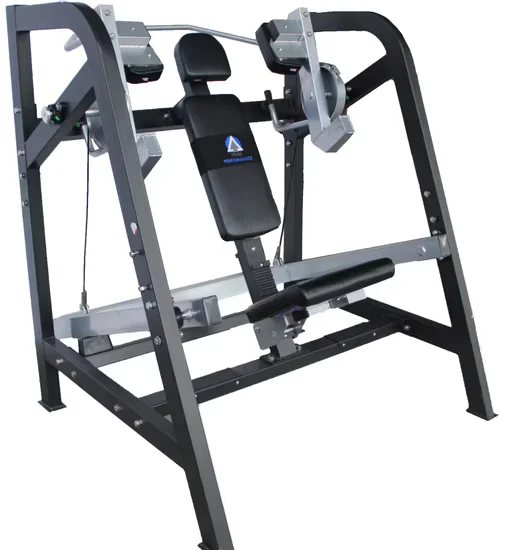
Plate Loaded Lateral D.Y. Row Machine, 1455×1476×2133mm, 135kg Net Weight — iso-lateral converging path with independent arms for balanced back development, plate loaded configuration for flexible resistance progression in high-traffic commercial environments. Built on 11-gauge 3×3 inch frame steel with robotic MIG continuous welding and sealed industrial bearings for wobble-free operation under heavy loads. Backed by 10-year frame warranty and factory-direct floor planning support for optimal commercial gym layout.
// Spec Highlights
• Direct from Manufacturer · No Middlemen · Worldwide Shipping
01
// Material
Imported Solid Wood
Premium hardwood frames sourced for density and visual warmth.
02
// Hardware
Medical-Grade Silent
Whisper-quiet pulleys and springs for clinical environments.
03
// Customization
Appearance OEM
Color, upholstery, and branding tailored to your studio.
04
// Service
Layout Design
Free venue planning for studios and rehab institutions.
Every component is selected for longevity, performance, and aesthetic harmony - from imported hardwood frames to silent medical-grade accessories.
// Features
Mill-Certified Frame Steel — every tube in this lateral row traces back to the coil with verifiable Q235 or Q345 grade documentation.
| Parameter | Value |
|---|---|
| Product Type | Plate Loaded Seated Row Machine |
| Frame Steel Gauge | 11-gauge |
| Frame Tube Size | 3×3 inch |
| Steel Grade | Q235 / Q345 industrial steel, mill-certified |
| Welding Type | Robotic MIG continuous weld |
| Loading Type | Plate loaded |
| Bearing Type | Sealed industrial bearings |
| Pulley System | Aircraft-cable pulley system |
| Powder Coating | 200μm scratch-resistant, sandblast pre-treatment |
| Upholstery | Standard or high-density options available |
| Product Dimensions | 1455×1476×2133mm |
| Net Weight | 135kg |
| Color Options | Optional |
| Assembly State | Unfolded |
| Certification | ISO 9001:2015, CE |
| Warranty | 10-year frame |
| OEM / Customization | Available |
| Facility Type | Typical Use |
|---|---|
| Commercial gym strength floor | Primary iso-lateral row station in the back training zone |
| Hotel and resort fitness center | Durable pulling machine for high-turnover guest use |
| University strength and conditioning room | Athletic department back development for field and court athletes |
| CrossFit box functional zone | Heavy plate-loaded rowing alongside rigs and free weight stations |
| Rehabilitation and performance center | Controlled iso-lateral pulling for return-to-play programming |
Real gauge and wall thickness determine whether the chassis stays rigid or flexes under loaded plates.
Many suppliers describe frame tubing as "commercial grade" without providing verifiable steel specifications. When a commercial plate loaded lateral row machine carries six plates per arm through thousands of weekly repetitions, vague claims offer no protection against frame flex, weld fatigue, or pivot arm drift. The buyer is left trusting a label rather than a mill certificate. [NEED_CITE: EN 957 structural requirements for stationary training equipment]
This machine eliminates that guesswork. The frame is built from 11-gauge 3×3 inch steel tubing sourced as Q235 or Q345 industrial grade, with traceability back to the originating coil. Every tube passes through a 6kW fiber laser at ±0.1mm cutting tolerance before entering the welding cell.
This lateral row targets the mid-back, lats, and rear deltoids through a converging iso-lateral pulling path. It pairs naturally with a plate-loaded front lat pulldown and a T-bar row to complete a three-station back zone. The 1455×1476mm footprint fits standard commercial spacing grids, leaving room for plate storage and safe passage between stations. It accommodates users across a wide range of torso lengths and arm spans due to the independent arm design, making it practical for facilities serving mixed populations from general fitness members to collegiate athletes. The commercial plate loaded lateral row machine earns its floor space by covering movement patterns that cable-based alternatives cannot replicate under equivalent loading.
The pivot arms on a plate-loaded row experience cyclic eccentric loading every repetition — the user accelerates through the concentric phase, then controls the return against gravity and plate mass. Each weld joint at the arm-to-frame junction accumulates fatigue cycles proportional to daily usage volume. [NEED_CITE: weld classification and fatigue performance in structural steel] In a facility running twelve or more hours daily, those joints endure tens of thousands of cycles per week. Sealed industrial bearings at the pivot point resist contamination from chalk dust and sweat, maintaining alignment where open bushings would develop lateral play. The powder coating at grip contact zones and plate horn interfaces must withstand repeated abrasion and chemical exposure from cleaning agents without exposing bare steel.
The 11-gauge frame tube sets the deformation threshold well above what typical gym loading will produce, meaning the chassis does not deflect perceptibly even when both arms carry maximum plate load. Robotic MIG continuous welding produces uniform bead geometry along the entire joint length, removing the inconsistent penetration and cold-start defects inherent to manual spot welding. Sealed industrial bearings prevent the gradual loosening that open bushings experience in dusty, humid gym environments — the seal keeps contaminants out and lubrication in. The 200μm powder coating, applied over sandblast pre-treatment, provides a scratch-resistant surface that holds up against plate contact and cleaning chemical exposure far better than thin decorative finishes. Aircraft-cable pulleys matched to appropriately sized sheave diameters prevent the cable fraying and premature replacement cycles that plague undersized pulley systems.
Thin-wall tubing deflects under heavy plate loads, creating a perceptible wobble that trained users immediately notice and report. Spot-welded joints at the pivot arm junction crack without visible warning, creating both a safety hazard and a liability question for the facility operator. [NEED_CITE: structural failure modes in welded fitness equipment frames] Non-sealed bearings and bushings develop lateral play within months in dusty environments, requiring bearing replacement or full arm rebuilds. Thin powder coating chips at plate horn contact points, exposing bare steel to oxidation that spreads beneath adjacent coating. Non-standard hardware and proprietary fasteners mean replacement parts are unavailable once the original supplier discontinues support, turning a minor wear issue into a full machine retirement.
The 11-gauge steel frame with mill-certified traceability means procurement teams can verify material grade against their specification requirements rather than accepting an unsubstantiated claim. Robotic MIG continuous welding across every joint removes the weak-point variability that manual welding introduces on high-stress pivot connections. Every unit undergoes load testing before shipment, not sample-based batch testing, so the machine arriving at the dock has individually verified structural integrity. The 200μm industrial powder coating with sandblast pre-treatment preserves appearance through years of plate contact and chemical cleaning. The 10-year frame warranty reflects confidence in long-term fatigue performance. Floor planning CAD support ensures the 1455×1476mm footprint integrates into the back training zone with correct safety clearances and plate storage access. OEM customization allows facility branding through color, logo, and upholstery selection.
Share your strength floor dimensions and current equipment list to receive a 2D or 3D layout showing how this commercial plate loaded lateral row machine integrates with safe clearances and traffic flow. Specify your expected daily user volume so the structural grade can be confirmed against your traffic profile. Indicate the body size range of your user population to verify seat and arm adjustment coverage. Note any customization requirements including frame color, logo placement, or upholstery material and density preference.
Q: How can I verify the actual steel gauge versus a generic "commercial grade" claim?
A: Request the mill certificate for the frame tubing, which documents the originating steel coil, grade designation such as Q235 or Q345, wall thickness, and chemical composition. A verifiable mill certificate provides traceability that a marketing label cannot. Cross-reference the certified gauge against the frame tube dimensions stated on the specification sheet.
Q: What maintenance do sealed industrial bearings require compared to open bushings?
A: Sealed industrial bearings are essentially maintenance-free under normal commercial use because the seal retains lubrication and excludes chalk dust and moisture. Open bushings require periodic inspection for lateral play and may need replacement once wear becomes perceptible. On high-traffic floors, the sealed bearing approach reduces scheduled downtime and parts inventory.
Q: How should I plan spacing between this row machine and adjacent stations?
A: Use the 1455×1476mm footprint as the baseline and add clearance on all sides for plate loading, user passage, and emergency egress. A CAD layout from the manufacturer accounts for plate storage positioning, adjacent machine swing paths, and ADA-compliant aisle widths. Proper spacing prevents user congestion and reduces collision risk during plate changes.
Q: What is the difference in fatigue life between continuous MIG welds and spot welds on pivot arms?
A: Continuous MIG welds distribute stress along the entire joint length, eliminating the concentrated stress points that form at the edges of spot welds. Under thousands of cyclic loading repetitions, spot-welded joints develop micro-cracks at unwelded gaps. Continuous welding extends the fatigue life of the pivot arm junction and reduces the probability of sudden joint failure.
Premium aesthetics meet quiet operation for boutique studio environments.
Medical-grade silence and precision for sports & postpartum recovery.
Furniture-grade craftsmanship for premium residential installations.
Compact premium setups for one-on-one and small-group training.
Aesthetic Pilates integration for hybrid wellness studio programming.
Multi-unit deployment with instructor-grade reliability for certification programs.
Tell us about your project. Our team will respond within 24 hours with pricing, customization options, and shipping details.
// Sales Director
William
+86 132 2531 1800
// Export Manager
Bella
+86 198 5412 8032
william@bickfit.com