01 / Scenario
STUDIO
P
High-End Pilates Studios
Premium aesthetics meet quiet operation for boutique studio environments.

ISO
9001
CE
Certified
OEM
Available
10YR
Warranty
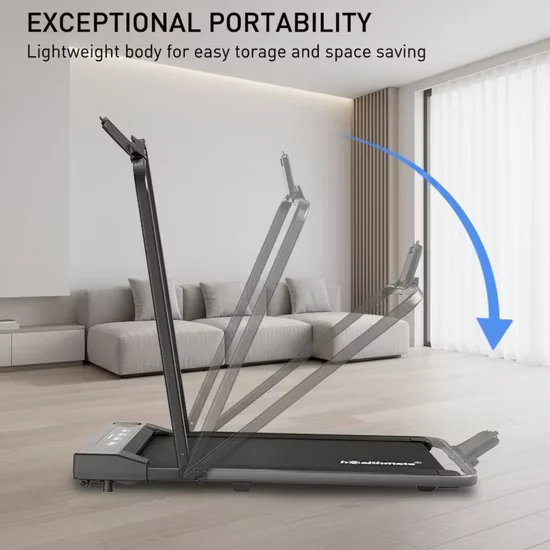
Electric Folding Walking Treadmill, 1.5HP Motor, 1-16 km/h Speed, 1200×450mm Runway — the 1.5HP motor supports continuous walking and light jogging, while the 1200×450mm belt delivers stable stride length for adult users. The foldable frame collapses to 1810×740×220mm, reducing storage footprint by over 80%. - 16 preset programs with LCD tracking for speed, distance, time, and calories. - CE and RoHS certified for global compliance. Every unit undergoes six-stage QC inspection before shipment, ensuring motor durability and folding mechanism reliability.
// Spec Highlights
• Direct from Manufacturer · No Middlemen · Worldwide Shipping
01
// Material
Imported Solid Wood
Premium hardwood frames sourced for density and visual warmth.
02
// Hardware
Medical-Grade Silent
Whisper-quiet pulleys and springs for clinical environments.
03
// Customization
Appearance OEM
Color, upholstery, and branding tailored to your studio.
04
// Service
Layout Design
Free venue planning for studios and rehab institutions.
Every component is selected for longevity, performance, and aesthetic harmony - from imported hardwood frames to silent medical-grade accessories.
// Features
Foldable Frame Integrity — The hinge mechanism undergoes repeated load cycling to ensure structural rigidity remains consistent across thousands of folding operations, preventing the play that compromises stability in compact cardio units.
| Parameter | Value |
|---|---|
| Product Type | Electric Folding Walking Treadmill |
| Motor Power | 1.5HP |
| Speed Range | 1-16 km/h |
| Runway Size | 1200×450 mm |
| Unfolded Dimensions | 1500×740×1150 mm |
| Folded Dimensions | 1810×740×220 mm |
| Net Weight | 42.0 kg |
| Console Display | LCD (Speed / Distance / Time / Calories) |
| Preset Programs | 16 |
| Frame Material | ABS Housing / Steel Internal Frame |
| Foldable | Yes |
| Certification | CE, RoHS |
| Customization | OEM/ODM Available |
| Facility Type | Typical Use |
|---|---|
| Boutique Fitness Studios | Warm-up zones and cool-down cardio circuits |
| Hotel Fitness Centers | Guest room or compact lobby cardio solutions |
| Corporate Wellness Rooms | Space-efficient walking stations for employees |
| Rehabilitation Centers | Low-impact gait training and mobility recovery |
| Residential Complexes | Shared amenity areas with limited square footage |
Many units marketed for compact spaces sacrifice the structural mass required for stable operation at higher speeds. When a frame lacks sufficient density, the chassis vibrates excessively, and the running belt tracking shifts under dynamic load. This unit addresses that gap by engineering a hinge system that locks securely without introducing flex points. [NEED_CITE: structural requirements for folding mechanisms in dynamic cardio equipment]
The challenge lies in balancing weight reduction with operational stability. Thinner gauge steel may lower shipping costs but introduces resonance that accelerates bearing wear. By prioritizing a rigid internal skeleton within the ABS housing, the equipment maintains a steady platform even during interval transitions, ensuring the user’s stride remains uninterrupted by mechanical chatter.
This electric folding walking treadmill for home use serves as a bridge between dedicated cardio decks and functional training areas. Its 1200×450 mm runway accommodates a natural walking stride and light jogging gait for a wide range of user heights, making it suitable for facilities where floor space is at a premium. Unlike bulkier commercial treadmills that dominate a room, this unit can be deployed in high-density layouts or stored vertically when not in use, allowing operators to maximize the utility of every square meter without sacrificing the quality of the movement experience.
The defining stress point of any folding unit is the hinge assembly. In commercial or high-traffic residential environments, the mechanism is subjected to both static loads during operation and dynamic shear forces during the folding action. Standard consumer hinges often develop play within months, leading to a wobbling deck that feels unsafe at speeds above 8 km/h. The engineering here focuses on reinforced pivot points and locking pins that distribute load across a wider surface area, reducing the concentration of stress on any single weld or bolt. [NEED_CITE: fatigue performance of mechanical hinges in repetitive motion applications] This approach ensures that the transition from locked to folded remains smooth, preventing the metal-on-metal grinding that signals premature wear.
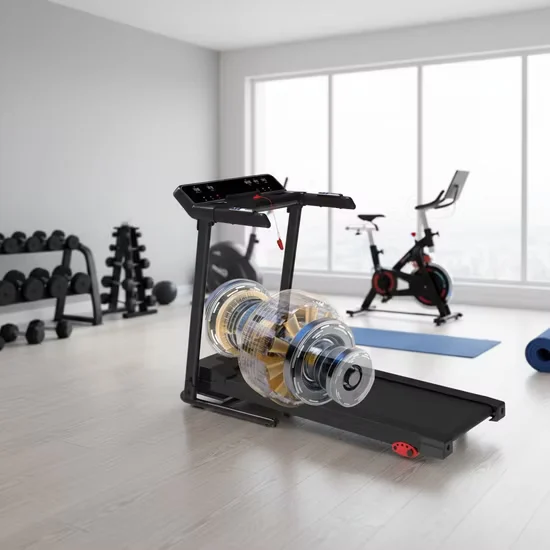
A 1.5HP motor in a unit of this size must deliver consistent torque across the 1-16 km/h range without overheating during extended sessions. The key is not just peak power, but the motor’s ability to maintain belt speed under varying user weights. The 1200×450 mm runway provides sufficient surface area to prevent the "trapped" feeling common in narrower decks, allowing for a more natural arm swing and foot placement. The belt material and deck lubrication are critical here; a high-friction surface increases motor strain, while a properly treated deck reduces wear on both the belt and the motor brushes, extending the service interval.
Manufacturers often reduce weight to simplify the folding action, but this can lead to a chassis that flexes under a 90kg user running at 12 km/h. Such flex not only creates an uncomfortable running experience but also misaligns the motor and roller bearings, leading to premature failure. Additionally, cheap ABS plastics may become brittle over time when exposed to UV light or cleaning chemicals, cracking at stress points. By selecting impact-resistant polymers and reinforcing the internal steel structure, this unit avoids the lifecycle costs associated with replacing cracked housings or realigning shifted motor mounts. [NEED_CITE: material degradation rates of engineering plastics in fitness environments]
The decision to deploy an electric folding walking treadmill for home use or commercial micro-gym often comes down to spatial efficiency. This model offers a folded footprint of just 220 mm in width, allowing it to be stored in closets or against walls without obstructing traffic flow. For operators, this means the ability to equip a room with multiple units that can be deployed simultaneously or stored away to create open floor space for classes. The OEM/ODM capability allows for branding alignment, while the CE and RoHS certifications ensure compliance with international safety and environmental standards, simplifying the procurement process for global projects.
To determine if this electric folding walking treadmill for home use fits your specific spatial and operational requirements, provide your floor plan dimensions and desired equipment density. Our team can generate a 2D-3D layout showing optimal placement and storage zones. Specify your target user weight range and daily usage hours to ensure the motor and structural specifications align with your facility’s intensity. Custom branding and console language options are available for bulk procurement.
Q: How does the folding mechanism affect the stability of the electric folding walking treadmill for home use during a run?
A: The stability is maintained through a reinforced steel internal frame and a precision-machined hinge that locks the deck rigidly in the open position. Unlike consumer models that rely on plastic latches, this system uses metal pins that eliminate deck wobble, ensuring the running surface remains steady even at the upper end of the 16 km/h speed range.
Q: Is the 1.5HP motor sufficient for continuous commercial use in a hotel gym?
A: While 1.5HP is typically rated for light commercial or heavy residential use, its suitability depends on the session length and user weight. For hotel environments where users typically engage in 20-30 minute walking or light jogging sessions, the motor provides adequate torque. However, for 24/7 high-traffic facilities, a higher continuous-duty motor rating would be recommended to prevent thermal overload.
Q: What maintenance is required for the runway and belt to ensure longevity?
A: The 1200×450 mm runway requires periodic lubrication to reduce friction between the belt and the deck. We recommend applying silicone-based lubricant every 150 hours of use. Additionally, the belt tension should be checked quarterly; a loose belt can slip under load, while an overtightened belt increases motor wear. Regular cleaning of the deck surface prevents debris accumulation that could accelerate wear.
Q: Can the console programs be customized for specific training protocols?
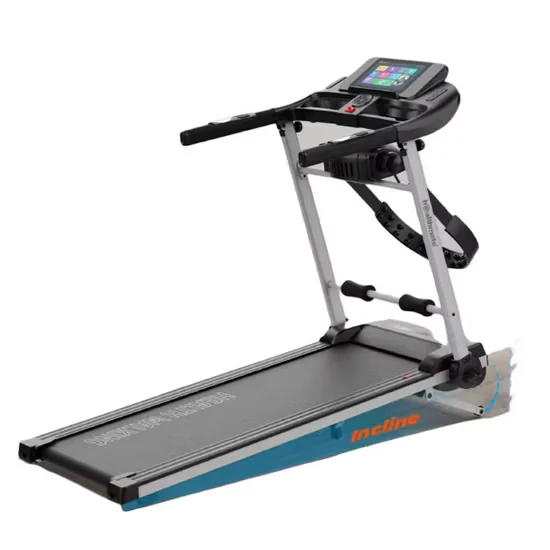
A: The unit comes with 16 preset programs designed to vary speed and incline (if applicable) to simulate different terrains. While the firmware is generally fixed for standard models, OEM/ODM projects with sufficient volume can request custom program profiles tailored to specific rehabilitation protocols or athletic conditioning sequences, provided the motor controller supports the required parameter adjustments.
Premium aesthetics meet quiet operation for boutique studio environments.
Medical-grade silence and precision for sports & postpartum recovery.
Furniture-grade craftsmanship for premium residential installations.
Compact premium setups for one-on-one and small-group training.
Aesthetic Pilates integration for hybrid wellness studio programming.
Multi-unit deployment with instructor-grade reliability for certification programs.
Tell us about your project. Our team will respond within 24 hours with pricing, customization options, and shipping details.
// Sales Director
William
+86 132 2531 1800
// Export Manager
Bella
+86 198 5412 8032
william@bickfit.com