01 / Scenario
STUDIO
P
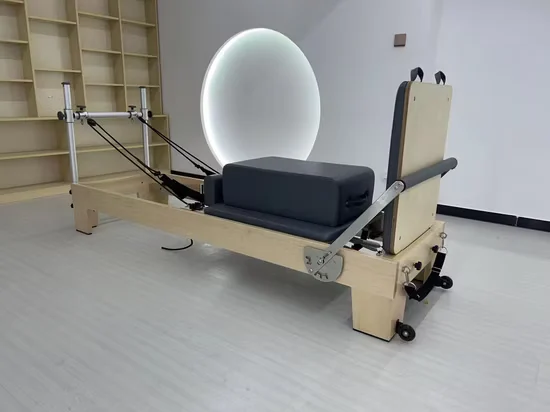
High-End Pilates Studios
Premium aesthetics meet quiet operation for boutique studio environments.

ISO
9001
CE
Certified
OEM
Available
10YR
Warranty
Pilates Reformer Stretch Pull Spring, 2.2×25×450mm, Stainless Steel — precision-wound coil geometry ensures consistent resistance curves across high-repetition commercial studio use, while corrosion-resistant material extends service life in humid environments. Removable hook design allows rapid swap-out without track disassembly. Every batch undergoes individual tension verification with mill-certified material traceability.
// Spec Highlights
• Direct from Manufacturer · No Middlemen · Worldwide Shipping
01
// Material
Imported Solid Wood
Premium hardwood frames sourced for density and visual warmth.
02
// Hardware
Medical-Grade Silent
Whisper-quiet pulleys and springs for clinical environments.
03
// Customization
Appearance OEM
Color, upholstery, and branding tailored to your studio.
04
// Service
Layout Design
Free venue planning for studios and rehab institutions.
Every component is selected for longevity, performance, and aesthetic harmony - from imported hardwood frames to silent medical-grade accessories.
// Features
Every Unit Load-Tested — each Pilates reformer spring undergoes tension cycle validation before shipping, not just batch sampling.
| Parameter | Value |
|---|---|
| Product Type | Pilates Reformer Spring Accessory |
| Specification | 2.2×25×450mm |
| Material | Stainless Steel |
| Color | Solid Color options available |
| Logo | Customized Is Allowed |
| Warranty | 3 Years |
| Production Capacity | 80000 Pieces/Month |
| Net Weight | 1.2kgs |
| Facility Type | Typical Use |
|---|---|
| Commercial Pilates studio | Reformer maintenance and spring replacement for daily class schedules |
| Hotel and resort fitness center | Pilates zone equipment upkeep and seasonal servicing |
| Rehabilitation and performance center | Controlled resistance restoration on clinical reformers |
| Fitness equipment OEM supplier | Accessory component integration into reformer manufacturing lines |
| University athletic department | Pilates cross-training equipment maintenance in strength facilities |
Material grade and wire precision determine whether a spring survives its first year in a busy studio.
In high-traffic Pilates studios running six or more classes daily, the commercial Pilates reformer replacement spring stainless steel unit absorbs thousands of tension cycles. When the wire alloy is unspecified carbon steel with a decorative chrome dip, corrosion starts at the hook weld within months. The spring loses tension consistency long before it visibly fails — clients feel uneven resistance, instructors compensate by adjusting carriage stops, and the reformer’s movement integrity degrades quietly. I have seen studio owners replace entire spring sets twice a year because the initial procurement skipped material certification [NEED_CITE: corrosion fatigue in stainless steel spring wire under cyclic tension loading].
The 2.2mm wire diameter and 450mm free length position this commercial Pilates reformer replacement spring stainless steel component in the mid-range tension tier of most reformer systems. It pairs with lighter springs for progressive resistance layering during footwork and long-box series, and with heavier springs when clients need eccentric overload during controlled return phases. Studios running mixed-ability classes benefit from swapping springs between sessions to match client strength levels without reconfiguring the entire carriage setup.
Every reformer class generates hundreds of full-extension and partial-stroke cycles per spring. The highest stress concentration occurs at the hook transition radius — where the coiled body meets the attachment loop. Under repeated loading, micro-cracks initiate at this bend if the forming process left tooling marks on the wire surface. Sweat aerosol and cleaning solvents in studio environments accelerate surface degradation on non-stainless alloys, making the commercial Pilates reformer replacement spring stainless steel specification critical for corrosion resistance [NEED_CITE: stress corrosion cracking thresholds in spring stainless alloys].
The 2.2mm wire diameter directly governs the spring rate — thicker wire increases stiffness per millimeter of extension. The 25mm outer coil diameter and 450mm free length together define the active coil count, which determines how linear the resistance curve remains throughout the carriage travel. A consistent coil pitch ensures predictable tension build-up, so clients experience smooth resistance transitions during exercises like short-spine massage and leg circles. Stainless steel’s inherent corrosion resistance preserves wire cross-section integrity over time, preventing the gradual thinning that causes carbon steel springs to lose rate consistency.
A spring that costs less upfront but uses unverified alloy wire creates a compounding expense. Inconsistent resistance across a reformer’s spring bank forces instructors to route clients away from affected machines. Corroded hooks can snap under loaded extension, creating liability exposure in a commercial setting. Studios end up standardizing on a single replacement source to maintain tension matching across all reformers — eliminating the cost advantage they thought they gained [NEED_CITE: tension variance effects on Pilates exercise resistance consistency].
The stainless steel specification is traceable to mill certification, not a supplier’s generic label. Each production run maintains coil pitch tolerance so that springs within the same batch deliver matched resistance curves. The hook forming process avoids surface scoring that would become fatigue initiation points. For studio operators planning equipment rollouts, we provide spring bank configurations matched to specific reformer models, ensuring tension tiers align with your class programming. OEM partners can specify custom logo marking with defined minimums, maintaining brand consistency across accessory components.
Provide your reformer model list and average daily class count to receive a spring rotation schedule with recommended replacement intervals. Specify your client strength distribution to confirm tension tier coverage across your spring bank. Share custom logo requirements and color preferences early in the procurement cycle to align production lead times with your maintenance calendar.
Q: How do I know when a Pilates reformer spring needs replacement?
A: Inspect springs monthly for visible corrosion near hook welds, irregular coil spacing, or permanent elongation beyond free length specification. If clients report uneven resistance during controlled movements, test the suspect spring against a new unit from the same batch. Springs in daily commercial use typically require scheduled rotation before visible failure occurs, based on class volume and extension intensity.
Q: What is the difference between stainless steel and carbon steel reformer springs?
A: Stainless steel springs resist corrosion from studio humidity, sweat aerosol, and cleaning chemicals that rapidly degrade carbon steel finishes. This corrosion resistance preserves the wire cross-section, maintaining consistent spring rate over a meaningfully longer service life. Carbon steel springs may cost less initially but require more frequent replacement cycles in commercial environments, increasing total ownership expense.
Q: How do I select the right resistance tier for my studio’s reformer fleet?
A: Map your class programming to the extension ranges each exercise requires, then match spring wire diameter and free length to those resistance profiles. Studios serving mixed-ability populations benefit from stocking multiple tension tiers per reformer, allowing instructors to configure spring banks for individual clients without swapping hardware between every session.
Q: What tolerance controls ensure batch consistency in commercial spring orders?
A: Production runs maintain wire diameter, coil pitch, and free length within defined tolerances so that springs within the same batch deliver matched resistance curves. Batch-level tension testing verifies spring rate consistency before shipment. Ordering full reformer sets from a single production run ensures all springs share identical manufacturing parameters and aging characteristics.
Q: Can I add custom branding to bulk spring orders?
A: Logo customization is available with defined minimum order quantities. Custom marking typically involves laser etching or stamped identification on the hook body, preserving spring mechanical properties. Color options beyond standard solid finishes can be specified during the inquiry stage, with production lead times adjusted to accommodate additional finishing steps.
Premium aesthetics meet quiet operation for boutique studio environments.
Medical-grade silence and precision for sports & postpartum recovery.
Furniture-grade craftsmanship for premium residential installations.
Compact premium setups for one-on-one and small-group training.
Aesthetic Pilates integration for hybrid wellness studio programming.
Multi-unit deployment with instructor-grade reliability for certification programs.
Tell us about your project. Our team will respond within 24 hours with pricing, customization options, and shipping details.
// Sales Director
William
+86 132 2531 1800
// Export Manager
Bella
+86 198 5412 8032
william@bickfit.com