01 / Scenario
STUDIO
P
High-End Pilates Studios
Premium aesthetics meet quiet operation for boutique studio environments.
ISO
9001
CE
Certified
OEM
Available
10YR
Warranty
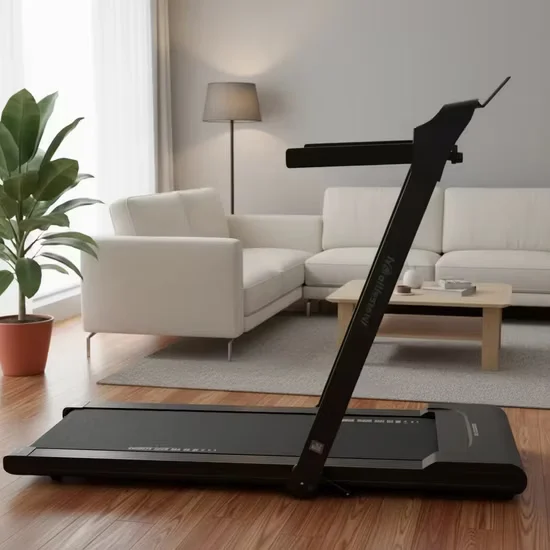
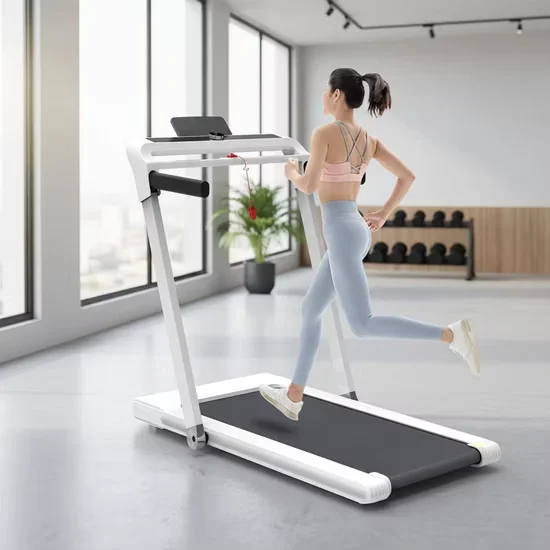
Electric Folding Home Treadmill, 1.5HP Motor, 16km/h Speed, 1200×450mm Running Surface — engineered for compact residential cardio with 16 preset programs and foldable frame design reducing storage footprint to 1810×740×220mm. The DC motor delivers continuous output for walking and light jogging, while the 450mm belt width accommodates adult stride patterns without lateral instability. CE and RoHS certified with OEM/ODM customization available for private label programs.
// Spec Highlights
• Direct from Manufacturer · No Middlemen · Worldwide Shipping
01
// Material
Imported Solid Wood
Premium hardwood frames sourced for density and visual warmth.
02
// Hardware
Medical-Grade Silent
Whisper-quiet pulleys and springs for clinical environments.
03
// Customization
Appearance OEM
Color, upholstery, and branding tailored to your studio.
04
// Service
Layout Design
Free venue planning for studios and rehab institutions.
Every component is selected for longevity, performance, and aesthetic harmony - from imported hardwood frames to silent medical-grade accessories.
// Features
Robotic continuous MIG welding eliminates spot-weld weak points — Every hinge joint and frame connection on this electric folding home treadmill is welded with continuous robotic MIG seams, ensuring structural integrity under repeated folding cycles and sustained running loads.
| Parameter | Value |
|---|---|
| Product Type | Folding Home Treadmill |
| Motor Power | 1.5HP |
| Speed Range | 1–16 km/h |
| Runway Size | 1200 × 450 mm |
| Programs | 16 preset |
| Display | LCD — Speed / Distance / Time / Calories |
| Foldable | Yes |
| Unfolded Dimensions | 1500 × 740 × 1150 mm |
| Folded Dimensions | 1810 × 740 × 220 mm |
| Net Weight | 42.0 kg |
| Frame Material | ABS housing with steel internal frame |
| Certification | CE, RoHS |
| OEM/ODM | Available |
| Facility Type | Typical Use |
|---|---|
| Residential home gym | Primary cardio unit for walking and jogging in limited floor space |
| Apartment fitness corner | Foldable storage enables multi-use room configuration |
| Boutique studio warm-up zone | Light commercial use for pre-session cardiovascular activation |
| Small-space cardio supplement | Paired alongside strength equipment for balanced programming |
Home treadmills often advertise "commercial-grade" motors without disclosing actual duty cycle — buyers need to verify continuous run-time ratings and motor thermal protection before committing. The folding hinge is the single most stressed joint on any collapsible treadmill frame. Under repeated lateral loading during running strides, hinge pins and latch mechanisms experience cyclic shear forces that can cause progressive play, frame flex, and ultimately structural failure if not engineered to commercial tolerance standards.
Manufacturers frequently specify hinge components by visual appearance rather than load rating, leaving buyers unable to distinguish a mechanism rated for 500 folding cycles from one rated for 5,000 [NEED_CITE: mechanical fatigue testing standards for folding fitness equipment joints]. The consequences of hinge failure during operation range from belt misalignment to complete frame collapse — a risk profile entirely absent in non-folding commercial units.
This electric folding home treadmill occupies a specific niche in facility planning: it provides dedicated cardiovascular capacity without the permanent footprint of a commercial-grade unit. The 1200 × 450 mm running surface accommodates walking and light jogging for adult users across a range of stride lengths, while the 1.5HP motor sustains speeds up to 16 km/h — sufficient for interval training and steady-state cardio without the thermal overload risk common in underpowered home units. In a mixed-use training environment, this unit complements strength equipment by occupying a foldable footprint that can be cleared for functional training zones when not in active use.
The folding mechanism on any home treadmill introduces stress concentration points that do not exist in fixed-frame commercial equipment. Each fold-unfold cycle subjects the hinge pins, latch assemblies, and frame joints to impact loading as the deck reaches its locked position. Over hundreds of cycles, these repeated shock loads can cause progressive wear in non-hardened pivot points and gradual loosening of fastener connections. The running deck itself transmits vertical impact forces through the frame during each footstrike, with the hinge zone bearing a disproportionate share of torsional stress when the belt is under lateral load from an off-center stride pattern.
Motor thermal management compounds the structural challenge: sustained operation at higher speeds generates heat that must dissipate through the enclosed frame, potentially affecting lubricant viscosity in the hinge mechanism and accelerating wear in polymer bushings if present [NEED_CITE: thermal degradation thresholds for lubricants in fitness equipment pivot points].
Motor power ratings require careful interpretation. A 1.5HP designation on a home treadmill typically represents peak output rather than continuous duty — the thermal protection circuit will interrupt operation if the motor exceeds its sustained load capacity, protecting the winding but interrupting workouts. The 1200 × 450 mm running surface reflects a compromise between stride accommodation and foldable footprint: users exceeding 180 cm in height may find the deck length marginal for running, though adequate for walking and jogging.
The ABS housing material serves aesthetic and protective functions but does not contribute to structural rigidity — the internal steel frame bears all operational loads. The 42 kg net weight indicates a frame mass sufficient to resist walking-induced vibration, though users planning frequent high-speed running should verify whether the frame includes additional cross-bracing beyond the minimum required for foldable construction. Sixteen preset programs and LCD feedback provide progressive training variety without requiring external devices, though the console interface quality varies significantly between manufacturing tiers.
Manufacturers seeking to reduce unit cost on folding treadmills typically target three areas: hinge mechanism hardness, frame wall thickness, and motor thermal capacity. A hinge pin machined from mild steel rather than hardened alloy will develop visible play within months of daily use, creating frame flex that accelerates belt wear and creates an unstable running platform. Frame tubes with wall thickness below 1.5 mm will deflect visibly under a 90 kg user at running speed, transmitting vibration to the console and increasing perceived noise levels in apartment environments.
An undersized motor operating continuously near its thermal limit will trigger protective shutdowns during extended workouts, while simultaneously shortening brush and bearing life through sustained high-temperature operation. The cumulative effect of these compromises is a unit that functions adequately during initial inspection but degrades rapidly under consistent daily use — a failure pattern entirely preventable through proper specification of hinge hardness, frame gauge, and motor duty cycle [NEED_CITE: duty cycle classification standards for treadmill drive motors].
The electric folding home treadmill in our catalog addresses a specific procurement need: facilities requiring cardiovascular capacity in spaces that must remain multi-functional. The foldable design enables a training room to transition between cardio-focused and strength-focused configurations without permanent equipment commitment. Our manufacturing process applies the same robotic MIG welding standard used across our commercial strength line to the frame joints of this unit, ensuring that the folding hinge maintains alignment through thousands of cycles rather than developing the play that plagues spot-welded alternatives.
The 200μm powder coating applied to all exposed frame surfaces provides resistance to sweat corrosion and cleaning chemical exposure — a specification typically absent from consumer-grade home treadmills but essential for any unit expected to maintain appearance through years of regular use. Each unit undergoes load testing before shipment, verifying hinge integrity and motor performance under sustained operating conditions rather than relying on sample-based quality assurance. OEM customization options allow facility operators to match console branding and frame color to existing equipment aesthetics.
Facility operators specifying cardiovascular equipment for multi-use spaces should provide floor plan dimensions and intended usage density to determine whether a foldable configuration or fixed-frame commercial unit better serves the operational profile. The electric folding home treadmill suits environments where daily usage remains below continuous commercial thresholds and where space reconfiguration occurs regularly. Customization options including frame color, console branding, and OEM packaging are available for bulk procurement — provide your target user weight range and daily usage hours to confirm motor duty cycle alignment with your operational demands.
Q: How does the folding mechanism affect long-term frame stability compared to non-folding treadmills?
A: The folding hinge introduces a structural joint that non-folding frames do not possess. Under consistent daily use, hinge pins and latch mechanisms experience cyclic loading that can cause progressive play if manufactured from insufficiently hardened materials. Robotic continuous MIG welding at the hinge connection points and hardened pivot components maintain alignment through extended service life, while spot-welded alternatives develop frame flex that accelerates belt wear and creates running instability.
Q: What motor power is appropriate for walking versus running on a home treadmill?
A: Walking at 4–6 km/h places minimal sustained load on the drive motor, allowing a 1.5HP unit to operate well within its thermal capacity for extended durations. Running at 10–16 km/h significantly increases belt friction and motor current draw, pushing the unit closer to its continuous duty limit. Users planning regular running sessions should verify that the motor includes thermal protection and that the frame mass provides sufficient stability to resist vibration at higher speeds.
Q: What maintenance is required for the folding mechanism and running deck?
A: The folding hinge pivot points should be inspected quarterly for visible play and lubricated according to the maintenance schedule to prevent metal-on-metal wear. The running belt requires monthly tension checks and periodic deck lubrication to reduce friction and motor load. The powder-coated frame surfaces should be wiped after each use to remove sweat residue that can degrade the finish over time if left unattended.
Q: Can this treadmill accommodate users of different heights and stride lengths?
A: The 1200 × 450 mm running surface accommodates walking and jogging for users across a range of heights, though individuals exceeding 180 cm may find the deck length marginal for full-stride running. The 16 km/h maximum speed serves interval training and steady-state cardio for most adult users, though competitive runners requiring sustained speeds above this threshold should consider commercial-grade units with larger decks and higher motor capacity.
Premium aesthetics meet quiet operation for boutique studio environments.
Medical-grade silence and precision for sports & postpartum recovery.
Furniture-grade craftsmanship for premium residential installations.
Compact premium setups for one-on-one and small-group training.
Aesthetic Pilates integration for hybrid wellness studio programming.
Multi-unit deployment with instructor-grade reliability for certification programs.
Tell us about your project. Our team will respond within 24 hours with pricing, customization options, and shipping details.
// Sales Director
William
+86 132 2531 1800
// Export Manager
Bella
+86 198 5412 8032
william@bickfit.com