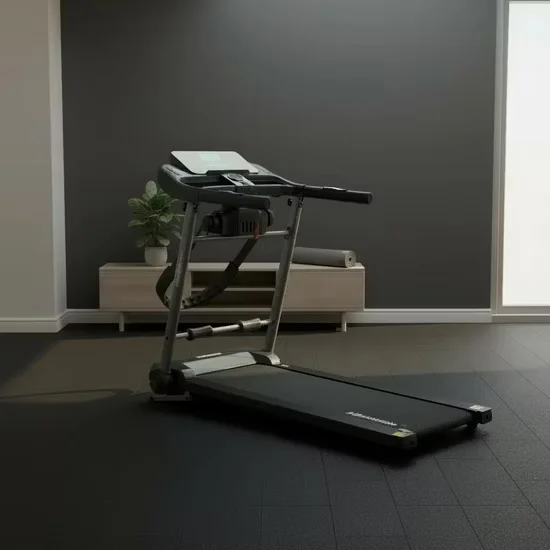
01 / Scenario
STUDIO
P
High-End Pilates Studios
Premium aesthetics meet quiet operation for boutique studio environments.
![[WARN] draft identifier mismatch MT296 Electric Running Machine Treadmill for Outdoor Running](https://bickgym.com/wp-content/uploads/2026/08/warn-draft-identifier-mismatch-mt296-electric-running-machine-treadmill-for-outdoor-running-a7cfad.webp)
ISO
9001
CE
Certified
OEM
Available
10YR
Warranty
Electric Motorized Treadmill, DC 2.0 HP Motor, 1200 × 520 mm Running Surface — foldable frame with gas strut hinge reduces footprint for space-constrained setups while maintaining belt stability at speeds up to 20 km/h across 16 preset programs. LCD console tracks speed, distance, time, calories, and pulse for user monitoring. Every unit undergoes load testing before shipment with 10-year frame warranty and full OEM-ODM capability available.
// Spec Highlights
• Direct from Manufacturer · No Middlemen · Worldwide Shipping
01
// Material
Imported Solid Wood
Premium hardwood frames sourced for density and visual warmth.
02
// Hardware
Medical-Grade Silent
Whisper-quiet pulleys and springs for clinical environments.
03
// Customization
Appearance OEM
Color, upholstery, and branding tailored to your studio.
04
// Service
Layout Design
Free venue planning for studios and rehab institutions.
Every component is selected for longevity, performance, and aesthetic harmony - from imported hardwood frames to silent medical-grade accessories.
// Features
Motor Integrity Under Daily Belt Load — The DC 2.0 HP motor sustains continuous operation across the 1200 × 520 mm running surface without thermal cutoff during extended cardio sessions.
| Parameter | Value |
|---|---|
| Product Type | Motorized Treadmill |
| Model | MT296 |
| Motor Power | DC 2.0 HP |
| Maximum Speed | 1–20 km/h |
| Running Surface | 1200 × 520 mm |
| Display | LCD (Speed / Distance / Time / Calories / Pulse) |
| Programs | 16 preset programs |
| Folding | Yes |
| Product Unfolded Size | 1580 × 865 × 1300 mm |
| Product Folded Size | 910 × 865 × 1345 mm |
| Net Weight | 64.0 kg |
| Material | ABS |
| Certification | CE, RoHS |
| OEM / ODM | Available |
| Facility Type | Typical Use |
|---|---|
| Home gym and residential fitness setups | Daily cardio training where space efficiency matters |
| Hotel and resort fitness rooms | Reliable, low-maintenance cardio for transient guests |
| Light commercial gym cardio zones | Moderate daily usage with foldable storage between peak hours |
| Apartment and residential amenity gyms | Shared building fitness rooms with intermittent traffic |
A DC 2.0 HP motor paired with a 1200 × 520 mm running surface determines whether the electric motorized treadmill folding commercial home gym unit holds pace under sustained load or stalls at higher speeds. Many units marketed for commercial environments list only peak HP figures, leaving operators to discover belt slip and motor overheating after months of daily traffic. The continuous-duty rating matters far more than the number printed on the box — a motor that cannot sustain its output across the full running surface length will overheat and trigger thermal protection during back-to-back user sessions. [NEED_CITE: motor duty cycle classification for continuous versus peak power ratings in fitness equipment]
This electric motorized treadmill folding commercial home gym model occupies a mid-range position in the cardio lineup, bridging the gap between entry-level home units and heavy-duty commercial runners. The 1200 × 520 mm running surface accommodates users across a broad height range, providing sufficient stride length for runners and enough width for lateral comfort during walking warm-ups. In a light commercial gym cardio zone, it pairs with air bikes and rowers to create a mixed-modality circuit. The foldable frame allows facility managers to reclaim floor space during off-peak hours or reconfigure the layout for functional training events.
The folding mechanism on a motorized treadmill introduces hinge points that do not exist on fixed-frame commercial units, and these joints become the primary fatigue concentration areas over the equipment’s service life. Each fold-unfold cycle loads the gas struts, hinge pins, and frame lock mechanisms with dynamic forces that compound over hundreds of repetitions. The ABS console housing and LCD mounting points also experience vibration transfer from the running belt, which can loosen fasteners if the frame lacks adequate torsional rigidity. Bearing seals at the front and rear rollers face contamination from dust and sweat, accelerating wear when the unit is stored in a folded position that exposes internal components to ambient humidity. [NEED_CITE: hinge fatigue and gas strut degradation in foldable fitness equipment frames]
The 1200 × 520 mm running surface dimension directly affects both user safety and motor load — a belt that is too narrow forces runners into a constrained stride pattern, increasing lateral force on the deck and motor bearings, while insufficient length causes heel-strike overhang at higher speeds. The DC 2.0 HP motor rating must be evaluated against the running surface area: larger decks require more torque to maintain belt speed under load, and an undersized motor will run at higher duty cycles, shortening its operational lifespan. The folding mechanism’s structural integrity depends on hinge point placement relative to the motor mount — if the fold axis sits too close to the drive roller, repeated cycling transfers vibration into the motor housing and controller board. The LCD console with pulse, speed, and distance sensors requires stable mounting to maintain accurate readings; frame flex at the console attachment point introduces display lag and sensor drift.
Thin-wall frame tubing on foldable treadmills flexes under the dynamic load of a running user, and that flex transfers directly into the folding hinge — over time, the metal fatigues at the weld junction and the frame develops play that no amount of bolt-tightening can eliminate. Non-sealed roller bearings on budget units accumulate dust and belt debris within the first few months of use, creating drag that forces the motor to work harder and overheat. Low-density foam padding on the handrails and console surround compresses permanently under grip pressure and UV exposure, leaving sharp ABS edges exposed. Powder coating applied below industrial thickness standards chips at the fold hinge contact points, exposing bare steel to sweat corrosion that spreads beneath the surrounding finish. [NEED_CITE: corrosion progression under thin powder coating at high-contact fold points]
The MT296 arrives with CE and RoHS certification, confirming electrical safety compliance for commercial installation environments. The foldable frame design reduces the footprint from 1580 × 865 × 1300 mm to 910 × 865 × 1345 mm, allowing facility planners to allocate cardio floor space more efficiently and maintain safe clearance distances between adjacent stations. OEM and ODM availability means the console faceplate, frame color, and upholstery can be matched to an existing facility design language. Every unit undergoes load testing before shipment to verify motor output and belt tracking under operating conditions. Replacement parts availability — including running belts, deck boards, motor controllers, and console assemblies — is confirmed at the time of order to prevent extended downtime during the equipment’s service life.
Provide your cardio zone floor dimensions and target daily user volume to receive a 2D-3D layout plan showing treadmill placement with safe clearance distances. Specify the intended user height range to confirm the 1200 × 520 mm running surface meets stride requirements. Indicate any OEM customization needs including frame color, console branding, or upholstery matching to existing facility equipment.
Q: How should I evaluate the DC 2.0 HP motor rating for daily commercial use?
A: Motor power ratings fall into two categories: continuous HP and peak HP. Continuous HP reflects what the motor sustains during extended running sessions, while peak HP represents a short burst capacity. For a light commercial gym or hotel fitness room with back-to-back users, the continuous rating determines whether the motor overheats or maintains belt speed. Request the manufacturer’s duty cycle test data to confirm the 2.0 HP figure represents continuous output rather than a peak-only claim.
Q: What running surface dimensions are appropriate for different user heights?
A: A 1200 mm belt length accommodates most adult stride lengths at running speeds, while 520 mm width provides sufficient lateral space for natural foot placement without constraining gait. Taller users with longer strides benefit from the full 1200 mm length to avoid heel overhang at maximum speed. For facilities serving a broad user range, this surface size balances space efficiency with biomechanical comfort across the majority of adult users.
Q: How do I maintain the running belt and deck to extend equipment lifespan?
A: Running belt maintenance centers on periodic lubrication of the deck surface to reduce friction between the belt and board. Without lubrication, friction increases motor load, accelerates belt wear, and generates excess heat that degrades the motor controller. Follow the manufacturer’s recommended lubrication interval based on daily usage hours. Inspect the belt for edge fraying and tracking alignment during routine maintenance checks.
Q: What are the structural trade-offs of a foldable treadmill versus a fixed-frame unit?
A: Foldable treadmills sacrifice some torsional rigidity at the hinge point to achieve space savings. The fold mechanism introduces additional wear components — gas struts, hinge pins, and frame locks — that require periodic inspection. For light commercial and residential use with moderate daily traffic, the trade-off is acceptable. For high-traffic commercial environments running eight or more hours daily, a fixed-frame unit eliminates hinge fatigue as a maintenance concern.
Q: What do CE and RoHS certifications indicate about this treadmill?
A: CE marking confirms the unit meets European electrical safety and electromagnetic compatibility standards, which is relevant for commercial installation and insurance compliance. RoHS certification indicates that component materials comply with restrictions on hazardous substances such as lead, mercury, and cadmium. Together, these certifications provide baseline assurance of electrical safety and material compliance for facility procurement records.
Premium aesthetics meet quiet operation for boutique studio environments.
Medical-grade silence and precision for sports & postpartum recovery.
Furniture-grade craftsmanship for premium residential installations.
Compact premium setups for one-on-one and small-group training.
Aesthetic Pilates integration for hybrid wellness studio programming.
Multi-unit deployment with instructor-grade reliability for certification programs.
Tell us about your project. Our team will respond within 24 hours with pricing, customization options, and shipping details.
// Sales Director
William
+86 132 2531 1800
// Export Manager
Bella
+86 198 5412 8032
william@bickfit.com