01 / Scenario
STUDIO
P
High-End Pilates Studios
Premium aesthetics meet quiet operation for boutique studio environments.
ISO
9001
CE
Certified
OEM
Available
10YR
Warranty
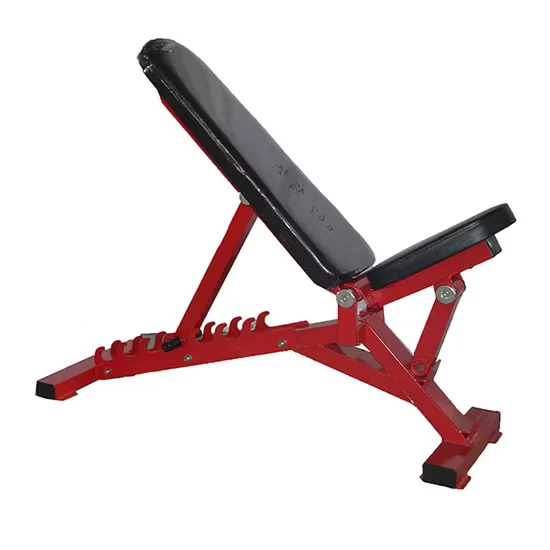
Wholesale Adjustable Bench, Incline/Flat/Decline Positions, 38kg Net Weight — engineered with steel frame construction and multi-angle adjustment for commercial strength training environments. Built to withstand high-traffic gym use with ISO9001 and CE certified manufacturing standards. Every unit undergoes load testing before shipment, backed by 10-year frame warranty and factory-direct pricing.
// Spec Highlights
• Direct from Manufacturer · No Middlemen · Worldwide Shipping
01
// Material
Imported Solid Wood
Premium hardwood frames sourced for density and visual warmth.
02
// Hardware
Medical-Grade Silent
Whisper-quiet pulleys and springs for clinical environments.
03
// Customization
Appearance OEM
Color, upholstery, and branding tailored to your studio.
04
// Service
Layout Design
Free venue planning for studios and rehab institutions.
Every component is selected for longevity, performance, and aesthetic harmony - from imported hardwood frames to silent medical-grade accessories.
// Features
Traceable 11-Gauge Frame — every steel coil carries mill certification back to the heat number, ensuring the 11-gauge tubing in this bench is verifiable, not just claimed.
| Parameter | Value |
|---|---|
| Product Type | Adjustable Bench |
| Product Dimensions | 1673 × 706 × 1390 mm |
| Frame Steel Gauge | 11-gauge |
| Frame Tube Size | 3 × 3 inch |
| Steel Grade | Q235 / Q345 |
| Welding Type | Robotic MIG continuous weld |
| Adjustment Positions | Incline / Flat / Decline |
| Upholstery | High-density commercial vinyl |
| Powder Coating | 200 μm scratch-resistant |
| Net Weight | 38 kg |
| Assembly State | Unfolded |
| Power Source | Manual |
| Certification | ISO 9001, CE |
| Warranty | 10-year frame |
| Facility Type | Typical Use |
|---|---|
| Commercial gym strength floor | Dumbbell press, shoulder press, and incline fly stations |
| University strength and conditioning room | Athletic testing and periodized pressing movements |
| Hotel fitness center | General strength training for transient guests |
| CrossFit box functional zone | Accessory pressing work between WOD stations |
| Rehabilitation and performance center | Controlled incline and decline progressions |
Spot welds on bench adjustment brackets are the first structural casualty in high-traffic strength zones.
Most commercial adjustable incline decline benches fail not because the steel gives out, but because the weld holding the pivot bracket to the base frame was a short spot weld. Under hundreds of daily adjustments and loaded presses, the stress concentrates at that tiny fused area and micro-cracks propagate along the heat-affected zone. We saw this pattern repeatedly: a facility replaces pads and pins while the real failure sits inside a welded joint nobody inspects. Continuous robotic MIG welds distribute that same load across the full seam length [NEED_CITE: weld classification and fatigue performance in structural steel].
This bench handles incline, flat, and decline angles, covering the primary pressing and rowing planes for chest, shoulder, and upper-back work. It complements plate-loaded racks and cable stations in the free-weight zone without duplicating their function. The 1673 × 706 mm footprint fits standard dumbbell rack spacing, and the adjustment range accommodates users across typical commercial gym demographics. A commercial adjustable incline decline bench positioned at proper intervals allows multiple athletes to train simultaneously without compromising safe passage.
Each adjustment cycle — pin release, backrest rotation, pin re-engagement — introduces micro-shock at the pivot joint. Load this joint with a 120 kg dumbbell press and the forces at the weld line multiply. Over months, static fatigue and eccentric loading from uneven pressing compound the damage [NEED_CITE: EN 957 structural requirements for stationary training equipment]. Upholstery compression from repeated seating, sweat exposure on coated surfaces, and cleaning chemicals all contribute to material degradation paths that a bench must survive far longer than a rack or cable tower.
The 3 × 3 inch frame tube paired with 11-gauge wall thickness provides a cross-section that resists lateral deflection when a user shifts weight during incline presses. Robotic MIG continuous welds eliminate the weak points inherent in spot-welded pivot brackets. The 200 μm powder coating, applied after sandblasting, resists chipping at contact edges where dumbbells and barbell collars routinely strike. Upholstery density directly determines how many months pass before the pad compresses past the point of structural support — commercial vinyl in high-density formulation maintains shape far longer than standard-density alternatives.
Thinner-walled tubing flexes visibly under heavy dumbbell loads, which feels unstable and accelerates fatigue at the adjustment mechanism. Spot welds that pass a visual inspection still crack under the cyclic shock of daily commercial use. Low-density upholstery pads compress and split within months, requiring replacement that costs more in downtime than the original savings on materials [NEED_CITE: upholstery compression and service life in commercial fitness environments]. Underspecified powder coating chips at frame contact points, exposing bare steel to sweat and humidity.
Mill-certified Q235 and Q345 steel means the 11-gauge tubing traceability extends to the coil source, not just the cut length. Robotic MIG welding produces continuous seam lines at the pivot bracket — the exact joint where spot welds fail first. Every unit undergoes load testing before crating, not sample-based inspection on one bench per batch. The 200 μm industrial powder coating survives contact strikes and cleaning chemicals. A 10-year frame warranty backs the structural claim. Floor planning support provides CAD layouts showing safe spacing between multiple bench stations and adjacent racks.
Provide your free-weight zone dimensions and existing equipment list to receive a 2D-3D CAD layout showing how many bench stations fit with safe spacing. Specify estimated daily user volume so the structural grade matches actual demand. Indicate your user demographic to confirm the adjustment positions cover the full range needed. State any color, logo, or upholstery customization requirements for OEM labeling.
Q: How do you distinguish a commercial-grade adjustable bench from a light-commercial one structurally?
A: Inspect the frame tube gauge and wall thickness — commercial benches use 11-gauge steel with verifiable mill certificates, while light-commercial products often specify tubing without traceable steel grade documentation. Check whether pivot brackets are continuous-welded or spot-welded, and whether load testing was performed on every unit or only on samples.
Q: What determines the relationship between steel gauge and load capacity in an adjustable bench?
A: The wall thickness and cross-sectional dimensions of the frame tube define how much the structure deflects under load. A larger tube with thicker walls resists lateral bending during heavy pressing movements. However, the weld quality at stress concentration points like pivot brackets ultimately determines whether the frame or the joint fails first.
Q: How can facilities prevent premature upholstery compression and surface splitting?
A: High-density commercial vinyl maintains structural support far longer than standard-density foam under repeated seating cycles. Regular cleaning with pH-neutral solutions prevents chemical degradation of the surface. When compression does eventually reduce support, replacement pads should be available as spare parts from the manufacturer rather than requiring full bench replacement.
Q: How does the number of adjustment positions affect training versatility?
A: Incline, flat, and decline positions together cover the primary pressing angles for chest and shoulder development. More positions allow finer angle increments, accommodating users of different limb lengths and targeting slightly different muscle fiber orientations. The adjustment mechanism must remain secure at every position without drift under load.
Q: How should a free-weight zone balance adjustable benches with fixed racks and stations?
A: Position benches near dumbbell racks to minimize plate-carrying distance. Maintain safe clearance between bench stations so spotters and passing traffic do not interfere with loaded presses. Complement benches with fixed pressing stations for maximal loads, reserving adjustable benches for dumbbell work and varied-angle training.
Premium aesthetics meet quiet operation for boutique studio environments.
Medical-grade silence and precision for sports & postpartum recovery.
Furniture-grade craftsmanship for premium residential installations.
Compact premium setups for one-on-one and small-group training.
Aesthetic Pilates integration for hybrid wellness studio programming.
Multi-unit deployment with instructor-grade reliability for certification programs.
Tell us about your project. Our team will respond within 24 hours with pricing, customization options, and shipping details.
// Sales Director
William
+86 132 2531 1800
// Export Manager
Bella
+86 198 5412 8032
william@bickfit.com