Air Rower Long-Term Care for 24H Gyms: OEM Wholesale
Most air rowers in unmanned facilities fail not from heavy usage, but from neglected micro-maintenance and dust accumulation.
In a 24-hour gym environment without on-site staff, the lifespan of an air rower is determined by a proactive OEM-backed spare parts strategy rather than reactive repairs. Facility managers must implement standardized weekly visual checks, maintain local inventory of high-wear components like straps and bearings, and utilize silicone-based lubricants to prevent premature seat rail failure. This approach significantly reduces total cost of ownership and minimizes member complaints regarding equipment downtime.
I still remember the humidity in that Las Vegas convention center during IHRSA. A procurement director from a major US-based 24-hour fitness franchise was venting about a batch of rowing machines that had become unusable within two years. The issue was not broken frames or snapped cables, but inconsistent drag and seized seat rails. He had assumed that because the machines were used constantly, they were built to withstand it. What he missed was that in an unmanned facility, the lack of daily supervision allows minor issues—like a fraying strap edge or dust clogging the fan cage—to escalate into catastrophic failures. That conversation shifted how I approach air rower maintenance 24-hour gym protocols. It is not about selling a unit; it is about ensuring the unit survives the unique stresses of unsupervised, round-the-clock operation.
The core problem in these environments is the absence of immediate feedback. In a staffed club, a trainer notices a squeak or a sticky rail and reports it. In a 24-hour setup, that squeak persists for weeks, grinding down bearings until the entire assembly fails. Understanding this dynamic is the first step toward effective air rower maintenance 24-hour gym strategies.
Why Do Air Rowers Fail Prematurely in 24/7 Gyms?
Lack of daily user supervision accelerates wear on specific friction points like straps and rails, leading to avoidable mechanical failures.
The common assumption is that volume breaks machines. In reality, it is the nature of the usage. Without a coach to correct form or inspect equipment, users may pull with uneven force, placing asymmetric stress on the chain or strap. More critically, the environment itself becomes an enemy. Dust and lint are constant threats in high-traffic areas. When these particles enter the flywheel housing, they do not just sit there; they mix with residual moisture and lubricants, creating an abrasive paste that accelerates bearing wear [NEED_CITE: impact of particulate contamination on bearing lifespan per ISO 15243].
I have seen this pattern repeat across multiple regions. In a European boutique studio with high member turnover, the primary complaint was inconsistent drag. The owner assumed the fan blades were warped. Upon inspection, we found that the fan cage was clogged with months of accumulated dust, disrupting the airflow and causing the resistance to feel jerky. This was not a manufacturing defect; it was a maintenance gap.
Another critical failure point is the seat rail. Users often neglect to wipe down the rail after use, leaving sweat and salts that corrode the surface over time. When combined with petroleum-based lubricants, which attract more dust, the result is a gritty, resistant glide that frustrates users and strains the seat bearings. For any facility manager focusing on air rower maintenance 24-hour gym best practices, recognizing these environmental and behavioral factors is essential. The machine does not fail because it is weak; it fails because the ecosystem around it is unmanaged.
What Are the Critical Weekly Maintenance Steps for Facility Staff?
A five-minute visual and tactile check prevents the majority of major mechanical failures by catching early signs of wear.
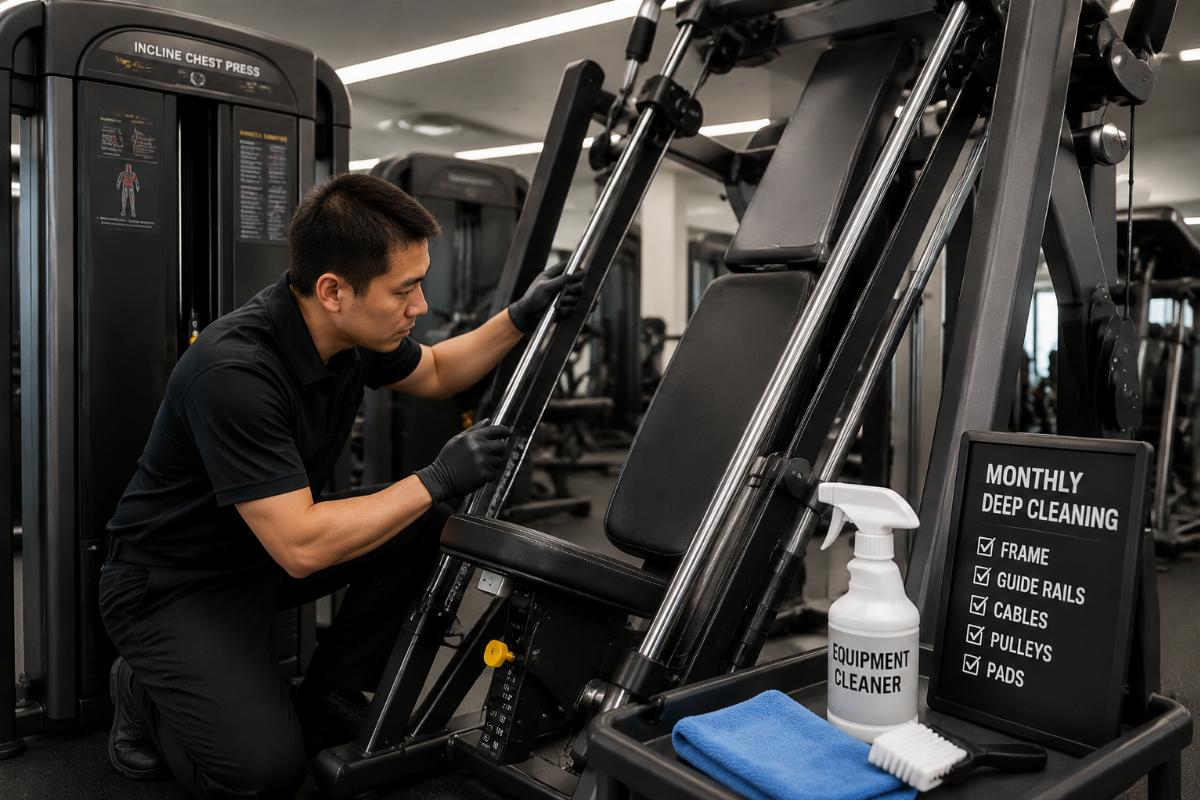
In an unmanned facility, you cannot rely on daily deep cleaning. Instead, you need a streamlined, high-impact checklist that can be performed by rotating staff or even trusted members. The goal is to identify issues before they become visible to the average user.
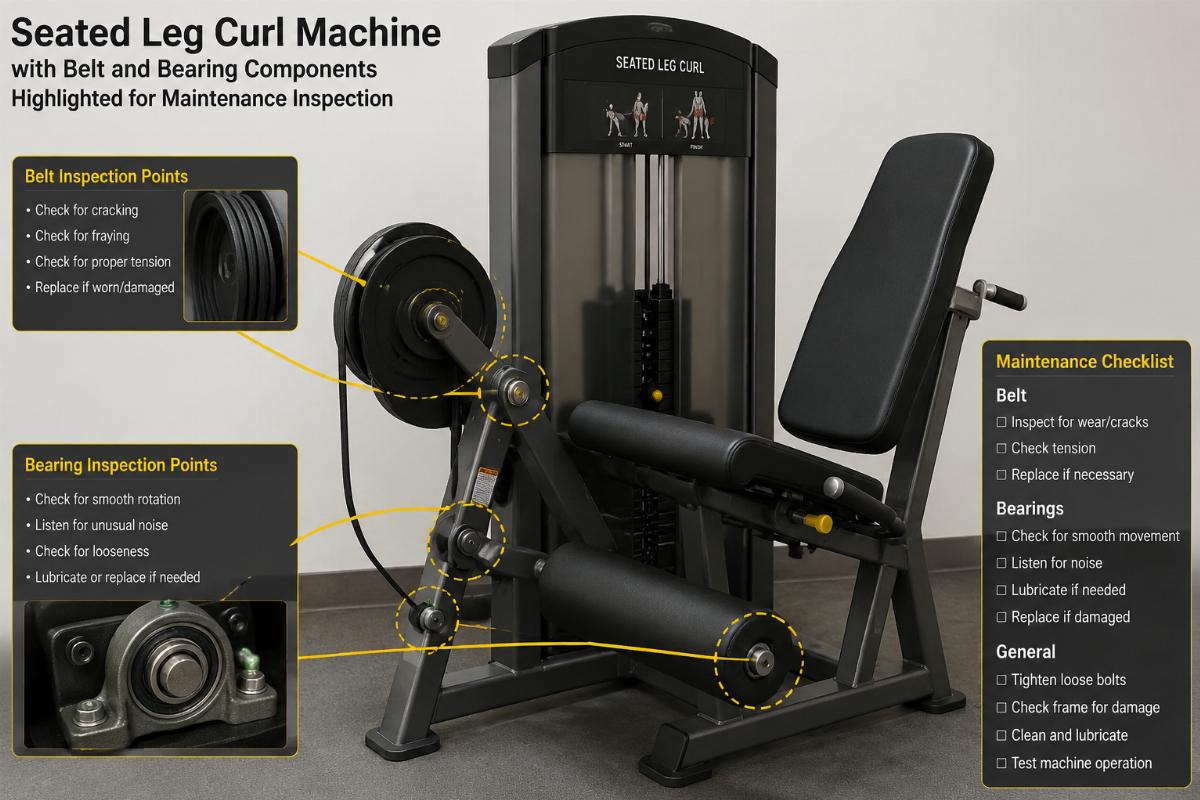
First, inspect the strap or chain integrity. Look for fraying edges on nylon straps or rust spots on metal chains. A frayed strap can snap under tension, posing a safety risk. Second, check the seat rail for debris. Run a clean cloth along the rail; if it comes away black or gritty, the rail needs cleaning and re-lubrication. Third, listen to the fan. A healthy air rower should produce a consistent whooshing sound. Any clicking, grinding, or irregular noise indicates foreign objects in the fan cage or bearing issues.
| Inspection Point | Frequency | Action Required | Risk if Ignored |
|---|---|---|---|
| Strap/Chain Integrity | Weekly | Visual check for fraying or rust | Sudden breakage, safety hazard |
| Seat Rail Cleanliness | Weekly | Wipe with dry cloth, check for grit | Bearing seizure, user discomfort |
| Fan Cage Airflow | Monthly | Remove cover, vacuum dust buildup | Inconsistent drag, motor strain |
| Bolt Tightness | Quarterly | Check frame and monitor mounts | Structural instability, noise |
This table outlines a basic protocol, but the key is consistency. In one Asian hotel gym with minimal staff presence, we implemented a simple "red tag" system. If a staff member noticed an issue during their routine rounds, they tagged the machine and logged it. This simple step reduced downtime significantly because repairs were scheduled before the machine completely failed. For those managing air rower maintenance 24-hour gym operations, these small, consistent actions are far more effective than occasional overhauls.
How to Manage Spare Parts Inventory for Unmanned Facilities?
Stocking high-wear OEM-specific components locally is more cost-effective than emergency air freight and minimizes equipment downtime.
Waiting for a spare part to arrive from overseas can take weeks, during which the machine sits idle, generating no revenue and frustrating members. The solution is to maintain a local inventory of critical spare parts. But which parts? Not every component needs to be in stock. Focus on the high-wear items: straps, seat bearings, and footrest springs. These are the parts that fail most frequently due to the intense, unsupervised usage patterns of 24-hour gyms.
When sourcing these parts, compatibility is crucial. Generic parts may fit loosely or wear out faster, leading to repeated failures. This is where an OEM partnership becomes valuable. At Bick, we often bundle "Year 1 & 2 Critical Spare Kits" with initial container orders for our commercial clients. These kits include the exact straps, bearings, and tools needed for the first two years of operation, ensuring that facility managers have the right parts on hand from day one. This strategy cuts downtime from weeks to days, as replacements can be swapped out immediately by local technicians.
For procurement directors, this approach shifts the cost model. Instead of paying premium prices for emergency shipping, you invest in a small, upfront inventory that pays for itself by keeping equipment operational. It is a practical aspect of air rower maintenance 24-hour gym planning that is often overlooked in favor of lower initial purchase prices. However, the long-term savings in logistics and member retention are substantial.
When Should You Consider Full Unit Replacement vs. Refurbishment?
Evaluate frame integrity versus component wear; OEM refurbishment kits often extend equipment life significantly at a fraction of the replacement cost.
Not every broken rower needs to be replaced. In many cases, the frame remains solid while only the moving parts are worn. Refurbishing these units can extend their useful life by several years. The decision hinges on the condition of the main frame and the welds. If the frame is intact and free of cracks, replacing the strap, bearings, and fan assembly is a viable option.
I recall a case with a Middle East fitness chain that was preparing to refresh its equipment. Instead of scrapping their existing rowers, they opted for a refurbishment program. We supplied OEM refurbishment kits that included all necessary wear parts and updated monitors. The result was a fleet of machines that looked and performed like new, at a cost significantly lower than buying new units. This approach also aligns with sustainability goals, reducing waste and extending the product lifecycle.
However, if the frame shows signs of stress, such as cracked welds or bent rails, replacement is the safer choice. Safety standards, such as EN ISO 20957, emphasize structural integrity, and compromising on this is not worth the risk. For facility managers, the key is to conduct regular structural inspections alongside the routine maintenance checks. This balanced approach ensures that resources are allocated efficiently, whether through repair or replacement. Understanding when to pivot from maintenance to replacement is a critical skill in air rower maintenance 24-hour gym management.
Conclusion
Proactive maintenance and strategic spare parts inventory are the keys to maximizing the lifespan of air rowers in unmanned facilities.
By focusing on weekly visual checks, keeping critical OEM parts on hand, and knowing when to refurbish versus replace, facility managers can significantly reduce downtime and total cost of ownership. This approach not only protects the investment but also ensures a better experience for members who rely on consistent, high-quality equipment. Implementing these air rower maintenance 24-hour gym strategies transforms equipment management from a reactive burden into a controlled, predictable process.