Battle Rope Set Split Shipment Policy: Wholesale Supplier for Multi-Region Buyers
Splitting a container of battle ropes to save on freight often costs more in damage claims and customs penalties than it saves in shipping fees.
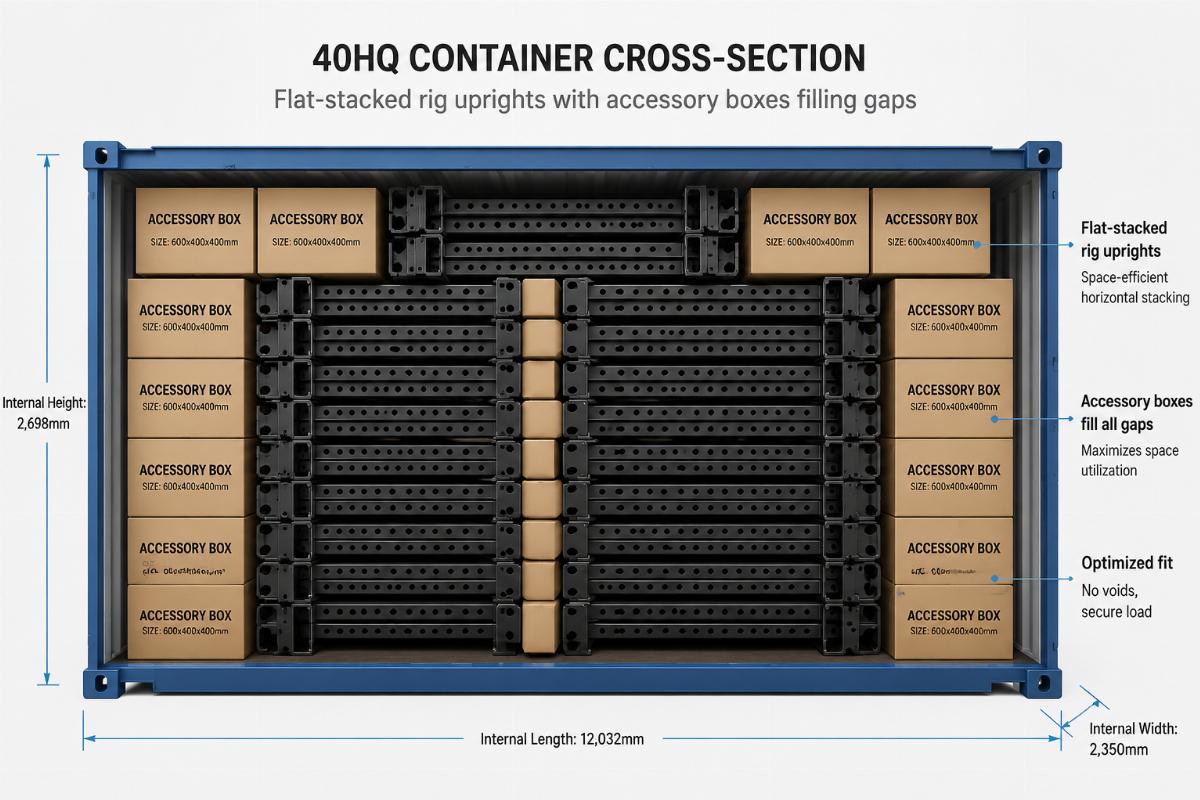
To execute a split shipment policy for battle rope sets successfully, buyers must align HS codes with local customs classifications before departure, opt for Full Container Load (FCL) consolidation over Less than Container Load (LCL) for heavy functional gear, and enforce vacuum-sealed packaging standards to prevent moisture damage during transshipment.
I still remember the silence on the phone line when a distributor in Santos called me last year. He had ordered a mixed container of strength machines and functional training gear, including several heavy-duty battle ropes. To cut costs, he requested we split the shipment, sending half via LCL through a hub in Busan. When the cargo arrived, the ropes were soaked, the packaging was torn, and Brazilian customs had reclassified the entire lot as "finished fitness machinery" rather than separate textile accessories and steel components. The duty rate jumped significantly, and the buyer refused to pay the balance. That incident wasn’t an anomaly; it was a textbook failure of ignoring the physical and regulatory realities of multi-region fitness equipment shipping. [NEED_CITE: common causes of customs reclassification for fitness accessories]
The logistics of functional training gear are deceptive. Battle ropes look simple, but their density and material composition make them vulnerable to both physical handling errors and bureaucratic misclassification. Understanding the split shipment policy battle rope requires looking beyond the freight invoice and into the hold of the vessel and the desk of the customs officer.
Why Do Split Shipments Fail for Functional Gear?
Inconsistent packaging standards and mismatched HS codes are the primary drivers of delays and damages in split shipments.
When a container is split, the cargo undergoes multiple handling events. For dense, heavy items like battle ropes, each transfer point introduces risk. In a direct FCL shipment, the goods are sealed at the factory and opened only at the final destination. In an LCL or split scenario, the cargo is unpacked, sorted, and repacked at intermediate hubs. This exposure is where moisture enters and where rough handling tears protective wrapping.
Consider the physical nature of battle ropes. They are typically made from high-density polypropylene or manila, materials that absorb humidity if not properly sealed. In a non-containerized leg of a journey, such as a truck transfer or a warehouse stay in a humid port like Singapore or Miami, unprotected ropes can absorb significant moisture. This leads to mold growth and weight gain, which further complicates customs valuation if duties are assessed by weight. [NEED_CITE: impact of humidity on synthetic fiber cargo during transit]
Furthermore, split shipments often lack the structural support of a full container. Without the surrounding cargo to brace them, heavy rolls of battle rope can shift during ocean transit, leading to crushing damage. The cost of claiming these damages through insurance is often prohibitive due to high deductibles and the difficulty of proving liability across multiple carriers.
How to Classify Battle Ropes Correctly for Each Region?
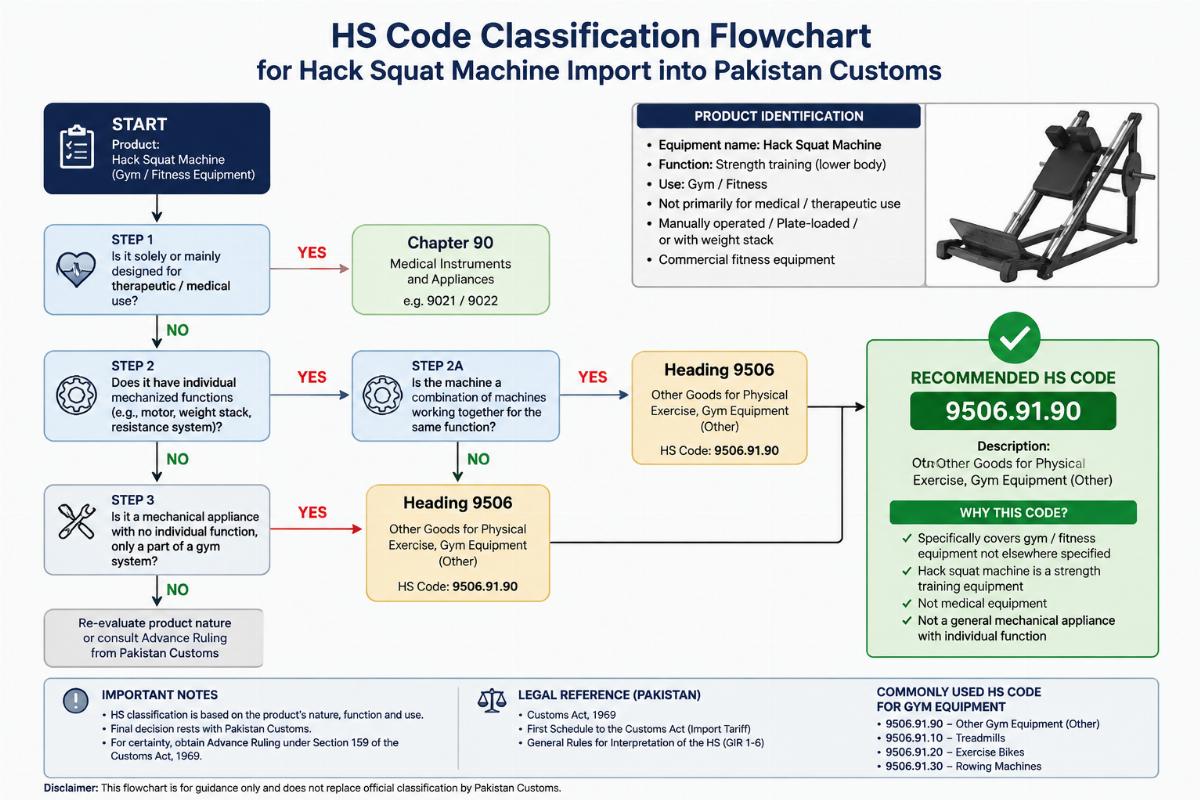
Pre-verifying local HS codes prevents costly reclassification from "textile accessory" to "fitness machine" tariffs.
One of the most persistent misconceptions in global trade is that HS codes are universal. While the first six digits are standardized globally, the subsequent digits vary by country, and interpretation varies by customs officer. For battle ropes, this ambiguity is dangerous. Some jurisdictions classify them under textile articles, which may carry lower duty rates. Others view them as specialized sports equipment or even parts of a larger fitness system, attracting higher taxes.
A buyer in South America once faced a situation where their battle ropes were cleared under a code for "gymnastic apparatus." The duty rate was substantially higher than if they had been declared as "textile ropes." Because the commercial invoice did not clearly separate the ropes from the metal anchor points and other hardware, customs applied the highest rate to the entire shipment. This error could have been avoided with a pre-verified classification strategy. [NEED_CITE: HS code variance for fitness accessories in Latin American customs]
To mitigate this risk, buyers should request a binding tariff information ruling or consult with a local customs broker before shipping. The documentation must explicitly describe the product material, usage, and components. For a split shipment policy battle rope, this means creating separate, detailed line items for the ropes, the anchors, and any accompanying mats. This clarity helps customs officers apply the correct code to each component, avoiding the "highest rate applies to all" trap.
| Classification Approach | Risk Level | Documentation Requirement | Customs Outcome |
|---|---|---|---|
| Generic "Fitness Equipment" | High | Minimal description | Potential reclassification to highest duty bracket |
| Separate Textile & Hardware | Low | Detailed material specs per item | Accurate duty application per component |
| Pre-verified Local HS Code | Lowest | Broker confirmation letter | Smooth clearance with predictable costs |
What Are the Real Risks of LCL for Heavy Fitness Equipment?
Multiple handlings in LCL scenarios drastically increase the probability of physical damage and loss compared to FCL consolidation.
Less than Container Load shipping is often marketed as a cost-saving solution for smaller orders. However, for heavy, dense items like battle ropes, the economics often fail when damage risks are factored in. In an LCL shipment, your cargo shares space with goods from dozens of other shippers. The consolidation process involves moving goods from various warehouses into a single container, often using forklifts and manual labor that may not be trained to handle specific fitness equipment nuances.
The risk is not just about broken packaging. It is about the cumulative stress on the product. Battle ropes are heavy. If they are stacked improperly under lighter but fragile items, or if they shift during the deconsolidation process, the inner core can be compromised. Even if the exterior looks fine, the internal integrity of the rope may be damaged, leading to premature failure in a commercial gym setting. [NEED_CITE: frequency of cargo damage in LCL vs FCL for dense goods]
Moreover, LCL shipments are more susceptible to theft and pilferage. High-value fitness accessories are targets in busy ports. A split shipment policy battle rope sent via LCL lacks the security of a sealed container. Once the container is opened at the hub, the cargo is exposed until it is reloaded onto a truck or another vessel. This window of vulnerability is absent in FCL shipments, where the seal remains intact from origin to destination.
Best Practices for Packaging and Documentation in Split Orders
Standardized, moisture-proof packaging and clear invoice separation are non-negotiable for successful multi-region splits.
If a split shipment is unavoidable due to inventory or budget constraints, rigorous preparation is essential. The packaging must be designed to survive independent transit, not just protected transit. This means using vacuum sealing for all textile-based battle ropes. Vacuum sealing removes air, reducing volume and preventing moisture absorption. It also creates a hard, uniform shape that is easier to stack and less prone to shifting. Adding desiccant packs inside the vacuum seal provides an extra layer of protection against humidity spikes during transshipment. [NEED_CITE: effectiveness of vacuum sealing for hygroscopic cargo]
Documentation must be equally robust. The commercial invoice and packing list must be mirrored exactly. Any discrepancy between the physical count and the documented count can lead to customs holds. For split shipments, each portion of the order must have its own complete set of documents. Do not rely on a master invoice that references "part 1 of 2." Each part must stand alone as a complete legal shipment document.
At Bick, we have refined this process by consolidating full gym packages with pre-verified documentation support. We ensure that every battle rope, anchor, and mat is listed with its specific HS code and material composition. This attention to detail allows our global buyers to navigate complex customs environments with confidence. By treating the documentation as critically as the product itself, we minimize the risk of delays and unexpected costs.
Implementing a effective split shipment policy battle rope strategy requires a shift in mindset. It is not just about moving goods; it is about managing risk. By prioritizing correct classification, choosing FCL over LCL whenever possible, and enforcing strict packaging standards, buyers can protect their investment and ensure their fitness equipment arrives ready for use. The savings from a cheaper shipping method are illusory if the cargo arrives damaged or stuck in customs. True efficiency comes from getting it right the first time.
Conclusion
Successful multi-region shipping of battle ropes depends on proactive customs classification and robust, moisture-resistant packaging.
Avoiding the pitfalls of split shipments requires recognizing that hidden handling fees and damage risks often outweigh initial freight savings. By securing accurate HS codes and opting for consolidated FCL loads, buyers ensure their functional gear arrives intact and compliant.