Commercial Power Rack for Boutique Studios Indonesia | OEM Wholesale Supplier
Most boutique studio owners assume thinner steel looks more refined, but in tropical climates, it accelerates structural failure.
Sourcing a Commercial Power Rack Indonesia requires balancing aesthetic customization with rigorous corrosion resistance and structural integrity validation. Buyers must prioritize suppliers who provide third-party verified coating durability data and finite element analysis for custom geometries, rather than relying solely on visual samples. The core risk in this market is not design complexity, but the rapid degradation of standard finishes under high humidity and the hidden safety compromises in non-standardized load-bearing components.
Having moved from quality inspection on the factory floor to managing client relationships in Southeast Asia, I learned that specifications on paper rarely survive the reality of local environments. Early in my tenure, a high-end private studio in Jakarta requested a batch of racks with a specific matte black finish and rose gold accents. The design called for a slight reduction in column wall thickness to achieve a "lighter" visual profile. We proceeded with the sample approval based on static load tests at room temperature. Three months after installation, the client reported peeling paint and minor surface rust on the lower joints. Flying out to inspect the site, I found that the combination of reduced material thickness and a standard powder coating process could not withstand the daily thermal cycling and high ambient humidity. The micro-cracks in the thin coating allowed moisture to penetrate, leading to substrate corrosion. This incident shifted my approach entirely: now, every OEM modification triggers a mandatory re-evaluation of both mechanical stress distribution and environmental resilience.
Why Do Boutique Studios in Indonesia Need Specialized Power Racks?
Space constraints and aggressive tropical humidity demand equipment that merges compact engineering with industrial-grade防腐 capabilities.
The fitness landscape in cities like Jakarta and Bali is evolving rapidly, with boutique studios replacing large-box gyms in many urban centers. These spaces often feature open-air designs or high-ventilation layouts to combat heat, which inadvertently exposes equipment to higher levels of moisture and salt air, particularly in coastal areas like Bali. A standard Commercial Power Rack Indonesia sourced from temperate regions often fails to account for these conditions.
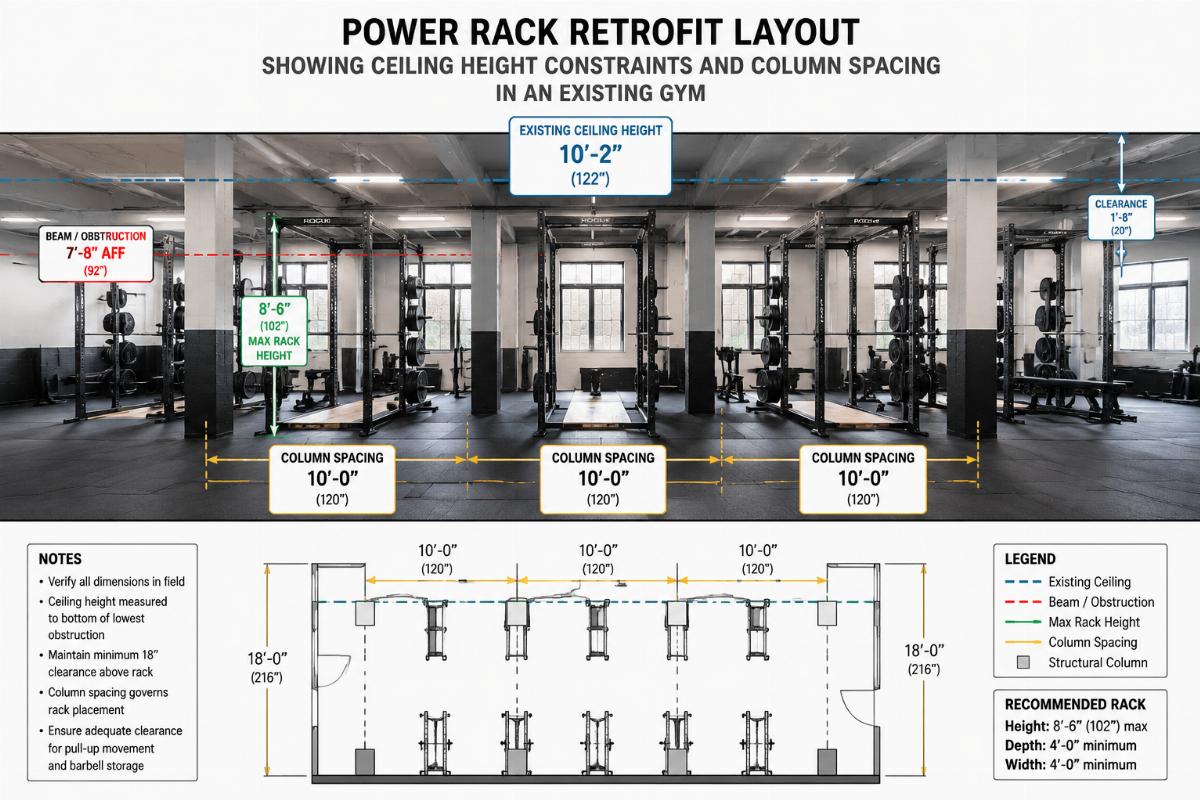
The primary challenge is not just weight capacity, but longevity. In a typical commercial gym, equipment undergoes thousands of cycles annually. When you add the corrosive element of tropical humidity, the margin for error in material selection shrinks significantly. Many buyers focus on the footprint, seeking racks that fit into narrow studio layouts without obstructing flow. However, reducing the base dimensions without reinforcing the structural geometry can lead to instability during dynamic movements like box jumps or heavy squats.
[NEED_CITE: impact of tropical climate on metal coating lifespan per ASTM standards]
Furthermore, the aesthetic expectations of boutique clients are higher. They require equipment that serves as a design element, not just a tool. This means custom colors, unique logo placements, and specific finish textures. Yet, these aesthetic choices often conflict with protective requirements. For instance, certain textured finishes trap moisture if not sealed correctly, while high-gloss paints may show scratches more easily in high-traffic zones. The solution lies in selecting a manufacturing partner who understands that a Commercial Power Rack Indonesia must be engineered for the environment first, and styled second.
What Are the Critical OEM Customization Risks in Tropical Climates?
Ignoring coating耐候性 testing leads to premature failure, making pre-shipment validation non-negotiable.
OEM customization is often misunderstood as a simple change of color or logo. In reality, any alteration to the surface treatment or structural dimensions requires a fresh round of validation. The most common pitfall is assuming that a coating approved for indoor use in Europe or North America will perform similarly in Indonesia. The difference lies in the salt spray test duration and the chemical composition of the pretreatment layer.
Consider the case of a yoga-strength hybrid studio in Bali. They requested a lightweight appearance for their racks to match a minimalist interior. The initial proposal involved using thinner gauge steel. While this achieved the desired look, it compromised the rack’s ability to resist bending moments under off-center loads. More critically, the thinner steel offered less substrate mass for the coating to adhere to, making it more prone to chipping during assembly and transport. Once installed, the high humidity accelerated oxidation at any point of coating damage.
[NEED_CITE: correlation between steel thickness and coating adhesion durability]
To mitigate this, we now enforce a strict protocol for any Commercial Power Rack Indonesia order involving custom finishes. We require extended salt spray testing that simulates years of tropical exposure in a compressed timeframe. If a client insists on a specific aesthetic that compromises protection, we document the risk and suggest alternative materials, such as stainless steel hardware or enhanced galvanization processes, even if it increases the unit cost. This transparency prevents the costly aftermath of replacing an entire fleet of racks due to cosmetic and structural degradation.
How to Balance Aesthetic Design with Structural Integrity?
Optimizing cross-section dimensions through finite element analysis ensures visual lightness without sacrificing safety.
Achieving a sleek look does not require compromising on strength. The key is intelligent engineering rather than material reduction. By using finite element analysis (FEA), manufacturers can identify stress concentration points in a rack’s design and reinforce only those areas, allowing other sections to be streamlined for aesthetics. This approach maintains the overall weight capacity while reducing the visual bulk of the structure.
For example, a client in Surabaya wanted a unified brand identity across their chain, with logos laser-engraved directly onto the J-cups. The concern was that engraving might weaken the contact surface or create stress risers. Through simulation, we determined that placing the engraving in a low-stress zone and adjusting the depth of the cut preserved the structural integrity. Additionally, we modified the column profile to use a rectangular tube with optimized wall thickness distribution—thicker at the corners where welding occurs and slightly thinner on the flat faces. This maintained the rigid feel users expect from a Commercial Power Rack Indonesia while presenting a cleaner, more modern silhouette.
[NEED_CITE: principles of finite element analysis in fitness equipment design]
This method also allows for greater flexibility in color application. With a structurally sound base, we can apply thicker, multi-layer coatings that offer superior protection without worrying about the added weight affecting stability. The result is a product that looks bespoke and premium but performs with the reliability of heavy-duty commercial gear. Buyers should ask potential suppliers for evidence of such engineering validation, rather than accepting generic claims of "heavy-duty construction."
What Should Buyers Verify Before Placing Bulk Orders?
Request third-party load reports and coating aging data, not just physical samples.
Before committing to a large order, due diligence is critical. Many suppliers provide impressive-looking samples that are hand-finished and do not represent mass production quality. To ensure consistency, buyers must request documentation that verifies performance claims. This includes independent certification for load capacity, such as CE marking compliance, and detailed reports on coating durability tests.
A practical step is to ask for the specific parameters used in their quality control process. For instance, what is the micron thickness of the powder coating? Has the product undergone fatigue testing that simulates real-world usage over time? For a Commercial Power Rack Indonesia, it is also wise to inquire about the supply chain for raw materials. Consistent steel quality is essential for predictable welding and coating outcomes.
In one instance, a regional distributor was comparing two quotes. One was significantly cheaper but lacked detailed test reports. Upon requesting the salt spray test hours, the cheaper supplier could not provide verifiable data, only internal claims. The other supplier, Bick, provided full CE certification and detailed test results showing extended endurance in corrosive environments. This transparency allowed the buyer to make an informed decision, avoiding potential liability issues from equipment failure.
[NEED_CITE: importance of third-party certification in fitness equipment procurement]
Additionally, verify the manufacturer’s ability to handle logistics and after-sales support. Can they provide spare parts quickly if a component fails? Do they offer technical guidance for assembly in remote locations? These factors contribute to the total cost of ownership and should be weighed against the initial purchase price.
Conclusion
Prioritize verified durability and engineered customization over superficial aesthetics.
Selecting the right Commercial Power Rack Indonesia involves looking beyond the showroom appeal to understand the engineering and material science behind the product. By demanding transparent testing data and partnering with manufacturers who proactively address tropical climate challenges, boutique studio owners can ensure their equipment remains safe, functional, and visually appealing for years. The cost of verification is negligible compared to the expense of premature replacement and reputational damage.