
Commercial Treadmill Price in Nigeria: 2026 Wholesale Buyer Guide
The machine cost is the smallest line item. Shipping, Lagos port clearance, and spare parts availability determine whether your commercial treadmill project turns a profit or bleeds cash.
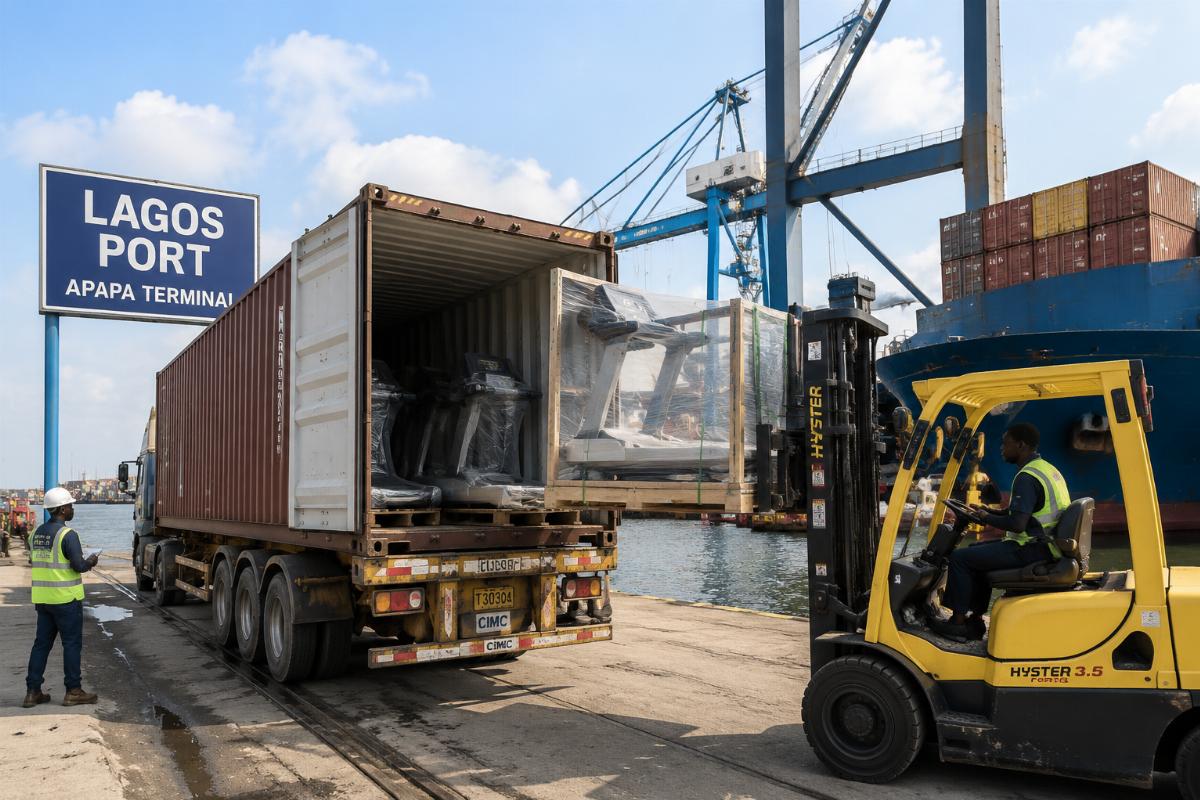
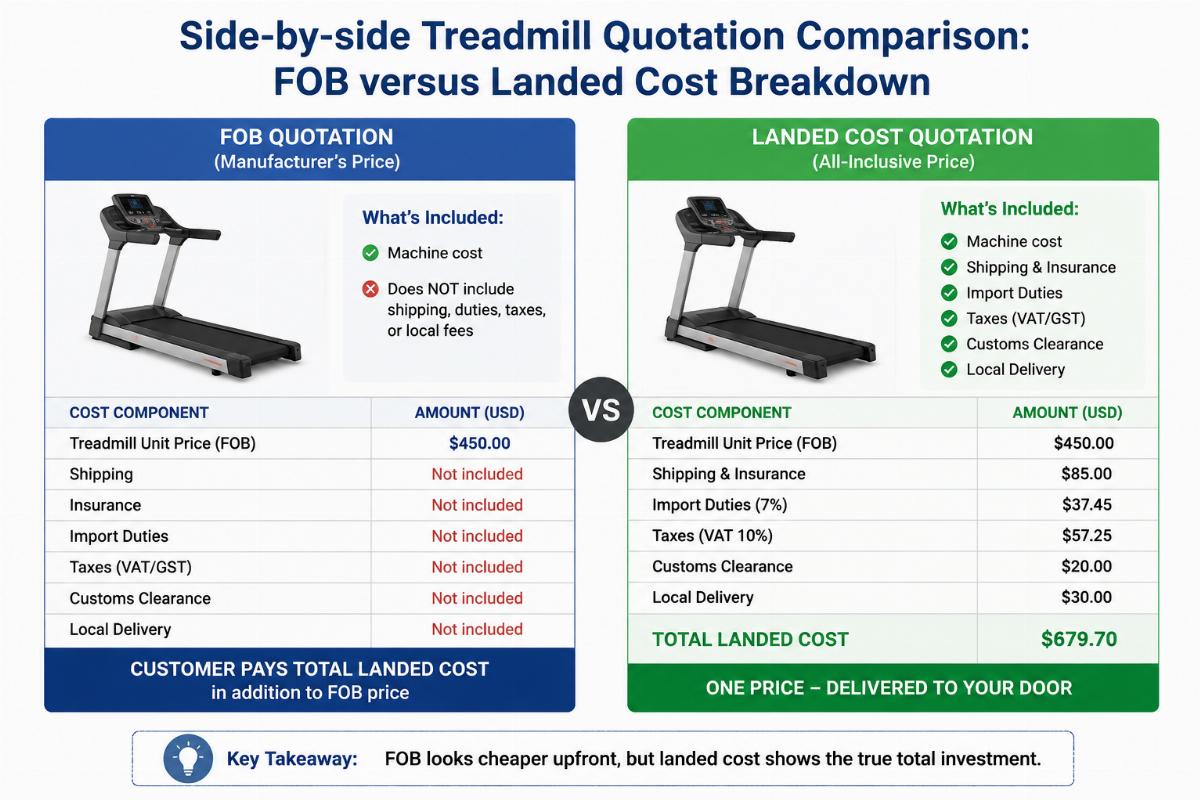
In 2026, a single commercial treadmill landed in Lagos typically costs two to three times its FOB factory price once freight, duties, SONCAP certification, VAT, and inland haulage are added. The real commercial treadmill price in Nigeria is never what you see on a quotation sheet—it is what hits your warehouse floor after the last truck unloads.
I have stood on the concrete floors of gyms in Lagos, Abuja, and Kano watching containers get sliced open, only to find treadmills sitting idle for months because a single control board failed and no local stock existed. The buyers who survive this market are not the ones who chase the lowest FOB number. They are the ones who understand landed cost, spec traps, and supply chain reality. [NEED_CITE: Nigeria Customs Service tariff classification for fitness equipment and applicable import duty rates]

Let me walk you through what actually moves the commercial treadmill price in Nigeria this year, and where buyers typically get hurt.
What Is the Real Landed Cost of a Commercial Treadmill in Nigeria in 2026?
Terminal price equals FOB plus ocean freight plus CISS inspection plus import duty plus VAT plus clearance fees plus inland transport. Hidden costs routinely consume a third or more of the total spend.
When a gym owner in Lagos asks me what a commercial treadmill costs, I never quote the machine alone. The FOB number is almost meaningless by itself. Here is the cost chain I walk every buyer through:
| Cost Component | Typical Share of Landed Cost | Notes |
|---|---|---|
| FOB Factory Price | Baseline | Varies by motor CHP, frame weight, electronics |
| Ocean Freight (China to Apapa/Tincan) | Noticeable | Rates fluctuate with global container market |
| CISS/SONCAP Pre-shipment Inspection | Minor but mandatory | Required for Nigerian customs clearance |
| Import Duty | Substantial | Classified under fitness equipment HS codes |
| VAT | Standard rate | Applied on duty-assessable value |
| Port Handling and Clearance Agent Fees | Variable | Congestion surcharges apply during peak periods |
| Demurrage and Detention (if delayed) | Potentially severe | Lagos port congestion is a known risk |
| Inland Haulage to Final Site | Noticeable | Lagos-Abuja or Lagos-Kano routes add cost |
[NEED_CITE: Nigerian Ports Authority average container dwell time and demurrage cost structure at Apapa and Tincan terminals]
A mid-sized gym in Lagos once ordered a batch of treadmills from a supplier who quoted an attractive FOB price. The machines sat at Apapa for an extended period because the SONCAP paperwork was incomplete. The demurrage alone ended up costing several times what the buyer saved on the machine price. That is the kind of lesson that reshapes how you think about commercial treadmill price in Nigeria.
The takeaway is simple: any supplier who only quotes FOB is either inexperienced with the Nigerian market or deliberately hiding downstream costs. A credible quotation must estimate landed cost, or at minimum flag every variable the buyer will face after the goods leave the factory.
Which Treadmill Specs Actually Matter for Nigerian Gyms?
Continuous duty horsepower, deck thickness, and roller bearing specification determine real service life. Peak horsepower marketing claims are largely irrelevant.
I have seen buyers select treadmills based on a single number printed on the console—peak horsepower—and then wonder why the machine dies within a year in a busy Lagos gym. The spec sheet tells a very different story if you know where to look.
| Specification | Why It Matters | What to Demand |
|---|---|---|
| Continuous Duty Horsepower (CHP) | Reflects sustained motor load during real workouts | Minimum CHP rating appropriate for commercial use frequency |
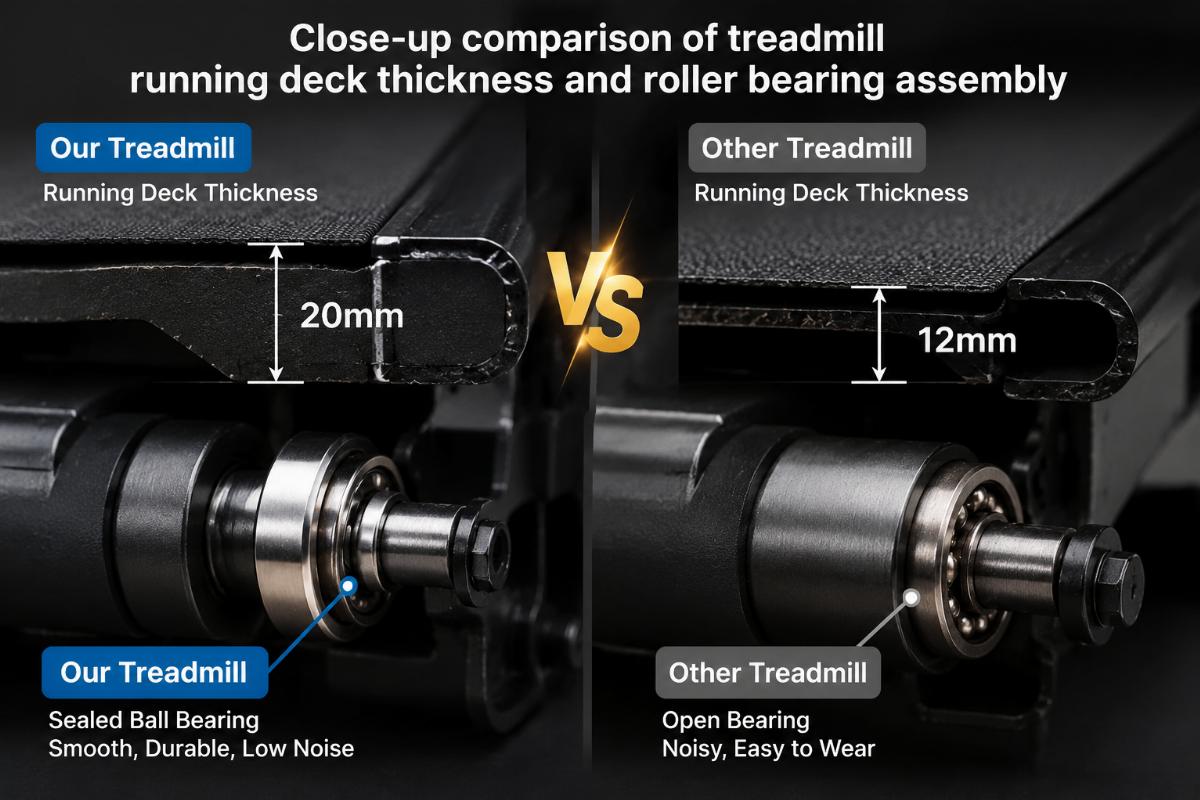
| Running Deck Thickness | Directly affects impact absorption and board warping risk | Thick commercial-grade deck, not thin home-use laminate |
| Roller Bearing Specification | Determines long-term belt tracking and motor strain | Sealed precision bearings rated for continuous operation |
| Running Belt Thickness and Width | Affects user comfort, slip risk, and replacement interval | Wide belt with adequate ply count for heavy users |
| Frame Weight and Weld Quality | Determines vibration, stability, and structural fatigue | Heavy-gauge steel with full-penetration welds |
| Electronics Enclosure Sealing | Protects control boards from dust and humidity | Sealed or conformal-coated boards for tropical climates |
[NEED_CITE: International fitness equipment industry standards for commercial treadmill motor duty cycle classification]
A hotel project in Abuja needed treadmills for a low-traffic fitness room. The buyer initially spec’d the same high-CHP units used in their commercial gym chain. After reviewing actual daily usage patterns, we recommended stepping down to a lighter-duty model. The per-unit savings were significant, and the machines still comfortably outlasted the warranty period because the usage intensity was low. Matching spec to actual use—not to marketing brochures—is how you control commercial treadmill price in Nigeria without sacrificing reliability.
The most common mistake I see is over-indexing on peak horsepower while ignoring deck and bearing quality. A motor can be replaced. A warped deck or a seized roller bearing usually means the entire unit is scrapped. In a market where spare parts logistics are already challenging, spec selection is your first line of defense.
How to Compare Prices Across Suppliers Without Getting Trapped?
Use landed cost as your only valid comparison basis. The lowest FOB price often masks spare parts abandonment risk and documentation failures that cost far more downstream.
Comparing commercial treadmill price in Nigeria by looking at FOB quotations from five different Chinese factories is a guaranteed way to make a bad decision. The FOB number tells you almost nothing about what you will actually pay to get a working machine onto your gym floor.
Here is the comparison framework I use with buyers:
- Request a full landed cost estimate, not just FOB. A supplier who cannot or will not estimate freight, duty, and clearance costs is signaling that they do not understand your market.
- Verify SONCAP and documentation support. Nigerian customs requires pre-shipment inspection certification. If the supplier has never shipped to Nigeria, they will not know the process, and you will pay for their learning curve.
- Ask about spare parts availability in country or willingness to ship a spare parts package with the order. A treadmill without local spare parts support is a ticking clock. Control boards, drive belts, and lower control panels are the components that fail first.
- Check whether the quotation includes voltage and plug customization for Nigerian power standards. Power quality in many parts of Nigeria is unstable. Machines built for clean-grid markets without voltage tolerance adjustments will fail prematurely.
- Evaluate MOQ flexibility and container consolidation options. If you are also buying strength equipment or free weights, a supplier who can consolidate into one container dramatically reduces per-unit freight cost.
[NEED_CITE: SONCAP conformity assessment program requirements for imported fitness equipment into Nigeria]
A distributor in Kano started with a small trial order from a factory that quoted the lowest FOB price he could find. The machines arrived, but the control boards were not compatible with local voltage fluctuation patterns. Two units failed within weeks. The original supplier had no spare parts in stock and no willingness to ship replacements at their cost. The distributor ended up sourcing replacement boards locally at a premium and lost end-customer confidence. He later switched to a supplier who bundled a spare parts kit with the second order and provided voltage-adjusted electronics. The commercial treadmill price in Nigeria looked higher on paper, but the total cost of ownership was substantially lower.
What Are the Hidden Costs of Importing Treadmills to Lagos?
Demurrage from port congestion, SONCAP certification delays, and exchange rate volatility are the three hidden cost drivers that turn a planned budget into a financial surprise.
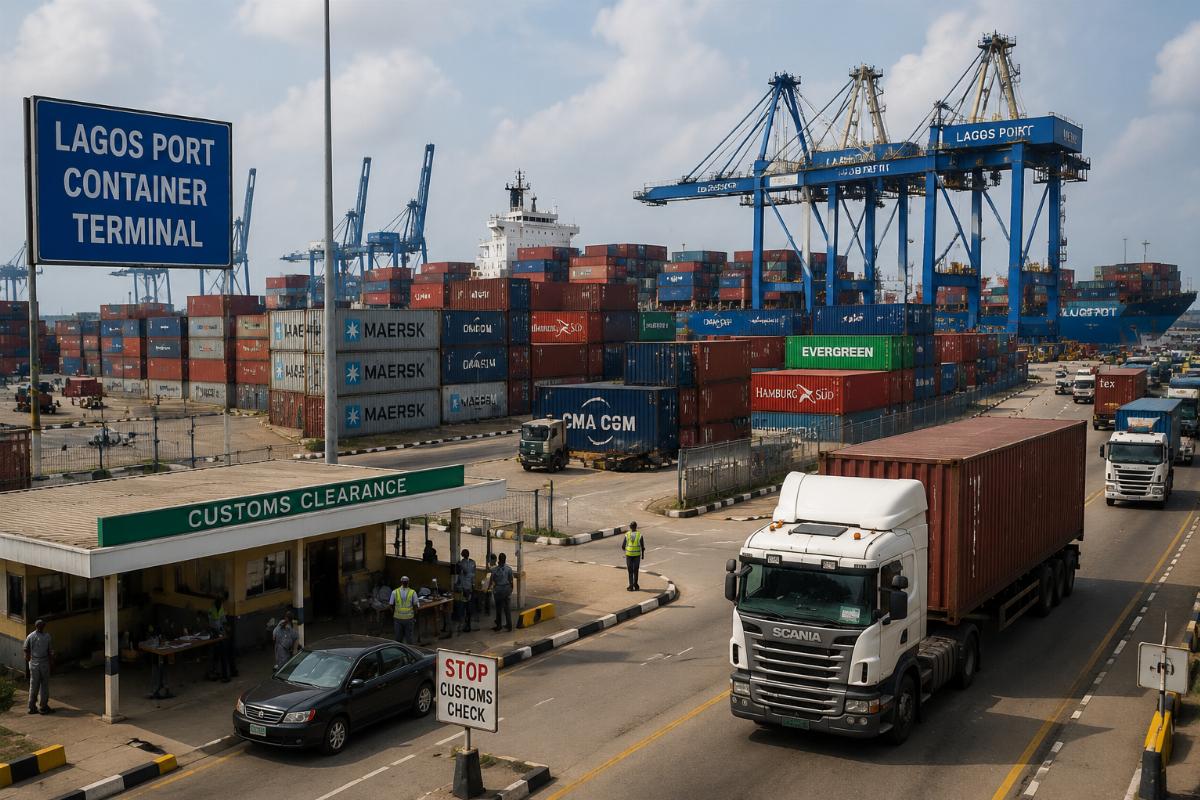
Lagos ports are among the most congested in West Africa. If your documentation is not perfect before the vessel arrives, your containers will sit, and the daily demurrage charges will accumulate rapidly. I have seen clearance delays stretch well beyond a week during peak import seasons, and the resulting costs can dwarf the original freight invoice.
The hidden cost categories every buyer must plan for:
- Demurrage and detention charges. Container lines grant a limited number of free days at the terminal. Beyond that, daily charges apply. Incomplete or incorrect documentation is the most common trigger.
- SONCAP certification fees and processing time. This is a mandatory pre-shipment conformity assessment. If your supplier does not provide the required test reports in the correct format, you will face delays at both the origin and destination ends.
- Exchange rate exposure. The Nigerian Naira has experienced significant volatility. If your purchase contract is in USD and the Naira depreciates between order placement and payment, your effective cost rises without the machine changing at all.
- Inland transport damage risk. The road network from Lagos to interior cities can be rough. Inadequate packaging or improper container loading leads to cosmetic and structural damage that is expensive to repair.
- After-sales parts vacuum. If your supplier does not maintain a spare parts pipeline, every minor failure becomes an international shipping event. A single control board air-freighted from China costs many times its factory value.
[NEED_CITE: World Bank Logistics Performance Index data on Nigerian port efficiency and clearance time]
A gym chain owner in Lagos shared that his worst import experience was not a quality problem—it was a documentation problem. The supplier’s commercial invoice had a minor HS code discrepancy, and Nigerian customs held the container for an extended period. The demurrage bill was staggering. Since then, he requires every supplier to submit draft documentation for pre-approval before the vessel sails. That single process change has eliminated demurrage surprises entirely.
Understanding these hidden costs is essential to calculating the true commercial treadmill price in Nigeria and protecting your project margin.
How to Negotiate Bulk Pricing Without Sacrificing After-Sales?
Leverage tiered MOQ structures and bundle spare parts into the container shipment. The goal is to lower per-unit cost while ensuring that wear components are physically present in country from day one.
Bulk purchasing is the most effective way to bring down the per-unit commercial treadmill price in Nigeria, but only if the negotiation protects your after-sales position. Cutting the machine price while accepting zero spare parts support is a false economy that will cost you dearly within a year.
The negotiation approach that works:
- Structure your order in tiered volumes. A first container establishes the relationship. Subsequent containers at higher unit counts should unlock meaningful per-unit reductions. Make the volume commitment explicit and get the tiered pricing in writing.
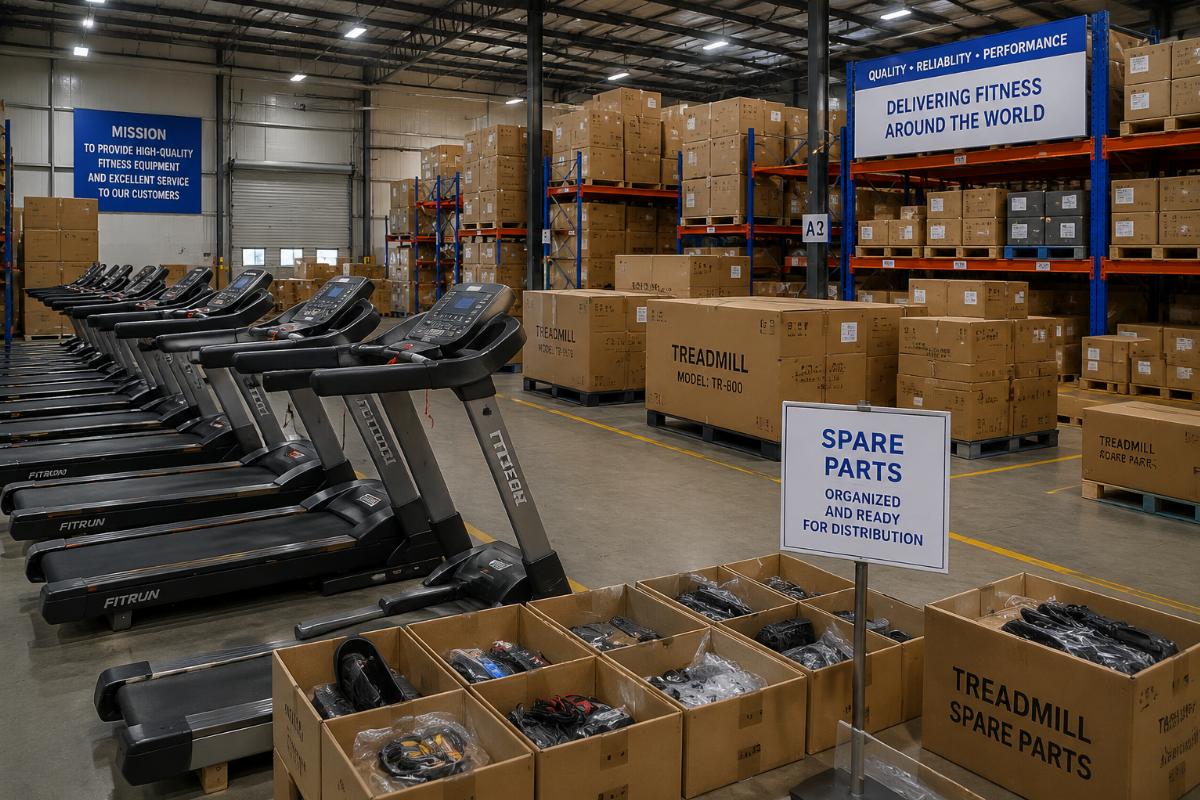
- Bundle a spare parts package into every container. Running belts, lower control boards, drive belts, and key sensors should travel with the machines. The marginal freight cost of adding a parts box to a full container is minimal compared to the cost of emergency air-shipment later.
- Negotiate OEM branding and customization at volume thresholds. If you are a distributor building your own brand, private-label console designs and logo placement become economically viable at full-container scale.
- Request consolidated container loading if you are buying mixed equipment. A supplier who manufactures both cardio and strength equipment can load treadmills alongside racks, cable machines, and free weights into one container. This spreads the freight cost across all product categories and reduces the per-unit landed cost of every item.
- Secure a written warranty and spare parts supply commitment. The warranty document should specify response time, parts availability guarantee, and technical support access. A warranty without enforceable parts supply is just a piece of paper.
[NEED_CITE: International fitness equipment industry best practices for spare parts stocking ratios in emerging markets]
A West African distributor started by ordering a single mixed container of treadmills, ellipticals, and strength equipment from one manufacturer. The consolidation meant his freight cost per treadmill was noticeably lower than if he had shipped cardio alone. He also negotiated a spare parts kit equal to a defined percentage of the total order value, included inside the same container. When a control board failed at a client site six months later, the replacement was already in his warehouse. The commercial treadmill price in Nigeria for his end customers remained competitive because his total cost structure was controlled from the start.
Conclusion
The commercial treadmill price in Nigeria is a supply chain equation, not a factory price tag. Buyers who focus exclusively on FOB quotations will consistently overshoot their real budgets. Those who model landed cost, select specs based on actual usage intensity, demand documentation compliance, and bundle spare parts into every shipment will build sustainable operations. The market rewards preparation and punishes shortcuts.


