Container Loading Configuration for Storage Wall Bulk Orders
Most buyers assume fully assembled units ship faster and save on-site labor. The reality is the opposite: assembled storage walls ship mostly air, and that air can inflate your freight bill by a third or more.
For storage wall bulk orders, the optimal container loading configuration hinges on systematic disassembly, nested stacking, and pre-verified 3D loading plans. When executed correctly, a single 40HQ can carry substantially more units than the upright-assembled baseline, cutting per-unit freight costs noticeably without adding assembly headaches at destination.
I still remember a gym owner in Mexico City who ordered a full set of wall-mounted cable crossovers and storage racks. His forwarder quoted him two 40HQs based on the supplier’s default upright loading. When I ran the numbers on disassembled frames nested with crossmembers laid flat, we pulled the entire order into one container. The freight saving alone covered his destination assembly labor and then some. That kind of outcome is not luck—it is the result of treating container loading configuration for storage wall bulk orders as an engineering problem, not an afterthought. [NEED_CITE: ISO 668 container internal dimension standards for 40HQ high-cube units]
Let me walk you through how we approach this, container by container.
Why Does Container Loading Matter for Storage Wall Bulk Orders?
Freight cost per unit is the single largest variable in landed cost for bulky fitness equipment, and loading configuration is the lever that moves it most.
When a storage wall or wall-mounted functional trainer ships fully assembled, you are essentially paying to transport empty space. The main frame stands upright, the pulley systems stick out, the weight stack horns extend sideways—all of it creates voids that a forklift cannot fill and a loader cannot compress. A typical 40HQ loaded with upright-assembled wall units might reach only a fraction of its volumetric capacity. [NEED_CITE: volumetric utilization rates for assembled vs. knocked-down fitness equipment per industry freight audits]
I have seen buyers in Latin America receive quotes for two containers when one would suffice, simply because the supplier defaulted to "ship as built." The extra container meant extra ocean freight, extra chassis fees at ports like Santos or San Antonio, and extra customs documentation. For a mid-size gym chain outfitting multiple locations, those costs compound quickly across a rollout.
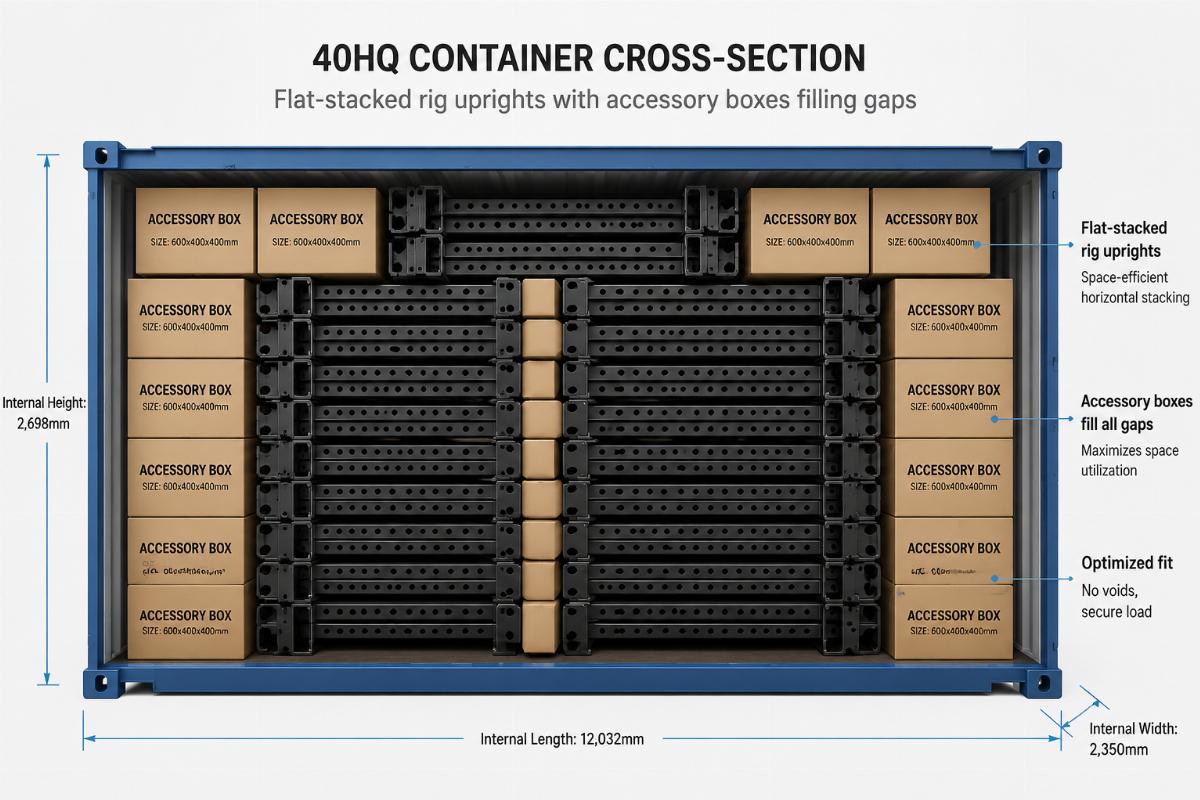
The math shifts dramatically once you treat the container loading configuration for storage wall bulk orders as a design input rather than a packing afterthought. Disassembled frames nest inside each other. Crossmembers and shrouds lay flat between them. Small hardware bags fill the gaps. The same cubic meter of container space holds substantially more sellable product.
How to Disassemble Storage Wall Equipment for Maximum Density?
A tiered disassembly strategy—breaking the unit into three logical levels—unlocks the density gains that make container loading configuration for storage wall bulk orders worthwhile.
Here is how we classify the teardown:
- Level-one disassembly: Remove all crossmembers, top caps, weight stack horns, and any bolt-on shrouds. These parts lay flat and stack like lumber.
- Level-two disassembly: Detach pulley assemblies, cable guides, and selectorized pin blocks. These go into labeled poly bags, then into a single crate per container tier.
- Level-three retention: The main upright frame stays intact. It is the structural skeleton and the nesting anchor.
The key insight is that the main frame, once stripped of protruding arms and horns, becomes a hollow rectangle. You can slide a slightly narrower frame inside it, then another inside that, like a set of folding chairs. [NEED_CITE: nesting efficiency principles for tubular steel fitness frames per mechanical packaging guides]
I once worked with a hotel project in the Middle East that ordered wall-mounted storage racks alongside functional trainers. The initial plan had the racks shipped fully welded. We proposed removing the horizontal beams and nesting the upright posts. The loading rate jumped noticeably—enough to pull an entire second rack order into the same container. The hotel’s procurement team had never seen that kind of flexibility from a supplier before.
One caution: do not over-disassemble. Every bolt you remove at origin is a bolt someone must re-torque at destination. The goal is to eliminate void space, not to turn the container into a flat-pack furniture kit. Level-one and level-two get you most of the gain. Level-three beyond that usually costs more in destination labor than it saves in freight.
What Are the Key Weight Distribution Principles?
Proper weight distribution in container loading configuration for storage wall bulk orders is about more than stability—it is about unload sequence, forklift access, and preventing cargo shift that triggers insurance claims.
The baseline rule is simple: heavy items low and centered, lighter items filling the upper voids. But the details matter more than the rule.
- Center of gravity: Keep the loaded center of gravity slightly below the container’s mid-height and aligned with the longitudinal centerline. An off-center load invites lateral shift during ocean roll, which can tear lashing points from the floor.
- Axle load balance: Distribute weight evenly across the container’s length. Port-hand-heavy loading causes chassis axle violations at destination, delaying gate-out and adding rework fees.
- Unload sequence planning: If the destination will partial-unload at a warehouse before final delivery, pack the first-stop items near the doors. I have seen entire containers re-stuffed at a transshipment port because the buyer needed three racks immediately but they were buried behind twenty cable crossover frames.
- Forklift clearance: Leave a narrow working aisle if the destination lacks a dock-level unloader. A fully floor-to-ceiling stuffed container sounds efficient until the receiver cannot extract the first pallet without toppling the second.
Steel banding is non-negotiable for storage wall frames. We use both horizontal and vertical cross-strapping, with edge protectors on every contact point. The frames are heavy, steel-to-steel, and they will grind through untreated banding in rough seas. [NEED_CITE: cargo securing guidelines for heavy steel fitness equipment per international container transport standards]
A buyer in West Africa once received a container where the supplier had skipped vertical strapping to save an hour of labor. Two frames had shifted during transit, crushing a crate of dumbbells against the door. The insurance claim covered the goods but not the project delay. That kind of loss is entirely preventable with proper lashing protocol.
How to Verify Loading Plans Before Shipment?
Never let a container door close without a pre-approved 3D loading plan and a real-time photo verification protocol. This is where container loading configuration for storage wall bulk orders either saves money or creates disputes.
We run every bulk order through a 3D loading simulation before production even finishes. The software models the exact internal dimensions of the container type—40HQ, 40GP, or 45HC—and places each disassembled component as a volumetric block. The output tells us how many units fit, where the weight centers, and whether the door-clearance margin is safe.
Once the plan is locked, we share it with the buyer as a PDF with top, side, and rear views. The buyer’s forwarder can then confirm chassis compatibility and port weight restrictions. This step alone has prevented multiple mis-shipments where a buyer assumed a 40GP would suffice but the volume actually required a 40HQ.
During loading, our floor team takes photos at three stages: empty container with floor markings, mid-load with first tier secured, and fully loaded with door clearance visible. These photos go to the buyer within the same day. If anything looks off—a gap that should not be there, a strap routed wrong—the buyer can flag it before the container is sealed.
I have had buyers tell me this level of transparency is rare. Most suppliers just load and ship, then send a blurry photo of closed doors. For a container loading configuration for storage wall bulk orders worth tens of thousands in freight, a few minutes of staged photography is cheap insurance.
What Documentation Ensures Smooth Customs Clearance?
Clean customs clearance for container loading configuration for storage wall bulk orders depends on documentation that matches the physical disassembly reality, not the original assembled product listing.
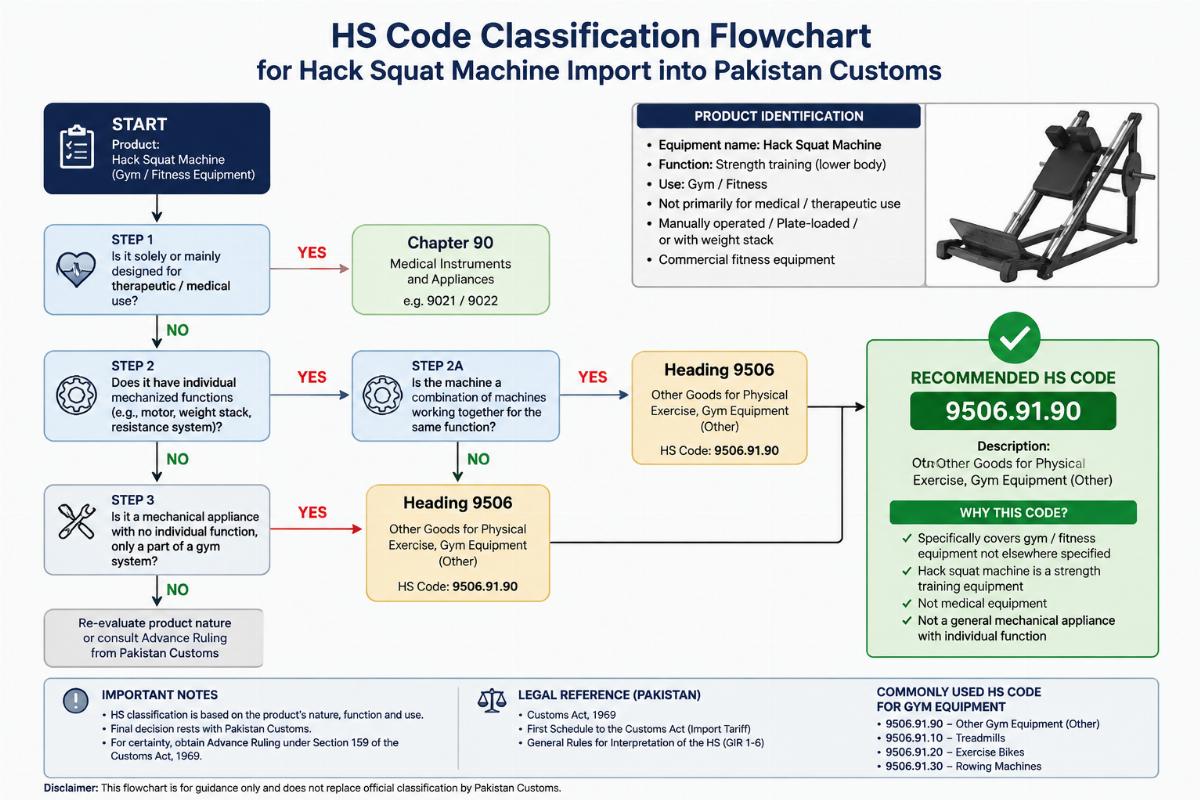
When you ship disassembled, the packing list must reflect each component tier, not just "one storage wall unit." Customs officers in markets across Latin America, the Middle East, and Africa are increasingly scrutinizing HS code accuracy. If your invoice says "complete strength machine" but the container holds nested frames, bagged pulleys, and separate hardware crates, you invite inspection delays or misclassification penalties.
We prepare three documents for every bulk order:
- Detailed packing list by disassembly tier: Lists every frame, crossmember, hardware bag, and accessory crate with individual weights and dimensions. This matches the 3D loading plan.
- HS code classification memo: Explains why disassembled components still classify under the same fitness equipment heading as the assembled unit, referencing relevant General Rules of Interpretation. [NEED_CITE: WCO HS classification principles for knocked-down fitness equipment under GIR 2(a)]
- Wood packaging fumigation certificate: If any crate or pallet uses solid wood, it must carry an ISPM-15 stamp. We use either heat-treated wood or engineered wood products to avoid fumigation delays entirely.
A distributor in Southeast Asia once had a container held for weeks because the packing list described "assembled cable crossover" while the physical cargo was fully knocked-down. Customs assessed a higher duty rate for "parts" instead of "complete machines." The reclassification cost the distributor a meaningful sum in retroactive duty and storage fees. The fix was straightforward—align the paperwork with the physical loading reality from day one.
Conclusion
Container loading configuration for storage wall bulk orders is a freight-cost multiplier that most buyers overlook until the invoice arrives. Systematic disassembly, nested stacking, disciplined weight distribution, pre-verified 3D plans, and documentation that mirrors the physical load—these are not optional refinements. They are the difference between paying for air and paying for product. Get the loading right, and the per-unit landed cost drops noticeably without sacrificing a single bolt of destination readiness.