HD-700 Plate Loaded Series Manufacturer & Supplier for Commercial Gyms
Most buyers assume heavier plate-loaded machines mean better durability — the real answer lies in steel yield strength and tube wall thickness, not gross weight.
The HD-700 Plate Loaded Series is a commercial-grade, heavy-duty plate-loaded strength training line engineered for high-frequency gym environments, covering chest, back, legs, and shoulder muscle groups with verifiable steel gauge specifications, load-bearing structures, and optimized container loading solutions for international buyers sourcing from China.
I still remember the first full container of plate-loaded machines I shipped to Santos port. Back when I was handling shipping documents, I thought "good enough" packaging would survive the Atlantic crossing. Two HD-700 series machines were stacked directly without wooden pallet isolation — by the time the vessel crossed the equator and hit rough swells, the steel frames shifted inside the container. When the buyer opened those doors in Brazil, three machines had deformed weight guide rails. The client refused acceptance, and rework plus reshipment dragged on for months. That single incident changed how I approach every spec sheet, every loading plan, every welding standard for the HD-700 Plate Loaded Series — because I know now that one missing line on a parameter sheet means one more scratch inside the container.

This article walks through exactly what commercial gym owners, Latin American distributors, and OEM buyers need to verify before placing orders — from steel specifications to container optimization.
HD-700 Plate Loaded Series Covers Which Machines and Muscle Groups?
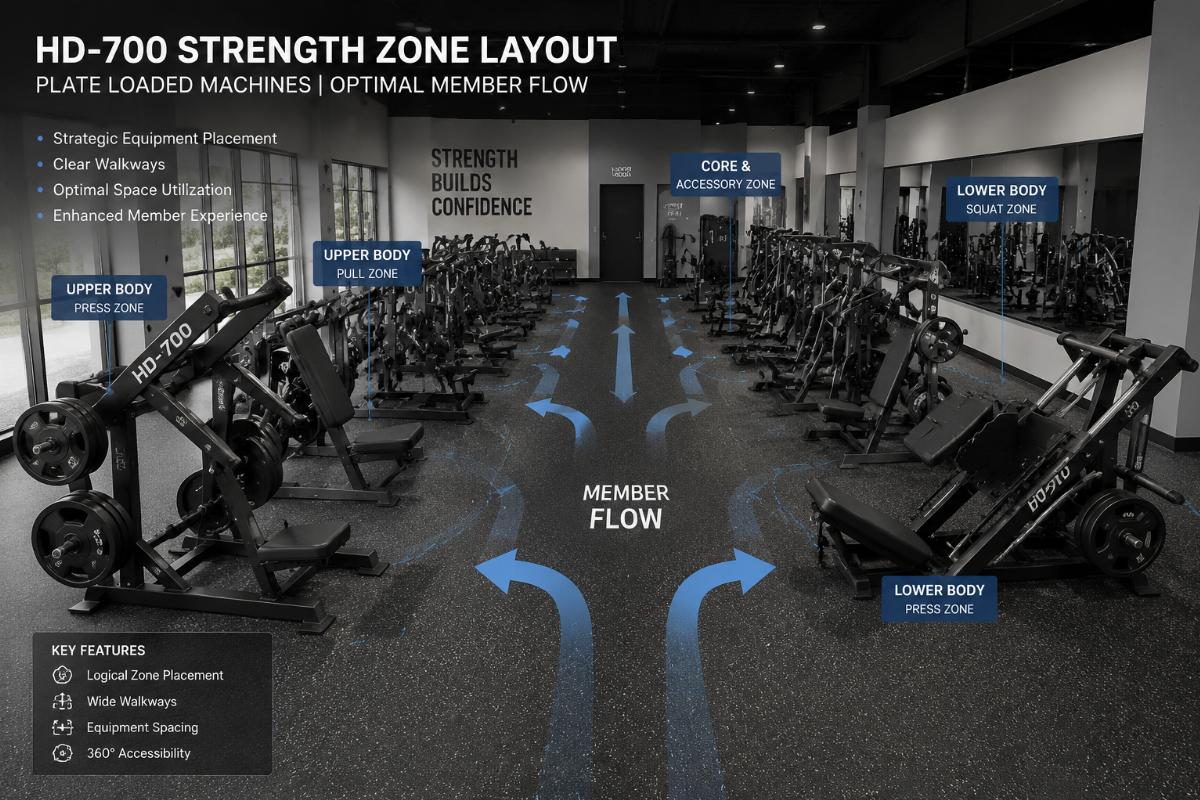
The HD-700 series provides comprehensive coverage of all major muscle groups — chest, back, legs, and shoulders — making it a complete strength zone solution for commercial gym configurations.
Commercial gym buyers typically need to outfit an entire strength training area, not just purchase individual machines. The HD-700 Plate Loaded Series addresses this by offering multiple stations targeting different muscle groups:
| Machine Type | Primary Target Muscles | Secondary Engagement | Typical Commercial Use Case |
|---|---|---|---|
| Plate Loaded Chest Press | Pectoralis major, anterior deltoids | Triceps, serratus anterior | High-traffic commercial gyms, hotel fitness centers |
| Plate Loaded Lat Pulldown | Latissimus dorsi, biceps | Rhomboids, rear deltoids | Back-focused strength zones, cross-training areas |
| Plate Loaded Leg Press | Quadriceps, glutes | Hamstrings, calves | Heavy-load commercial environments, athletic training facilities |
| Plate Loaded Shoulder Press | Deltoids, trapezius | Triceps, upper chest | Full-body strength circuits, personal training zones |
| Plate Loaded Row | Middle back, biceps | Rear deltoids, forearms | Balanced upper-body development, rehabilitation settings |
A Latin American distributor I worked with needed to equip a mid-size commercial gym chain across multiple cities. They initially wanted only leg machines because "leg day sells memberships." After reviewing traffic patterns and peak-hour usage data, we recommended a balanced mix — chest, back, legs, and shoulder stations from the HD-700 series. The result was more balanced member utilization across the strength zone, reducing bottlenecks during evening peak hours.
For buyers evaluating the HD-700 Plate Loaded Series, the key question is not whether a single machine fits your space — it is whether the full series covers your members’ training needs without requiring supplementary equipment from other manufacturers. [NEED_CITE: commercial gym equipment selection criteria per muscle group balance]
What Are the Key Steel and Load-Bearing Specs Buyers Should Verify?
Tube wall thickness, steel grade, and welding standards are the three verifiable document dimensions that separate commercial-grade plate-loaded equipment from light-duty alternatives.
Most buyers focus on machine appearance or brand reputation. But the real durability indicators are buried in technical documentation — and they require specific verification methods, not just supplier promises.
Tube Wall Thickness and Outer Diameter
Commercial plate-loaded machines endure repetitive heavy loads — often exceeding standard residential use by multiples. The critical specification is not just outer diameter, but the ratio of outer diameter to wall thickness.
| Specification Level | Tube Outer Diameter Range | Wall Thickness Category | Load-Bearing Classification |
|---|---|---|---|
| Light-Duty Residential | Smaller diameter range | Thin-wall category | Suitable for occasional home use |
| Standard Commercial | Medium diameter range | Standard-wall category | Suitable for moderate gym traffic |
| Heavy-Duty Commercial | Larger diameter range | Thick-wall category | Suitable for high-frequency commercial environments |
The HD-700 Plate Loaded Series falls into the heavy-duty commercial classification, with tube specifications designed to handle sustained loads during peak gym hours when multiple members use equipment simultaneously. [NEED_CITE: steel tube specifications for commercial strength equipment per EN ISO 20957]
Steel Grade and Yield Strength
Steel grade determines how the frame responds to stress over time. Commercial environments need steel with sufficient yield strength to resist permanent deformation under repeated loading.
- Carbon steel grades commonly used in fitness equipment range from basic structural grades to higher-strength variants
- Yield strength indicates the stress level at which steel begins to deform permanently — higher yield strength means better resistance to frame flexing
- Material certificates should accompany commercial equipment orders, allowing buyers to verify steel grade claims
A Middle East gym owner once asked me why his previous supplier’s machines developed frame cracks after extended use. The answer was simple: the supplier used basic structural steel without providing material certificates. When we supplied HD-700 series equipment with verifiable material documentation, the buyer could confirm the steel grade matched commercial requirements.
Welding Standards and Inspection Documentation
Welding quality directly affects structural integrity. But how do buyers verify welding standards without visiting the factory?
The answer lies in requesting specific documentation:
- Welding procedure specifications showing joint design and filler material
- Visual inspection reports documenting weld quality
- Non-destructive testing records for critical load-bearing joints
For the HD-700 Plate Loaded Series, welding documentation is available for buyer review, providing traceability from raw material to finished product. [NEED_CITE: welding inspection standards for fitness equipment per AWS D1.1]
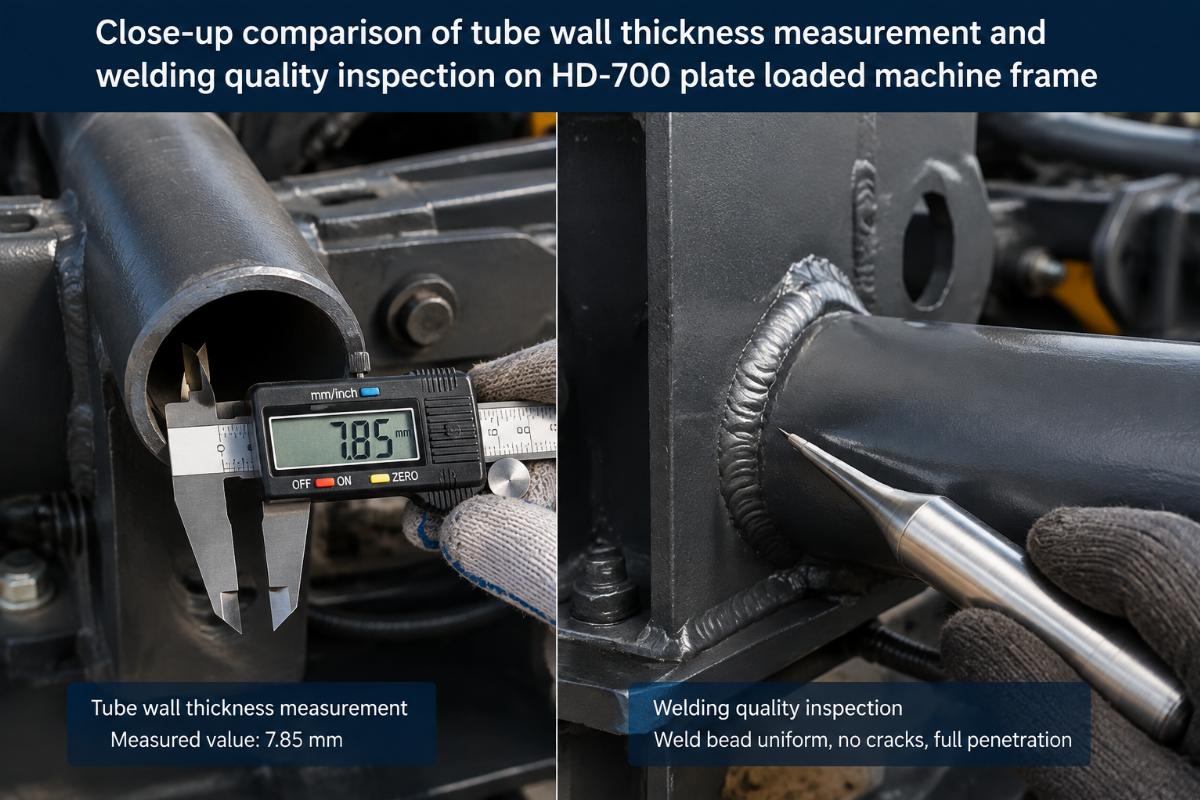
Plate Loaded vs. Selectorized: Which Fits Your Gym Model?
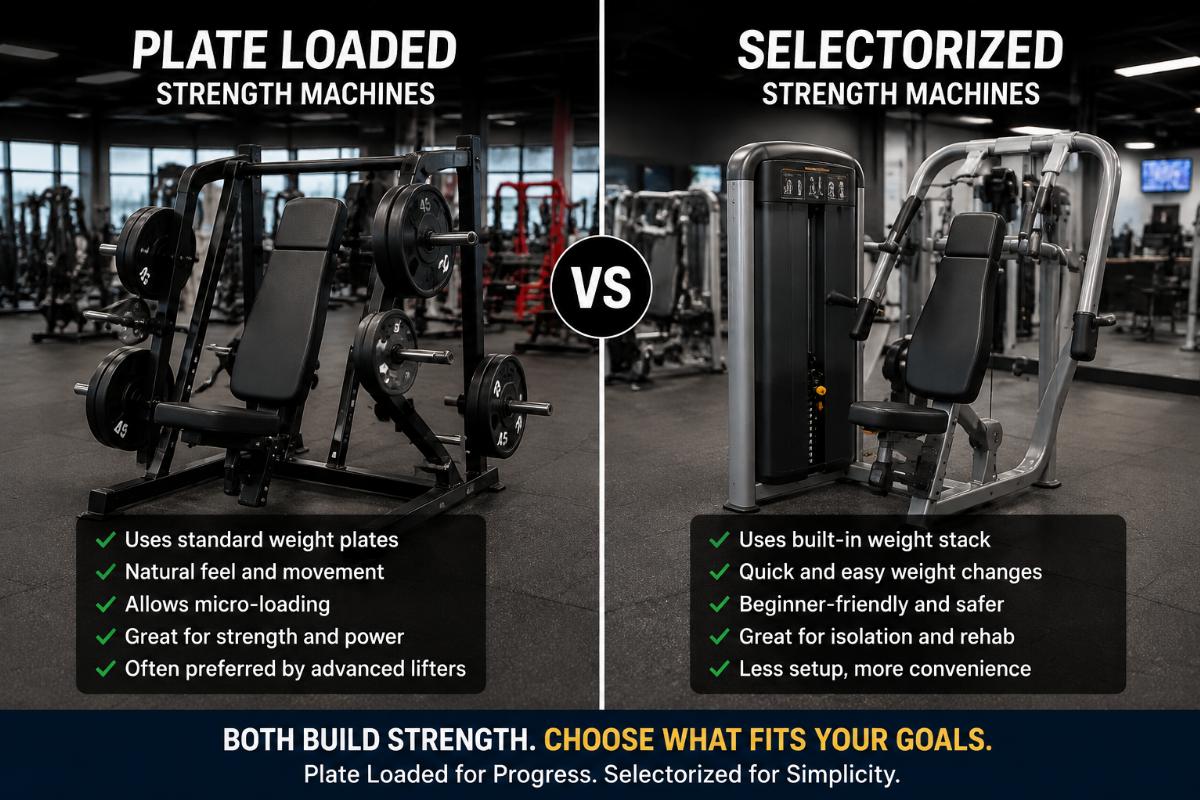
Plate-loaded machines suit high-frequency commercial use and budget-sensitive scenarios, while selectorized machines fit premium member experience environments — the choice depends on your gym’s business model, not just equipment cost.
This is one of the most common questions I receive from buyers: should they invest in plate-loaded or selectorized equipment? The answer requires understanding your target member profile and operational priorities.
Maintenance Cost Comparison
| Factor | Plate Loaded | Selectorized |
|---|---|---|
| Moving parts complexity | Noticeably simpler | Substantially more complex |
| Cable and pulley wear | Minimal cable systems | Multiple cable pathways requiring regular inspection |
| Weight stack maintenance | No weight stack — users load plates | Weight stack guides and selector pins require periodic attention |
| Long-term parts consumption | Lower frequency of replacement parts | Higher frequency of component replacement |
For gym operators focused on minimizing maintenance overhead, plate-loaded equipment offers a clear advantage. The HD-700 Plate Loaded Series uses guided movement patterns with minimal cable systems, reducing the components that wear over time.
User Experience Considerations
- Plate-loaded equipment appeals to serious lifters and athletes who prefer loading their own weight — this demographic values the tactile experience and precise weight control
- Selectorized equipment appeals to general fitness members who prefer quick weight adjustments — this demographic values convenience and ease of use
- Hybrid approach works for many commercial gyms: plate-loaded stations for serious lifters, selectorized stations for general members
A boutique fitness studio owner in Southeast Asia initially wanted only selectorized equipment for a "premium look." After discussing his target demographic — primarily young athletes and serious lifters — he switched to a plate-loaded configuration using the HD-700 series. Member feedback indicated higher satisfaction with the equipment choice, and maintenance costs dropped noticeably compared to his previous selectorized setup.
Budget and ROI Analysis
Plate-loaded equipment typically carries a lower initial purchase price than selectorized equivalents. But the real financial comparison must include:
- Initial capital expenditure — plate-loaded generally requires less upfront investment
- Maintenance budget allocation — plate-loaded reduces ongoing parts and labor costs
- Member retention impact — equipment choice affects member satisfaction and renewal rates
For the HD-700 Plate Loaded Series, buyers receive commercial-grade construction at a price point that allows budget allocation across multiple stations rather than concentrating investment in fewer selectorized machines. [NEED_CITE: commercial gym equipment ROI comparison plate loaded vs selectorized]
How to Optimize Container Loading for HD-700 Series?
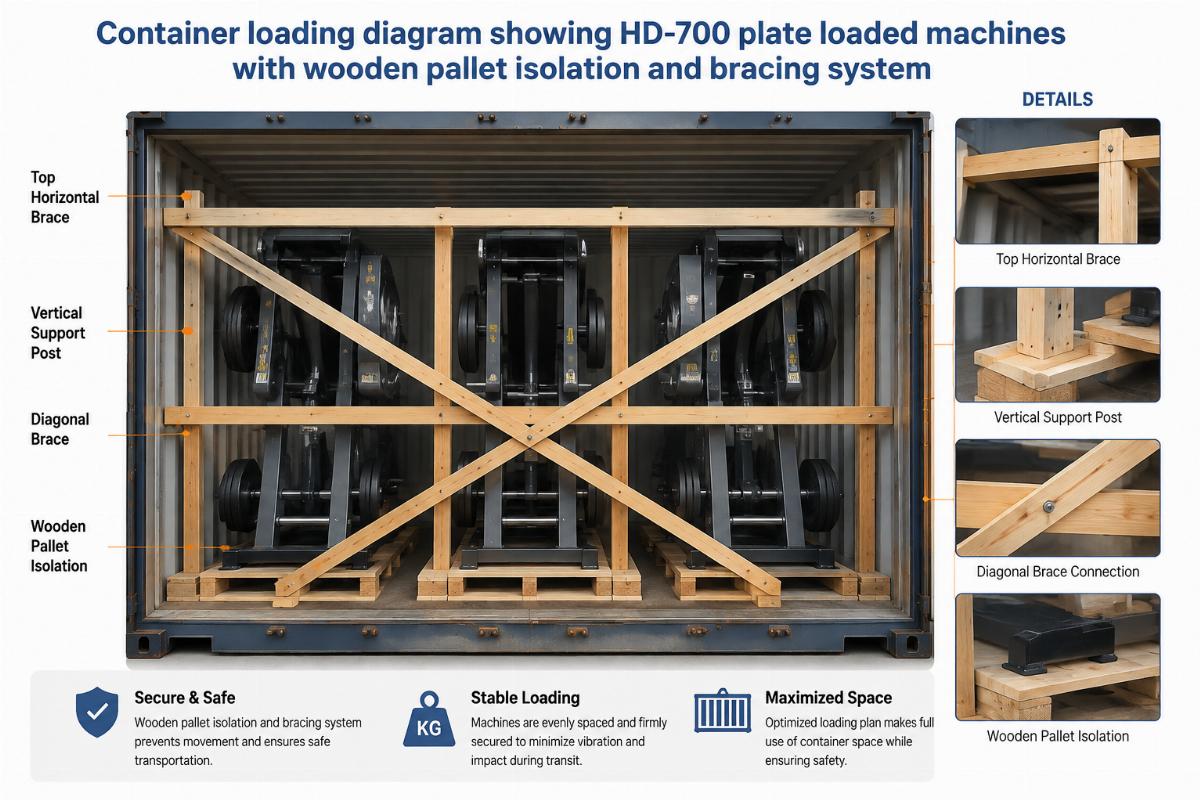
Mixed-model container loading with proper wooden pallet isolation and center-of-gravity fixation is the key to reducing cross-ocean transit damage rates for plate-loaded equipment.
This section hits close to home for me — it is where I learned my hardest lesson. When shipping heavy steel equipment internationally, container loading is not just about fitting as many machines as possible. It is about balancing loading density with damage prevention.
Loading Density vs. Damage Rate Balance
Many buyers assume filling every cubic meter of a container maximizes cost efficiency. But this approach ignores a critical variable: damage during transit.
- Overloaded containers with insufficient bracing lead to machine movement during rough seas
- Improper weight distribution causes containers to shift on vessel stacks
- Missing isolation materials allow machines to contact and damage each other
For the HD-700 Plate Loaded Series, we developed specific loading protocols based on machine weight and dimensions:
| Loading Scenario | Container Type | Recommended Approach | Damage Prevention Method |
|---|---|---|---|
| Single machine type | Standard configuration | Uniform stacking with pallet separation | Wooden pallet isolation between layers |
| Mixed machine types | Optimized configuration | Weight-balanced loading with heavy machines at bottom | Center-of-gravity fixation using bracing materials |
| Full gym package | Consolidated configuration | Strategic placement considering unloading sequence | Comprehensive isolation and bracing system |
Wooden Pallet Isolation Protocol
Wooden pallets serve multiple functions in plate-loaded equipment shipping:
- Weight distribution — pallets spread machine weight across container floor
- Separation barrier — pallets prevent direct metal-to-metal contact between machines
- Moisture buffer — pallets elevate machines slightly above potential condensation pooling
For a Latin American distributor ordering mixed HD-700 series machines — leg press, chest press, and lat pulldown — we implemented a specific loading sequence. Heavy leg press machines went on the bottom with full pallet isolation. Lighter upper-body machines stacked above with additional bracing. The result: zero damage across multiple container shipments, compared to the damage rate the distributor experienced with previous suppliers who did not use systematic isolation protocols.
Center-of-Gravity Fixation Methods
Once machines are loaded, they must remain stationary during transit. This requires:
- Lateral bracing — preventing side-to-side movement
- Longitudinal bracing — preventing front-to-back shifting
- Vertical restraint — preventing vertical bouncing on rough roads
The HD-700 Plate Loaded Series shipping protocol includes specific bracing points designed into the machine frames, allowing securement straps to attach without damaging equipment surfaces. [NEED_CITE: container loading best practices for heavy fitness equipment per ISO 17363]
What After-Sales Parts and OEM Support Are Included?
Guide rails, bearings, and cables are the high-frequency wear components in plate-loaded equipment — spare parts supply capability and OEM branding documentation determine long-term operational costs.
Most buyers focus on initial purchase price. But the real cost of gym equipment extends far beyond the invoice. Maintenance parts availability and OEM support quality directly impact total cost of ownership.
High-Wear Component Identification
Plate-loaded machines have fewer moving parts than selectorized equipment, but certain components still experience wear:
| Component Type | Function | Wear Mechanism | Replacement Frequency |
|---|---|---|---|
| Guide rails | Weight plate movement guidance | Friction from repeated plate loading | Extended service life with proper maintenance |
| Bearings | Smooth movement facilitation | rotational wear and load stress | Substantially extended with quality bearings |
| Cables | Resistance transmission | Tensile stress and flexing fatigue | Periodic inspection and replacement as needed |
| Seat pads | User comfort and positioning | Compression and surface wear | Noticeably extended with commercial-grade upholstery |
For the HD-700 Plate Loaded Series, these wear components are sourced from verified suppliers with quality documentation available for buyer review.
Spare Parts Supply Strategy
The question is not whether parts will wear — it is whether replacement parts are available when needed. A gym with a broken machine generates no revenue from that station.
Effective spare parts strategies include:
- Initial spare parts package — ordering critical wear components with the initial equipment purchase
- Regional parts inventory — distributors maintaining stock for their territory
- Direct factory supply — manufacturer capability to ship parts internationally on demand
For buyers purchasing the HD-700 Plate Loaded Series through distribution channels, we support a parts-with-equipment policy, allowing spare components to ship in the same container as the main equipment order. This reduces shipping costs and ensures parts availability from day one.
OEM Branding and Documentation Support
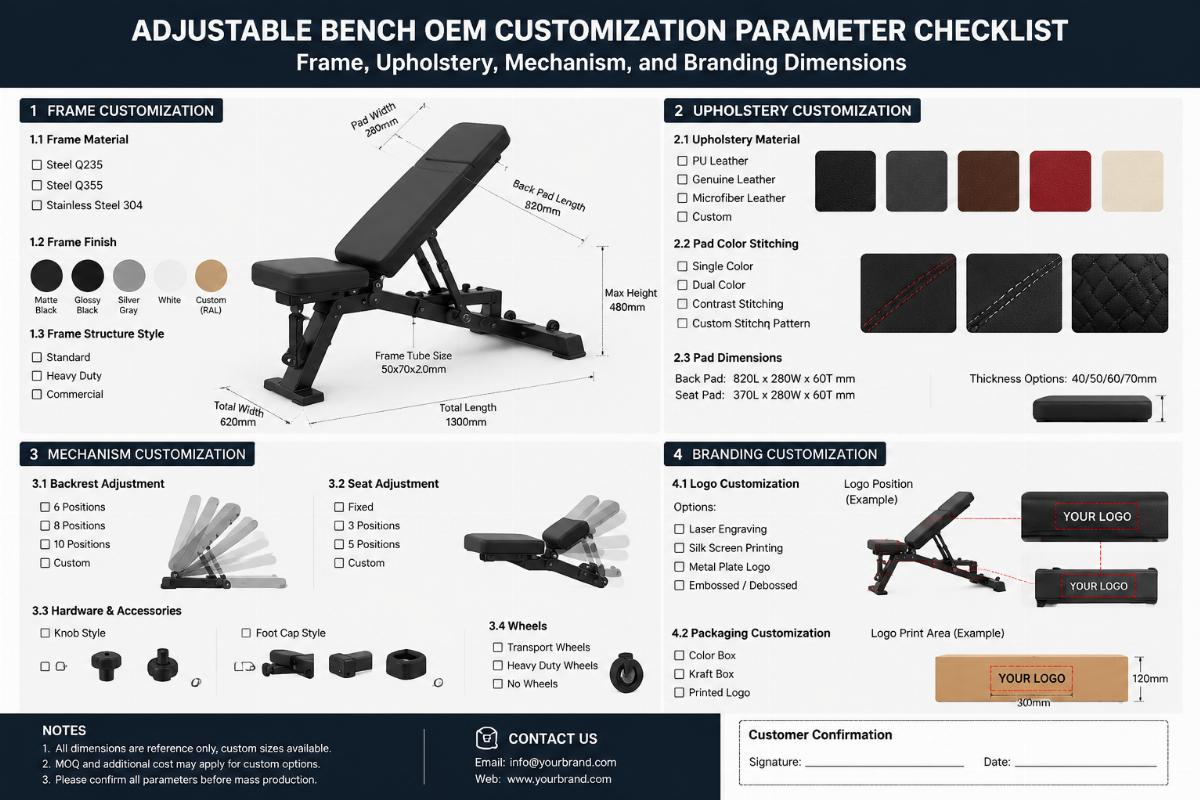
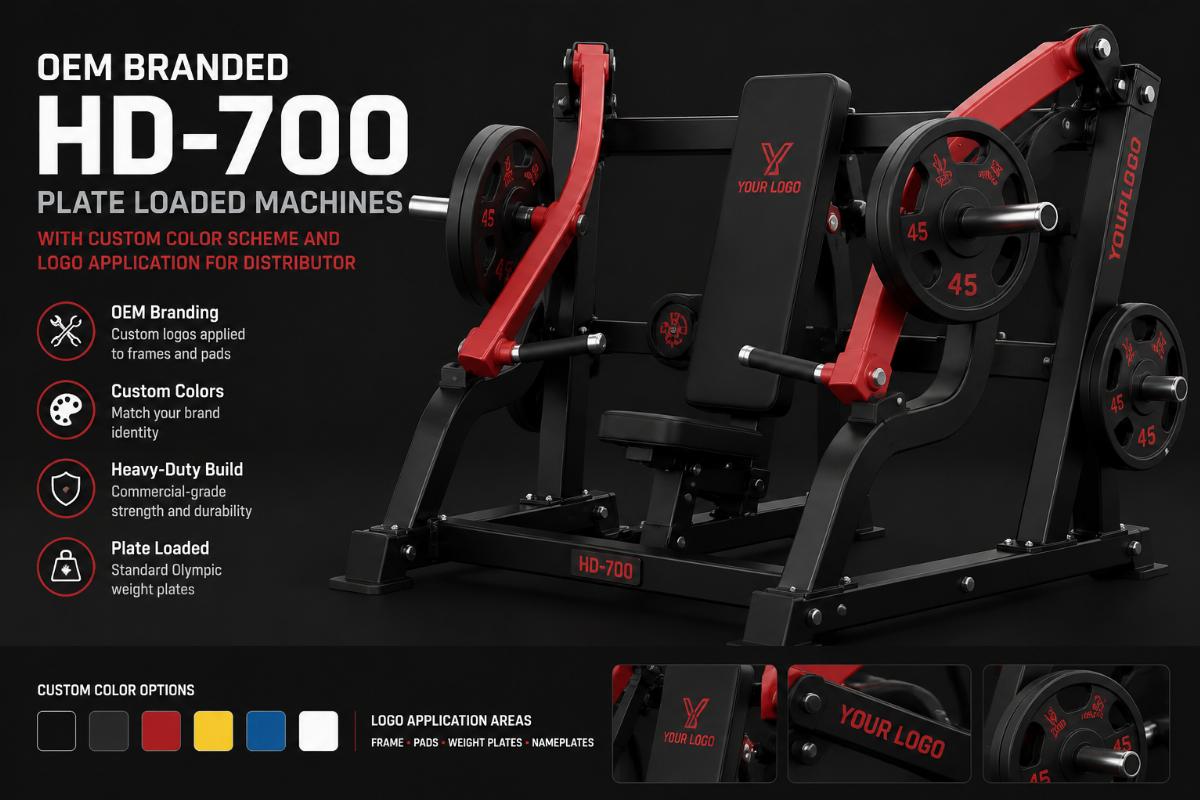
Distributors seeking to build their own brand require more than just equipment — they need complete branding support:
- Custom logo application — manufacturer capability to apply distributor branding during production
- Custom color schemes — ability to match equipment colors to distributor brand identity
- Technical documentation — user manuals and maintenance guides in distributor’s language and branding
- Quality certification — third-party test reports and compliance documentation supporting distributor claims
The HD-700 Plate Loaded Series supports full OEM and ODM customization, with branding documentation packages that allow distributors to present the equipment as their own product line. [NEED_CITE: OEM documentation requirements for fitness equipment distribution]
A distributor in the Middle East wanted to establish his own brand identity rather than reselling under the manufacturer’s name. We provided complete OEM support for the HD-700 series — custom branding, color matching, and translated technical manuals. The distributor successfully positioned the equipment as his proprietary product line, building customer loyalty around his brand rather than the manufacturing source.
Conclusion
The HD-700 Plate Loaded Series delivers commercial-grade strength training solutions with verifiable specifications, optimized logistics, and comprehensive after-sales support.
From steel gauge verification to container loading optimization, from wear component management to OEM branding support, every aspect of the HD-700 series addresses real buyer pain points. Commercial gym owners get durable equipment for high-frequency use, distributors get reliable supply chains with branding flexibility, and all buyers get transparent documentation supporting their investment decisions.