Hoist Fitness Leg Extension Machine vs China Factory-Direct Supplier
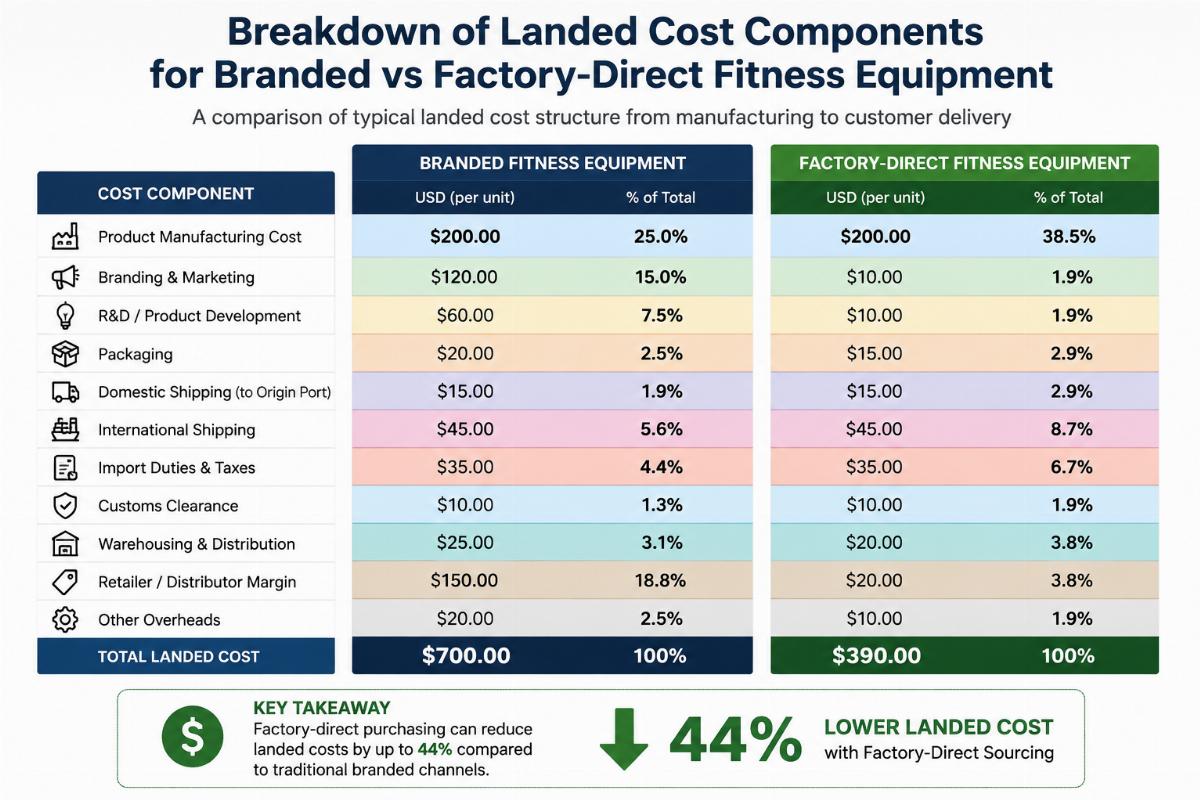
Most buyers assume paying a premium for an American brand guarantees commercial-grade durability. The reality is that a significant portion of that premium covers warehousing, distribution margins, and brand positioning—not necessarily better steel or tighter welds.
A China factory-direct Hoist Fitness Leg Extension alternative delivers equivalent CE-certified commercial specs at roughly half the landed cost, with single-unit MOQ flexibility and lead times measured in weeks rather than months. For gym operators, hotel developers, and regional distributors across MENA, Africa, and Southeast Asia, the functional gap between branded machines and Shandong factory-direct alternatives has narrowed to near zero.
I still remember standing in a back-of-house storage room at a five-star hotel in Riyadh, prying open crates that had crossed two oceans and sat in a bonded warehouse for months. The client had specified Hoist leg curl and extension units by name. When we pulled the first machine out, the upholstery already showed compression marks from stacking, and the chain drive had noticeable slack. Replacement parts requested from the US took weeks to clear customs. The client looked at me and said: "I paid top-shelf pricing, I got warehouse stock." [NEED_CITE: landed cost structure of imported US fitness equipment including warehousing and depreciation] That moment redirected my entire sourcing focus toward verifying whether Shandong-based manufacturers could genuinely replicate commercial-grade selectorized leg extension performance—and over the years, the answer has consistently been yes.

The question is no longer whether a China factory can build a durable leg extension machine. The question is how to verify that the factory you are dealing with actually meets the spec, and how to structure the procurement so that warranty risk stays manageable.
What Are You Really Paying For When You Buy a Branded Leg Extension?
The sticker price of a premium American-brand selectorized leg extension machine reflects far more than the cost of steel, welding, and assembly. A meaningful share goes toward North American marketing spend, regional distributor margins, and the inventory carrying cost of machines sitting in overseas warehouses waiting for the next container to ship. [NEED_CITE: typical distribution margin structure for imported commercial fitness equipment]
When a hotel developer in the Gulf specifies a branded leg extension unit, the invoice often includes a premium that covers the brand’s global advertising, the regional dealer’s showroom overhead, and the depreciation of stock that may have been sitting in a container yard for months before final delivery. The machine itself—the frame, the weight stack, the pivot bearings, the cable routing—is only a portion of what the buyer actually funds.
From a procurement standpoint, this creates a structural mismatch. A boutique gym owner in Lagos or a fitness distributor in Jeddah is paying for infrastructure they will never use: a showroom in Los Angeles, a European logistics hub, a North American warranty call center. The physical machine arriving on their dock is functionally identical to what a Shandong factory can produce under the same EN 957 / CE framework, yet the price tag tells a different story.
I have seen projects where the specified brand leg extension arrived with upholstery that had been compressed under stacking weight during trans-Pacific storage, and pivot bushings that showed early play despite being technically "new." The brand warranty process required the buyer to ship defective components back for assessment, adding weeks to downtime. [NEED_CITE: common failure modes in selectorized strength machines during extended warehousing]
The core insight is straightforward: brand pricing protects the distribution ecosystem, not necessarily the end-user’s operational uptime.
Can a China Factory-Direct Leg Extension Match Commercial-Grade Performance?
The short answer is yes, provided the buyer knows which parameters to verify and which certifications to demand. Shandong Province has developed a concentrated industrial cluster for commercial fitness equipment over the past two decades, with manufacturers producing selectorized machines, plate-loaded equipment, and functional trainers for gyms and hotels across multiple continents. [NEED_CITE: Shandong fitness equipment manufacturing cluster capabilities and export volume]
The critical specifications that determine whether a leg extension machine performs at commercial grade are consistent regardless of origin:
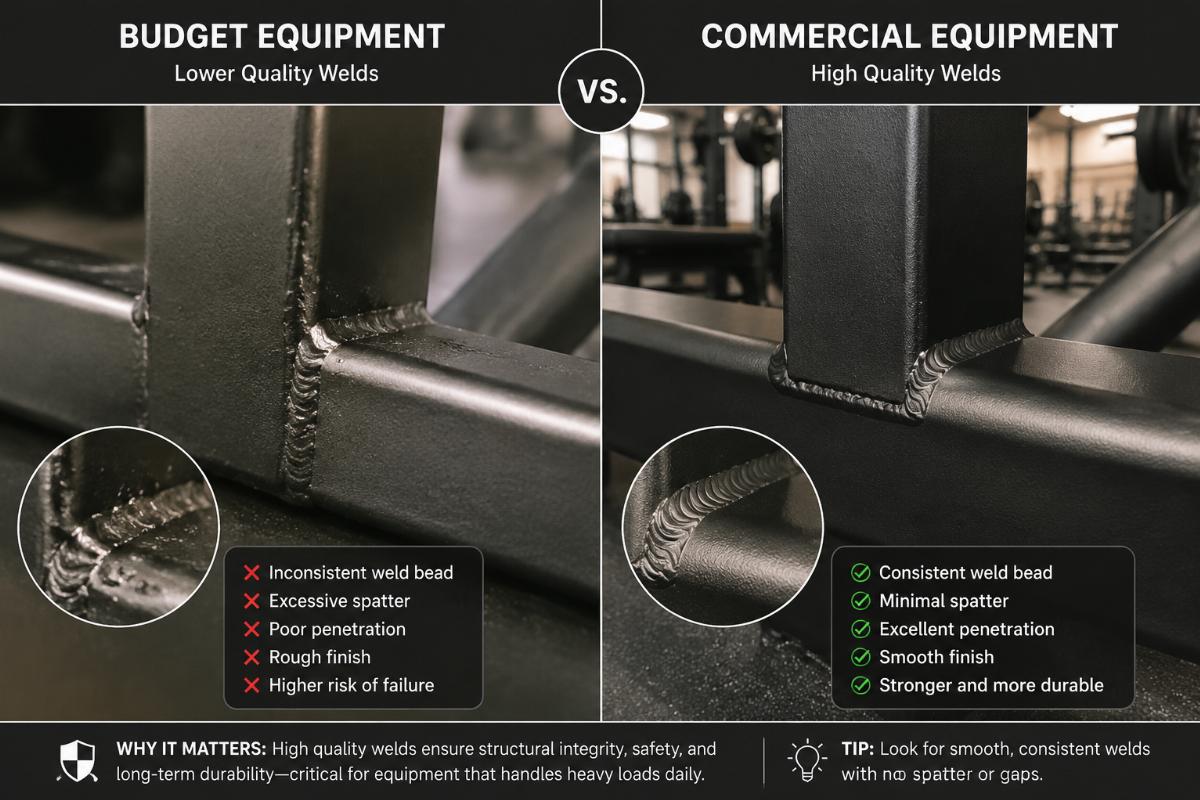
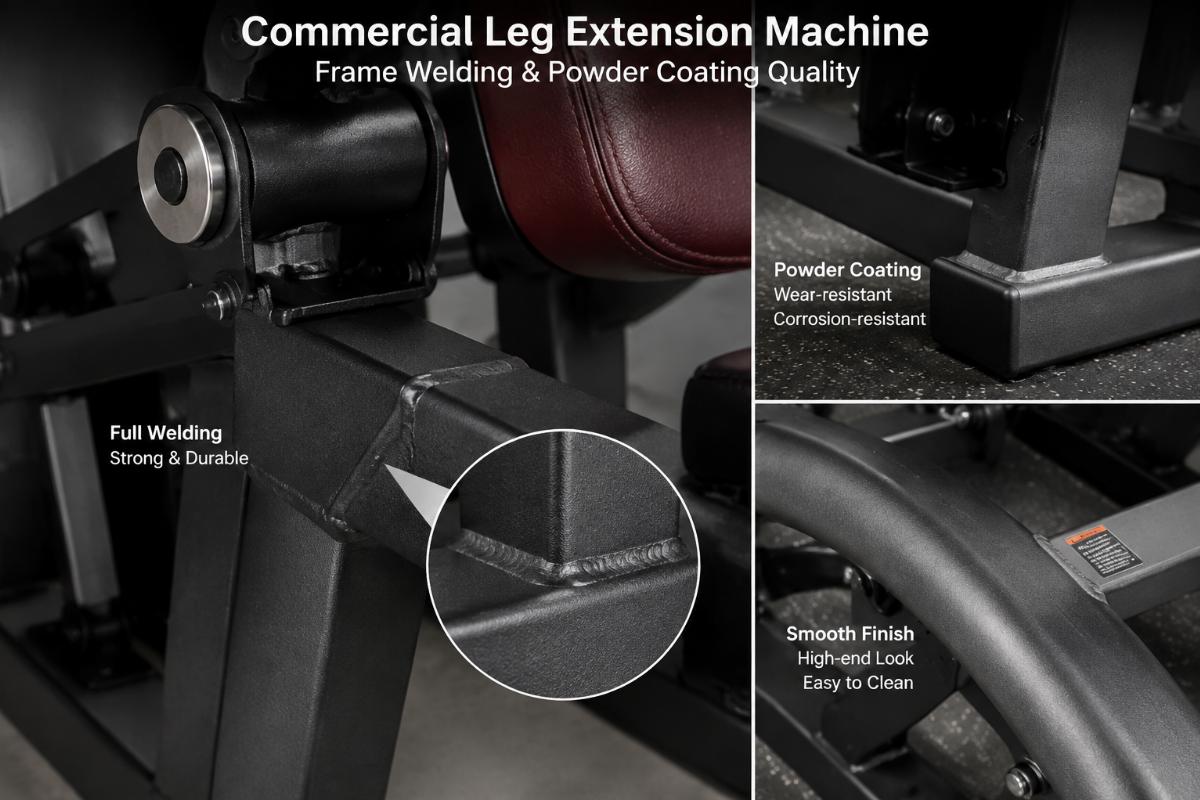
- Frame construction: Minimum steel gauge, welding quality on pivot joints, and powder-coat adhesion resistance to sweat and humidity.
- Weight stack system: Guide rod diameter, bearing smoothness through full range of motion, and pin insertion mechanism durability.
- Padding and upholstery: High-density foam that resists compression set, vinyl rated for commercial cleaning agents, and stitch reinforcement at stress points.
- Pivot and cam mechanics: Bearing type, alignment precision, and resistance to play over extended use cycles.
- Adjustability: Seat slide range, back pad angle positions, and ankle roller adjustment increments to accommodate diverse user anthropometry.
A reputable Shandong factory producing a Hoist Fitness Leg Extension alternative will use comparable steel thickness, employ MIG or TIG welding on structural joints, and apply electrostatic powder coating rated for humid environments. The CE certification process under EN 957 standards requires documented testing of load-bearing components, stability under dynamic use, and pinch-point safety—none of which are origin-dependent. [NEED_CITE: EN 957 stationary training equipment safety requirements for strength machines]
What differentiates one factory from another is not geography but quality control discipline. I have walked through facilities where the welding booths had proper ventilation and the welders held certified credentials, and I have seen others where cosmetic finish masked structural shortcuts. The buyer’s verification process matters far more than the country of origin.
Head-to-Head Comparison: Branded vs Factory-Direct Leg Extension
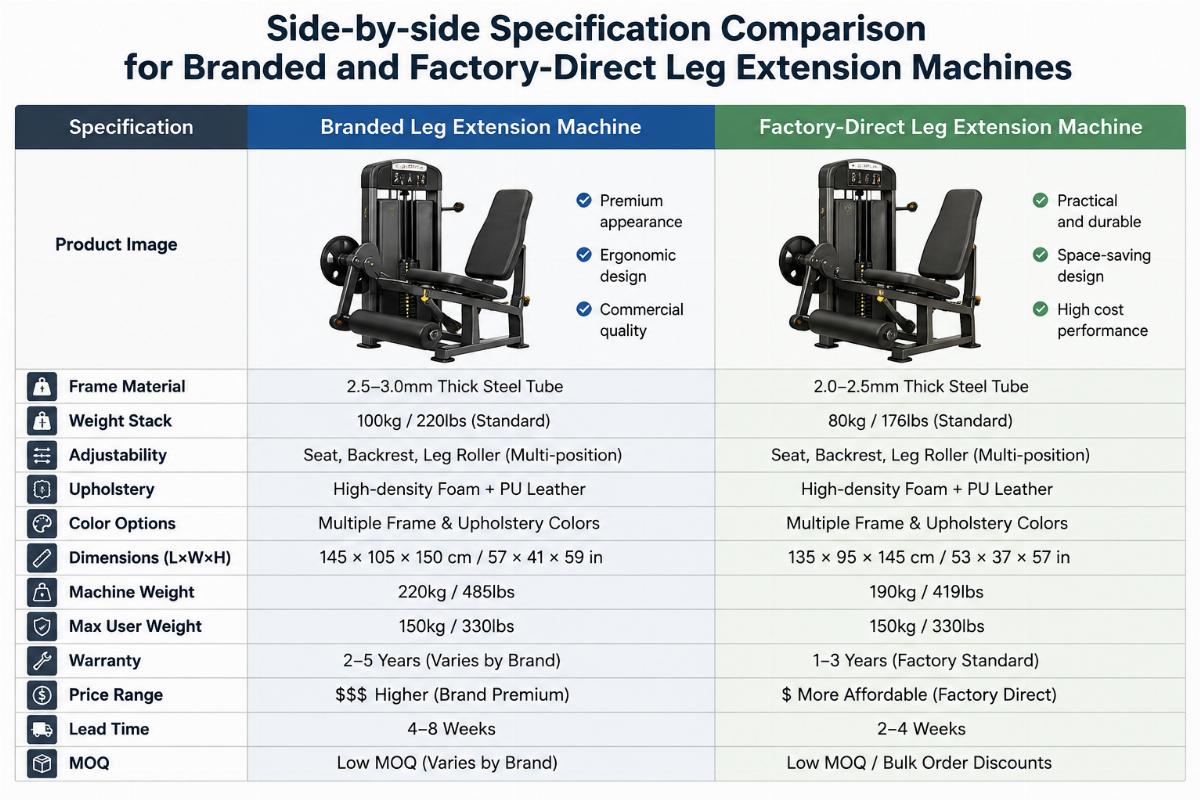
When you place a premium American-brand leg extension and a Shandong factory-direct alternative side by side on a spec sheet, the functional differences shrink while the cost and flexibility gaps widen significantly.
| Parameter | Branded US Machine | Shandong Factory-Direct |
|---|---|---|
| Frame Steel | Commercial-grade, verified | Commercial-grade, verifiable via mill cert |
| CE / EN 957 Certification | Certified | Certified, certificate verifiable online |
| Weight Stack | Integrated, proprietary design | Standard commercial spec, interchangeable |
| Upholstery | Branded vinyl, high density | Commercial-grade vinyl, comparable density |
| MOQ | Typically dealer-locked, full container | Single unit to full container, flexible |
| Lead Time | Extended due to warehousing and allocation | Production-start to shipment in weeks |
| OEM / Private Label | Not available | Full customization, branding, color matching |
| Spare Parts Availability | Dependent on regional distributor stock | Direct from factory, shipped on demand |
| Pricing Tier | Premium, includes brand and distribution margin | Substantially lower, factory-direct pricing |
[NEED_CITE: comparative procurement lead times for branded vs Chinese-manufactured fitness equipment]
A distributor in West Africa once told me he switched his entire selectorized line from a specified brand to a Shandong factory-direct Hoist Fitness Leg Extension alternative because the branded machines required him to commit to minimum order quantities that tied up capital in slow-moving SKUs. With the factory-direct option, he could order mixed containers—leg extensions, leg curls, chest presses, lat pulldowns—each in quantities matching actual project demand. The per-unit cost dropped noticeably, and more importantly, his inventory turnover improved because he was no longer holding dead stock.
For a hotel project in Southeast Asia, the developer needed a compact selectorized leg extension that fit a specific footprint. The branded option came in one fixed size. The factory-direct manufacturer adjusted the frame dimensions and cam path to match the architectural constraint, something the brand simply could not accommodate. [NEED_CITE: customization flexibility of Chinese fitness equipment manufacturers for OEM projects]
The trade-off is real but manageable: branded machines carry recognition value that helps with end-user marketing, while factory-direct machines offer cost efficiency and customization that improve project margins and operational flexibility.
How to Verify Quality When Sourcing a Factory-Direct Leg Extension from China
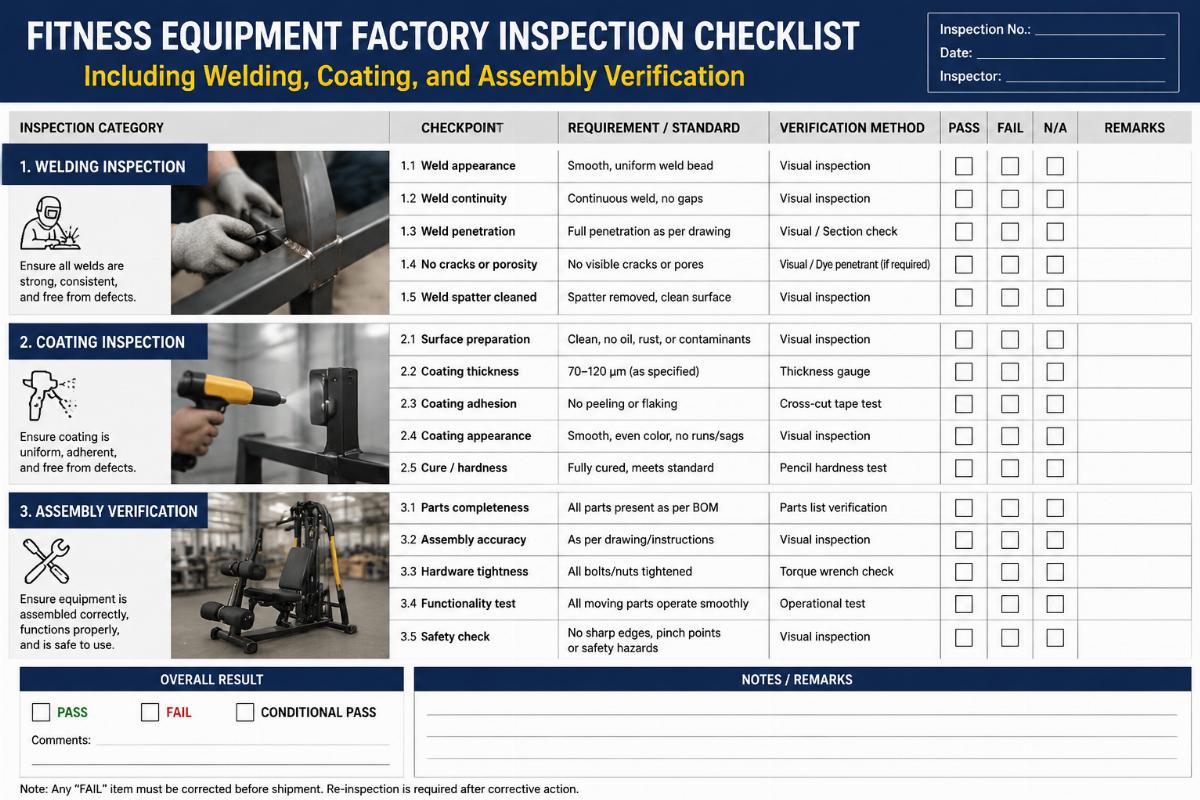
The single most important step in buying a Hoist Fitness Leg Extension alternative from a Chinese factory is establishing a verification protocol before placing any order. Trust is built through documentation, not through marketing claims.
The verification process should cover four layers:
1. Factory Capability Audit
Request a live video walkthrough or arrange a third-party inspection. Verify that the production floor includes dedicated welding stations with proper fume extraction, a powder-coating line with pre-treatment stages, and an assembly area with torque-controlled tools. A factory that cannot show you its production process in real time is a factory you should avoid. [NEED_CITE: best practices for auditing Chinese fitness equipment manufacturing facilities]
2. Certification Verification
CE certification under EN 957 is non-negotiable for commercial equipment entering most international markets. Ask for the certificate number and verify it against the issuing body’s database. A legitimate factory will provide this without hesitation. Be wary of certificates that only cover "accessories" or "components" rather than the complete machine.
3. Sample Testing Protocol
Before committing to a container order, purchase a single unit as a sample. Test it under simulated commercial conditions: run the weight stack through full range of motion repeatedly, check for pivot play after extended use cycles, inspect weld joints for micro-cracks, and evaluate upholstery compression after simulated heavy use. A factory confident in its product will welcome sample orders and will stand behind the unit if issues emerge.
4. Spare Parts and Warranty Agreement
Establish a written spare parts supply agreement before the first shipment. Identify which components are wear items—cables, pulleys, pivot bushings, upholstery pads—and agree on lead times for replacement shipments. A factory that commits to keeping spare parts inventory for your specific model is a factory planning for a long-term relationship. [NEED_CITE: spare parts supply chain management for imported fitness equipment]
I worked with a gym chain operator in East Africa who insisted on receiving a sample unit six months before his planned container order. During that period, he had his maintenance technician disassemble the leg extension, photograph every weld joint, measure the guide rod diameter, and test the cable routing under load. The factory addressed two minor issues he identified—a slightly rough bearing surface on the pivot and a vinyl seam that showed early stress—and corrected them before production began. That sample phase prevented what could have been a costly container-level quality dispute.
Which Buyer Profile Should Choose Which Option?
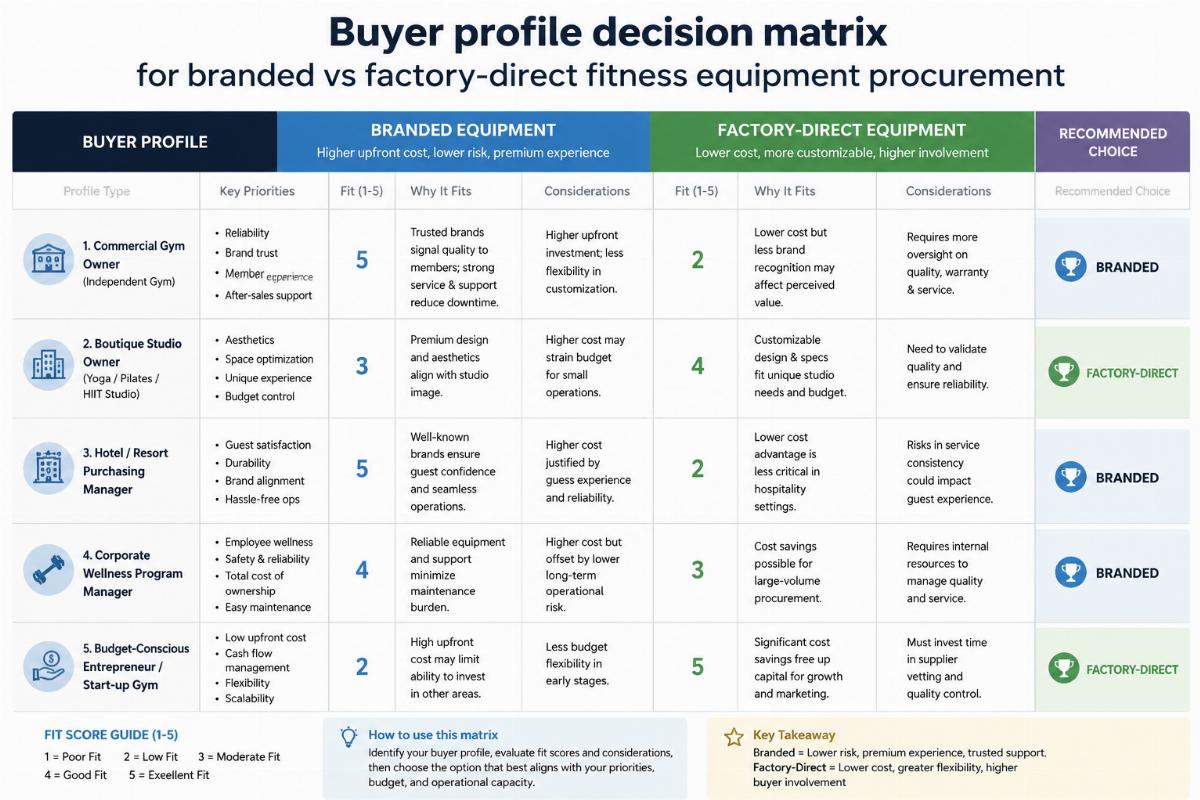
The decision between a branded leg extension and a factory-direct Hoist Fitness Leg Extension alternative is not about quality alone—it is about matching procurement strategy to business model.
Specified Brand Projects: When a hotel brand’s corporate procurement policy mandates specific equipment brands, or when a franchise agreement requires branded fitness equipment for consistency across locations, the branded option is the only viable path. The premium is non-negotiable in these contexts, and attempting to substitute will create contractual complications.
Cost-Sensitive Commercial Gyms: For independent gym operators, fitness chains building out multiple locations, and distributors stocking equipment for resale in price-competitive markets, the factory-direct route offers a clear advantage. The capital saved on equipment procurement can be redirected toward facility buildout, marketing, or working capital. A Hoist Fitness Leg Extension alternative from a verified Shandong factory delivers the same commercial-grade performance without the brand premium. [NEED_CITE: procurement cost optimization strategies for commercial fitness facility operators]
OEM and Private Label Distributors: For importers building their own brand in regional markets, factory-direct sourcing is essential. The ability to customize colors, add branding, adjust specifications, and order in flexible quantities allows distributors to differentiate their offering and respond to local market preferences. A branded machine cannot be relabeled or modified; a factory-direct machine can be tailored to exact requirements.
Hotel and Residential Developers: For projects where equipment specification is flexible and the focus is on delivering a quality fitness experience within budget, factory-direct sourcing provides the customization and cost efficiency needed to fit architectural constraints and financial targets. Compact dimensions, custom upholstery colors, and mixed-container ordering align with the realities of project-based procurement.
The common thread across all factory-direct scenarios is verification discipline. Buyers who invest time in auditing the factory, testing samples, and establishing spare parts agreements consistently report satisfaction with their Hoist Fitness Leg Extension alternative. Buyers who skip verification and chase the lowest price without due diligence encounter the problems that reinforce the myth that "Chinese quality is unreliable." The reality is that quality is a function of oversight, not geography.
Conclusion
A China factory-direct Hoist Fitness Leg Extension alternative delivers commercial-grade performance at substantially lower cost, provided the buyer applies rigorous verification standards. The brand premium pays for distribution infrastructure, not necessarily superior engineering. Shandong manufacturers producing CE-certified selectorized equipment have demonstrated the capability to match branded specifications across frame construction, weight stack systems, and pivot mechanics. The procurement advantage lies in flexible MOQ, faster lead times, OEM customization, and direct spare parts access—benefits that branded distribution channels structurally cannot offer. For cost-conscious gym operators, hotel developers, and regional distributors, the factory-direct path is not a compromise; it is a strategically superior sourcing model when executed with proper due diligence.