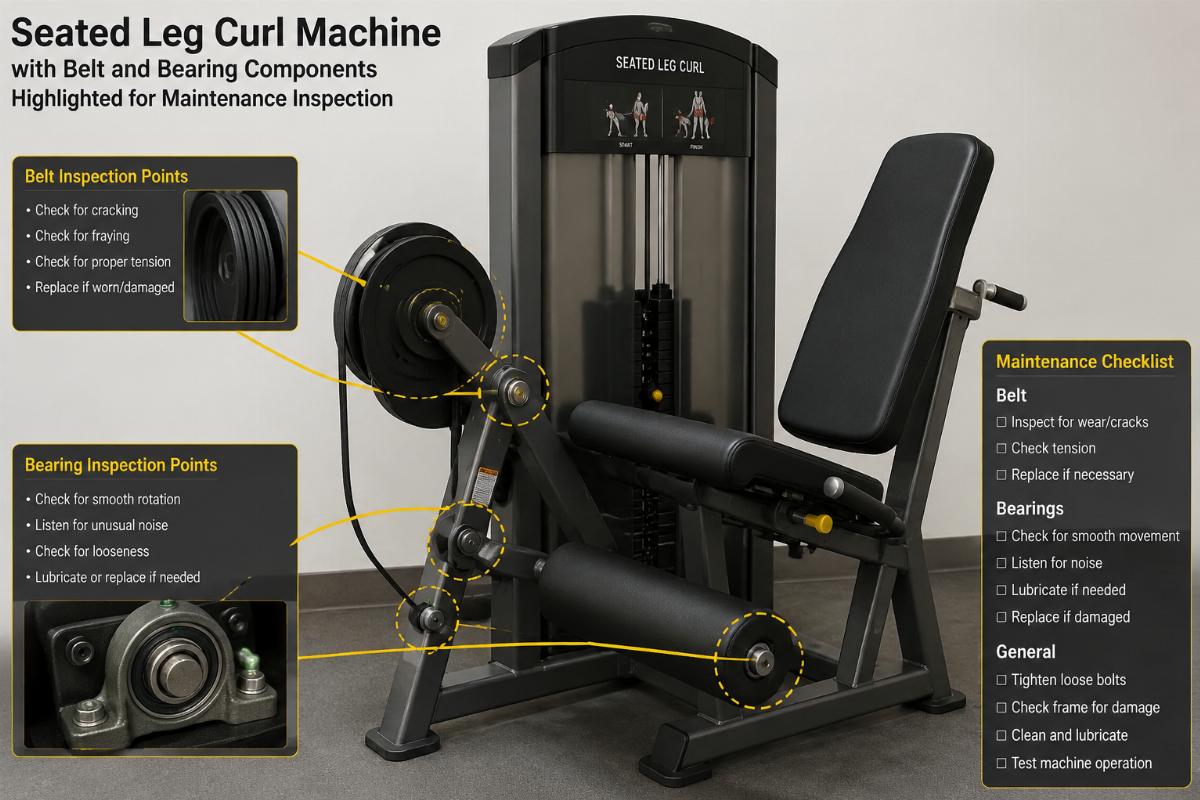
Plate Storage Tree Alignment and Calibration Standards | Bick OEM Supplier
Most weight plate storage failures on commercial strength equipment trace back to a single overlooked detail: the vertical alignment tolerance of the plate storage tree at the factory floor.
The acceptable lateral runout for a selectorized or plate-loaded machine’s storage peg assembly is typically within 1.5 mm over the full extended length, and the angular deviation between the tree axis and the machine frame must not exceed 0.5 degrees. When these two parameters are calibrated during pre-shipment QC, field complaints related to plate binding, uneven loading, and frame stress drop to near zero.
I remember standing on the dock at Qingdao Port years ago, watching a full container of plate-loaded machines being sealed for a gym chain in the Middle East. Everything looked fine on the surface — powder coat intact, bolts torqued, labels straight. But when I tilted my head and sighted along the storage tree from base to tip, I could see a faint wobble. The pegs weren’t perfectly coaxial. I pulled the container back, had the floor team re-check the alignment with a dial indicator, and found the tree bracket had been welded at a slight skew during final assembly. That half-millimeter of deviation would have caused the weight plates to grind against each other during loading, and within months, the customer would have been filing a warranty claim. [NEED_CITE: root cause distribution of plate-loaded machine warranty claims in commercial gym environments]
That kind of catch doesn’t happen by accident. It happens because someone on the line knows what to look for and has the right tools to verify it.
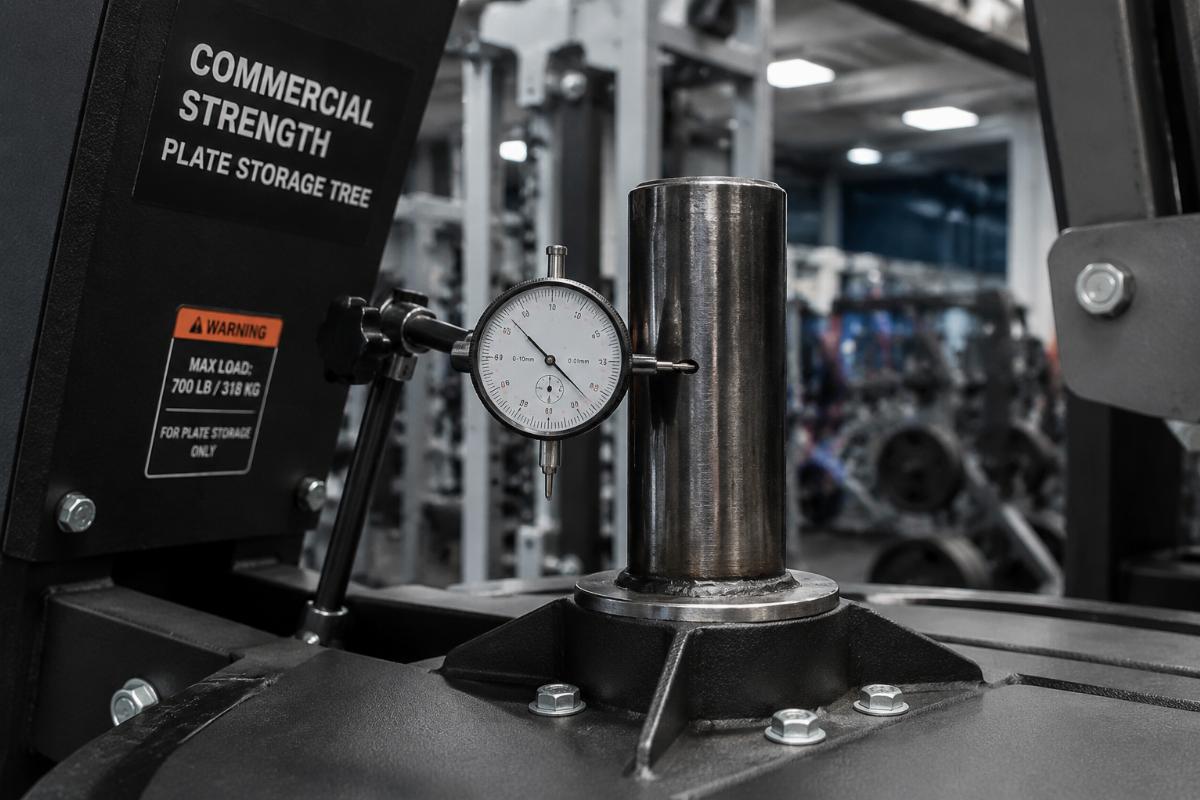
Getting from the welding jig to a shipping container with a properly aligned storage tree requires a structured approach. Let’s walk through the standards, the checkpoints, and the common pitfalls that turn a perfectly good machine into a service headache.
What Are the Core Alignment Tolerances for a Plate Storage Tree?
The two non-negotiable parameters are lateral runout and angular deviation. Lateral runout measures how far the tip of the storage peg drifts from the ideal centerline relative to the base mount. Angular deviation measures the tilt of the entire tree assembly relative to the machine’s vertical reference plane.
| Parameter | Acceptable Range | Measurement Method | Consequence of Exceeding |
|---|---|---|---|
| Lateral runout (tip-to-base) | Within 1.5 mm | Dial indicator on extended peg | Plate binding, uneven wear on peg sleeves |
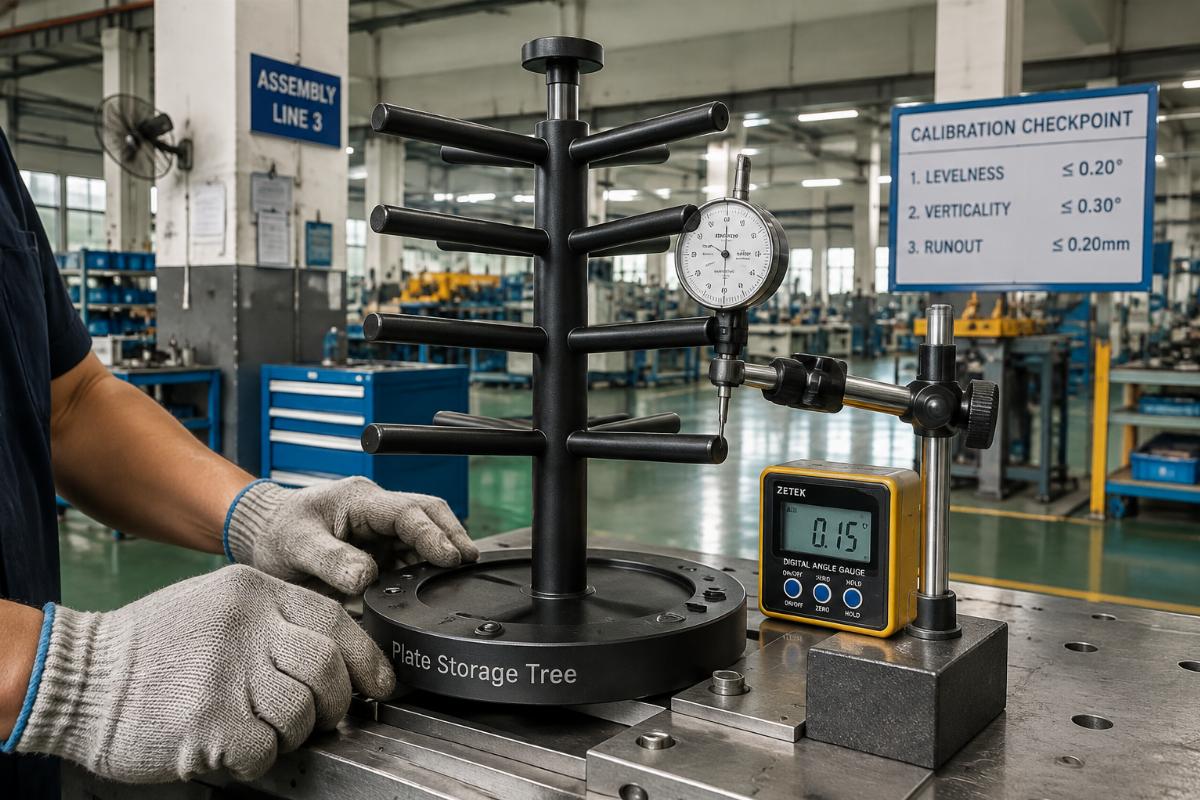
| Angular deviation (tree vs. frame) | Within 0.5 degrees | Digital angle gauge on tree bracket | Asymmetric load transfer, frame fatigue |
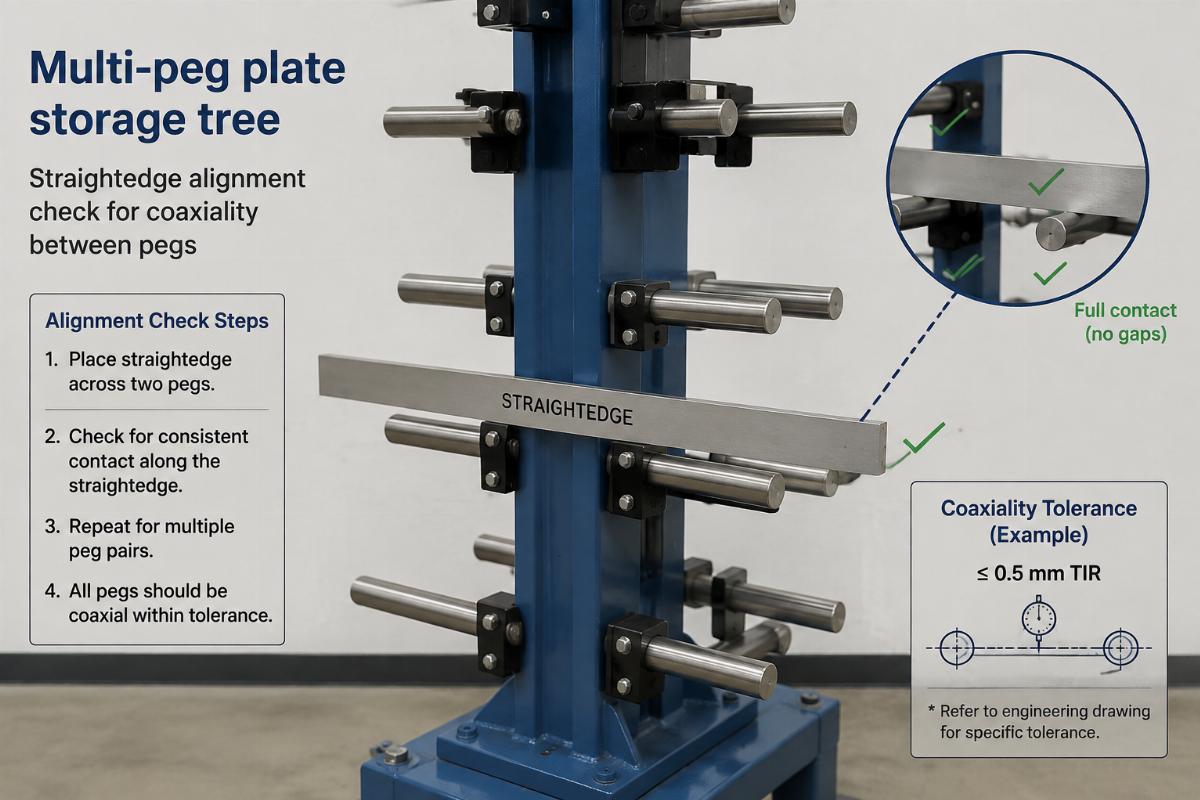
| Peg-to-peg coaxiality (multi-peg trees) | Within 1.0 mm | Straightedge and feeler gauge | Plates slide off-center, user frustration |
| Mounting bolt torque | Per manufacturer spec (typically Grade 8.8) | Calibrated torque wrench | Tree loosening under dynamic load |
These tolerances are not arbitrary. They derive from the physical interaction between a standard Olympic plate (with its own inner sleeve tolerance) and the storage peg diameter. When the peg is even slightly off-axis, the plate’s inner hole contacts the peg at a point rather than sliding along its full length. Over hundreds of load-unload cycles, this creates localized wear on both the peg chrome and the plate insert. [NEED_CITE: mechanical interaction tolerances between Olympic weight plates and storage pegs per equipment manufacturing guidelines]
I once reviewed a batch of cable crossover machines where the multi-peg storage trees had been assembled without a coaxiality check. The individual pegs were each within tolerance on their own, but relative to each other, they formed a slight S-curve. A technician loading plates in sequence would feel a subtle catch every third or fourth plate. The end user would interpret this as a quality problem with the plates, not the machine — but the root cause sat right there in the tree bracket.
How Should a Factory Calibrate the Storage Tree During Assembly?
Calibration begins before the tree is even bolted to the frame — it starts at the welding station. The bracket that holds the storage tree must be fixtured so that its mounting surface is square to the machine’s vertical reference. If the weld jig is off, no amount of post-assembly adjustment will fix the problem.
The step-by-step calibration sequence at the factory floor typically follows this order:
-
Fixture verification. Before any welding begins, the jig itself is checked with a precision square and a height gauge. The mounting surface for the tree bracket must be within 0.3 mm of flatness across its contact area. [NEED_CITE: welding fixture verification standards for strength equipment frame assembly]
-
Post-weld bracket check. After the bracket is welded to the frame, the assembly is placed on a level surface. A digital angle gauge is used to confirm the bracket face is plumb. Any deviation beyond 0.3 degrees at this stage requires the weld to be ground and re-done — there is no field-adjustable fix later.
-
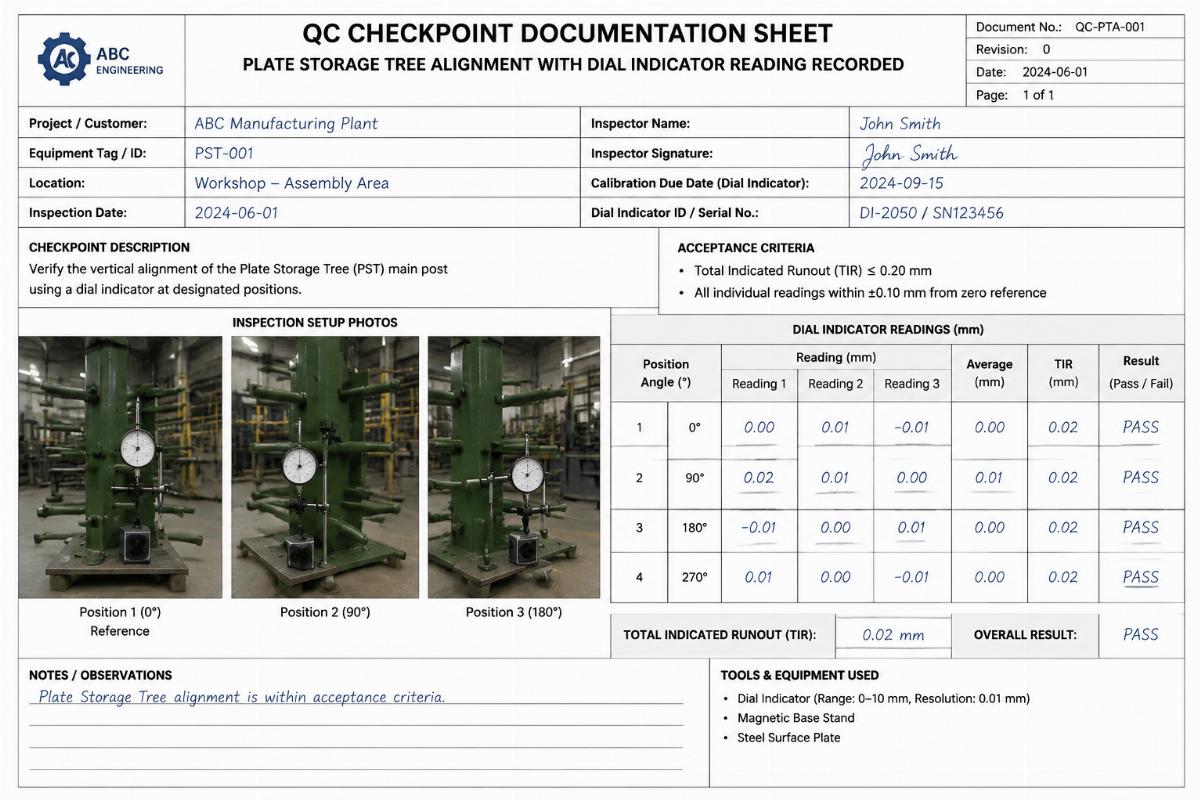
Tree insertion and initial torque. The storage tree is inserted into the bracket and hand-tightened. A dial indicator is mounted on a stable base, with its probe touching the peg at the midpoint of its extended length. The tree is rotated slowly, and the runout reading is recorded.
-
Adjustment and final torque. If runout exceeds the 1.5 mm threshold, shims or adjustable spacers (depending on the bracket design) are used to bring the tree into alignment. Once within spec, the mounting bolts are torqued to the manufacturer’s specification in a star pattern to avoid introducing new distortion.
-
Multi-peg coaxiality verification. For trees with two or more pegs, a straightedge is laid across the peg tips. A feeler gauge checks the gap between the straightedge and each peg. Any gap exceeding 1.0 mm triggers a re-check of the individual peg mounts.
A gym equipment distributor in Southeast Asia once sent us back a full container of plate-loaded leg press machines. The complaint: plates kept jamming on the storage trees during loading. When we pulled the machines apart at our facility, we found the welding jigs at the subcontractor’s shop had worn down over months of use. The bracket mounting surfaces had drifted out of square by a small but critical amount. Every single tree on every single machine was off by roughly the same margin — which meant the problem was systemic, not random. We rebuilt the jigs, added a weekly fixture audit to the production protocol, and the issue never recurred. [NEED_CITE: impact of welding fixture wear on assembly alignment in commercial fitness equipment manufacturing]
What QC Checkpoints Must Be Documented Before Shipment?
A calibration without documentation is just a guess. Every storage tree on every machine must pass through a documented QC gate before the container is sealed. This is not paperwork for its own sake — it is the only defensible record that the equipment left the factory in spec.
The essential QC checkpoints for plate storage tree alignment include:
-
Incoming material inspection. The storage tree tube and peg components are checked for straightness upon arrival at the assembly line. A tube that is bent before assembly cannot be corrected by bracket adjustment alone. [NEED_CITE: incoming material straightness inspection standards for tubular steel components in fitness equipment]
-
In-process alignment record. After the tree is mounted and torqued, the dial indicator reading is recorded on the machine’s build sheet. This record travels with the unit through the rest of the assembly process.
-
Final audit sampling. For production runs of a full container or more, a statistical sample of machines (typically one in every ten units) undergoes a full re-check of all alignment parameters using a second, independent set of gauges. This catches any drift in the primary measurement tools.
-
Photographic evidence. A photo of the dial indicator setup and reading is taken for each sampled unit. This serves as objective evidence if a customer later disputes the factory’s calibration claim.
-
Packaging and transport protection. The storage tree is the most protruding component on many plate-loaded machines. If it is not braced or protected during packaging, it can be bent during container loading or ocean transit — undoing all the factory calibration. A simple foam sleeve and a cross-brace inside the crate can prevent this.
I walked through a warehouse in Dubai once where a container of strength machines had been sitting for weeks before the gym fit-out began. The client noticed that several machines had plates that wouldn’t slide smoothly onto the storage trees. We traced the issue not to a factory defect, but to the trees being used as leverage points during unloading — the forklift operator had hooked the chains to the pegs. The trees were bent. No amount of calibration at the factory could survive that kind of handling. The lesson: the QC documentation must extend to clear handling instructions on the crate exterior, and the receiving party must be briefed before the container is opened.
Why Do Field Failures Happen Even When Factory Calibration Is Correct?
The storage tree does not live in a controlled environment. Once the machine is installed in a commercial gym, it faces conditions that no factory test can fully replicate: uneven flooring, aggressive users, improper plate handling, and years of cyclic loading.
The most common field failure modes for plate storage trees include:
-
Floor-induced tilt. If the gym floor is not level, the entire machine frame tilts, and the storage tree tilts with it. Plates then load at an angle, creating asymmetric wear. This is not a tree defect — it is an installation issue. [NEED_CITE: gym flooring levelness requirements for proper strength equipment installation]
-
Dynamic overload. Users who drop plates onto the storage tree (rather than sliding them on gently) impose shock loads that can gradually bend the peg or loosen the bracket bolts. Over time, the alignment drifts out of spec.
-
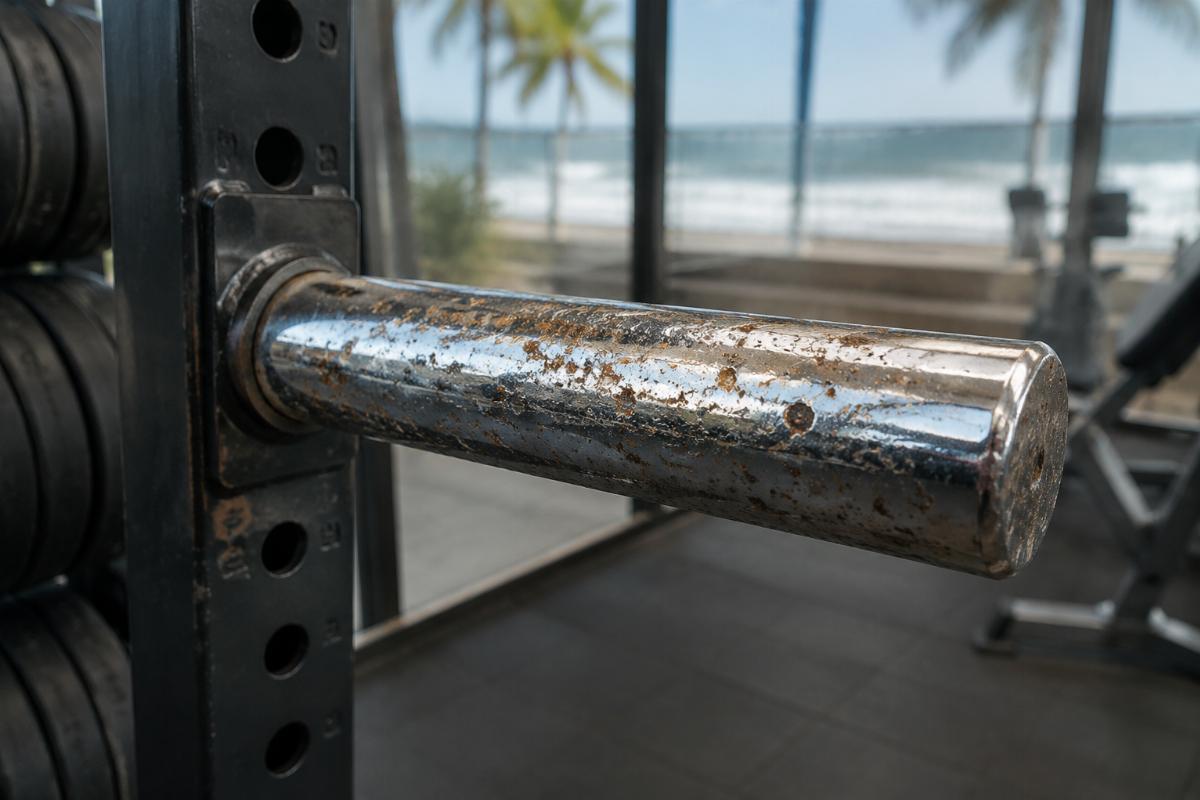
Corrosion in humid environments. In coastal or tropical gym locations, chrome-plated pegs can develop surface corrosion if the gym’s climate control is inadequate. Corrosion increases friction between the plate insert and the peg, making loading difficult. This is often misdiagnosed as an alignment problem when it is actually a surface finish issue.
-
Bolt relaxation under vibration. Machines near heavy cardio equipment or in facilities with high foot traffic experience continuous low-level vibration. Mounting bolts on the storage tree bracket can relax over time, allowing the tree to shift. A periodic re-torque check during routine maintenance prevents this.
A hotel fitness center operator in a coastal resort once reported that their plate-loaded machines were developing loading issues within the first year. Our field technician found that the storage trees were perfectly aligned, but the chrome plating on the pegs had developed micro-pitting from salt-laden air. The solution was not realignment — it was upgrading to a higher-grade chrome finish with better corrosion resistance for that specific installation environment. [NEED_CITE: corrosion resistance requirements for chrome-plated components in coastal gym environments]
Conclusion
Plate storage tree alignment is a deceptively simple specification with outsized impact on equipment longevity and user satisfaction. The tolerances are tight, the measurement methods are straightforward, and the cost of getting it wrong far exceeds the cost of doing it right at the factory. From welding fixture verification through final QC documentation and into field installation guidance, every step in the chain must be executed with discipline. When it is, the storage tree becomes a non-issue — and the machine performs the way the user expects, load after load, year after year.