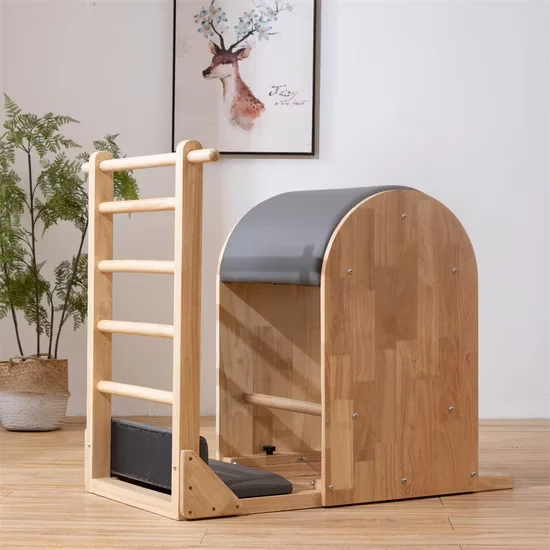
01 / Scenario
STUDIO
P
High-End Pilates Studios
Premium aesthetics meet quiet operation for boutique studio environments.
ISO
9001
CE
Certified
OEM
Available
10YR
Warranty
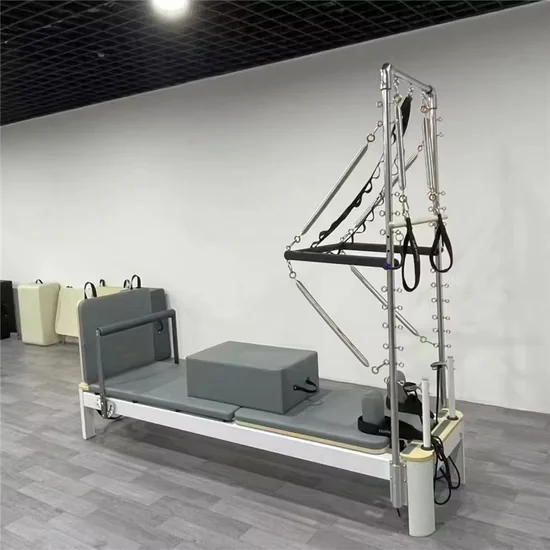
Pilates Reformer with Half Tower, Aluminum Alloy Frame, 2570×730×1850mm — corrosion-resistant alloy construction eliminates rust in humid studio environments while maintaining rigidity under cyclic spring loading. Integrated tower provides vertical spring anchoring for standing and kneeling work without a separate Cadillac unit. Includes long box, jump board, and platform with modular attachment interfaces. Backed by 3-year frame warranty and 32-point inspection with full load testing before shipment.
// Spec Highlights
• Direct from Manufacturer · No Middlemen · Worldwide Shipping
01
// Material
Imported Solid Wood
Premium hardwood frames sourced for density and visual warmth.
02
// Hardware
Medical-Grade Silent
Whisper-quiet pulleys and springs for clinical environments.
03
// Customization
Appearance OEM
Color, upholstery, and branding tailored to your studio.
04
// Service
Layout Design
Free venue planning for studios and rehab institutions.
Every component is selected for longevity, performance, and aesthetic harmony - from imported hardwood frames to silent medical-grade accessories.
// Features
Rust-Free Aluminum Rigidity — Mill-certified aluminum alloy frame eliminates corrosion in humid studio environments while maintaining structural stability under repetitive spring tension.
| Parameter | Value |
|---|---|
| Product Type | Pilates Reformer |
| Frame Material | Aluminum Alloy |
| Color | White (custom colors available) |
| Product Dimensions | 2570 × 730 × 1850 mm |
| Net Weight | 130 kg |
| Accessories Included | Long Box, Jump Board, Platform |
| Tower Configuration | Half Tower with spring anchor points |
| Warranty | 3 Years Frame |
| Logo | Customized |
| Target User | Adult / Unisex |
| Facility Type | Typical Use |
|---|---|
| Boutique Pilates studio | Group reformer classes with tower-based standing sequences |
| Rehabilitation center | Controlled spring-resistance therapy with half tower support |
| Private home studio | Comprehensive reformer and tower work in a single footprint |
| Hotel fitness center | Low-maintenance, corrosion-resistant equipment for humid environments |
Aluminum alloy resists cyclic spring-loading deflection without the corrosion vulnerability of thin-wall steel.
Most reformers marketed as studio-grade rely on thin-wall steel tubes that gradually flex under sustained high spring tension. Over months of daily group classes, that micro-deflection accumulates — the carriage track develops play, spring anchor points shift, and the sliding mechanism binds. An aluminum alloy frame addresses this differently. The material’s corrosion resistance means no rust jacking at weld joints in humid studio environments, and the alloy’s stiffness-to-weight ratio keeps the 2570mm rail assembly dimensionally stable through thousands of spring-loaded cycles [NEED_CITE: aluminum alloy structural properties under cyclic loading]. When a studio owner specifies a commercial aluminum alloy Pilates reformer with tower, the frame material choice directly determines whether the unit stays true after two years of eight-class-per-day scheduling.
The half tower configuration anchors vertical spring vectors for standing bar work, push-through bar sequences, and kneeling arm exercises — movement planes that a flat-top reformer cannot address without a separate Cadillac unit. In a boutique studio running group classes, this aluminum alloy Pilates reformer with tower covers the majority of the classical and contemporary repertoire on a single machine. The 2570mm length requires careful bay spacing to allow safe dismount on both sides and at the tower end. For studios programming rehabilitation alongside group fitness, the half tower bridges the gap between mat-based therapy and full apparatus work.
Reformer frames endure a specific fatigue profile: the carriage accelerates and decelerates hundreds of times per class, transferring impact through the rail-to-frame interface. The half tower adds off-axis loading when springs anchor to the vertical upright during standing exercises — a lateral force vector that the main rail must absorb without torsional twist. Spring anchor points experience the highest stress concentration, particularly where the tower upright meets the horizontal base. Carriage wheel bearings, rail surface finish, and spring fatigue life all degrade proportionally to class volume [NEED_CITE: fatigue cycle testing for fitness equipment components]. In a studio running six or more group sessions daily, these contact points define the maintenance interval.
The aluminum alloy frame specification matters most at the rail and tower junction — wall thickness and alloy grade determine whether the upright deflects under maximum spring tension during standing push-through work. The accessory interfaces for the long box, jump board, and platform must tolerate repeated attachment and detachment without the mounting points wearing oval. Net weight of 130kg provides sufficient mass to resist walking during jump board sequences, where reactive forces try to shift the unit laterally. The 3-year frame warranty signals the manufacturer’s confidence in alloy selection and weld integrity at the tower base — a shorter warranty on an aluminum frame typically indicates recycled-grade alloy or inadequate wall thickness at critical joints.
A studio that selects a reformer based on upfront price often discovers the real cost at month eighteen. Thin-wall frames that initially perform well begin to show rail deflection, causing the carriage to track unevenly and requiring wheel replacement. Non-anodized aluminum or low-grade alloy develops surface oxidation in humid environments, staining upholstery and compromising the aesthetic standard clients expect. Spring anchor points on under-built towers loosen with repeated off-center loading, creating rattle and requiring frequent bolt retightening. When accessory mounting interfaces wear from daily long box swaps, the studio faces either custom fabrication or full unit replacement [NEED_CITE: total cost of ownership analysis for commercial fitness equipment].
Mill-certified aluminum alloy sourcing means every frame tube is traceable to the originating coil — no mystery-grade material enters the production line. Robotic MIG welding produces continuous weld lines at the tower base and rail joints, eliminating the spot-weld failures that appear under cyclic loading. Every unit undergoes load testing before shipment: the half tower is stressed under off-center spring tension to verify the upright-to-base junction holds without deflection. The 200μm industrial powder coating process, applied after sandblast preparation, protects aluminum surfaces from oxidation and cleaning chemical exposure. For studio buildouts, 2D and 3D CAD layout support ensures the 2570mm footprint integrates with proper clearance for safe client flow between reformer bays. OEM customization covers color, logo, and accessory configuration to match studio branding.
Provide your studio floor dimensions and intended reformer count to receive a 2D or 3D layout confirming bay spacing, tower clearance, and instructor sightlines. Specify your average daily class volume and maximum participant load to validate that the structural grade matches your operational intensity. Indicate any customization requirements including frame color, logo placement, or accessory package modifications to align with your studio specification.
Q: How does an aluminum alloy frame compare to steel for long-term studio use?
A: Aluminum alloy eliminates rust entirely, which matters in studios with high humidity or frequent cleaning. Steel frames depend on coating integrity — once scratched, corrosion begins at the contact point. Aluminum maintains dimensional stability under cyclic spring loading without the weight penalty, making repositioning for floor plan adjustments manageable. The trade-off is that aluminum requires proper alloy grade selection; low-grade aluminum will deflect where quality alloy holds true.
Q: Is a half tower sufficient for a commercial group class program?
A: A half tower covers the vertical spring anchoring needed for standing bar, push-through bar, and kneeling arm work — the sequences most group classes program. A full tower adds trapeze and additional anchor points that matter primarily in private sessions or classical repertoire studios. For high-throughput group programming, the half tower reduces footprint and cost while retaining the movement variety instructors require.
Q: What determines spring replacement intervals on a studio reformer?
A: Spring fatigue depends on class volume, user load range, and how frequently springs are stretched to maximum extension. Studios running six-plus classes daily should inspect springs quarterly for loss of tension consistency and visible coil deformation. Replacing springs on a scheduled cycle prevents mid-class failures and maintains the resistance profile clients expect from session to session.
Q: How should reformer bays be spaced in a group class studio with tower units?
A: Each 2570mm reformer with tower needs lateral clearance for safe mounting and dismounting on both sides, plus rear clearance for tower-based standing exercises. Minimum spacing should account for the longest limb reach during supine leg work and the instructor’s ability to walk between units during class. A detailed CAD layout prevents dead space while maintaining safe operational clearances.
Q: Are the long box, jump board, and platform interchangeable with other reformer brands?
A: Accessory compatibility depends on the mounting interface design — pin spacing, rail width, and locking mechanism geometry vary across manufacturers. This reformer’s accessory attachment points are engineered specifically for its rail profile and frame dimensions. Using accessories designed for this platform ensures secure locking and prevents the interface wear that occurs when ill-fitting components shift during use.
Premium aesthetics meet quiet operation for boutique studio environments.
Medical-grade silence and precision for sports & postpartum recovery.
Furniture-grade craftsmanship for premium residential installations.
Compact premium setups for one-on-one and small-group training.
Aesthetic Pilates integration for hybrid wellness studio programming.
Multi-unit deployment with instructor-grade reliability for certification programs.
Tell us about your project. Our team will respond within 24 hours with pricing, customization options, and shipping details.
// Sales Director
William
+86 132 2531 1800
// Export Manager
Bella
+86 198 5412 8032
william@bickfit.com