01 / Scenario
STUDIO
P
High-End Pilates Studios
Premium aesthetics meet quiet operation for boutique studio environments.

ISO
9001
CE
Certified
OEM
Available
10YR
Warranty
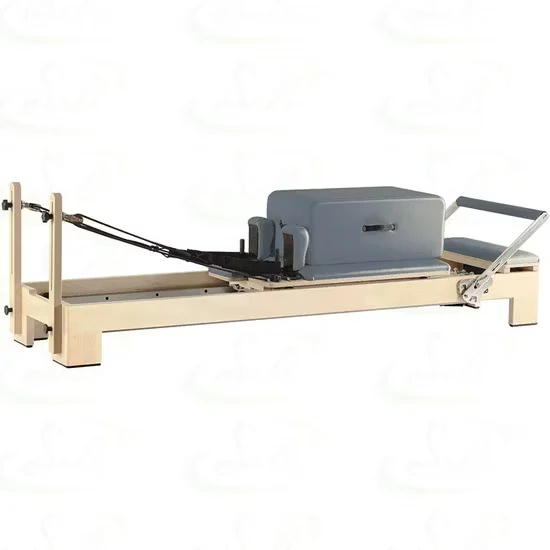
Foldable Pilates Reformer, White Maple Wood Frame, 2400×600×350mm — solid hardwood construction resists rail warping under repeated carriage loading, with reinforced steel hinge inserts at fold joints to prevent wood splitting. Includes long box, jump board, and platform accessories for full-range commercial programming. Direct from a 15,000㎡ vertically integrated plant with 3-year warranty and ISO 9001-certified production.
// Spec Highlights
• Direct from Manufacturer · No Middlemen · Worldwide Shipping
01
// Material
Imported Solid Wood
Premium hardwood frames sourced for density and visual warmth.
02
// Hardware
Medical-Grade Silent
Whisper-quiet pulleys and springs for clinical environments.
03
// Customization
Appearance OEM
Color, upholstery, and branding tailored to your studio.
04
// Service
Layout Design
Free venue planning for studios and rehab institutions.
Every component is selected for longevity, performance, and aesthetic harmony - from imported hardwood frames to silent medical-grade accessories.
// Features
Robotic Continuous Welds — every joint on this folding frame is MIG-welded in a single pass, eliminating the spot-weld weak points that crack under repeated carriage loading.
| Parameter | Value |
|---|---|
| Product Type | Folding Pilates Reformer |
| Frame Material | White Maple Wood |
| Product Dimensions | 2400 × 600 × 350 mm |
| Net Weight | 100 kg |
| Adjustment Positions | Foldable Design |
| Included Accessories | Long Box, Jump Board, Platform |
| Color Options | Solid Color |
| Logo | Customized Is Allowed |
| Certification | ISO 9001 |
| Warranty | 3 Years |
| Facility Type | Typical Use |
|---|---|
| Commercial Pilates Studio | Daily group and private reformer classes with frequent folding for floor clearing |
| Boutique Fitness Center | Hybrid class formats requiring rapid equipment reconfiguration between sessions |
| Rehabilitation and Performance Center | Controlled movement therapy with adjustable spring resistance and foldable storage |
| Hotel Fitness Facility | Compact wellness rooms where equipment must be stowed between guest use periods |
Folding mechanisms concentrate stress at hinge points, and undersized steel inserts split the surrounding wood within months.
When a Pilates reformer folds daily, the hinge bore experiences cyclic shear loading that cheap brass bushings cannot absorb. The wood surrounding the pivot compresses unevenly, the carriage rail drifts out of alignment, and the wheel track develops play that riders feel immediately. A commercial foldable pilates reformer maple wood frame must use through-bolted steel hinge plates with precision-machined pivot bores to distribute load across a wider grain area. Facilities running six or more classes per day see this failure pattern repeatedly when manufacturers substitute pressed-in bushings for bolted steel plates [NEED_CITE: wood joint fatigue under cyclic loading in fitness equipment].
This reformer addresses the sagittal plane through spring-loaded carriage travel, targeting core stabilizers, hip flexors, and posterior chain muscles across supine, prone, and seated positions. In a dedicated Pilates studio, it pairs with cadillacs and chair units to complete the full apparatus curriculum. The foldable footprint suits high-density layouts where floor space must serve multiple class formats throughout the day. The carriage length and spring configuration accommodate users across a wide range of body proportions without requiring manual rail adjustments.
Each fold-unfold cycle applies alternating shear and bending moments at the hinge plate interface, where wood fiber compression accumulates microscopically over thousands of repetitions. The carriage wheels bear static loads during storage and dynamic impact loads when users mount and dismount, accelerating bearing wear if seals are compromised by studio dust and chalk residue. Spring anchor points experience eccentric tension during exercises like long stretch and elephant, where the user’s body weight creates off-axis pull on the spring hooks. Sweat and cleaning solvents degrade exposed wood finishes over time, making moisture content and surface sealing critical to preventing grain lift and splintering [NEED_CITE: EN 957 structural requirements for stationary training equipment].
Solid white maple provides high density and tight grain structure that resists compression set along the carriage rail, maintaining track straightness under sustained loading. The species’ hardness rating directly correlates to how long the rail surface resists wheel indentation and groove formation. Moisture content at the time of assembly determines whether the frame will warp in humid studio environments or shrink and loosen fasteners in dry climates. Steel hinge inserts at fold points prevent the wood from bearing shear loads directly, transferring stress into the metal fastener path instead. Spring tension calibration ensures consistent resistance feel across units, so instructors can cue the same exercise without compensating for unit-to-unit variation.
Thin-walled hinge brackets bend under the leverage of a fully extended reformer, misaligning the carriage rail and binding the wheel track within the first year. Non-sealed carriage bearings ingest chalk dust and skin particles, developing play that instructors notice as lateral wobble during single-leg work. Springs with inconsistent tension ratings force instructors to verbally compensate during classes, eroding the studio’s professional standard. Wood frames assembled at incorrect moisture content crack at fastener holes when the environment dries, leaving no repair path short of frame replacement [NEED_CITE: weld classification and fatigue performance in structural steel].
Our vertically integrated facility controls every stage from maple sourcing through final assembly, meaning hinge plate thickness and bearing specifications are verified on the production floor rather than outsourced to unknown subcontractors. Each unit undergoes load testing before shipment, confirming that the fold mechanism holds rated capacity without deflection beyond tolerance. The powder-coated steel hardware receives the same 200μm industrial coating applied to our strength equipment, protecting hinge plates from sweat corrosion in high-humidity studio environments. We provide 2D-3D floor planning CAD support to position foldable reformers with correct clearance zones for safe mounting and dismounting, accounting for the swing radius when the unit is folded and unfolded.
Provide your studio floor plan and daily class schedule so we can configure the reformer count and placement to match traffic flow and clearance requirements. Specify your user demographic range to confirm that the spring configuration and carriage travel accommodate your clientele. Detail any branding requirements including custom logo placement and frame color to align with your studio identity.
Q: How do I verify solid maple construction versus laminated plywood with a veneer?
A: Examine the end grain at any cut edge or fastener hole. Solid maple shows continuous grain lines running through the full thickness, while plywood reveals alternating layers with a thin surface veneer. Request the manufacturer’s wood species certificate and moisture content test report, which document the material origin and conditioning before assembly.
Q: What specifications prevent fold hinge failure over time?
A: Look for through-bolted steel hinge plates rather than pressed-in bushings, which distribute load across a wider area of the wood frame. The hinge pivot bore should be precision-machined in the steel plate, not drilled directly into wood. Ask for cycle test documentation showing the mechanism rated for the fold frequency your studio requires.
Q: What is the difference between sealed bearings and bushings on the carriage wheels?
A: Sealed bearings contain internal lubrication protected from dust and moisture ingress, maintaining smooth carriage travel with minimal maintenance over years of daily use. Bushings rely on surface contact without sealed lubrication, wearing faster in studio environments where chalk dust and skin particles accumulate. Sealed bearings require replacement only when play develops, while bushings demand regular attention.
Q: How does spring tension rating relate to user weight capacity?
A: Spring sets are calibrated to provide progressive resistance across the full carriage travel, and the rating determines the maximum effective load the springs can support before over-extension. A commercial studio serving diverse user sizes needs multiple tension levels color-coded for quick identification during class transitions between exercises and participants.
Q: What clearance is needed around a foldable reformer in a commercial studio?
A: Minimum clearance should account for the full deployed length plus mounting and dismounting space on both ends, as well as the swing radius when folding and unfolding. Your equipment supplier should provide a scaled floor plan showing each unit’s operational footprint, storage position, and safe passage zones between stations.
Premium aesthetics meet quiet operation for boutique studio environments.
Medical-grade silence and precision for sports & postpartum recovery.
Furniture-grade craftsmanship for premium residential installations.
Compact premium setups for one-on-one and small-group training.
Aesthetic Pilates integration for hybrid wellness studio programming.
Multi-unit deployment with instructor-grade reliability for certification programs.
Tell us about your project. Our team will respond within 24 hours with pricing, customization options, and shipping details.
// Sales Director
William
+86 132 2531 1800
// Export Manager
Bella
+86 198 5412 8032
william@bickfit.com