01 / Scenario
STUDIO
P
High-End Pilates Studios
Premium aesthetics meet quiet operation for boutique studio environments.

ISO
9001
CE
Certified
OEM
Available
10YR
Warranty
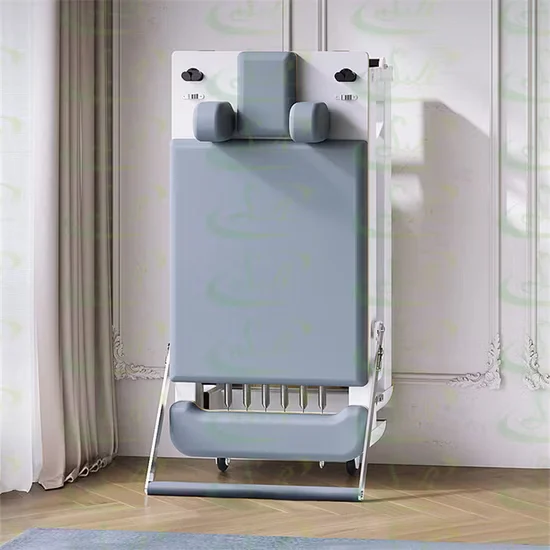
Folding Core Pilates Bed, Solid Maple Wood Frame, 2400×600×350mm — engineered with solid maple selected for grain density and dimensional stability, resisting warping under repeated carriage loading and studio humidity shifts. The foldable joint mechanism maintains zero-play alignment when deployed, while precision-machined rails and sealed wheels deliver silent glide without frequent lubrication. Includes long box, jump board, and platform with reinforced mount points rated for dynamic use. 100kg net weight, 3-year warranty, and custom logo options available. Every unit undergoes 32-point inspection and full load testing before dispatch.
// Spec Highlights
• Direct from Manufacturer · No Middlemen · Worldwide Shipping
01
// Material
Imported Solid Wood
Premium hardwood frames sourced for density and visual warmth.
02
// Hardware
Medical-Grade Silent
Whisper-quiet pulleys and springs for clinical environments.
03
// Customization
Appearance OEM
Color, upholstery, and branding tailored to your studio.
04
// Service
Layout Design
Free venue planning for studios and rehab institutions.
Every component is selected for longevity, performance, and aesthetic harmony - from imported hardwood frames to silent medical-grade accessories.
// Features
Solid Maple Core — kiln-dried hardwood selected for dimensional stability under repeated carriage loading in studio environments.
| Parameter | Value |
|---|---|
| Product Type | Pilates Reformer / Core Bed |
| Model NO. | SRY-20B |
| Product Dimensions | 2400 × 600 × 350 mm |
| Net Weight | 100 kg |
| Frame Material | Solid Maple Wood |
| Design Configuration | Foldable Frame |
| Included Accessories | Long Box, Jump Board, Platform |
| Finish Option | Solid Color |
| Logo | Custom Branding Available |
| Certification | ISO 9001:2015, CE |
| Warranty | 3 Years |
| Facility Type | Typical Use |
|---|---|
| Boutique Pilates Studio | Group reformer classes with frequent equipment reconfiguration |
| Personal Training Facility | One-on-one core conditioning and rehabilitation sessions |
| Hotel & Resort Wellness Center | Multi-user daily rotation in spa and fitness zones |
| Physical Therapy & Rehabilitation Clinic | Controlled movement therapy and post-injury core stabilization |
Solid maple resists the warping that separates rail alignment from carriage travel.
Many reformers labeled as studio grade rely on laminated plywood or thin hardwood veneers for the frame. In climates with seasonal humidity swings, these layered boards absorb moisture unevenly, causing the carriage rails to drift out of parallel. Once the rails lose alignment, the wheels bind, the ride gets rough, and the studio owner faces a choice between constant lubrication or replacing the unit. Solid maple, when kiln-dried to the correct moisture content, maintains its grain structure and dimensional tolerance across years of daily studio use. A commercial folding core pilates bed maple wood reformer built on this foundation keeps the carriage gliding without the maintenance overhead that laminated frames demand. [NEED_CITE: dimensional stability of solid hardwood vs laminated board in furniture and equipment frames]
This unit covers the full sagittal plane for core, hip, and lower-limb work through spring-resisted carriage movement. In a studio layout, it pairs with a Cadillac or tower unit to add vertical resistance vectors and mat stations for bodyweight floor sequences. The foldable footprint suits facilities that run back-to-back group classes and need to clear floor space between sessions. For studio owners planning a commercial folding core pilates bed maple wood reformer purchase, the frame accommodates users from petite to tall builds, with the long box and jump board extending the exercise menu without requiring additional apparatus.
Every fold and unfold introduces a fatigue cycle at the hinge points, and this is where most collapsible reformers accumulate structural play over time. The carriage imposes both static load when the user holds a position and dynamic impact during jump board plyometrics, concentrating force on the joint mechanism. In a studio running eight or more classes per day, those hinge points endure thousands of articulation cycles annually. Sealed wheel bearings at the carriage rail interface prevent sweat and chalk dust from penetrating the rolling surface, which would otherwise accelerate wear and introduce lateral drift. [NEED_CITE: fatigue performance of mechanical hinges in commercial fitness equipment]
Solid maple was selected for its density and closed-grain structure, which resist the compression marks that softer woods accumulate where accessories mount and where the carriage contacts the end stops. The 2400 mm bed length provides full-body carriage travel without requiring the user to shorten their stroke, while the 600 mm width accommodates the long box and platform attachments without overhang. The foldable joint mechanism is engineered so that when the bed is deployed and locked, the hinge introduces zero lateral play, keeping the carriage rail in true alignment. Maple’s natural stiffness means the frame does not flex under off-center loading during single-leg or rotational exercises, which preserves the movement path and protects the user’s joints from compensatory strain.
Manufacturers chasing a lower price point substitute thinner hardwood or engineered board, and the savings show up as frame flex during loaded exercises. When the bed flexes under a user performing jump board repetitions, the carriage rail deflects slightly with each landing, accelerating wheel wear and creating a rougher ride. Non-reinforced accessory mounting points loosen over time as the surrounding material compresses, leading to wobble in the long box and jump board that cannot be fixed by simply tightening fasteners. A frame that lacks sufficient cross-sectional thickness also limits the depth of the hinge hardware, forcing smaller pins and bushings that wear faster under studio-volume use. [NEED_CITE: structural consequences of undersized timber sections in load-bearing fitness equipment]
The maple frame stock is kiln-dried and moisture-verified before machining, which prevents the post-delivery warping that throws carriage rails out of true. Hinge joints are fitted with hardened steel pins and bushings sized for repeated folding without developing slop, a detail that directly affects how long the unit stays serviceable in a high-turnover studio. Every commercial folding core pilates bed maple wood reformer is load-tested before shipment to confirm the frame and accessories hold under peak dynamic force. The 200μm-equivalent surface treatment on contact and wear points resists the sweat acidity and cleaning chemicals used in studio maintenance routines. A 3-year warranty backs the frame and moving components, and 2D-3D CAD layout support is available so studio owners can plan clearances around the folded and deployed footprint.
Share your studio floor dimensions and the number of reformer stations you need so we can provide a 2D-3D layout showing folded storage zones and deployed clearances. Specify your expected daily class volume so we can confirm the structural grade matches your traffic. Let us know if you require custom color matching or logo application to align with your studio interior branding.
Q: How can a buyer confirm the frame is solid maple rather than laminated board with a veneer?
A: Inspect the end grain of the frame members. Solid maple shows continuous grain lines running through the full cross-section, while laminated board reveals layered plies with alternating grain direction. Request a wood species certificate and moisture content report from the manufacturer to verify the material specification before the order enters production.
Q: What load and cycle testing should a commercial reformer pass before it is suitable for studio use?
A: A commercial unit should be tested under both static hold loads and dynamic impact loads that simulate jump board use. The manufacturer should provide a test record for each individual unit confirming the frame, hinge mechanism, and accessory mounts held without permanent deformation or joint play. Ask for documentation rather than relying on general product claims.
Q: What are the structural trade-offs between a foldable and a fixed-frame reformer in a busy studio?
A: A fixed frame eliminates hinge wear entirely and offers marginally greater rigidity, but it occupies permanent floor space. A foldable unit sacrifices a small amount of theoretical stiffness at the joint to allow floor clearance between classes, which is the priority for studios running back-to-back group sessions. Quality hinge engineering minimizes the rigidity gap.
Q: How often should carriage wheels and rail surfaces be inspected or replaced?
A: In a studio running multiple classes daily, inspect the carriage wheels every six months for flat spots, bearing play, or surface cracking. Rail surfaces should be cleaned of chalk and sweat residue weekly. Wheel replacement intervals depend on usage volume, but sealed bearings typically outlast open bearings significantly in studio environments where dust and moisture are present.
Premium aesthetics meet quiet operation for boutique studio environments.
Medical-grade silence and precision for sports & postpartum recovery.
Furniture-grade craftsmanship for premium residential installations.
Compact premium setups for one-on-one and small-group training.
Aesthetic Pilates integration for hybrid wellness studio programming.
Multi-unit deployment with instructor-grade reliability for certification programs.
Tell us about your project. Our team will respond within 24 hours with pricing, customization options, and shipping details.
// Sales Director
William
+86 132 2531 1800
// Export Manager
Bella
+86 198 5412 8032
william@bickfit.com