01 / Scenario
STUDIO
P
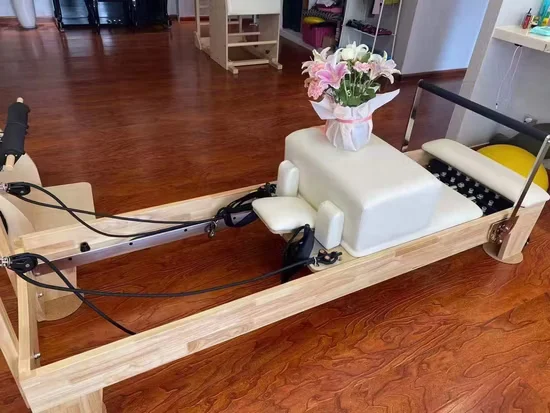
High-End Pilates Studios
Premium aesthetics meet quiet operation for boutique studio environments.
ISO
9001
CE
Certified
OEM
Available
10YR
Warranty
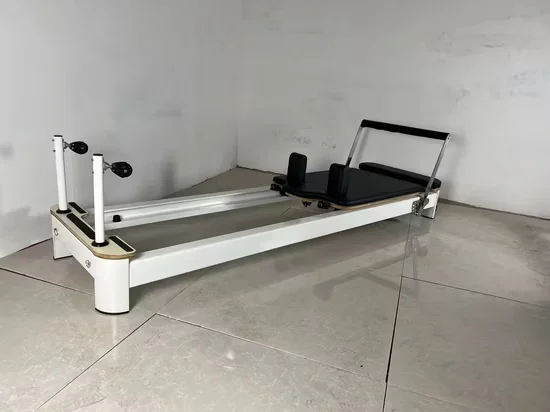
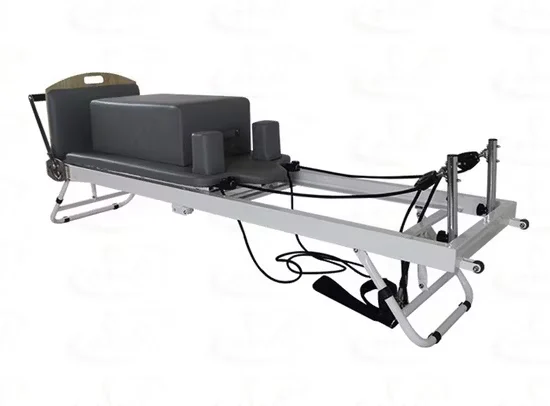
SRY-11B Folding Pilates Reformer, 2000×500×340mm, 50kg Net Weight — solid steel frame with foldable design for space-efficient studio deployment, includes long box, jump board, and platform for full-spectrum Pilates programming. Backed by ISO 9001:2015, CE, and SGS certifications with 3-year warranty coverage and custom logo options. Each unit undergoes load testing before shipment with mill-certified steel traceable to the coil.
// Spec Highlights
• Direct from Manufacturer · No Middlemen · Worldwide Shipping
01
// Material
Imported Solid Wood
Premium hardwood frames sourced for density and visual warmth.
02
// Hardware
Medical-Grade Silent
Whisper-quiet pulleys and springs for clinical environments.
03
// Customization
Appearance OEM
Color, upholstery, and branding tailored to your studio.
04
// Service
Layout Design
Free venue planning for studios and rehab institutions.
Every component is selected for longevity, performance, and aesthetic harmony - from imported hardwood frames to silent medical-grade accessories.
// Features
Continuous Weld Integrity — Every SRY-11B frame joint uses robotic MIG welding with full-length bead coverage, eliminating spot-weld fracture points under repeated carriage loading.
| Parameter | Value |
|---|---|
| Designation | SRY-11B |
| Product Type | Folding Pilates Reformer |
| Product Dimensions | 2000 × 500 × 340 mm |
| Net Weight | 50 kg |
| Frame Construction | Solid steel frame |
| Color Options | Solid color options available |
| Included Accessories | Long Box, Jump Board, Platform |
| Logo | Custom logo available on request |
| Warranty | 3 Years |
| Certification | ISO 9001:2015 / CE / SGS |
| Target User | Adult, Unisex |
| Facility Type | Typical Use |
|---|---|
| Pilates studio | Daily group and private sessions requiring continuous carriage travel under varying resistance loads |
| Commercial fitness center | Functional training zone addition for members seeking low-impact core and stability work |
| Rehabilitation center | Controlled resistance exercises with smooth rail guidance for post-injury mobility programs |
| Hotel fitness room | Compact folding footprint for space-limited wellness areas serving transient guests |
| Home gym | Dedicated Pilates practice in residential settings where floor space must be reclaimed after use |
Carriage drift under off-center loading traces back to rail tolerance, not frame stiffness alone.
Most studios discover within the first year that a reformer carriage begins to bind or rattle during unilateral movements. The root cause is rarely the steel tube itself but rather rail mounting surfaces that were not machined flat after welding. When the carriage travels thousands of cycles per week, even minor rail misalignment compounds into visible play and uneven wheel wear. On a commercial folding pilates reformer used across eight or more hours of daily classes, this drift accelerates bearing degradation and forces early carriage replacement [NEED_CITE: EN 957 structural requirements for stationary training equipment].
The SRY-11B covers the primary horizontal pressing and pulling plane, engaging the deep core stabilizers, hip flexors, and posterior chain through spring-loaded carriage resistance. In a studio layout, it pairs naturally with a Pilates chair for standing balance work and a ladder barrel for spinal articulation drills. Its folding capability allows facilities running high class turnover to store units between sessions, making it practical for rooms that serve multiple programming formats throughout the day. The included Long Box, Jump Board, and Platform expand the movement repertoire from foundational supine work through plyometric conditioning, accommodating users across a broad range of body proportions on this commercial folding pilates reformer.
Each carriage stroke generates alternating tensile and compressive loads through the frame’s longitudinal members, with peak stress concentrating at the rail mounting brackets and the folding hinge mechanism. In a studio running back-to-back classes, a single unit may complete several hundred full-travel cycles daily, subjecting weld joints to continuous fatigue loading. The hinge pivot point experiences both static load when the unit stands folded and dynamic impact when deployed onto the floor repeatedly. Upholstery contact zones on the shoulder blocks and headrest endure compressive cycling combined with sweat exposure, testing both foam density recovery and vinyl seam integrity [NEED_CITE: weld classification and fatigue performance in structural steel].
The 50 kg net weight signals substantial steel mass in the frame, which directly raises the threshold before any tube section approaches its elastic deformation limit during loaded carriage exercises. A folding mechanism introduces a structural discontinuity that must be compensated by heavier-gauge material around the hinge assembly to prevent flex at the joint. Rail parallelism depends on the flatness of the mounting surface post-welding; any distortion from heat input during assembly will transfer directly into carriage travel quality. The solid steel frame construction prioritizes rigidity over weight savings, which matters when a practitioner performs jump board exercises that generate repeated impact forces into the carriage stop. Upholstery on the shoulder blocks and carriage pad must use closed-cell foam of sufficient density to resist permanent compression after months of body-weight loading, and the covering material must tolerate frequent cleaning with commercial disinfectants without cracking. Spring attachment points require reinforced mounting plates rather than simple tube holes to distribute load across a wider frame area and prevent localized fatigue cracking.
Thinning the frame tube wall to reduce shipping weight creates a unit that deflects visibly during jump board drills and gradually loses rail alignment as the longitudinal members creep under cyclic load. Substituting spot welds for continuous bead welds at the hinge bracket creates fracture initiation points that may pass initial inspection but propagate cracks within months of commercial use. Low-density foam in the carriage pad compresses permanently within a single season of studio scheduling, forcing upholstery replacement that costs more in labor downtime than the original material savings. Undersized rail wheels develop flat spots under constant directional loading, producing the grinding noise that signals metal-on-metal contact and imminent carriage failure [NEED_CITE: bearing load rating and fatigue life in linear motion systems]. Non-standard hardware in the folding mechanism means replacement pins or bushings become unavailable once the supplier discontinues that production run.
The frame steel sourcing traces to certified industrial-grade coil with documented mill origin, ensuring material consistency across production batches. Robotic MIG welding delivers continuous bead coverage at every joint on the SRY-11B, removing the human variability that creates cold joints and undercut defects in manual welding. Each unit undergoes load testing before shipment rather than relying on sample-based batch inspection, catching individual defects before they reach a studio floor. The powder coating process applies a 200μm industrial finish that resists chipping at high-contact zones where carriage stops and spring hooks experience repeated metal impact. The 3-year warranty on this commercial folding pilates reformer reflects confidence in frame fatigue life under sustained commercial scheduling. Two-dimensional and three-dimensional CAD layout support is available to plan multi-unit studio spacing with safe clearance for carriage extension and instructor circulation paths. OEM branding options allow studio chains to maintain consistent visual identity across their equipment fleet.
Provide your studio floor area and target unit count to receive a 2D or 3D layout showing safe spacing between reformers with adequate instructor walkway clearance. Specify your expected daily class volume and average practitioner body-weight range so that the structural grade matches your usage intensity. Communicate any brand identity requirements including frame color preference and logo placement position to align the equipment with your studio’s visual standards. Confirm whether your space requires the folding capability for multi-format room usage or if dedicated permanent placement suits your scheduling model.
Q: How do I distinguish a commercial-grade Pilates reformer from a residential one?
A: Commercial units use heavier frame steel with documented mill certification, continuous weld joints at all structural connections, and rail systems rated for thousands of daily cycles. Residential models often rely on thinner tube walls and spot-welded brackets that degrade under studio-class scheduling. Check the net weight and warranty period as initial indicators of structural grade.
Q: Does the folding mechanism compromise long-term frame stability?
A: A properly engineered folding hinge uses a through-pin with reinforced bracket plates welded continuously to the main frame members. The hinge itself does not flex during use because the locking mechanism transfers load directly through the frame’s longitudinal axis. Periodic inspection of the pivot pin and bushing ensures the joint remains tight across years of deployment and storage cycles.
Q: What maintenance does the rail and carriage system require?
A: Keep the rail surfaces clean of dust and chalk residue that accelerates wheel wear. Inspect carriage wheels quarterly for flat spots or bearing play, and replace wheels showing uneven tread wear. Apply dry silicone lubricant to rail contact surfaces as needed based on your local humidity conditions. Avoid oil-based lubricants that attract particulate buildup.
Q: How long does the upholstery typically last under commercial scheduling?
A: High-density closed-cell foam in shoulder blocks and the carriage pad maintains shape through multiple years of daily studio use when cleaned with appropriate pH-neutral products. Vinyl covering resists cracking from disinfectant exposure when maintained regularly. Replacement pad kits are available to extend the unit’s service life without full reupholstery work.
Q: What floor spacing is needed between multiple reformers in a studio layout?
A: Allow at least 600 mm between adjacent units measured at their widest carriage extension point, plus instructor circulation space of 800 mm minimum along one long side of each row. A CAD layout service can optimize your specific room dimensions to balance unit count against safe movement clearance for both practitioners and instructors during supervised sessions.
Premium aesthetics meet quiet operation for boutique studio environments.
Medical-grade silence and precision for sports & postpartum recovery.
Furniture-grade craftsmanship for premium residential installations.
Compact premium setups for one-on-one and small-group training.
Aesthetic Pilates integration for hybrid wellness studio programming.
Multi-unit deployment with instructor-grade reliability for certification programs.
Tell us about your project. Our team will respond within 24 hours with pricing, customization options, and shipping details.
// Sales Director
William
+86 132 2531 1800
// Export Manager
Bella
+86 198 5412 8032
william@bickfit.com