
01 / Scenario
STUDIO
P
High-End Pilates Studios
Premium aesthetics meet quiet operation for boutique studio environments.

ISO
9001
CE
Certified
OEM
Available
10YR
Warranty
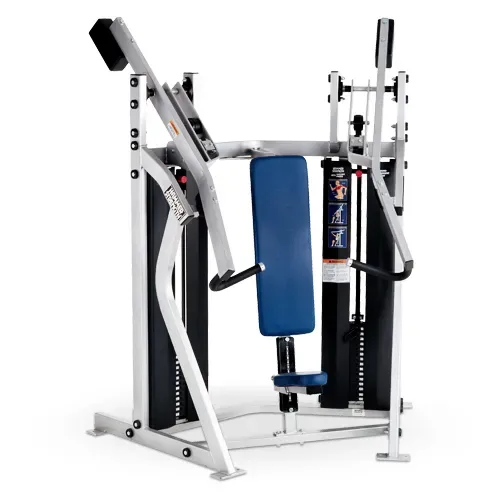
Commercial Selectorized Lateral Raise Machine, 102kg Net Weight, 1050×1506×1300mm Dimensions — engineered with 3×3 inch frame steel and sealed industrial bearings for smooth, isolated shoulder abduction through high-repetition commercial use. Robotic MIG continuous welding eliminates cold joints, while 200μm powder coating resists chipping at adjustment interfaces. Every unit undergoes per-shipment load testing and three-stage dimensional QC before dispatch.
// Spec Highlights
• Direct from Manufacturer · No Middlemen · Worldwide Shipping
01
// Material
Imported Solid Wood
Premium hardwood frames sourced for density and visual warmth.
02
// Hardware
Medical-Grade Silent
Whisper-quiet pulleys and springs for clinical environments.
03
// Customization
Appearance OEM
Color, upholstery, and branding tailored to your studio.
04
// Service
Layout Design
Free venue planning for studios and rehab institutions.
Every component is selected for longevity, performance, and aesthetic harmony - from imported hardwood frames to silent medical-grade accessories.
// Features
Traceable Steel — Every tube in this lateral raise frame is 11-gauge Q235 steel, traceable to the mill coil it was cut from.
| Parameter | Value |
|---|---|
| Product Type | Selectorized Shoulder Machine |
| Model NO. | 5010 |
| Exercise Part | Shoulder |
| Frame Steel Gauge | 11-gauge |
| Steel Grade | Q235 industrial steel, mill-certified |
| Welding Type | Robotic MIG, continuous seams |
| Bearing Type | Sealed industrial bearings |
| Pulley System | Aircraft-cable pulley system |
| Powder Coating | 200μm scratch-resistant, sandblast pre-treated |
| Upholstery | Available in standard or high-density options |
| Product Dimensions | 1050 × 1506 × 1300 mm |
| Net Weight | 102 kg |
| Loading Type | Selectorized pin-select weight stack |
| Certification | ISO 9001:2015, CE |
| Warranty | 10-year frame warranty |
| Facility Type | Typical Use |
|---|---|
| Commercial gym strength floor | Isolated shoulder abduction station in selectorized machine rows |
| Hotel and resort fitness center | Durable shoulder equipment for high-turnover guest use |
| University strength and conditioning room | Accessory movement station alongside primary lifts |
| Rehabilitation and performance center | Controlled lateral deltoid loading for return-to-sport protocols |
This commercial selectorized lateral raise machine specifies exact steel gauge and tube dimensions so buyers can verify structural capacity themselves.
Many strength equipment suppliers label their frames as "commercial grade" without disclosing the actual wall thickness or tube size. When a lateral raise arm pivots under repeated eccentric loading, undersized tubing flexes at the pivot axis and spot welds develop hairline cracks within months of heavy use. The result is a machine that feels loose during the concentric phase and produces audible grinding at the bearing housing. Facility operators end up pulling units off the floor for weld repairs that never fully restore original alignment [NEED_CITE: weld fatigue classification in structural steel frames]. This unit eliminates that ambiguity by documenting 11-gauge steel sourced from certified mills and assembled with continuous robotic MIG welds at every joint.
This commercial selectorized lateral raise machine targets the medial deltoid through a fixed abduction arc, filling the gap between compound pressing movements and rear deltoid work. On a strength floor, it pairs logically with a seated overhead press station and a rear delt fly unit to complete the shoulder training triangle. The compact footprint suits high-density commercial layouts where floor space must accommodate multiple selectorized stations in a single row. The seat and pad geometry accommodates users across a broad range of torso lengths without requiring multiple adjustment points per set.
The lateral raise movement generates an eccentric load vector that peaks at the top of the arc, placing rotational stress on the pivot arm weld and bearing housing. In a busy gym running ten or more sets per hour across dozens of users, that pivot point endures thousands of load cycles weekly. The continuous MIG weld seams distribute this stress along the full joint length rather than concentrating it at discrete spot-weld points. Sealed bearings resist contamination from chalk dust and sweat that would otherwise accelerate play development in open bushing systems [NEED_CITE: bearing contamination and play development in fitness equipment]. The powder coating at adjustment pin interfaces must withstand repeated metal-on-metal contact without chipping down to bare steel.
The 11-gauge frame steel provides the wall thickness needed to resist deformation when the pivot arm reaches maximum extension under load. Thinner tubing may appear identical in product photos but will deflect measurably under the lateral moment arm created by the user’s arm weight plus stack resistance. Robotic MIG welding produces uniform bead profiles without the cold joints or incomplete fusion zones that hand welding can introduce at awkward angles. Sealed industrial bearings maintain precise shaft alignment over years of use, whereas unsealed alternatives develop radial play that shifts the movement path away from the intended arc. The 200μm powder coating, applied over a sandblast-prepared surface, bonds to the steel at a thickness that resists chipping at high-contact adjustment points and sweat exposure zones.
Thin-wall tubing on a lateral raise machine reveals itself not on day one but after several months of daily commercial cycles, when the pivot arm begins to flex visibly at the top of each rep. Spot-welded joints that passed initial visual inspection fracture under accumulated fatigue, creating liability exposure for gym operators when structural failure occurs mid-set. Non-sealed bearings demand scheduled maintenance intervals that pull machines off the floor repeatedly, and replacement bearing kits add parts cost on top of labor downtime. Low-density upholstery compresses permanently within months under constant use, requiring pad replacements that interrupt member access. Thin powder coating chips at the weight stack guide rod contact zone, exposing untreated steel to oxidation in humid gym environments [NEED_CITE: powder coating thickness standards for commercial fitness equipment].
The 11-gauge Q235 and Q345 steel used across BICKFIT frames is sourced from certified mills with coil-level traceability, so the material pedigree of every tube is documented. Robotic MIG welding runs continuous seams along every structural joint on this commercial selectorized lateral raise machine, eliminating the spot-weld weak points that fail under repetitive shoulder loading. Every completed unit undergoes load testing before shipment rather than relying on sample-based batch inspection. The 200μm industrial powder coating is applied after sandblast pre-treatment to achieve adhesion that survives years of contact-point abrasion. The 10-year frame warranty reflects confidence in material and weld integrity. For facility layout, BICKFIT provides 2D and 3D CAD planning support to ensure safe clearance spacing around this station and adjacent equipment.
Share your strength floor dimensions and current equipment list to receive a 2D or 3D layout showing how this station fits within your shoulder training zone. Specify your average daily user volume so the structural grade can be matched to actual traffic. Indicate the body size range of your member population to confirm the pad and seat geometry covers your users. State any customization requirements for frame color, logo placement, or upholstery density to align the unit with your facility branding.
Q: How can I verify that a lateral raise machine is truly commercial grade rather than light commercial?
A: Request the frame steel gauge and tube dimensions in writing, then cross-reference against the mill certificate. Light-commercial units often use thinner wall tubing with spot welds at pivot joints. True commercial frames specify gauge numbers, continuous weld methods, and sealed bearings. Ask for per-unit load testing documentation rather than accepting sample-based batch reports as proof of structural integrity.
Q: What does frame steel gauge mean for lateral raise machine durability?
A: The gauge number indicates wall thickness of the steel tube, which directly determines how much the frame resists bending under lateral load. A lateral raise arm creates a moment force at the pivot joint with every repetition. Thicker gauge steel maintains alignment through thousands of cycles without measurable deflection, while thinner tubing develops flex that shifts the movement path and accelerates bearing wear at the pivot housing.
Q: How do selectorized and plate-loaded lateral raise machines compare for high-traffic gyms?
A: Selectorized machines allow rapid weight changes between users, which keeps traffic flowing during peak hours on a busy strength floor. Plate-loaded units require members to load and unload discs, adding time per set. Selectorized systems also enclose the weight stack, reducing the risk of dropped plates on flooring. Both formats can be built to equivalent structural standards with the same gauge steel and welding methods.
Q: What maintenance do sealed bearings require on a commercial shoulder machine?
A: Sealed industrial bearings are designed to operate without scheduled lubrication or adjustment under normal commercial conditions. The seal prevents chalk dust, sweat, and cleaning solution from entering the bearing race. Maintenance involves periodic visual inspection for smooth rotation and checking for any audible grinding that would indicate seal compromise. Replacement intervals depend on total cycle volume rather than calendar time.
Premium aesthetics meet quiet operation for boutique studio environments.
Medical-grade silence and precision for sports & postpartum recovery.
Furniture-grade craftsmanship for premium residential installations.
Compact premium setups for one-on-one and small-group training.
Aesthetic Pilates integration for hybrid wellness studio programming.
Multi-unit deployment with instructor-grade reliability for certification programs.
Tell us about your project. Our team will respond within 24 hours with pricing, customization options, and shipping details.
// Sales Director
William
+86 132 2531 1800
// Export Manager
Bella
+86 198 5412 8032
william@bickfit.com

![ISO-Lateral Abdominal Crunch MTS-8009 Commercial Gym Machine [WARN] draft identifier mismatch](https://bickgym.com/wp-content/uploads/2026/08/iso-lateral-abdominal-crunch-mts-8009-commercial-gym-machine-warn-draft-identifier-mismatch-485c96.webp)