01 / Scenario
STUDIO
P
High-End Pilates Studios
Premium aesthetics meet quiet operation for boutique studio environments.
ISO
9001
CE
Certified
OEM
Available
10YR
Warranty
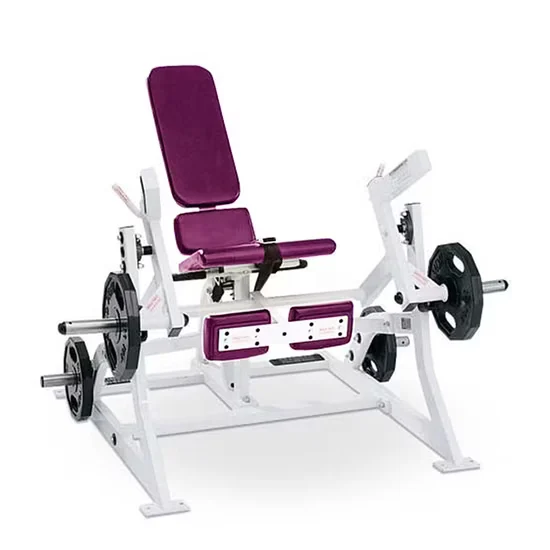
Commercial Leg Extension Machine, 103kg Net Weight, 1440×1695×1481mm Dimensions — selectorized pin-select stack system with sealed industrial bearings and precision guide rods for smooth, binding-free motion under heavy loads. Engineered with continuous robotic MIG welding on heavy-gauge steel frames to eliminate cold joints and extend structural fatigue life in high-traffic gym environments. Every unit undergoes individual load testing before shipment, backed by a 10-year frame warranty and free floor planning support.
// Spec Highlights
• Direct from Manufacturer · No Middlemen · Worldwide Shipping
01
// Material
Imported Solid Wood
Premium hardwood frames sourced for density and visual warmth.
02
// Hardware
Medical-Grade Silent
Whisper-quiet pulleys and springs for clinical environments.
03
// Customization
Appearance OEM
Color, upholstery, and branding tailored to your studio.
04
// Service
Layout Design
Free venue planning for studios and rehab institutions.
Every component is selected for longevity, performance, and aesthetic harmony - from imported hardwood frames to silent medical-grade accessories.
// Features
Continuous Weld Lines — robotic MIG welding eliminates cold joints and spot-weld failures across the entire frame structure.
| Parameter | Value |
|---|---|
| Product Type | Selectorized Leg Extension Machine |
| Exercise Target | Quadriceps isolation |
| Frame Steel | 11-gauge, 3×3 inch tube |
| Steel Grade | Q235 / Q345 industrial steel |
| Welding Type | Robotic MIG, continuous weld |
| Weight Stack | Pin-select, up to 150kg |
| Bearing Type | Sealed industrial bearings |
| Pulley System | Aircraft-cable with precision pulleys |
| Guide Rods | Precision-ground, hardened steel |
| Upholstery | High-density commercial vinyl |
| Powder Coating | 200μm scratch-resistant |
| Product Dimensions | 1440 × 1695 × 1481 mm |
| Net Weight | 103 kg |
| Certification | ISO 9001:2015, CE, RoHS |
| Warranty | 10-year frame |
| Facility Type | Typical Use |
|---|---|
| Commercial gym strength floor | High-traffic quadriceps station in the fixed machine circuit |
| University strength and conditioning room | Athlete leg development between squat rack sessions |
| Hotel fitness center | Accessible isolation movement for diverse guest fitness levels |
| Rehabilitation and performance center | Controlled knee extension for return-to-play protocols |
| Corporate wellness facility | Low-skill-entry leg training for time-limited members |
Thicker tube walls resist the cyclic bending forces that thinner frames cannot survive past the first year.
Most selectorized leg extension machines on the market quote "commercial grade" steel without disclosing actual gauge or tube dimensions. Under repeated heavy loading — particularly when members load the full stack and perform slow eccentrics — the main frame tube undergoes cyclic bending stress at the seat-to-upright junction. A frame built from lighter gauge steel will develop micro-cracks at weld intersections long before the steel itself yields. The failure mode is almost always the weld zone, not the parent metal [NEED_CITE: EN 957 structural requirements for stationary training equipment]. Our commercial selectorized leg extension machine uses 11-gauge, 3×3 inch steel sourced with mill certification traceable to the coil, so the structural capacity is verifiable rather than claimed.
The leg extension isolates the quadriceps through a fixed sagittal-plane arc, making it a natural complement to compound movements like squats and leg presses already anchored in the free weight and plate-loaded zones. In a typical commercial selectorized leg extension machine placement, it sits adjacent to the leg curl station to form a paired agonist-antagonist circuit. It suits facilities running 200-plus daily check-ins where members expect immediate availability without waiting for free weight stations. The seat and back pad adjustment range accommodates users from roughly the fifth percentile female to the ninety-fifth percentile male, which matters in mixed-membership environments where body types vary widely.
Every rep of a loaded leg extension generates an eccentric braking force when the member lowers the pad — this reverse torque cycles through the pivot bearing, the frame weld at the pivot mount, and down into the base tube. In a busy gym running eight-plus hours daily, that pivot bearing alone endures thousands of load reversals per week. Unsealed bearings allow sweat, chalk dust, and cleaning chemicals to penetrate the race, accelerating wear and introducing lateral play that members feel as wobble mid-rep [NEED_CITE: bearing contamination and premature wear in commercial fitness equipment]. The powder coating at contact points — where the weight stack shrouds meet the frame and where adjustment pins slide — faces abrasion from repeated metal-on-metal contact, making the 200μm coating thickness a functional requirement rather than cosmetic.
The 11-gauge tube wall thickness and 3×3 inch cross-section determine how much the frame deflects when a member loads the full stack and holds the contraction at peak extension. Thinner tubes flex visibly under load, which transfers energy away from the target muscle and into frame vibration. Robotic MIG welding with continuous weld lines removes the cold joints inherent to manual spot welding — a continuous bead distributes stress along the entire joint length rather than concentrating it at discrete weld points [NEED_CITE: weld classification and fatigue performance in structural steel]. Sealed industrial bearings at the pivot axis prevent contamination ingress that would otherwise degrade rotation smoothness within months. The aircraft-cable pulley system pairs a specific cable diameter with matched pulley grooves; undersized pulleys increase cable bending fatigue and accelerate strand failure. The precision-ground guide rods maintain tight clearance with the weight stack bushings, preventing the binding that occurs when off-center loading pushes the stack against one side of the rod.
A thinner frame tube might hold up during the first quarter of commercial use, but once cyclic loading accumulates, flex at the seat mount transfers into weld cracking that compromises the entire machine. Spot welds that pass a visual factory inspection fail under months of real eccentric loading, creating a liability exposure the gym operator inherits. Unsealed bearings require scheduled replacement — pull the machine offline, order parts, pay technician hours — while sealed units run for years without intervention. Low-density upholstery foam compresses permanently under daily use, splitting at the stitch lines and forcing re-upholstery well before the frame itself shows wear. Thin powder coating chips at adjustment contact points, exposing bare steel to sweat-borne chlorides that initiate surface rust [NEED_CITE: powder coating degradation in high-sweat commercial environments].
The 11-gauge frame with mill-traceable Q235 and Q345 steel ensures that the commercial selectorized leg extension machine carries a verifiable structural backbone rather than a marketing claim. Robotic MIG welding with continuous weld lines is applied to every joint, eliminating the spot-weld weak points that crack under sustained heavy use. Each unit undergoes load testing before shipment — not sample-based batch testing, but individual verification. The 200μm industrial powder coating, applied over sandblasted surfaces, resists chipping at high-contact zones. The 10-year frame warranty reflects confidence in these structural decisions. For facility planning, this machine’s 1440 × 1695 mm footprint and required clearance envelope are provided in 2D and 3D CAD files so operators can verify safe passage widths between stations before the equipment arrives.
Provide your strength floor area and current machine roster to receive a 2D or 3D layout showing where this leg extension fits within safe clearance standards. Specify your expected daily member throughput so we can confirm the structural grade matches your usage intensity. Share the body type range of your primary user population to verify the adjustment positions cover your membership. Indicate any custom requirements including frame color, logo placement, or upholstery material so we can quote OEM options alongside the standard configuration.
Q: How do you distinguish a true commercial-grade leg extension from a light-commercial one?
A: Request the actual steel gauge and tube dimensions rather than accepting "commercial grade" as a descriptor. Verify the welding method — continuous robotic MIG welds outperform spot welds under cyclic loading. Ask whether each unit is load-tested individually before shipment or only sampled from a batch. True commercial machines carry frame warranties measured in years, not months, and use sealed bearings throughout the pivot system.
Q: What determines whether the weight stack runs smoothly under off-center loading?
A: The guide rod diameter, surface finish, and clearance tolerance with the stack bushings are the controlling factors. Precision-ground hardened rods maintain consistent clearance so the stack does not bind when a member applies force unevenly through the pad. Sealed bearings at the pulleys prevent contamination from chalk dust and sweat, which would otherwise degrade the cable travel path and introduce friction over time.
Q: How should I plan spacing between this machine and adjacent stations?
A: Use the machine footprint of 1440 × 1695 mm as the starting point and add a minimum clearance envelope on all sides for member movement and loading access. Adjacent machines should not create pinch points where two users operate simultaneously in overlapping space. We provide 2D and 3D CAD files for your floor plan so you can verify safe passage widths before committing to a layout.
Q: What maintenance does the selectorized system require over its service life?
A: Sealed bearings at the pivot and pulley points require minimal scheduled maintenance compared to unsealed alternatives. The aircraft-cable system should be inspected for strand wear at intervals determined by daily use volume. Guide rods should be wiped clean of dust and residue periodically. The weight stack pin and selector mechanism need occasional verification of positive engagement to prevent accidental stack release during use.
Premium aesthetics meet quiet operation for boutique studio environments.
Medical-grade silence and precision for sports & postpartum recovery.
Furniture-grade craftsmanship for premium residential installations.
Compact premium setups for one-on-one and small-group training.
Aesthetic Pilates integration for hybrid wellness studio programming.
Multi-unit deployment with instructor-grade reliability for certification programs.
Tell us about your project. Our team will respond within 24 hours with pricing, customization options, and shipping details.
// Sales Director
William
+86 132 2531 1800
// Export Manager
Bella
+86 198 5412 8032
william@bickfit.com