01 / Scenario
STUDIO
P
High-End Pilates Studios
Premium aesthetics meet quiet operation for boutique studio environments.

ISO
9001
CE
Certified
OEM
Available
10YR
Warranty
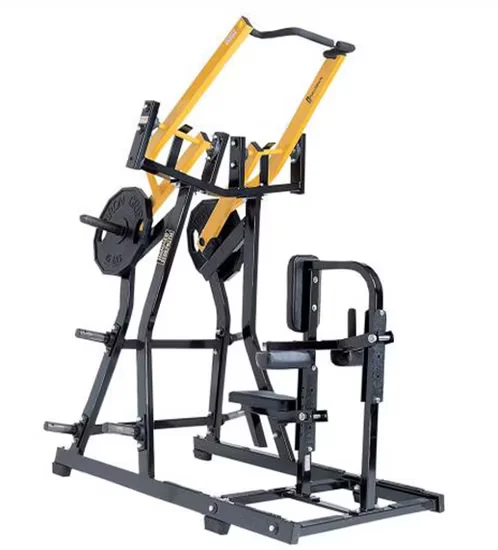
H5036 ISO-Lateral Leg Extension Machine, 1433×1477×1470mm, 126kg — built with industrial steel framing and continuous welding to eliminate spot-weld fatigue under repetitive loading. Independent converging arms deliver natural biomechanical resistance while minimizing knee shear force. Every unit undergoes full load testing before shipment to guarantee structural integrity in high-traffic facilities.
// Spec Highlights
• Direct from Manufacturer · No Middlemen · Worldwide Shipping
01
// Material
Imported Solid Wood
Premium hardwood frames sourced for density and visual warmth.
02
// Hardware
Medical-Grade Silent
Whisper-quiet pulleys and springs for clinical environments.
03
// Customization
Appearance OEM
Color, upholstery, and branding tailored to your studio.
04
// Service
Layout Design
Free venue planning for studios and rehab institutions.
Every component is selected for longevity, performance, and aesthetic harmony - from imported hardwood frames to silent medical-grade accessories.
// Features
Traceable Steel Integrity — Every frame tube is traced back to its mill coil certification, ensuring the 11-gauge steel in this ISO-lateral leg extension meets verifiable commercial standards.
| Parameter | Value |
|---|---|
| Designation | H5036 |
| Product Type | ISO-Lateral Leg Extension Machine |
| Frame Steel | 11-gauge industrial steel, Q235/Q345 grade |
| Frame Tube Size | 3×3 inch rectangular section |
| Welding Type | Robotic MIG, continuous weld lines |
| Loading Type | Plate loaded |
| Bearing Type | Sealed industrial bearings at pivot points |
| Powder Coating | 200μm scratch-resistant industrial finish |
| Upholstery | High-density commercial vinyl, available in standard or custom color options |
| Product Dimensions | 1433 × 1477 × 1470 mm |
| Net Weight | 126 kg |
| Certification | ISO 9001, CE |
| Warranty | 10-year frame warranty |
| Facility Type | Typical Use |
|---|---|
| Commercial gym strength floor | Primary quad isolation station in high-traffic machine circuits |
| University strength and conditioning room | Athlete quad development and pre-habilitation work |
| Hotel fitness center | Durable leg training option for diverse guest demographics |
| Rehabilitation and performance center | Controlled single-leg loading for return-to-play protocols |
| Crossfit box functional zone | Accessory strength work for Olympic weightlifting athletes |
Continuous MIG welds carry the load path through every joint, not just at convenient tack points.
Walk through most commercial strength floors and you will find leg extension machines with hairline cracks radiating from spot welds near the pivot bracket. The tube itself never yielded — the connection simply could not handle thousands of eccentric loading cycles. When we inspect competitor frames at trade shows like FIBO, spot-weld failures are the most common structural deficiency we document on plate loaded and selectorized leg machines alike. A commercial ISO-lateral leg extension machine endures concentrated shear at the arm pivot every time a user drops the weight back down, and that is exactly where discontinuous welds begin to separate. [NEED_CITE: weld classification and fatigue performance in structural steel]
The H5036 occupies the quad isolation slot in a commercial strength circuit, complementing compound machines like hack squats and leg presses by targeting the rectus femoris through a controlled arc. Its ISO-lateral arm design lets each leg work independently, which matters for athletes correcting strength imbalances and for general membership populations with varying limb lengths. The footprint suits medium-to-high density floors where every square meter counts. Users from petite to large body types can achieve proper knee-axis alignment thanks to the adjustable seat and pad positions. A well-placed commercial ISO-lateral leg extension machine anchors the posterior-and-anterior leg pairing that most facility planners spec into their strength zones.
Every rep on a leg extension generates an eccentric deceleration force at the bottom of the movement, sending shock through the pivot bearing and into the frame junction. In a busy commercial gym, that cycle repeats hundreds of times daily across users who load unevenly or drop weight stacks without control. The sealed bearings at the main pivot resist contamination from chalk dust, sweat aerosol, and cleaning chemicals that degrade open bushings within months. Weld seams around the seat post and arm bracket face the highest stress concentration, which is why robotic continuous welding replaces the intermittent tacks that crack under repetitive fatigue. [NEED_CITE: EN 957 structural requirements for stationary training equipment] The powder coating at contact edges must withstand abrasion from shoes, belt buckles, and dropped plates without exposing bare steel to oxidation.
The 11-gauge frame wall thickness provides a deformation threshold well beyond what typical user loads produce, keeping the structure rigid even under maximum plate loading. Q235 and Q345 steel grades carry mill certifications traceable to the coil, so the material provenance is verifiable rather than claimed. The 3×3 inch rectangular tube cross section resists torsional twisting during single-leg work, where asymmetric forces try to rotate the frame on its base. Robotic MIG welding produces uniform penetration depth along every seam, eliminating the cold joints and incomplete fusion that hand welding occasionally introduces on high-volume production lines. Sealed industrial bearings maintain consistent rotational resistance regardless of the gym environment’s humidity or particulate load, unlike bronze bushings that develop play as lubricant washes out. The 200μm powder coat thickness — applied over sandblasted surfaces — prevents the micro-chipping at pad-contact zones that exposes substrate metal within the first year at lesser thickness levels.
A thinner-walled tube might look identical in product photos, but under heavy eccentric loads it flexes just enough to shift the knee-axis alignment, making the movement feel sloppy and accelerating bearing wear. Spot-welded pivot brackets pass initial load testing yet develop fatigue cracks within months of commercial rotation, turning a structural concern into a liability question. Non-sealed bushings require lubrication schedules that most gym maintenance teams skip, leading to grinding noises and eventual pivot play that demands bearing replacement — if replacement parts are even available. Low-density upholstery foam compresses permanently within weeks of constant use, forcing reupholstering costs that exceed the original savings on material selection. Thin powder coatings chip where shoes and plates contact the frame, allowing sweat-borne chlorides to initiate corrosion that spreads beneath the remaining finish.
The 11-gauge frame steel with full mill traceability means every H5036 carries documented material provenance, not just a "commercial grade" label. Robotic continuous MIG welding runs full-length seams at the pivot bracket and seat post, removing the weak-link joints that fail under repetitive leg extension loading. Each unit undergoes individual load testing before crating — not sample-based batch testing — so the machine arriving at your facility has already proven its structural capacity. The 200μm industrial powder coating survives years of shoe contact, plate bumps, and chemical cleaning without exposing the steel beneath. A 10-year frame warranty backs the structural engineering decisions, and our facility planning team provides 2D and 3D CAD layouts showing exact clearance zones around this machine so your strength floor remains safe and navigable at full capacity. OEM customization extends to frame color, upholstery selection, and logo placement for branded environments.
Share your strength zone dimensions and current machine schedule so our planning team can generate a 2D or 3D layout showing how this ISO-lateral leg extension integrates with surrounding stations. Specify your expected daily user volume to confirm the structural grade matches your traffic profile. Provide target user demographics so we can verify the adjustment range accommodates your membership base. Indicate any custom requirements including frame color, upholstery material, or logo application for branded facility rollouts.
Q: How do we verify the steel is genuinely commercial grade?
A: Request the mill certificate tied to the steel coil batch used in production. Legitimate commercial manufacturers trace frame material back to its origin and provide documentation showing gauge, grade, and mechanical properties. This traceability separates verified structural steel from vague "commercial grade" claims that carry no supporting evidence or third-party validation.
Q: Why does continuous welding matter on a leg extension frame?
A: Leg extensions produce repeated eccentric loading at the pivot bracket, concentrating stress at weld points. Continuous MIG welds distribute that stress along the entire seam, whereas spot welds create isolated load points that fatigue and crack under thousands of daily cycles. The difference becomes visible within the first year of commercial operation when spot-welded frames begin showing hairline fractures.
Q: What maintenance does this machine require in a busy gym?
A: Sealed industrial bearings at the pivot points need minimal attention — quarterly inspection for smooth rotation and contamination checks. Structural fasteners should be retorqued after the initial break-in period and then semi-annually. The powder-coated frame requires only pH-neutral cleaning to maintain its finish, and upholstery should be inspected for mounting integrity during routine maintenance rounds.
Q: How does ISO-lateral movement differ from a fixed-path leg extension?
A: Independent arm movement allows each leg to follow its natural arc without being locked to the other limb’s path. This accommodates users with different hip widths and leg lengths, reduces compensatory movement patterns, and lets athletes address unilateral strength deficits. Fixed-path machines force both legs through an identical trajectory that may not match individual biomechanics.
Q: Can the upholstery and finish be customized for our facility branding?
A: Yes. Upholstery is available in standard or high-density options with multiple color selections to match facility design schemes. Frame powder coating color can be specified beyond the standard palette, and logo application is available for branded gym chains or institutional installations requiring visual identity consistency across all strength equipment on the floor.
Premium aesthetics meet quiet operation for boutique studio environments.
Medical-grade silence and precision for sports & postpartum recovery.
Furniture-grade craftsmanship for premium residential installations.
Compact premium setups for one-on-one and small-group training.
Aesthetic Pilates integration for hybrid wellness studio programming.
Multi-unit deployment with instructor-grade reliability for certification programs.
Tell us about your project. Our team will respond within 24 hours with pricing, customization options, and shipping details.
// Sales Director
William
+86 132 2531 1800
// Export Manager
Bella
+86 198 5412 8032
william@bickfit.com