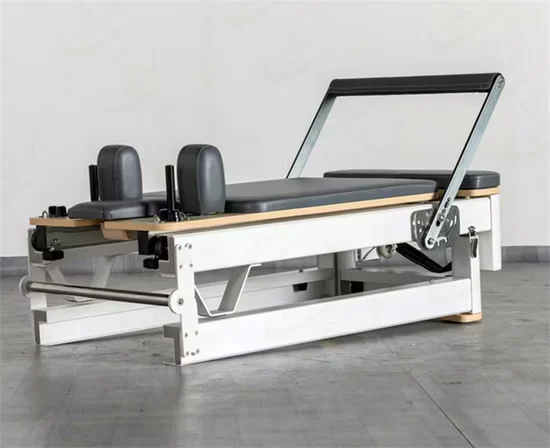
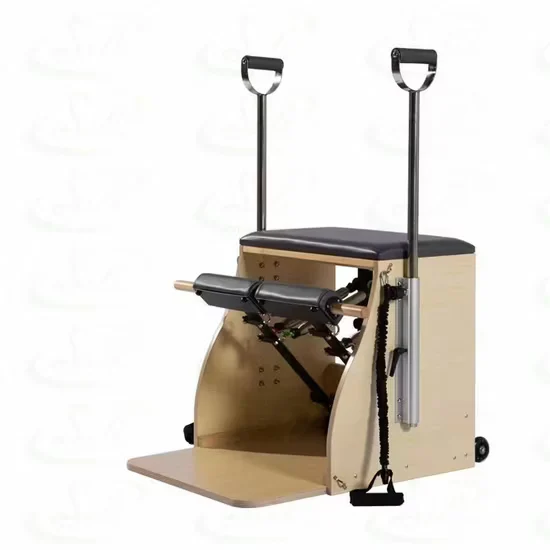
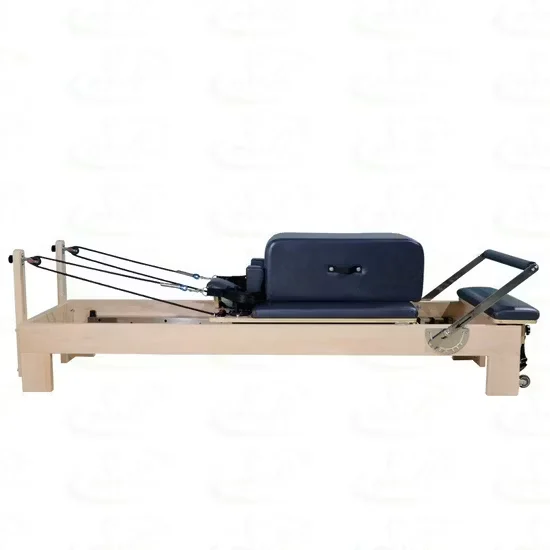
01 / Scenario
STUDIO
P
High-End Pilates Studios
Premium aesthetics meet quiet operation for boutique studio environments.
ISO
9001
CE
Certified
OEM
Available
10YR
Warranty
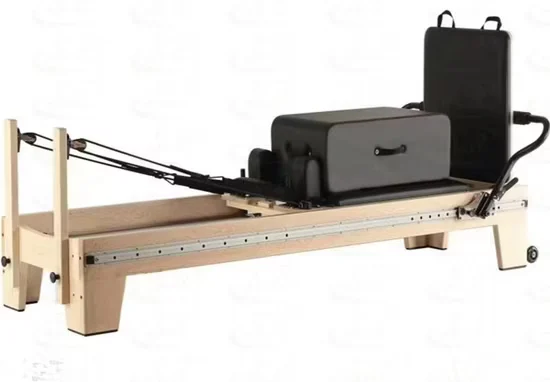
Maple Wood Pilates Reformer, 2460×730×680mm, 100kg Net Weight — solid maple frame with full-track carriage system delivers low-friction glide and resists warping under daily studio repetition; reinforced joinery maintains alignment across high-volume training cycles; includes long box, jump board, and platform with standardized mounting interfaces. Every unit undergoes 32-point inspection and full load testing before shipment, backed by a 3-year frame warranty.
// Spec Highlights
• Direct from Manufacturer · No Middlemen · Worldwide Shipping
01
// Material
Imported Solid Wood
Premium hardwood frames sourced for density and visual warmth.
02
// Hardware
Medical-Grade Silent
Whisper-quiet pulleys and springs for clinical environments.
03
// Customization
Appearance OEM
Color, upholstery, and branding tailored to your studio.
04
// Service
Layout Design
Free venue planning for studios and rehab institutions.
Every component is selected for longevity, performance, and aesthetic harmony - from imported hardwood frames to silent medical-grade accessories.
// Features
Solid Maple Frame Integrity — kiln-dried solid maple carriage track resists warping and maintains alignment under years of repetitive studio loading cycles.
| Parameter | Value |
|---|---|
| Product Type | Pilates Reformer |
| Frame Material | Maple Wood (solid) |
| Product Dimensions | 2460 × 730 × 680 mm |
| Net Weight | 100 kg |
| Carriage Track | Full-track, precision-milled rail channels |
| Accessories Included | Long Box, Jump Board, Platform |
| Color Options | Solid color finishes available |
| Warranty | 3 Years |
| Facility Type | Typical Use |
|---|---|
| Commercial Pilates Studio | Daily group and private reformer sessions across full repertoire |
| Hotel & Resort Wellness Center | Guest-facing Pilates programming with low-maintenance wood finish |
| Rehabilitation & Physical Therapy Clinic | Controlled resistance exercises for post-injury conditioning |
| High-Traffic Boutique Fitness Studio | Back-to-back class scheduling with minimal equipment downtime |
Solid maple eliminates the delamination and warping failures that plague laminated-veneer reformers within the first year of daily use.
Many reformers sold into commercial Pilates studios use engineered plywood cores wrapped in thin hardwood veneer. The adhesive layers between plies absorb moisture from humid studio air and sweat runoff, causing the track surface to swell unevenly. Within months, the carriage develops lateral play and begins binding near end-of-travel. I have seen track surfaces that looked flawless at delivery develop visible ridges at the ply boundaries — the exact spots where the carriage wheels concentrate load. A commercial maple wood pilates reformer built from solid stock avoids this failure mode entirely because there are no adhesive layers to degrade. [NEED_CITE: wood moisture content stability in fitness equipment applications]
This reformer addresses the full sagittal-plane movement repertoire — footwork, leg circles, long stretch, short spine, and coordination sequences — while the included long box opens prone and seated work for spinal articulation and upper-body pulling. The jump board attachment adds plyometric loading for athletic conditioning clients. In a studio layout, this unit pairs with cadillacs and chair stations to cover the complete Pilates apparatus system, fitting facilities that schedule eight or more sessions per day on a single reformer. The 2460 mm length accommodates tall users without the carriage bottoming out during full-extension exercises. Commercial maple wood pilates reformer placement should allow clearance on both sides for instructor access during private sessions.
A reformer in a busy studio sees forty to sixty carriage cycles per session, and a fully booked unit may run six sessions daily — that is hundreds of loaded glide cycles every single day. The carriage wheels concentrate force onto narrow track rails, and any surface irregularity translates directly into binding or lateral drift. Mortise-and-tenon joinery at the frame joints must resist the cyclical compression and tension that occurs when clients push and pull through springs at varying resistance levels. The track-to-frame interface is the most fatigue-critical zone on the entire unit, and any loosening there degrades glide quality immediately. Sweat and magnesium powder from grip aids settle into the rail channels, accelerating wear on unsealed wheel bearings. [NEED_CITE: bearing seal performance under particulate contamination in studio environments]
Solid maple has a tight, closed grain structure that machines to a smooth rail surface without the tear-out risks you get with open-grain species like oak. The density of hard maple resists denting from carriage wheel loads, which is critical because even a shallow depression in the track creates a bump the client feels on every pass. Kiln-drying to a controlled moisture content prevents the frame from twisting after delivery — wood that ships at the wrong moisture level will warp as it equilibrates to the studio environment, pulling the track rails out of parallel. The precision-milled rail channels must hold a flatness tolerance tight enough that the carriage glides without rocking, which requires the maple stock to remain dimensionally stable through seasonal humidity changes. Reinforced joinery at the head and foot ends of the frame keeps the track geometry locked under thousands of spring-tension cycles.
Reformers built with laminated veneer lumber or MDF cores cost less upfront, but the track surface degrades in ways that are impossible to repair — you cannot sand out a delamination bubble without exposing the substrate. Non-sealed bearings in the carriage wheels accumulate chalk dust and lint until the carriage drags, and replacing them on a budget reformer often means the axle hardware is non-standard with no replacement source. Frames assembled with basic butt joints and staples rather than proper mechanical fasteners or dowel joinery develop racking under lateral loads, which throws the track out of square. Thin lacquer finishes on the wood surface wear through at the carriage contact points within months, leaving bare wood exposed to sweat and humidity. These failures force studios into premature equipment replacement or constant maintenance callbacks. [NEED_CITE: comparative lifecycle cost of solid wood versus engineered wood in commercial fitness equipment]
The steel frames we build use 11-gauge Q235 and Q345 steel with mill certifications traceable to the coil, and that same traceability discipline applies to the maple sourcing for this reformer — the wood species and moisture content are documented, not assumed. Our robotic MIG welding produces continuous weld lines on steel frames, and the equivalent commitment here is reinforced joinery that does not rely on adhesive alone to handle cyclical studio loads. Every unit undergoes load testing before shipment, catching track alignment and carriage glide issues at the factory rather than after installation in your studio. The 200μm industrial powder coating we apply to steel equipment has a parallel in the finish specification for this maple frame — a durable coating that withstands daily contact with sweat, grip aids, and cleaning products. Our ten-year frame warranty on steel equipment reflects the same engineering confidence that supports the three-year warranty on this maple reformer. Floor planning CAD support ensures reformer spacing accounts for instructor walkways and accessory storage.
Provide your studio floor dimensions and planned reformer count to receive a 2D or 3D layout that accounts for instructor circulation, client entry paths, and accessory storage walls. Specify your average daily sessions per unit so we can confirm the structural grade matches your traffic volume. Share your target client demographic — rehabilitation patients versus athletic populations — to verify the accessory package and spring configuration fit your programming. Note any branding requirements for frame color or logo placement on the headrest panel.
Q: How do I tell solid maple apart from laminated veneer reformers before purchasing?
A: Examine the end grain on the frame rails. Solid maple shows continuous grain lines running through the full thickness, while veneer-core construction reveals a plywood or particleboard cross-section with a thin surface layer. Check the track surface for repeating grain patterns — laminated surfaces often show identical grain figures at regular intervals because they are printed or sliced from a single flitch. Request wood species documentation from the manufacturer.
Q: What track length do I need for full Pilates repertoire coverage?
A: The 2460 mm overall length provides sufficient carriage travel for full-body extensions, including long stretch and leg pull front sequences performed by taller users. Shorter reformers force compromises on exercises that require full carriage excursion. Verify the usable travel distance — not just overall frame length — matches your tallest expected client plus allowance for full arm and leg extension beyond the carriage edge.
Q: How does wood frame maintenance differ from steel in humid studio environments?
A: Solid maple requires regular wiping with pH-neutral cleaners to prevent sweat acids from degrading the surface finish. Unlike powder-coated steel, wood absorbs moisture if the finish wears through, so inspect high-contact areas quarterly and plan for periodic refinishing. Maintain studio humidity between forty and fifty-five percent to minimize seasonal expansion and contraction that can affect track alignment over time.
Q: Are the included accessories interchangeable with other reformer brands?
A: The long box, jump board, and platform use standardized mounting interfaces common across commercial-grade reformer platforms, but cross-brand compatibility is not guaranteed without verifying pin spacing and rail width. We recommend keeping accessories matched to the original equipment to ensure proper fit and safe attachment. Request the mounting hardware specifications if you plan to source replacement accessories independently.
Premium aesthetics meet quiet operation for boutique studio environments.
Medical-grade silence and precision for sports & postpartum recovery.
Furniture-grade craftsmanship for premium residential installations.
Compact premium setups for one-on-one and small-group training.
Aesthetic Pilates integration for hybrid wellness studio programming.
Multi-unit deployment with instructor-grade reliability for certification programs.
Tell us about your project. Our team will respond within 24 hours with pricing, customization options, and shipping details.
// Sales Director
William
+86 132 2531 1800
// Export Manager
Bella
+86 198 5412 8032
william@bickfit.com