01 / Scenario
STUDIO
P
High-End Pilates Studios
Premium aesthetics meet quiet operation for boutique studio environments.
ISO
9001
CE
Certified
OEM
Available
10YR
Warranty
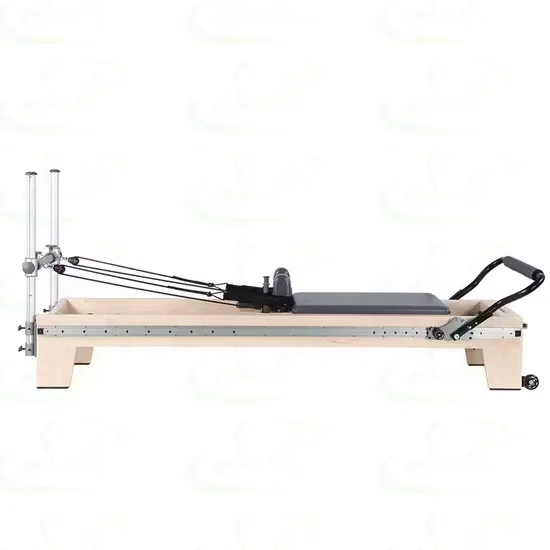
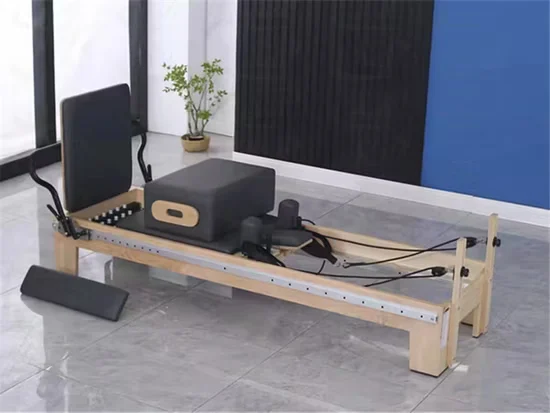
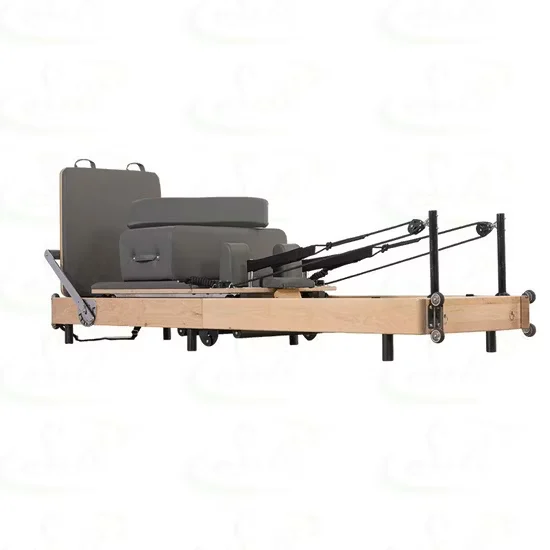
Pilates Reformer, Solid Oak Wood Frame, Foldable Design, 2400×600×350mm — engineered with solid oak construction to eliminate rail warping and carriage wobble under repetitive commercial loading, foldable hinge mechanism reinforced for high-density studio floor planning without compromising structural rigidity. Long box, jump board, and platform included with reinforced mounting points for stable accessory integration. Backed by 32-point inspection protocol and 100% load testing before shipment.
// Spec Highlights
• Direct from Manufacturer · No Middlemen · Worldwide Shipping
01
// Material
Imported Solid Wood
Premium hardwood frames sourced for density and visual warmth.
02
// Hardware
Medical-Grade Silent
Whisper-quiet pulleys and springs for clinical environments.
03
// Customization
Appearance OEM
Color, upholstery, and branding tailored to your studio.
04
// Service
Layout Design
Free venue planning for studios and rehab institutions.
Every component is selected for longevity, performance, and aesthetic harmony - from imported hardwood frames to silent medical-grade accessories.
// Features
Solid Oak Core — Mill-documented solid oak timber eliminates the rail warping and joint fatigue failure modes inherent in laminated or veneered alternatives.
| Parameter | Value |
|---|---|
| Product Type | Pilates Reformer |
| Frame Material | Solid Oak Wood |
| Product Dimensions | 2400 × 600 × 350 mm |
| Net Weight | 100 kg |
| Included Accessories | Long Box, Jump Board, Platform |
| Color Options | Solid Color, Customization Available |
| Logo Customization | Customized Is Allowed |
| Target Demographic | Adult, Unisex |
| Production Capacity | 80 Pieces / Month |
| Certification | ISO 9001 (manufacturer level) |
| Warranty | 3 Years |
| Facility Type | Typical Use |
|---|---|
| Boutique Pilates studio | Daily group and private reformer sessions requiring foldable storage between classes |
| Rehabilitation and physical therapy center | Low-vibration carriage movement for controlled therapeutic exercise protocols |
| Hotel and resort wellness spa | Aesthetic wood-frame equipment balancing visual warmth with commercial durability |
| Private home studio | Space-conscious residential installations where foldable design preserves living area |
Solid oak resists the cyclic rail deformation that causes carriage wobble in engineered wood reformers within the first year of commercial scheduling.
Many Pilates reformers marketed to studio owners use laminated plywood rails or hollow-core frames. Under repeated daily carriage loading — particularly during high-spring Footwork and Long Stretch sequences — these composite materials develop micro-separations at glue lines. The result is visible carriage play, rail surface delamination, and eventually misalignment that affects movement quality and member safety. A commercial oak wood foldable Pilates reformer built from solid timber eliminates this failure mode because the grain structure runs continuously through the rail cross-section, not in bonded layers that separate under shear stress [NEED_CITE: wood fatigue behavior under cyclic mechanical loading in fitness equipment]. Studio operators who schedule back-to-back classes need a frame material that maintains dimensional tolerance across thousands of carriage cycles without requiring rail re-alignment or carriage wheel adjustment.
This reformer addresses the full sagittal and frontal plane movement catalog — from supine Footwork and abdominal series through standing platform work and long box prone pulling. In a boutique studio layout, it pairs with mat stations and Cadillac units to create a complete apparatus circuit without redundant floor allocation. The foldable design allows operators in space-constrained venues to store units vertically between class blocks, recovering usable floor area for mat-based sessions or member circulation. The 2400 mm length accommodates the full range of adult user heights during supine and prone carriage exercises, while the 600 mm width provides adequate clearance for lateral movement sequences and long box mounting. For studios running six or more class slots daily, the commercial oak wood foldable Pilates reformer enables rapid reconfiguration of the workout space without requiring dedicated storage rooms.
Every reformer session imposes repetitive eccentric and concentric loading through the carriage return springs, transmitting forces into the rail mounting points and frame joints. In a studio scheduling eight classes per day with three users per hour, each unit accumulates substantial fatigue cycles annually. The fold hinge represents the highest stress concentration — each open-close event introduces lateral shear at the joint, and any hardware deflection compounds over time into visible frame misalignment. The accessory mounting points where the long box, jump board, and platform attach must distribute dynamic impact loads across the oak frame rather than concentrating stress at surface-fastened screw points [NEED_CITE: timber joint reinforcement standards for dynamic loading applications]. Carriage wheel bearings endure constant compression against the oak rail surface, and sweat exposure in humid studio environments accelerates corrosion on unsealed bearing races. The 200μm industrial powder coating standard referenced in heavy-duty steel gym equipment provides a benchmark for surface protection that wood reformer finishes should approach in terms of sweat and cleaner resistance.
The solid oak specification means the frame is milled from single timber sections rather than laminated strips, providing continuous grain orientation along the rail length that resists warping under asymmetric carriage loading. The 100 kg net weight indicates substantial timber mass throughout the frame — lighter reformers typically achieve their weight by using thinner stock or engineered wood substitutes that sacrifice long-term rigidity. Rail surface finish directly governs carriage glide quality; a properly planed and sealed oak rail maintains consistent friction coefficient across its length, preventing the stick-slip sensation that develops when softer woods compress unevenly under wheel pressure. The included long box, jump board, and platform must attach through reinforced mounting points — mortise-and-tenon or through-bolted connections — rather than surface-driven wood screws that strip under repeated removal and reinstallation. The three-year warranty coverage signals manufacturer confidence in the fold joint hardware and rail integrity under defined commercial use conditions, which is the minimum threshold studio operators should accept for daily-use apparatus.
Laminated rail reformers may hold alignment during a showroom demonstration, but the adhesive bonds between veneer layers weaken with sweat exposure and cyclic humidity changes common in studio environments. When carriage wobble develops, operators face either costly rail replacement or accepting degraded movement quality that members notice immediately. Thin-section oak or rubberwood substitutes reduce material cost upfront but develop surface denting under jump board impact loading and long box edge contact. Non-reinforced fold hinges — particularly those using wood-screw-only attachment without steel gusset plates or through-bolting — develop play that worsens with each open-close cycle until the frame no longer sits level when deployed. Unsealed carriage bearings accumulate dust and skin particles that abrade the oak rail surface, creating visible grooves that worsen carriage play over time and require expensive rail refinishing [NEED_CITE: bearing seal requirements for fitness equipment in high-use environments].
The solid oak frame material is specified with mill documentation traceable to the timber source, ensuring species verification beyond visual grain inspection alone. Each unit ships with accessory mounting points engineered for the specific load paths generated by jump board plyometric impacts and long box leverage forces, not generic hardware adapted from furniture-grade applications. The 100 kg frame mass reflects adequate timber density throughout the structure, meaning the unit maintains stability during advanced standing exercises on the platform without frame resonance or tipping risk. For studio operators planning multi-unit purchases, 2D-3D floor planning support accounts for the deployed footprint and the vertical storage clearance required when units fold, ensuring safe member circulation paths between apparatus stations. The three-year warranty and ISO 9001 manufacturing certification provide the documentation baseline that commercial liability insurers and facility compliance audits require, and OEM customization including logo application and color matching allows studio branding consistency across the apparatus fleet.
Provide your studio floor dimensions and target class capacity to receive a 2D-3D layout showing deployed and folded reformer positions with safe clearance zones. Specify your daily class schedule and average user volume so we can confirm the oak frame specification matches your fatigue cycle requirements. Communicate any custom color or logo application requirements for brand consistency across your apparatus fleet, and confirm whether accessory mounting configurations need adjustment for specialized rehabilitation or athletic training protocols.
Q: How do I verify solid oak versus laminated or veneer construction on a Pilates reformer?
A: Inspect the rail cross-section at an exposed end grain. Solid oak shows continuous grain rings through the full thickness, while laminated construction reveals distinct glued layers. Request mill documentation specifying timber species and source. Veneered alternatives display a thin decorative surface layer over engineered core material that becomes visible at joint edges or mounting point cutouts.
Q: What structural features prevent carriage wobble and rail play from developing over time?
A: Continuous solid timber grain along the rail length resists the compression set and warping that cause carriage misalignment in laminated alternatives. Sealed carriage wheel bearings prevent particulate intrusion that accelerates rail surface wear. Rail surface finish must be planed to consistent tolerance, and carriage wheel axles should use through-bolted mounting rather than press-fit hardware that loosens under vibration.
Q: How does the foldable mechanism affect long-term frame rigidity and joint integrity?
A: The fold joint concentrates mechanical stress at the hinge point during every open-close cycle and during loaded exercises near the joint line. Reinforced hinges using steel gusset plates and through-bolting maintain alignment far better than surface-mounted wood screws. Request fatigue cycle testing documentation for the specific hinge hardware and inspect the deployed frame for level consistency as an indicator of joint deflection.
Q: What maintenance differences exist between wood rail and aluminum rail reformer systems?
A: Wood rails require periodic surface inspection for compression grooves and sweat salt accumulation that degrades the finish. Humidity control in the studio environment prevents timber swelling that increases carriage friction. Aluminum rails resist moisture damage but transmit more vibration during dynamic exercises. Both systems require sealed bearing inspection, but wood rail refinishing demands specialized planing skills that aluminum systems do not require.
Q: How should I evaluate accessory mounting reinforcement for long box, jump board, and platform attachments?
A: Inspect each mounting point for through-bolted connections or mortise-and-tenon joinery rather than surface-driven wood screws. Jump board mounting must resist repetitive impact loading from plyometric exercises, requiring steel reinforcement plates behind the oak surface. Long box attachment points should distribute leverage forces across a broad frame section. Request load testing documentation specific to each accessory mounting configuration.
Premium aesthetics meet quiet operation for boutique studio environments.
Medical-grade silence and precision for sports & postpartum recovery.
Furniture-grade craftsmanship for premium residential installations.
Compact premium setups for one-on-one and small-group training.
Aesthetic Pilates integration for hybrid wellness studio programming.
Multi-unit deployment with instructor-grade reliability for certification programs.
Tell us about your project. Our team will respond within 24 hours with pricing, customization options, and shipping details.
// Sales Director
William
+86 132 2531 1800
// Export Manager
Bella
+86 198 5412 8032
william@bickfit.com