01 / Scenario
STUDIO
P
High-End Pilates Studios
Premium aesthetics meet quiet operation for boutique studio environments.

ISO
9001
CE
Certified
OEM
Available
10YR
Warranty
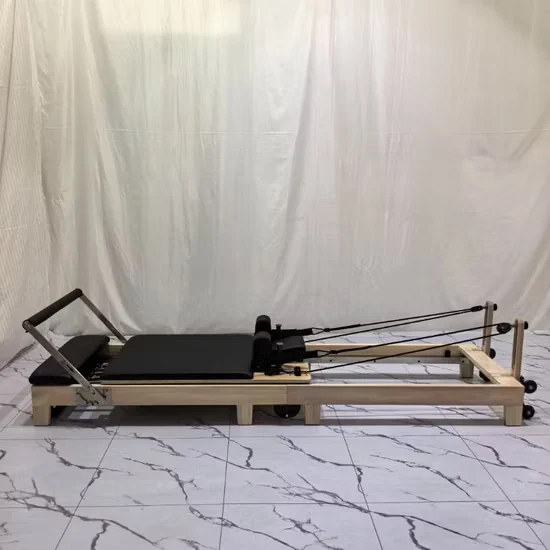
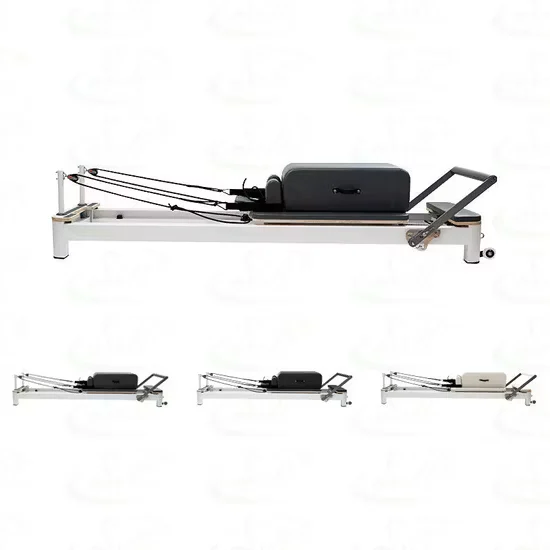
Pilates Reformer Core Bed, 2570×730×1100mm, 110kg Net Weight — industrial aluminum alloy rail with reinforced carbon steel frame, modular accessory interface supporting long box, jump board, and platform configurations for high-repetition studio cycles. Direct from our 15,000㎡ vertically integrated facility with full OEM-ODM capability and three-stage inspection on every unit before shipment.
// Spec Highlights
• Direct from Manufacturer · No Middlemen · Worldwide Shipping
01
// Material
Imported Solid Wood
Premium hardwood frames sourced for density and visual warmth.
02
// Hardware
Medical-Grade Silent
Whisper-quiet pulleys and springs for clinical environments.
03
// Customization
Appearance OEM
Color, upholstery, and branding tailored to your studio.
04
// Service
Layout Design
Free venue planning for studios and rehab institutions.
Every component is selected for longevity, performance, and aesthetic harmony - from imported hardwood frames to silent medical-grade accessories.
// Features
Continuous Robotic Welding — Every joint on the commercial Pilates reformer core bed features uninterrupted MIG weld seams, eliminating the cold-joint failures that plague manual spot-welded frames in high-traffic studio environments.
| Parameter | Value |
|---|---|
| Product Type | Pilates Reformer |
| Model NO. | SRY-27 |
| Frame Material | Aluminum alloy rail with reinforced carbon steel main beam |
| Product Dimensions | 2570×730×1100mm |
| Net Weight | 110kgs |
| Accessory Options | Long Box / Jump Board / Platform |
| Color Options | Black frame, upholstery available in standard or high-density options |
| Logo | Customized Is Allowed |
| Warranty | 3 Years |
| Certification | CE European conformity |
| Facility Type | Typical Use |
|---|---|
| Commercial Pilates studio | Group reformer classes with daily back-to-back scheduling |
| Rehabilitation and physiotherapy center | Controlled resistance work for post-injury recovery protocols |
| Boutique fitness studio | Small-group functional Pilates combining reformer with mat work |
| Hotel and resort wellness facility | Guest-accessible wellness programming in spa-adjacent fitness areas |
| Home studio | Private practice space for instructors and dedicated practitioners |
A commercial Pilates reformer core bed is only as durable as its weakest tension component under daily class cycles.
Walk into any studio running six reformer classes a day and you will notice the pattern: springs lose tension consistency, pulley cables develop slack, and carriage bearings begin to rattle within months [NEED_CITE: spring fatigue testing standards for cyclic loading in fitness equipment]. The frame itself may hold, but every attachment point in the tension system endures thousands of extension-retraction cycles weekly. When manufacturers source unsealed bearings and generic extension springs to cut unit costs, the maintenance burden shifts entirely to the studio operator — who discovers the real price difference during the first year of ownership.
The commercial Pilates reformer core bed occupies the central movement plane in any reformer-focused studio layout. It covers supine, prone, and seated positions targeting deep stabilizers, hip flexors, and the entire posterior chain. In a mixed-equipment studio, it pairs with Cadillac towers for advanced decompression work and chair units for standing balance sequences. Facilities running four or more group classes daily benefit from standardized units that allow instructors to cue uniformly across the room. The 2570mm length accommodates practitioners across a wide height range without requiring frame extensions.
Every reformer class generates hundreds of carriage passes along the rail, creating cumulative lateral and eccentric loading at the bearing contact points [NEED_CITE: bearing wear classification under cyclic linear motion]. Sweat and cleaning solutions drip onto the rail surface between classes, accelerating corrosion on uncoated or thinly coated aluminum. The jump board attachment introduces impact loads that travel back through the carriage frame into the rail mounting bolts. Platform extensions shift the center of gravity during standing exercises, testing the torsional rigidity of the main beam. Upholstery on the carriage pad and long box endures repeated compression from body weight and friction from limb movement, making foam density and cover material critical to service life.
The aluminum alloy rail must maintain dimensional consistency across its full length — any variation in extrusion tolerance creates dead spots where the carriage hesitates or binds. Carbon steel main beam thickness determines how much the frame deflects when a practitioner performs standing work on the platform with full spring tension engaged. Sealed bearings keep studio dust and humidity out of the rolling elements, directly affecting how often the carriage needs re-alignment. The spring system requires clear resistance grading so instructors can prescribe specific loads for different class levels without guessing. High-density foam in the carriage pad resists bottoming out during prone exercises where body weight concentrates on a smaller contact area.
Thin-walled aluminum rails flex under heavy practitioners performing explosive jump board sequences, causing the carriage to track off-center and wear unevenly. Non-sealed bearings accumulate chalk dust and humidity, developing lateral play that instructors notice as carriage wobble during slow controlled movements. Low-density foam compresses permanently within months, leaving visible depressions that clients associate with equipment neglect. Generic springs lose calibrated tension at different rates, so two springs marked identically provide unequal resistance — a problem that surfaces during unilateral work. When proprietary cable fittings break and the original supplier has discontinued the part, the entire tension system sits idle waiting for a fabrication workaround [NEED_CITE: equipment downtime cost analysis in commercial fitness operations].
Our carbon steel main beams are sourced with mill certification traceable to the coil, so you know exactly what alloy is carrying your clients. Robotic MIG welding produces continuous seams along every frame joint — no spot-weld shortcuts that look acceptable until a jump board impact reveals the gap. Every unit undergoes load testing before shipping, not just sample-based batch inspection. The 200μm industrial powder coating resists the cleaning chemicals and sweat exposure that strip thinner finishes within a season. Our 15,000㎡ facility provides 2D-3D floor planning CAD support, calculating safe clearance between reformer units so instructors can walk the room without squeezing past loaded carriages. OEM customization covers logo placement, upholstery color selection, and accessory bundling.
Share your studio floor dimensions and planned reformer count so we can generate a layout with proper safety corridors. Specify your average daily class frequency and practitioner volume so we can confirm the structural grade matches your traffic load. Indicate any upholstery color requirements, logo placement preferences, or accessory bundle needs for your program format.
Q: How do I verify a reformer meets true commercial-grade standards?
A: Request the rail material specification with extrusion tolerance data, the main beam steel grade and wall thickness, and spring fatigue test results showing cycle count before tension degradation. Commercial-grade equipment provides verifiable structural documentation rather than generic durability claims. Ask whether every unit is load-tested individually or only sample-tested by batch.
Q: What difference does aluminum rail make compared to wood rail construction?
A: Aluminum rails maintain consistent dimensional tolerance across temperature and humidity fluctuations, which is critical in studios where climate control varies between class blocks. Wood rails can warp seasonally, introducing carriage tracking issues. Aluminum also tolerates frequent cleaning with commercial disinfectants without surface degradation, while wood requires specific maintenance products to avoid drying or splintering.
Q: How should spring resistance levels match class programming?
A: Studios running beginner through advanced classes need springs with clearly differentiated resistance grades so instructors can prescribe loads precisely. If all springs feel similar, unilateral exercises become inconsistent between sides. Ask the manufacturer for a resistance chart showing force values at standard extension lengths for each spring color or marking.
Q: What maintenance schedule keeps bearings and cables reliable?
A: In studios running more than four classes daily, inspect carriage bearings for lateral play monthly and check cable fittings for fraying quarterly. Sealed bearings require no lubrication but should be replaced when wobble becomes detectable during slow controlled movements. Cable replacement intervals depend on visible strand separation at pulley contact points.
Q: How much floor space should I allocate per reformer unit?
A: Beyond the 2570×730mm footprint, allocate minimum 800mm on each long side for instructor access and carriage overhang during exercises like long box work. Head-end clearance should account for practitioners extending beyond the frame during overhead reaches. A detailed CAD layout prevents dead zones where equipment spacing creates unusable floor area.
Premium aesthetics meet quiet operation for boutique studio environments.
Medical-grade silence and precision for sports & postpartum recovery.
Furniture-grade craftsmanship for premium residential installations.
Compact premium setups for one-on-one and small-group training.
Aesthetic Pilates integration for hybrid wellness studio programming.
Multi-unit deployment with instructor-grade reliability for certification programs.
Tell us about your project. Our team will respond within 24 hours with pricing, customization options, and shipping details.
// Sales Director
William
+86 132 2531 1800
// Export Manager
Bella
+86 198 5412 8032
william@bickfit.com