01 / Scenario
STUDIO
P
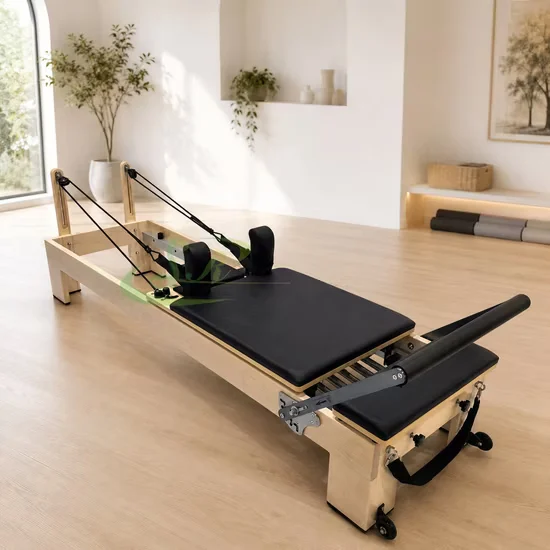
High-End Pilates Studios
Premium aesthetics meet quiet operation for boutique studio environments.
ISO
9001
CE
Certified
OEM
Available
10YR
Warranty
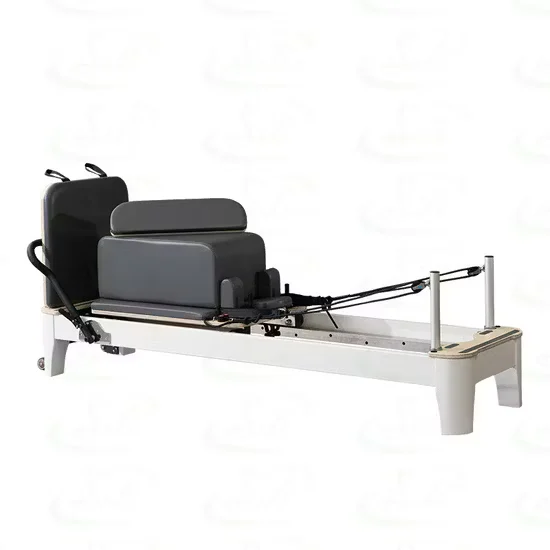
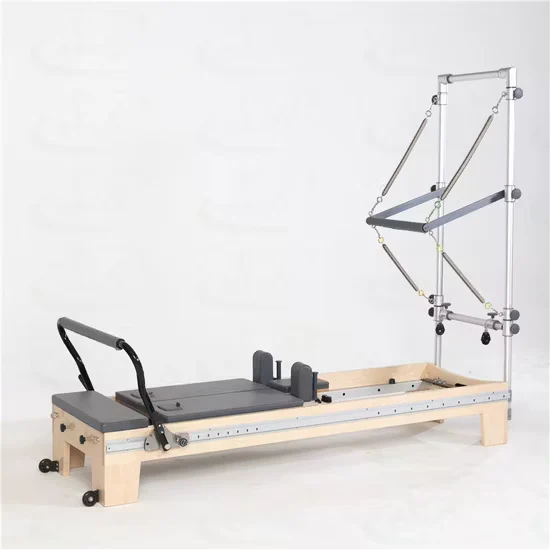
Commercial Pilates Reformer, 150kg Net Weight, Two-Way Sliding Ladder — engineered with industrial-grade steel frame and precision sealed-bearing carriage system for smooth, noise-free operation under 8+ hours of daily studio use. Includes Long Box, Jump Board, and Platform for full-spectrum programming from rehab to advanced functional training. Backed by 10-year frame warranty and full floor planning support for optimal studio layout.
// Spec Highlights
• Direct from Manufacturer · No Middlemen · Worldwide Shipping
01
// Material
Imported Solid Wood
Premium hardwood frames sourced for density and visual warmth.
02
// Hardware
Medical-Grade Silent
Whisper-quiet pulleys and springs for clinical environments.
03
// Customization
Appearance OEM
Color, upholstery, and branding tailored to your studio.
04
// Service
Layout Design
Free venue planning for studios and rehab institutions.
Every component is selected for longevity, performance, and aesthetic harmony - from imported hardwood frames to silent medical-grade accessories.
// Features
Traceable 11-Gauge Steel — Every steel coil used in this commercial Pilates reformer with sliding ladder is mill-certified to Q235 or Q345 grade, with full traceability from raw material to finished frame.
| Parameter | Value |
|---|---|
| Product Type | Pilates Reformer |
| Product Dimensions | 2460×730×1900mm |
| Net Weight | 150kg |
| Frame Construction | Industrial-grade steel with reinforced sliding rail system |
| Rail System | Precision-machined track with sealed industrial bearings |
| Bearing Type | Sealed industrial-grade bearings |
| Spring Resistance | Multi-position adjustable resistance springs |
| Accessories Included | Long Box / Jump Board / Platform |
| Upholstery | Standard commercial-grade vinyl, color options available |
| Powder Coating | 200μm scratch-resistant industrial powder coating |
| Logo | Customized is allowed |
| Color | Solid color options available |
| Warranty | 3 Years |
| Certification | ISO 9001:2015, CE European conformity, SGS factory audit verified |
| Facility Type | Typical Use |
|---|---|
| Commercial Pilates studio | Daily group and private reformer classes, 8+ hours continuous operation |
| Boutique fitness center | Hybrid programming combining reformer work with functional training circuits |
| Rehabilitation and performance center | Post-injury recovery protocols and corrective movement retraining |
| Hotel wellness facility | Guest-access programming with minimal supervision requirements |
| Private home studio | High-use personal training environments demanding commercial durability |
A commercial Pilates reformer with two-way sliding ladder either glides or it grinds — and that distinction is decided at the bearing and rail interface before the unit ever leaves the factory.
Most reformer complaints in high-traffic studios surface around the sixth month: the carriage develops lateral play, the slide feels gritty, and instructors start hearing metallic chatter during footwork sequences. The root cause is almost always unsealed bearings riding on rails machined to loose tolerances. Sweat, chalk dust, and cleaning aerosols infiltrate open bearings within weeks, degrading the grease and introducing abrasive particles into the rolling elements [NEED_CITE: bearing contamination and premature wear in fitness equipment environments]. When the rail profile itself lacks precision, the carriage compensates with lateral movement that accelerates wear on both the track and the bearing housing.
This reformer covers the full spectrum of supine, prone, seated, and standing movement patterns that define contemporary Pilates programming. The two-way sliding ladder design enables both traditional carriage travel and ladder-based resistance angles, allowing instructors to transition from foundational footwork to advanced spinal articulation sequences on a single platform. In a commercial Pilates reformer studio layout, this unit pairs naturally with Cadillac towers and Wunda chairs to create progressive training zones. The 2460mm footprint fits standard studio bays with adequate clearance for instructor circulation on three sides. The 150kg net weight anchors the frame during dynamic jump board work without requiring floor bolting on properly leveled concrete subfloors.
Reformer carriages endure cyclical eccentric loading that few other fitness equipment categories experience. Every return stroke decelerates a loaded carriage through the spring array, concentrating fatigue stress at the rail endpoints and the carriage-to-spring attachment points. In a busy studio running eight or more classes daily, these micro-impacts accumulate into thousands of cycles per week [NEED_CITE: fatigue loading classification for cyclic exercise equipment]. The sealed bearings on this unit prevent the most common failure pathway — contaminant ingress degrading rolling smoothness — while the reinforced rail profile resists the lateral deflection that causes binding under off-center loads. Upholstery contact points on the shoulder rests and headrest endure repeated compression from users ranging from lightweight rehabilitation clients to athletic males performing loaded jump sequences, demanding vinyl that resists both surface abrasion and seam splitting. The powder coating on the steel frame must withstand daily wiping with disinfectant solutions without chalking or losing adhesion at high-contact grip zones.
The 150kg net weight is not an arbitrary number — it reflects frame mass distributed across a 2460mm wheelbase, providing the inertial stability necessary to prevent frame walk during aggressive jump board sequences and standing platform work. Sealed industrial bearings differ fundamentally from the bushings or open bearings found in lighter-duty units: sealed units maintain factory-packed lubrication isolated from environmental contaminants, translating directly into consistent carriage feel over years rather than months. The multi-position spring array provides graduated resistance levels that accommodate the full range from post-surgical rehabilitation loads to advanced athletic conditioning, with the spring anchors engineered to handle repeated engagement and release without loosening. The included Long Box, Jump Board, and Platform are not generic accessories — each must interface precisely with the carriage geometry to maintain stable contact during loaded movement, and poorly fitted accessories are a frequent source of studio downtime and client injury reports [NEED_CITE: accessory compatibility and safety in commercial Pilates environments].
Thin-wall tubing on a reformer frame flexes perceptibly during heavy spring-resistance exercises, and that flex translates into user discomfort and instructor frustration when equipment feels unstable under load. Open bearings on the carriage demand scheduled maintenance — cleaning, re-greasing, and eventual replacement — that accumulates significant labor cost across a fleet of machines over a single year. Low-density upholstery foam compresses permanently within months of commercial use, creating visible depressions that clients associate with worn-out equipment and prompting premature reupholstery expenses. Powder coating applied below industrial thickness standards chips at contact points where hands, feet, and accessories repeatedly strike the frame, exposing bare steel to sweat-borne chlorides that initiate corrosion [NEED_CITE: powder coating thickness and corrosion resistance in commercial fitness environments]. Non-standard hardware and proprietary accessory fittings mean that when a spring anchor or pulley wheel fails, the studio faces extended downtime waiting for single-source replacement parts rather than swapping in readily available components.
The 11-gauge steel frame with mill-certified traceability means every reformer deployed in your studio can be traced back to its source coil — this is structural accountability, not marketing language. Robotic MIG welding produces continuous weld lines at every frame junction, eliminating the spot-weld weak points that crack under the cyclical loading patterns unique to reformer carriage travel. Every unit undergoes load testing before shipment rather than sample-based batch testing, so the machine arriving at your facility has individually verified structural integrity. The 200μm industrial powder coating applied after sandblast surface preparation resists the chipping and chemical degradation that plague thinner finishes in high-humidity studio environments. The 10-year frame warranty — extending well beyond the standard 3-year coverage on this unit — reflects confidence in a frame engineered to outlast its wear components by a wide margin. Studio layout planning with 2D and 3D CAD support ensures your commercial Pilates reformer with sliding ladder units are positioned with proper instructor clearance corridors and ADA-compliant access pathways, not simply spaced evenly and left to chance. OEM customization options for logo placement and frame color allow branded consistency across multi-location studio rollouts.
Provide your studio floor dimensions and planned equipment list to receive a 2D or 3D layout showing optimal commercial Pilates reformer with sliding ladder placement with instructor circulation paths. Specify expected daily class volume and average client profile to confirm that the structural grade matches your operational intensity. Communicate any branding requirements including custom logo application and frame color preferences for multi-studio visual consistency. Indicate target client body-size ranges so accessory positioning and spring resistance configuration can be matched to your programming needs.
Q: What structural features distinguish a commercial Pilates reformer from a home-use model?
A: Commercial reformers use heavier-gauge steel frames, sealed industrial bearings on the carriage, and higher-density upholstery foam rated for continuous daily use. Home models typically rely on lighter tubing, open bearings or bushings, and thinner padding that compresses within months under frequent use. The net weight alone — 150kg on this unit versus under 80kg on many residential models — reflects the structural mass necessary for stable, wobble-free performance during dynamic exercises in a studio environment.
Q: What causes carriage rail sticking and how can studios prevent it?
A: Rail sticking originates from two sources: unsealed bearings that accumulate sweat and chalk dust, and rail surfaces machined to loose tolerances that allow lateral carriage play. Sealed industrial bearings prevent contaminant ingress entirely, while precision-machined tracks maintain alignment under off-center loading. Studios should inspect carriage travel weekly and wipe rails with a dry cloth between classes. Avoid oil-based lubricants that attract particulate matter and create abrasive paste on the rail surface.
Q: How do spring resistance levels affect exercise programming on this reformer?
A: The multi-position spring array provides graduated resistance from light rehabilitation loads through heavy athletic conditioning levels. Lighter spring tensions suit post-injury clients and precise stabilizer activation work, while heavier configurations challenge experienced practitioners during lower-body and core strengthening sequences. Instructors should match spring selection to client capability rather than defaulting to maximum resistance, as excessive load compromises the controlled movement quality that defines effective Pilates training.
Q: What spacing guidelines should studios follow when planning a reformer zone?
A: Each commercial Pilates reformer with sliding ladder requires clearance on at least three sides for instructor access and safe client transitions. Minimum spacing between adjacent units should accommodate a fully extended Long Box plus instructor standing room. Consider ADA compliance pathways and ensure emergency egress routes remain unobstructed. A detailed 2D or 3D floor plan helps verify that equipment density supports class flow without creating congestion during group sessions.
Q: How often should upholstery and straps be replaced in a commercial studio?
A: Upholstery lifespan depends on class volume and cleaning protocols, but commercial-grade vinyl on high-use reformers typically shows visible wear within eighteen to thirty months. Shoulder rest padding and headrest covers experience the most compression and should be inspected quarterly for seam integrity. Strap webbing should be checked for fraying at attachment points and replaced immediately if any fiber separation is visible. Replacement parts and reupholstery services are available through the manufacturer to minimize equipment downtime.
Premium aesthetics meet quiet operation for boutique studio environments.
Medical-grade silence and precision for sports & postpartum recovery.
Furniture-grade craftsmanship for premium residential installations.
Compact premium setups for one-on-one and small-group training.
Aesthetic Pilates integration for hybrid wellness studio programming.
Multi-unit deployment with instructor-grade reliability for certification programs.
Tell us about your project. Our team will respond within 24 hours with pricing, customization options, and shipping details.
// Sales Director
William
+86 132 2531 1800
// Export Manager
Bella
+86 198 5412 8032
william@bickfit.com