01 / Scenario
STUDIO
P
High-End Pilates Studios
Premium aesthetics meet quiet operation for boutique studio environments.

ISO
9001
CE
Certified
OEM
Available
10YR
Warranty
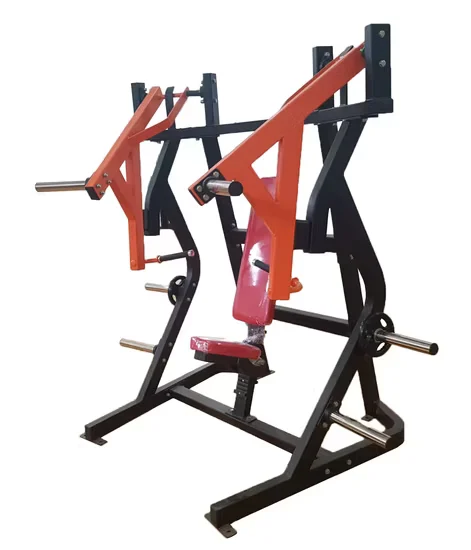
Plate Loaded Back Extension Machine, Steel Frame, 1552×771×876mm — built with robotic MIG welding for continuous weld lines and sealed bearing pivot points to handle repetitive heavy loading in high-traffic facilities. Frame and cushion colors are customizable for facility branding consistency. Every unit undergoes individual load testing before shipment, ensuring structural reliability for commercial gym posterior chain training zones.
// Spec Highlights
• Direct from Manufacturer · No Middlemen · Worldwide Shipping
01
// Material
Imported Solid Wood
Premium hardwood frames sourced for density and visual warmth.
02
// Hardware
Medical-Grade Silent
Whisper-quiet pulleys and springs for clinical environments.
03
// Customization
Appearance OEM
Color, upholstery, and branding tailored to your studio.
04
// Service
Layout Design
Free venue planning for studios and rehab institutions.
Every component is selected for longevity, performance, and aesthetic harmony - from imported hardwood frames to silent medical-grade accessories.
// Features
Mill-Certified Steel Traceability — Every coil of Q345 steel used in this commercial plate loaded back extension machine is documented back to the rolling mill, ensuring the 11-gauge frame specification is verifiable, not a marketing claim.
| Parameter | Value |
|---|---|
| Product Type | Plate Loaded Back Extension Machine |
| Frame Steel | 11-gauge, Q345 industrial steel |
| Welding Type | Robotic MIG, continuous weld lines |
| Loading Type | Plate loaded |
| Bearing Type | Sealed industrial bearings |
| Powder Coating | 200μm scratch-resistant |
| Product Dimensions | 1552×771×876mm |
| Upholstery | Customizable color and density options |
| Main Frame Color | Customizable |
| Certification | ISO 9001, CE |
| OEM/ODM | Acceptable |
| Power Source | Manual |
| Folded | Yes |
| Facility Type | Typical Use |
|---|---|
| Commercial gym strength floor | Posterior chain development station in free weight and plate loaded zones |
| Hotel and resort fitness center | Low-maintenance back and glute training for diverse guest populations |
| University strength and conditioning room | High-frequency athlete use for spinal erector and hip extensor work |
| CrossFit box functional zone | Accessory lifting station complementing rig-based programming |
| Rehabilitation and performance center | Controlled lumbar extension under supervised loading protocols |
A back extension machine lives or dies by what happens at the pivot weld.
Many facilities have watched their plate loaded back extension machines develop visible frame flex within the first year of heavy use. The crossbeam where the hip pad mounts takes cyclic loading every single repetition — an athlete loading four plates, dropping back, extending, and resetting. That pivot junction sees thousands of load cycles per week. When manufacturers quote "commercial grade" without specifying wall thickness or steel grade, the frame tube simply does not have the section modulus to resist deflection under those conditions. [NEED_CITE: EN 957 structural requirements for stationary training equipment] Spot welds at the hip pad bracket pass a visual inspection at the factory but develop microfractures that propagate under repeated eccentric loading. The result is a machine that wobbles during use and eventually requires structural repair or full replacement.
This commercial plate loaded back extension machine occupies a specific role on the strength floor: it targets the spinal erectors, glutes, and hamstrings through a hip-hinge movement pattern that barbell deadlifts and good mornings also train, but with isolated loading and reduced systemic fatigue. It complements plate loaded leg press and hack squat stations by addressing the posterior chain from a different vector. In high-traffic commercial facilities, it serves lifters who need focused lumbar and hip extensor work without occupying a power rack. The compact footprint of 1552×771mm allows placement along perimeter walls or between larger stations where floor space is constrained, and the manual loading mechanism means no cable or weight stack maintenance overhead.
The hip pad junction on a plate loaded back extension machine absorbs the full moment arm of the user’s torso plus any added plates. Each repetition generates an eccentric load as the user lowers into flexion, then a concentric peak at full extension. Over months of commercial use, these stress cycles concentrate at the weld connecting the pad bracket to the main frame tube. Sealed bearings at the pivot shaft prevent the lateral play that bushing-type joints develop when sweat and chalk dust infiltrate the contact surface. The upholstery on the hip pad and ankle roller endures compressive cycling and friction from clothing, which is why foam density and vinyl thickness directly determine how long the pads remain functional before splitting or compressing flat. The 200μm powder coating at frame contact points must resist abrasion from plates being loaded and unloaded near the base. [NEED_CITE: weld classification and fatigue performance in structural steel]
The 11-gauge Q345 steel frame provides a wall thickness that resists ovalization at the pivot bore — a failure mode where thin-wall tubing deforms from circular to elliptical under cyclic bending loads, eventually cracking at the tube edge. Robotic MIG welding produces continuous weld beads along every joint, eliminating the cold-start defects inherent in manual spot welding where the arc must restart at each point. The 3×3 inch main tube cross-section gives the frame a section modulus sufficient to limit deflection under maximum plate loading, keeping the hip pad stable rather than flexing during heavy extensions. Sandblast surface preparation before the 200μm powder coat ensures coating adhesion at the molecular level, preventing the flaking that exposes bare steel to oxidation in humid gym environments. Sealed bearings at the pivot eliminate the maintenance interval that unsealed bushings demand in high-traffic settings.
Switching from 11-gauge to thin-wall tubing on a back extension frame reduces material cost but introduces frame flex that users feel immediately during loaded extensions — the hip pad shifts under load, altering the movement path and reducing exercise effectiveness. Spot-welded pivot brackets that save seconds on the assembly line become the first failure point, cracking under cyclic loading and creating a liability risk for the facility operator. Unsealed bushings at the pivot develop play within months of daily use, requiring technician visits to press in replacements and realign the shaft. Low-density foam in the hip pad compresses within weeks of commercial use, exposing the steel plate beneath and forcing premature upholstery replacement. Thin powder coating chips at the plate-loading zone, leaving bare steel that oxidizes and degrades appearance in a matter of months. [NEED_CITE: comparative maintenance frequency of sealed bearing versus bushing pivot systems in commercial fitness equipment]
The 11-gauge Q345 frame with mill-certified coil traceability means the steel specification on the purchase order matches the steel in the machine — no substitution of lower-grade material between quotation and production. Robotic MIG continuous welding at every structural joint ensures the pivot bracket and main frame connection can withstand years of cyclic loading without crack initiation. Every unit undergoes load testing before shipment, verifying structural integrity rather than relying on sample-based inspection. The 200μm industrial powder coating applied over sandblasted surfaces resists chipping at the plate-loading contact zone where abrasion is constant. The 10-year frame warranty reflects confidence in the structural specification rather than actuarial calculation. Floor planning CAD support ensures this machine is positioned with correct safety clearances relative to adjacent stations, preventing the cramped layouts that cause user collisions.
Provide your strength floor dimensions and current equipment list to receive a 2D-3D layout showing this machine positioned with correct safety clearances and traffic flow. Specify expected daily user volume so we can confirm the structural rating matches your facility’s usage intensity. Indicate your user population’s body size range to verify the pad positioning accommodates your members. Communicate any frame color, logo, or upholstery customization requirements for branding consistency across your strength zone.
Q: How can I verify the steel specification is genuinely 11-gauge and not a thinner wall thickness marketed as commercial grade?
A: Request the mill certificate that traces the steel coil to the rolling mill. This document lists the exact wall thickness, steel grade, and mechanical properties of the raw material. Compare the certificate values against the manufacturer’s stated specification. A legitimate commercial supplier will provide this documentation without hesitation, as it is standard output from certified steel mills.
Q: What is the relationship between frame tube wall thickness and the load capacity of a plate loaded back extension machine?
A: Wall thickness directly determines the tube’s resistance to bending and ovalization at stress concentration points like the pivot junction. Thicker gauge steel maintains its cross-sectional shape under cyclic loading, preventing the flex that users feel as instability during heavy extensions. The tube’s outer dimensions combined with wall thickness define the section modulus, which is the engineering parameter governing deflection thresholds.
Q: Plate loaded versus selectorized back extension — which configuration better suits a high-traffic commercial facility?
A: Plate loaded machines have fewer moving parts — no weight stack, guide rods, cables, or selector pins — which reduces maintenance requirements in high-traffic environments. Users accustomed to loading barbells find the plate system intuitive. Selectorized versions offer faster weight changes for circuit-style training but introduce cable and pulley wear points. The choice depends on your members’ training patterns and your maintenance capacity.
Q: What floor space and clearance requirements should I plan for when positioning this machine on a commercial strength floor?
A: The machine footprint is 1552×771mm, but safe operation requires clearance around all sides for plate loading and user movement. Plan a minimum of 600mm clearance behind the machine for loading plates and at least 800mm in front for the user’s range of motion. Adjacent equipment should not obstruct the extension arc or create collision risk during use.
Q: How long does commercial-grade upholstery typically last on back extension hip pads before replacement is needed?
A: Upholstery lifespan depends on foam density, vinyl thickness, and daily usage volume. High-density foam with commercial-grade vinyl resists compression and splitting for meaningfully longer than low-density alternatives. Replacement pads should be available from the manufacturer to avoid full machine replacement when upholstery eventually wears. Confirm parts availability and lead times before purchasing.
Premium aesthetics meet quiet operation for boutique studio environments.
Medical-grade silence and precision for sports & postpartum recovery.
Furniture-grade craftsmanship for premium residential installations.
Compact premium setups for one-on-one and small-group training.
Aesthetic Pilates integration for hybrid wellness studio programming.
Multi-unit deployment with instructor-grade reliability for certification programs.
Tell us about your project. Our team will respond within 24 hours with pricing, customization options, and shipping details.
// Sales Director
William
+86 132 2531 1800
// Export Manager
Bella
+86 198 5412 8032
william@bickfit.com