01 / Scenario
STUDIO
P
High-End Pilates Studios
Premium aesthetics meet quiet operation for boutique studio environments.

ISO
9001
CE
Certified
OEM
Available
10YR
Warranty
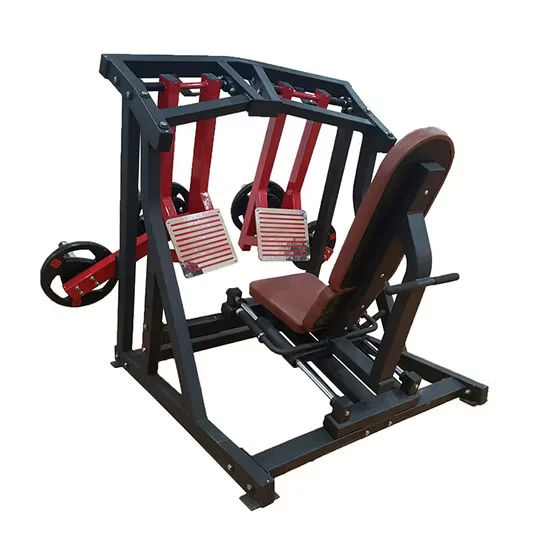
Commercial Iso-Lateral Chest Press, Plate Loaded, 1323×1599×1746mm, 140kg Net Weight — engineered with plate loaded resistance for independent arm movement, targeting balanced muscle development in high-traffic commercial environments. Frame construction utilizes industrial steel with ISO9001 and CE certification, ensuring structural reliability under repeated heavy use. Every unit undergoes load testing before shipment, backed by a 10-year frame warranty and factory-direct pricing with no middlemen.
// Spec Highlights
• Direct from Manufacturer · No Middlemen · Worldwide Shipping
01
// Material
Imported Solid Wood
Premium hardwood frames sourced for density and visual warmth.
02
// Hardware
Medical-Grade Silent
Whisper-quiet pulleys and springs for clinical environments.
03
// Customization
Appearance OEM
Color, upholstery, and branding tailored to your studio.
04
// Service
Layout Design
Free venue planning for studios and rehab institutions.
Every component is selected for longevity, performance, and aesthetic harmony - from imported hardwood frames to silent medical-grade accessories.
// Features
Traceable Mill Steel — Every tube in this plate loaded chest press traces back to a certified coil, not an unverified commercial grade claim.
| Parameter | Value |
|---|---|
| Product Type | Plate Loaded Chest Press |
| Loading Type | Plate loaded |
| Frame Steel | Q235 / Q345 industrial steel, mill-certified |
| Frame Tube Size | 3×3 inch (HD-700 series platform) |
| Product Dimensions | 1323 × 1599 × 1746 mm |
| Net Weight | 140 kg |
| Powder Coating | 200 μm scratch-resistant, sandblasted pretreatment |
| Certification | ISO 9001:2015, CE |
| Color Options | Optional per buyer specification |
| Upholstery | Standard or high-density options available |
| Assembly State | Unfolded |
| Facility Type | Typical Use |
|---|---|
| Commercial gym strength floor | Primary chest pressing station in high-traffic plate loaded zones |
| University strength and conditioning room | Athlete upper-body pressing development under supervised sessions |
| Hotel and resort fitness center | Durable pressing option for diverse guest usage patterns |
| CrossFit box functional zone | Supplementary strength work alongside barbell and rig training |
| Rehabilitation and performance center | Controlled iso-lateral pressing for return-to-training protocols |
A commercial plate loaded iso-lateral chest press lives or dies by what the frame tube actually is, not what the brochure calls it.
Walk into enough gym build-outs and you will find chest presses labeled "commercial grade" where the steel specification stops at that exact phrase. No gauge, no grade, no mill certificate. When a member loads four plates per side and the frame deflects visibly at the weld junction, the equipment has already told you what the spec sheet omitted. The issue is not catastrophic failure on day one — it is fatigue cracking at spot-welded joints after months of repeated eccentric loading, where the heat-affected zone was never properly fused [NEED_CITE: EN 957 structural requirements for stationary training equipment]. A unit that shifts under load also changes the pressing path, which means the movement no longer tracks the way the cam geometry intended.
This commercial plate loaded iso-lateral chest press covers the horizontal pressing plane, targeting the pectorals, anterior deltoids, and triceps through independent arm convergence. On a strength floor, it sits naturally between a flat bench station and an incline press, giving members a machine-based alternative that still demands stabilization from each side independently. It fits facilities running moderate to high daily traffic where selectorized machines see constant pin changes but plate loaded stations attract serious lifters who prefer incremental loading. The iso-lateral arm design accommodates a wide range of torso lengths and shoulder widths, so users from lightweight endurance athletes to heavyweight field sport players can find a comfortable grip width and press path.
A chest press in a busy gym endures an unusual mix of static holds, controlled concentric pushes, and dropped eccentrics where the member lets the arms snap back. Each cycle sends force through the pivot bearings, the frame welds at the arm-to-upright junction, and the seat mounting bolts [NEED_CITE: weld classification and fatigue performance in structural steel]. The pivot point sees the highest cyclic stress, and unsealed bearings in that location develop radial play within the first year of heavy use, translating into a wobble the user feels as looseness in the handle. Upholstery takes compression cycles every set, and low-density foam compresses permanently within months, leaving a concave seat that pushes the user forward off the intended back angle. Powder coating at the grip contact points and plate-loading horns faces abrasion from knurled sleeves and bare hands, so pretreatment and film thickness determine whether the frame stays sealed or starts showing rust spots.
The frame steel on the HD-700 series platform uses 3×3 inch rectangular tube, which provides a section modulus that resists bending under heavy plate loads far better than smaller profiles. Continuous robotic MIG welding along the arm joints eliminates the cold-start and crater defects common in manual spot welding, meaning the weld bead maintains uniform penetration across the entire joint length. Sealed industrial bearings at the pivot axis keep lubrication intact and block gym dust from entering the race, which directly extends the interval before any radial play develops. The 200 μm powder coating applied over sandblasted steel creates a film thick enough to survive contact abrasion from plates and chains without exposing bare metal. Upholstery options in standard or high-density foam let buyers match the compression recovery to their expected daily session volume.
A thinner-walled tube saves material cost upfront but deflects noticeably when loaded past a certain threshold, and that deflection shifts the entire pressing geometry mid-rep. Spot-welded joints that look acceptable in a showroom photograph develop hairline cracks once the equipment enters daily rotation, and those cracks propagate silently until a visible gap appears at the seam. Non-sealed bushings at the pivot require periodic lubrication that most gym maintenance schedules skip, leading to metal-on-metal wear that eventually requires a full bearing replacement. Low-density upholstery foam compresses past its recovery point within a few months of commercial use, and replacement pads often cost more in downtime and shipping than selecting higher-density material at the outset [NEED_CITE: commercial upholstery compression and recovery standards].
The 11-gauge frame steel on this platform comes with mill certification traceable to the coil, so you can verify the exact material that went into your unit rather than trusting a generic label. Robotic MIG welding produces continuous weld lines at every structural joint, which is verifiable by visual inspection without destructive testing. Every unit undergoes load testing before shipment — not sample-based batch testing, but individual verification on the actual machine leaving the factory. The 200 μm industrial powder coating over sandblasted pretreatment resists chipping at high-contact points like plate horns and seat rails. A 10-year frame warranty backs the structural claim, and 2D-3D CAD floor planning support ensures this commercial plate loaded iso-lateral chest press fits your strength zone with correct safety clearances between adjacent stations.
Provide your strength zone dimensions and existing equipment list to receive a 2D-3D layout showing how this press fits with correct safety spacing. Specify your expected daily user volume so the structural grade and upholstery density match the actual wear cycle. Indicate the body size range of your primary user population to confirm the adjustment positions cover your membership. State any custom color, logo, or upholstery requirements at the inquiry stage to lock in production specifications.
Q: How do I tell genuine commercial grade from light commercial on a chest press?
A: Request the mill certificate for the frame steel, which shows exact gauge and grade rather than a vague commercial label. Check whether welding is continuous MIG or spot-welded at joints. Ask for individual unit load test records, not just sample-based batch reports. True commercial equipment provides verifiable documentation at every structural stage.
Q: What is the relationship between tube size and load capacity on plate loaded presses?
A: Larger tube cross-sections provide higher section modulus, meaning the frame resists bending under heavy plate loads with less deflection. A 3×3 inch tube paired with adequate wall thickness maintains pressing geometry even at maximum loading. The tube specification directly determines whether the movement path stays consistent or shifts under stress.
Q: Should I choose plate loaded or selectorized for a commercial chest press station?
A: Plate loaded units attract serious lifters who prefer incremental loading and independent arm movement, while selectorized machines serve higher throughput with quick pin changes. Most commercial strength floors benefit from both, with plate loaded presses positioned as the primary heavy pressing station and selectorized units handling general membership traffic.
Q: How much space does this chest press need on the gym floor?
A: The unit footprint is 1323 × 1599 mm, but safe installation requires additional clearance for plate loading on both sides and user entry from the rear. Providing your floor plan allows a CAD layout that prevents the press arms from conflicting with adjacent equipment during full range of motion.
Q: What upholstery holds up under daily commercial chest press use?
A: High-density foam maintains compression recovery through thousands of daily cycles without permanent deformation. Vinyl covers with double-stitched seams resist splitting at stress points. Selecting the correct density at purchase avoids mid-year pad replacements that take the station offline and incur additional shipping costs.
Premium aesthetics meet quiet operation for boutique studio environments.
Medical-grade silence and precision for sports & postpartum recovery.
Furniture-grade craftsmanship for premium residential installations.
Compact premium setups for one-on-one and small-group training.
Aesthetic Pilates integration for hybrid wellness studio programming.
Multi-unit deployment with instructor-grade reliability for certification programs.
Tell us about your project. Our team will respond within 24 hours with pricing, customization options, and shipping details.
// Sales Director
William
+86 132 2531 1800
// Export Manager
Bella
+86 198 5412 8032
william@bickfit.com