01 / Scenario
STUDIO
P
High-End Pilates Studios
Premium aesthetics meet quiet operation for boutique studio environments.
ISO
9001
CE
Certified
OEM
Available
10YR
Warranty
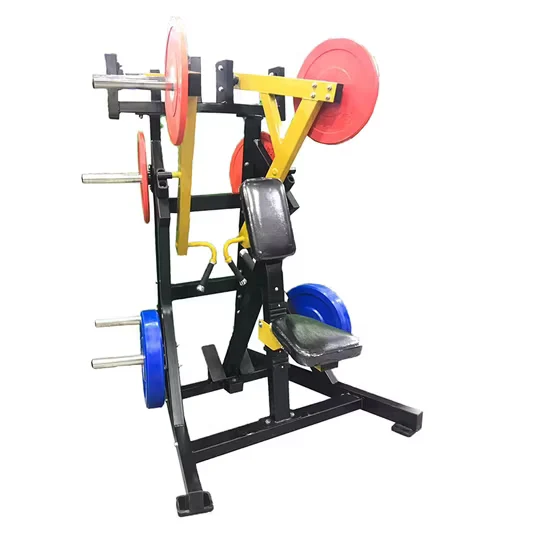
Plate Loaded ISO-Lateral Low Row Machine, 1250×1056×1700mm, 139kg Net Weight — engineered with plate-loaded resistance for iso-lateral converging pull patterns targeting back and rear deltoid development in commercial environments. ISO 9001 and CE certified, suitable for high-traffic gym strength zones. Every unit undergoes load testing before shipment, backed by a 10-year frame warranty and factory-direct floor planning support.
// Spec Highlights
• Direct from Manufacturer · No Middlemen · Worldwide Shipping
01
// Material
Imported Solid Wood
Premium hardwood frames sourced for density and visual warmth.
02
// Hardware
Medical-Grade Silent
Whisper-quiet pulleys and springs for clinical environments.
03
// Customization
Appearance OEM
Color, upholstery, and branding tailored to your studio.
04
// Service
Layout Design
Free venue planning for studios and rehab institutions.
Every component is selected for longevity, performance, and aesthetic harmony - from imported hardwood frames to silent medical-grade accessories.
// Features
Mill-Certified Steel — Q235/Q345 coil documentation traceable from furnace to finished frame on every unit we ship.
| Parameter | Value |
|---|---|
| Product Type | Plate Loaded Low Row Machine |
| Frame Steel Gauge | 11-gauge |
| Frame Tube Size | 3×3 inch |
| Steel Grade | Q235 / Q345 industrial steel |
| Welding Type | Robotic MIG continuous weld |
| Loading Type | Plate loaded |
| Bearing Type | Sealed industrial bearings |
| Pulley System | Aircraft-cable pulley system |
| Powder Coating | 200μm scratch-resistant |
| Product Dimensions | 1250×1056×1700mm |
| Net Weight | 139kg |
| Certification | ISO 9001, CE |
| Warranty | 10-year frame |
| Facility Type | Typical Use |
|---|---|
| Commercial gym strength floor | Primary horizontal pulling station in plate-loaded zones |
| CrossFit box functional zone | Heavy rowing work for strength-bias programming |
| Hotel fitness center | Durable pulling option for 24/7 unsupervised access |
| University strength and conditioning room | Team-based horizontal pull development |
| Rehabilitation and performance center | Controlled iso-lateral loading for return-to-play protocols |
Continuous MIG weld lines distribute load across the entire joint, not just at discrete points.
On a commercial plate loaded iso-lateral low row machine, the seat rail and upright junction absorbs repeated off-axis pulling forces. Spot welds pass a visual check on day one but concentrate stress into small fusion zones. After months of heavy loading, micro-cracks propagate from those points. I have walked into gyms in Dubai where the cross-member behind the seat had visibly separated from the main frame — not because the steel failed, but because the weld pattern was never designed for cyclic commercial use. [NEED_CITE: weld classification and fatigue performance in structural steel]
The iso-lateral low row targets the mid-back — rhomboids, mid-traps, rear delts, and lats through a converging pull path. In a plate-loaded zone, it sits between a high row and a seated cable row in terms of movement coverage, filling the horizontal pulling plane at a torso angle that reduces lower back demand. It pairs naturally with a plate-loaded chest press and shoulder press to complete the push-pull balance. The converging arm pattern accommodates users from shorter to taller builds without requiring seat adjustment beyond the standard range. This commercial plate loaded iso-lateral low row machine serves facilities running high daily throughput where movement consistency matters more than adjustability.
The seat rail on a low row experiences a combination of static downward load from the user and dynamic rearward pull transmitted through the arm linkage. Each rep introduces an eccentric component as the user controls the return. At commercial use frequency, that junction endures thousands of load cycles monthly. The pivot bearing at the arm hinge sees the most wear — unsealed bushings develop play within months in dusty or humid environments, and that play transfers into wobble at the handle. Sweat and cleaning chemicals also attack the powder coating at contact points where plates are loaded and where the user’s shoes brace against the foot platform. [NEED_CITE: EN 957 structural requirements for stationary training equipment]
The 11-gauge, 3×3 inch frame tube on this unit resists lateral flex during heavy pulls — a thinner tube with the same footprint would deflect under load, shifting the handle path and changing the resistance feel mid-rep. Robotic MIG continuous welding ensures the full perimeter of each joint is fused, eliminating the cold joints that intermittent spot welding leaves between weld spots. Sealed industrial bearings at the pivot points prevent dust and moisture ingress, which is the primary cause of play development in high-traffic pulling stations. The 200μm powder coating, applied over sandblasted steel, resists chipping where plates contact the loading horns and where users adjust positions on and off the seat.
Dropping from 11-gauge to a thinner wall saves material cost at the factory. On the gym floor, that thinner tube flexes under loaded pulls, and the user feels the frame shift rather than the target muscles working. Spot-welded joints on the seat rail crack within the first year of heavy use, creating a liability event rather than a maintenance event. Unsealed bushings at the arm pivot require quarterly replacement in high-dust environments like desert-climate facilities — a cost that compounds when you have a floor of forty machines. Thin powder coating chips at the loading horns within months, exposing bare steel to sweat and humidity, which accelerates corrosion at the exact points that carry the most structural load. [NEED_CITE: powder coating adhesion and corrosion resistance on fitness equipment frames]
The 11-gauge Q235/Q345 frame on this low row is sourced with mill certification traceable to the coil — you can verify the steel grade on every tube. Robotic MIG welding runs continuous bead lines along the seat rail and upright junctions, the highest-stress areas on a horizontal pulling machine. Every unit undergoes load testing before it leaves the factory, not sample-based batch testing. The 200μm powder coating covers the loading horns and foot platform where abrasion is constant. Floor planning support includes the 1250×1056mm footprint with recommended clearance zones so this station fits safely into your strength floor layout without crowding adjacent equipment.
Provide your strength floor dimensions and equipment list so we can generate a 2D or 3D layout showing this low row station positioned with correct safety clearances. Tell us your expected daily user volume so we can confirm the structural grade matches your traffic level. Share the body size range of your primary user group to verify the seat and arm path accommodation. Specify any custom requirements including frame color, logo placement, or upholstery material selection.
Q: How do I confirm the actual steel specification on a low row machine before purchasing?
A: Request the mill certificate that traces the steel coil to the finished frame. A genuine commercial-grade low row should have documentation showing the steel grade and gauge. Marketing terms like heavy-duty or commercial-grade without verifiable mill paperwork mean the specification is unconfirmed. Ask for the certificate before placing the order, not after delivery.
Q: What difference does continuous MIG welding make compared to spot welding on a low row frame?
A: Continuous MIG welding fuses the full perimeter of each joint, distributing stress evenly across the connection. Spot welding creates isolated fusion points with gaps between them, concentrating load into small areas. Under repeated heavy pulling, those gaps become crack initiation points. Continuous welds significantly extend the fatigue life of the frame in high-traffic commercial environments.
Q: Why do sealed bearings matter on the pivot points of a plate-loaded low row?
A: Sealed industrial bearings prevent dust, chalk, and moisture from entering the bearing race. In a commercial gym, airborne particles and sweat accumulate around pivot points constantly. Unsealed bushings absorb these contaminants, developing play and wobble within months. Sealed bearings maintain smooth rotation and consistent handle alignment through years of daily heavy use without requiring replacement.
Q: How should I plan floor spacing around an iso-lateral low row station?
A: Account for the machine footprint plus clearance on both sides for plate loading and user movement. Users need space to load and unload plates from the horns without crowding adjacent stations. Factor in the full range of the arm travel path. Share your floor plan for a layout that positions this station with safe operational clearances relative to surrounding equipment.
Premium aesthetics meet quiet operation for boutique studio environments.
Medical-grade silence and precision for sports & postpartum recovery.
Furniture-grade craftsmanship for premium residential installations.
Compact premium setups for one-on-one and small-group training.
Aesthetic Pilates integration for hybrid wellness studio programming.
Multi-unit deployment with instructor-grade reliability for certification programs.
Tell us about your project. Our team will respond within 24 hours with pricing, customization options, and shipping details.
// Sales Director
William
+86 132 2531 1800
// Export Manager
Bella
+86 198 5412 8032
william@bickfit.com