01 / Scenario
STUDIO
P
High-End Pilates Studios
Premium aesthetics meet quiet operation for boutique studio environments.

ISO
9001
CE
Certified
OEM
Available
10YR
Warranty
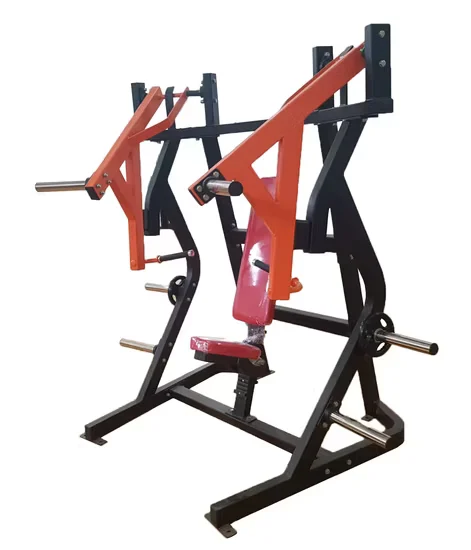
Commercial Plate Loaded Pec Fly Machine, 3×3 inch Frame Tube, 92kg Net Weight — built with 11-gauge steel and robotic MIG continuous welding to eliminate spot-weld failure under cyclic chest isolation loading. Sealed bearing pivot points maintain smooth iso-lateral convergence without play during high-traffic use. Every unit undergoes individual load testing before shipment, backed by a 10-year frame warranty with floor planning support.
// Spec Highlights
• Direct from Manufacturer · No Middlemen · Worldwide Shipping
01
// Material
Imported Solid Wood
Premium hardwood frames sourced for density and visual warmth.
02
// Hardware
Medical-Grade Silent
Whisper-quiet pulleys and springs for clinical environments.
03
// Customization
Appearance OEM
Color, upholstery, and branding tailored to your studio.
04
// Service
Layout Design
Free venue planning for studios and rehab institutions.
Every component is selected for longevity, performance, and aesthetic harmony - from imported hardwood frames to silent medical-grade accessories.
// Features
Mill-Certified Steel — Every coil of 11-gauge Q345 steel used in this commercial plate loaded pec fly machine traces back to its originating mill certificate.
| Parameter | Value |
|---|---|
| Product Type | Plate Loaded Pec Fly Machine |
| Frame Tube Size | 3×3 inch |
| Frame Steel Gauge | 11-gauge |
| Steel Grade | Q235 and Q345 industrial steel, mill-certified |
| Welding Type | Robotic continuous MIG, no spot welds |
| Loading Type | Plate loaded |
| Bearing Type | Sealed industrial bearings at pivot points |
| Powder Coating | 200μm scratch-resistant, sandblast prepped |
| Upholstery | Available in standard or high-density options |
| Product Dimensions | 1350×1650×1350mm |
| Net Weight | 92kg |
| Exercise Part | Chest |
| Certification | ISO 9001, CE |
| HS Code | 9506911900 |
| Warranty | 10-year frame |
| Facility Type | Typical Use |
|---|---|
| Commercial gym strength floor | Primary chest isolation station in plate-loaded zones |
| Hotel and resort fitness center | High-durability chest training for diverse guest demographics |
| University strength and conditioning room | Athletic chest development and hypertrophy programming |
| CrossFit box functional strength area | Accessory pressing work for competitive athletes |
| Rehabilitation and performance center | Controlled iso-lateral movement for return-to-training protocols |
Continuous robotic MIG welds eliminate the cold joints and spot-weld fractures that plague sub-spec frames under cyclic pec fly loading.
Suppliers often label tube thickness as "commercial grade" without providing a verifiable gauge or steel origin. When a spot weld holds the pivot arm to the main frame, repeated heavy loading on a pec fly creates stress concentrations that initiate hairline cracks — invisible until the arm develops lateral play or, worse, structural failure mid-set. [NEED_CITE: weld classification and fatigue performance in structural steel] Unsealed pivot bearings compound the problem: gym dust, chalk, and sweat infiltrate the race within months of high-traffic use, and the movement path begins to wander off the intended converging arc. A commercial plate loaded pec fly machine that cannot maintain its geometry under load is a liability, not an asset.
This machine targets the pectoralis major through a converging iso-lateral arc, allowing each arm to move independently along a path that mimics the natural adduction of the shoulder joint. It complements flat and incline press stations by providing a controlled stretch-and-squeeze stimulus without the stabilization demands of free weights. In a commercial plate loaded pec fly machine configuration, it occupies a dedicated isolation slot — typically placed adjacent to plate-loaded shoulder and back stations to form a logical upper-body circuit. The seat and pad geometry accommodates a wide range of torso lengths, making it suitable for facilities serving mixed-gender and multi-athlete populations.
Each repetition on a plate-loaded pec fly imposes an eccentric-to-concentric load transition at the pivot, where the bending moment peaks near the arm-to-frame junction. In a high-traffic commercial gym, that junction may endure thousands of cycles per week across users loading anywhere from a single plate to multiple 20kg bumpers per horn. [NEED_CITE: EN 957 structural requirements for stationary training equipment] The sealed bearings at each pivot must resist axial and radial forces simultaneously while excluding abrasive particulates. Sweat and alkaline cleaning agents attack the powder coating at contact points — adjustment knobs, seat rails, and horn sleeves — making coating thickness and surface preparation critical to long-term corrosion resistance. Upholstery endures repeated compression and lateral shear as users brace during heavy sets.
The 11-gauge, 3×3 inch tube dimensions set the deformation threshold: a larger cross-section distributes bending stress across more material, reducing deflection under asymmetric plate loading. Robotic continuous MIG welding produces uniform penetration along the entire seam, meaning there are no inter-pass cold laps or undercut notches that become crack initiation sites under fatigue cycling. Sealed industrial bearings at the pivot points eliminate the maintenance intervals required by bronze bushing designs — no periodic re-greasing, no developing slop from wear debris accumulation. The 200μm powder coating, applied over sandblasted substrate, provides mechanical adhesion that resists chipping at high-contact adjustment zones where bare metal would otherwise oxidize within weeks of exposure to sweat and humidity.
Thinner-walled tubing may hold a static load, but under repeated eccentric plate-loaded cycling, the frame begins to flex perceptibly — a feel that experienced lifters immediately recognize as sub-commercial. Spot-welded pivot attachments transfer load through a small weld area, and when that weld fractures under cyclic fatigue, the repair often requires pulling the machine off the floor for days. [NEED_CITE: fatigue crack propagation in welded structural joints] Non-sealed bushings demand scheduled maintenance that most gym operators skip until the arm develops play, at which point the entire pivot assembly requires replacement. Thin powder coating chips at seat adjustment points within months, exposing steel to sweat-driven corrosion that spreads under adjacent coating. Low-density upholstery compresses permanently under daily commercial use, requiring pad replacement far sooner than high-density alternatives.
The 11-gauge Q235 and Q345 frame steel arrives with mill certification traceable to the coil — operators and auditors can verify the material origin, not just trust a label. Robotic continuous MIG welding ensures every pivot-to-frame joint carries uniform load distribution with no spot-weld weak points. Each unit undergoes load testing before crating, not sample-based batch testing, so the specific machine arriving at your dock has been structurally verified. The 200μm industrial powder coating over sandblast preparation resists chipping at adjustment contact points where daily use concentrates wear. The 10-year frame warranty is backed by a vertically integrated manufacturing operation, and the 1350×1650mm footprint with required safety clearances can be plotted into your strength floor via 2D-3D CAD layout support before purchase commitment.
Provide your strength zone square footage and existing equipment list to receive a 2D-3D CAD layout showing exact placement, safety clearances, and traffic flow around this station. Specify anticipated daily user volume so the structural grade and maintenance schedule align with your facility’s traffic profile. Confirm the body-size range of your primary user population to verify that the seat and pad adjustment range delivers proper biomechanical alignment across your demographic. Indicate any custom color, logo, or upholstery requirements for facility branding consistency across your plate-loaded lineup.
Q: How do I distinguish true commercial-grade plate loaded equipment from light commercial?
A: Request the specific frame steel gauge and tube dimensions with mill-certified traceability. Light commercial frames typically use thinner wall thickness and smaller cross-sections that flex under heavy plate loading. Verify the welding method — continuous robotic MIG produces uniform seams, while spot welds concentrate stress at the pivot attachment points and are prone to fatigue cracking under daily commercial use.
Q: What does frame steel gauge and tube size mean for a pec fly’s load capacity?
A: The 11-gauge wall thickness combined with a 3×3 inch tube cross-section determines how much bending stress the frame absorbs before deflection becomes perceptible. A larger cross-section distributes eccentric plate loads across more material, keeping the pivot arm geometry stable under heavy unilateral or bilateral loading without the frame flex that compromises movement consistency.
Q: Plate loaded versus selectorized pec fly — which is better for high-traffic facilities?
A: Plate loaded units eliminate weight stack cables, guide rods, and selector pin mechanisms — components that require ongoing adjustment in high-use environments. Users self-select load via plates, reducing moving-part wear. Selectorized versions offer faster load changes for circuit training formats. The choice depends on your programming style and maintenance capacity rather than inherent durability differences.
Q: What equipment footprint and safety clearance does this machine require for floor planning?
A: The unit occupies 1350×1650mm of floor space, with additional lateral clearance needed on both sides for safe plate loading and user entry. Adequate rear clearance ensures users can load and unload plates without obstructing adjacent equipment traffic. A detailed CAD layout factors in these clearances alongside neighboring station spacing to prevent unsafe congestion on the strength floor.
Q: What bearing and pivot maintenance intervals apply to commercial iso-lateral pec fly machines?
A: Sealed industrial bearings at each pivot point eliminate the re-greasing schedules required by open bushing designs. Monthly visual and tactile inspection for smooth rotation and absence of axial play is generally sufficient. If play develops, the sealed cartridge can be replaced without dismantling the entire arm assembly, minimizing floor downtime.
Premium aesthetics meet quiet operation for boutique studio environments.
Medical-grade silence and precision for sports & postpartum recovery.
Furniture-grade craftsmanship for premium residential installations.
Compact premium setups for one-on-one and small-group training.
Aesthetic Pilates integration for hybrid wellness studio programming.
Multi-unit deployment with instructor-grade reliability for certification programs.
Tell us about your project. Our team will respond within 24 hours with pricing, customization options, and shipping details.
// Sales Director
William
+86 132 2531 1800
// Export Manager
Bella
+86 198 5412 8032
william@bickfit.com