01 / Scenario
STUDIO
P
High-End Pilates Studios
Premium aesthetics meet quiet operation for boutique studio environments.
ISO
9001
CE
Certified
OEM
Available
10YR
Warranty
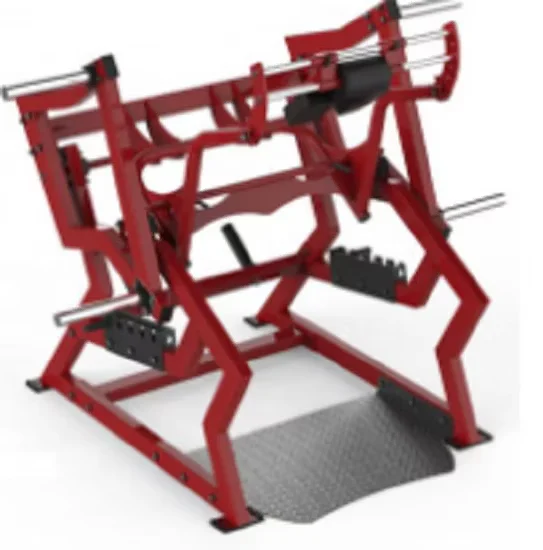
Commercial Plate Loaded Power Squat Rack, 50×100×3mm Frame Tube, 170kg Machine Weight — plate-loaded design eliminates cable maintenance while the 3mm wall thickness resists deflection under eccentric barbell loading. Robotic MIG welding ensures continuous joints at base-to-upright connections for fatigue resistance in high-traffic environments. Every unit undergoes individual load testing before shipment, backed by 10-year frame warranty and CAD floor planning support.
// Spec Highlights
• Direct from Manufacturer · No Middlemen · Worldwide Shipping
01
// Material
Imported Solid Wood
Premium hardwood frames sourced for density and visual warmth.
02
// Hardware
Medical-Grade Silent
Whisper-quiet pulleys and springs for clinical environments.
03
// Customization
Appearance OEM
Color, upholstery, and branding tailored to your studio.
04
// Service
Layout Design
Free venue planning for studios and rehab institutions.
Every component is selected for longevity, performance, and aesthetic harmony - from imported hardwood frames to silent medical-grade accessories.
// Features
Mill-Certified Steel — 50×100×3mm frame tube traceable to the coil, cut by 6kW fiber laser at ±0.1mm tolerance.
| Parameter | Value |
|---|---|
| Product Type | Power Squat Rack |
| Frame Tube Size | 50×100×3mm |
| Steel Grade | Q235 / Q345 industrial steel, mill-certified |
| Welding Type | Robotic MIG, continuous weld lines |
| Loading Type | Plate loaded |
| Powder Coating | 200μm scratch-resistant industrial finish |
| Product Dimensions | 1550×1480×1825mm |
| Net Weight | 170kg |
| Assembly State | Unfolded |
| Power Source | Manual |
| Color Options | Customized |
| Certification | ISO 9001, CE, RoHS |
| Warranty | 10-year frame |
| Facility Type | Typical Use |
|---|---|
| Commercial gym strength floor | Primary heavy squat station for open free-weight zones |
| University strength and conditioning room | Athlete lower-body power development in supervised sessions |
| CrossFit box functional zone | Barbell squat and rack pull programming in group or individual use |
| Hotel and resort fitness center | Durable squat solution for unattended, high-turnover environments |
| Community fitness center | Accessible plate loaded squat option for general membership use |
Wall thickness determines whether a squat rack frame deflects or holds rigid when a loaded barbell rests off-center on the J-cups.
Many suppliers quote "commercial grade" tubing on a commercial plate loaded power squat rack without disclosing the actual wall thickness. When the tube wall is undersized, the uprights flex noticeably at the catch points during heavy sets, and the cyclic loading accelerates fatigue cracking at the base-to-upright junction [NEED_CITE: EN 957 structural requirements for stationary training equipment]. I have seen racks with vague specs returned to the factory after the cross-member bent under repeated deep squat loads — a failure that traces directly back to a procurement decision based on price rather than verifiable steel specifications.
A plate loaded power squat rack anchors the barbell compound movement area. It covers the sagittal plane for lower-body posterior chain and quadriceps work, and pairs with adjacent flat and incline benches, deadlift platforms, and dumbbell stations to form a complete strength zone. This equipment fits high-density commercial floors where multiple users cycle through heavy sets throughout peak hours, and its open-frame geometry accommodates a wide range of user heights without requiring complex adjustment mechanisms. The commercial plate loaded power squat rack serves as a structural constant in the layout — members load, squat, and rerack without waiting for a pin selector or cable system to reset.
Every squat rep generates an eccentric impact when the barbell is reracked on the J-cups, transmitting a shock load through the uprights into the base welds. In a commercial gym operating eight or more hours daily, that junction endures thousands of loading cycles per week [NEED_CITE: weld classification and fatigue performance in structural steel]. Continuous robotic MIG welding eliminates the stress concentrations inherent in spot-welded joints, where a small crack at one nugget can propagate unchecked through the connection. The powder coating at these high-contact zones also faces constant abrasion from plate loading and reracking, requiring a 200μm finish applied over sandblasted steel to resist chipping down to bare metal.
The rectangular cross-section of the 50×100mm tube provides a higher moment of inertia along the axis where squat loads create bending stress, meaning the upright resists deflection more effectively than a smaller or square-section tube of equivalent weight. The 3mm wall thickness keeps the tube from local buckling at the J-cup mounting points, where the concentrated force of a heavily loaded barbell compresses a small contact area. Robotic MIG welding with continuous beads ensures that the load path from the upright to the base remains uninterrupted, unlike spot welds that leave unwelded gaps as potential crack initiation sites. Sandblasting before the 200μm powder coat removes mill scale and contaminants, giving the coating a mechanical bond that survives daily contact with iron plates and knurled barbell sleeves.
Thinner wall tubing saves material cost at procurement but creates a liability the moment a member loads the rack beyond the frame’s deflection threshold. Spot-welded joints that pass a visual inspection at the factory can develop cracks within months of heavy commercial use, shifting the failure risk onto the facility operator. Non-industrial powder coatings chip at the J-cup contact points within weeks, exposing raw steel to sweat and humidity that accelerates corrosion. When proprietary or non-standard fasteners and J-cup pins are used to reduce cost, replacement parts become unavailable after the initial batch, turning a minor wear issue into a full equipment replacement decision [NEED_CITE: structural steel fatigue and failure modes in fitness equipment].
The 50×100×3mm frame tube with mill-certified Q235 or Q345 steel means the material specification is verifiable from the coil certificate to the finished rack. Robotic MIG welding with continuous beads on every load-bearing joint eliminates the weak points that spot welding introduces at the base and upright connections. Every unit undergoes load testing before shipment — not sample-based inspection on one unit per batch, but per-unit verification. The 200μm industrial powder coating applied over sandblasted surfaces protects the rack through years of plate contact, sweat exposure, and cleaning chemical contact. A 10-year frame warranty backs the structural claims. For floor planning, the 1550×1480mm footprint requires defined clearance zones on all sides for safe plate loading and spotter access, and our CAD support maps those clearances into your 2D or 3D layout.
Provide your strength zone floor area and existing equipment list so we can map this rack’s clearance requirements into a 2D or 3D layout that maintains safe traffic flow. Specify your expected daily user volume to confirm the structural grade aligns with your facility’s duty cycle. Indicate any custom color or logo requirements for the powder coat finish to match your facility’s brand identity across the commercial plate loaded power squat rack and surrounding stations.
Q: How do I verify that a squat rack is genuinely commercial grade and not light-commercial?
A: Request the mill-certified steel specification for the frame tubing and confirm the wall thickness matches the quoted value. Check that the welding method is continuous MIG rather than spot welding, and ask whether load testing is performed on every unit or only on a sample basis. These three data points separate verifiable commercial construction from marketing claims.
Q: What clearance should I plan around a plate loaded power squat rack on a commercial floor?
A: You need sufficient space on all sides for loading plates, racking the barbell, and spotter access during heavy sets. Provide your floor dimensions so we can generate a CAD layout that positions the rack with proper safety zones and traffic flow, avoiding unusable gaps between adjacent stations that waste floor area.
Q: How does plate loaded design compare to selectorized squat machines for maintenance?
A: Plate loaded racks eliminate cables, pulleys, and weight stack guide rods — the components that require the most frequent adjustment and replacement in a selectorized machine. The trade-off is that members handle plates directly, which suits strength-focused facilities but may not fit environments where quick weight changes and minimal member instruction are priorities.
Q: What warranty coverage should I expect on a commercial squat rack frame and finish?
A: A commercial-grade frame should carry a minimum 10-year warranty covering structural integrity under normal use. The powder coating warranty should address chipping and peeling under commercial conditions, while wear items like J-cup inserts and hardware are typically covered under a separate consumable terms schedule.
Premium aesthetics meet quiet operation for boutique studio environments.
Medical-grade silence and precision for sports & postpartum recovery.
Furniture-grade craftsmanship for premium residential installations.
Compact premium setups for one-on-one and small-group training.
Aesthetic Pilates integration for hybrid wellness studio programming.
Multi-unit deployment with instructor-grade reliability for certification programs.
Tell us about your project. Our team will respond within 24 hours with pricing, customization options, and shipping details.
// Sales Director
William
+86 132 2531 1800
// Export Manager
Bella
+86 198 5412 8032
william@bickfit.com